



Passive Components Blog
No Result
View All Result
  • Home
  • NewsFilter
    • All
    • Aerospace & Defence
    • Antenna
    • Applications
    • Automotive
    • Capacitors
    • Circuit Protection Devices
    • electro-mechanical news
    • Filters
    • Fuses
    • Inductors
    • Industrial
    • Integrated Passives
    • inter-connect news
    • Market & Supply Chain
    • Market Insights
    • Medical
    • Modelling and Simulation
    • New Materials & Supply
    • New Technologies
    • Non-linear Passives
    • Oscillators
    • Passive Sensors News
    • Resistors
    • RF & Microwave
    • Telecommunication
    • Weekly Digest

    Samsung Electro-Mechanics Signs 1.5T KRW Silicon Capacitor AI Contract

    Murata Expands Thermistor Production Capacity at Yokaichi Plant

    Hirose Expands Compact High‑Voltage EV connectors

    Qi2 Wireless Charging: Inductors, Capacitors and EMC Filters

    Samsung Introduced Low ESL 3-Terminal Reverse-Geometry MLCCs for High-Performance ADAS

    Würth Elektronik Presents New Bidirectional Digital Isolators

    Using Stress–Strain Curves to Diagnose Tantalum Powders for Capacitors

    Coilcraft Introduces SMT Current Sense Transformers for High‑Performance Power Electronics

    Samsung Launches Ultra-Compact 008004 High Q MLCC for Next-Generation RF Applications

    Trending Tags

    • Ripple Current
    • RF
    • Leakage Current
    • Tantalum vs Ceramic
    • Snubber
    • Low ESR
    • Feedthrough
    • Derating
    • Dielectric Constant
    • New Products
    • Market Reports
  • VideoFilter
    • All
    • Antenna videos
    • Capacitor videos
    • Circuit Protection Video
    • Filter videos
    • Fuse videos
    • Inductor videos
    • Inter-Connect Video
    • Non-linear passives videos
    • Oscillator videos
    • Passive sensors videos
    • Resistor videos

    Qi2 Wireless Charging: Inductors, Capacitors and EMC Filters

    Two‑capacitor paradox explained for engineers

    Capacitances of Nonlinear MLCCs: What Datasheets Don’t Tell You

    Tapped Inductor Buck Converter Fundamentals

    Planar vs Conventional Transformer: When it Make Sense

    Modeling Fringing Field Losses in Inductors & Transformers

    Why Power Inductors Use a Ferrite Core With an Air Gap

    Transformer-Based Power-Line Harvester Magnetic Design

    Thermal Modeling of Magnetics

    Trending Tags

    • Capacitors explained
    • Inductors explained
    • Resistors explained
    • Filters explained
    • Application Video Guidelines
    • EMC
    • New Products
    • Ripple Current
    • Simulation
    • Tantalum vs Ceramic
  • Knowledge Blog
  • DossiersNew
  • Suppliers
    • Who is Who
  • PCNS
    • PCNS 2025
    • PCNS 2023
    • PCNS 2021
    • PCNS 2019
    • PCNS 2017
  • Events
  • Home
  • NewsFilter
    • All
    • Aerospace & Defence
    • Antenna
    • Applications
    • Automotive
    • Capacitors
    • Circuit Protection Devices
    • electro-mechanical news
    • Filters
    • Fuses
    • Inductors
    • Industrial
    • Integrated Passives
    • inter-connect news
    • Market & Supply Chain
    • Market Insights
    • Medical
    • Modelling and Simulation
    • New Materials & Supply
    • New Technologies
    • Non-linear Passives
    • Oscillators
    • Passive Sensors News
    • Resistors
    • RF & Microwave
    • Telecommunication
    • Weekly Digest

    Samsung Electro-Mechanics Signs 1.5T KRW Silicon Capacitor AI Contract

    Murata Expands Thermistor Production Capacity at Yokaichi Plant

    Hirose Expands Compact High‑Voltage EV connectors

    Qi2 Wireless Charging: Inductors, Capacitors and EMC Filters

    Samsung Introduced Low ESL 3-Terminal Reverse-Geometry MLCCs for High-Performance ADAS

    Würth Elektronik Presents New Bidirectional Digital Isolators

    Using Stress–Strain Curves to Diagnose Tantalum Powders for Capacitors

    Coilcraft Introduces SMT Current Sense Transformers for High‑Performance Power Electronics

    Samsung Launches Ultra-Compact 008004 High Q MLCC for Next-Generation RF Applications

    Trending Tags

    • Ripple Current
    • RF
    • Leakage Current
    • Tantalum vs Ceramic
    • Snubber
    • Low ESR
    • Feedthrough
    • Derating
    • Dielectric Constant
    • New Products
    • Market Reports
  • VideoFilter
    • All
    • Antenna videos
    • Capacitor videos
    • Circuit Protection Video
    • Filter videos
    • Fuse videos
    • Inductor videos
    • Inter-Connect Video
    • Non-linear passives videos
    • Oscillator videos
    • Passive sensors videos
    • Resistor videos

    Qi2 Wireless Charging: Inductors, Capacitors and EMC Filters

    Two‑capacitor paradox explained for engineers

    Capacitances of Nonlinear MLCCs: What Datasheets Don’t Tell You

    Tapped Inductor Buck Converter Fundamentals

    Planar vs Conventional Transformer: When it Make Sense

    Modeling Fringing Field Losses in Inductors & Transformers

    Why Power Inductors Use a Ferrite Core With an Air Gap

    Transformer-Based Power-Line Harvester Magnetic Design

    Thermal Modeling of Magnetics

    Trending Tags

    • Capacitors explained
    • Inductors explained
    • Resistors explained
    • Filters explained
    • Application Video Guidelines
    • EMC
    • New Products
    • Ripple Current
    • Simulation
    • Tantalum vs Ceramic
  • Knowledge Blog
  • DossiersNew
  • Suppliers
    • Who is Who
  • PCNS
    • PCNS 2025
    • PCNS 2023
    • PCNS 2021
    • PCNS 2019
    • PCNS 2017
  • Events
No Result
View All Result
Passive Components Blog
No Result
View All Result

Skeleton Releases GrapheneGPU to Reduce AI Energy Consumption by 44% and Boosts Power by 40%

29.5.2025
Reading Time: 3 mins read
A A

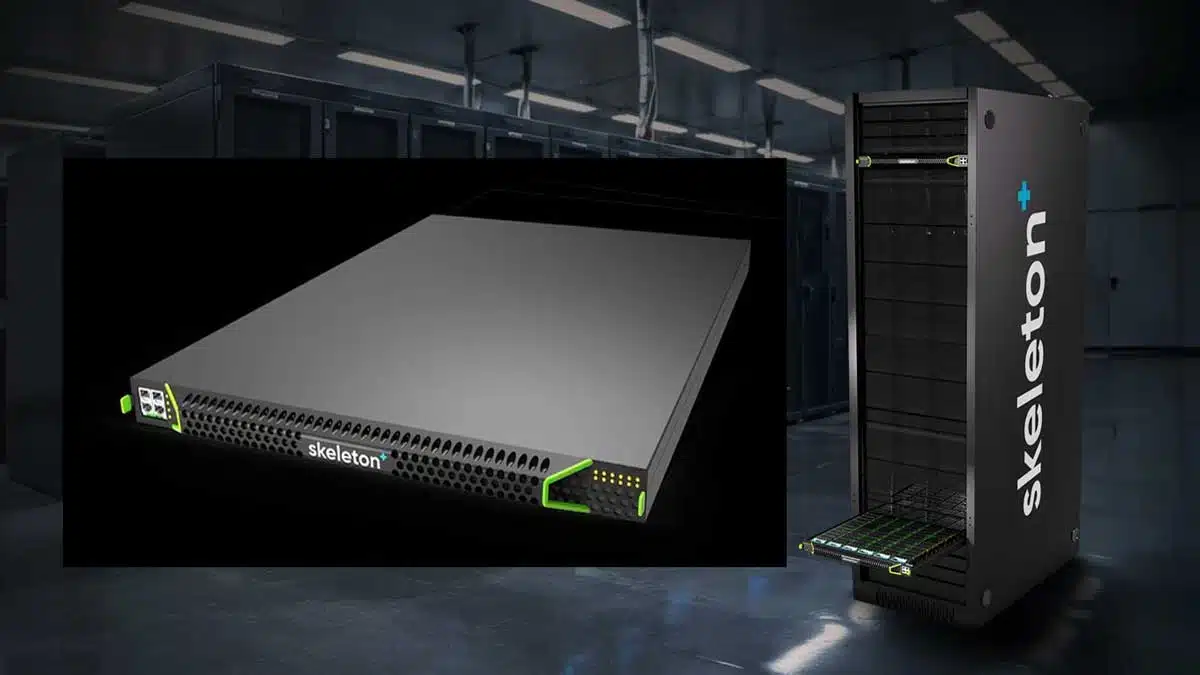
Skeleton’s GrapheneGPU, has revolutionized AI data center energy efficiency by reducing energy consumption by 44% while simultaneously enhancing computing power by 40%.

Skeleton Technologies, a global leader in high-power energy storage, introduces GrapheneGPU, a high-performance system designed to address the critical challenge of AI growth: energy inefficiency and limitations in power infrastructure.

RelatedPosts

Skeleton Technologies Expands in U.S. to Power AI Data Centers

Skeleton Opens €220M Supercapacitor Leipzig Factory

Skeleton Opens SuperBattery Factory in Finland 

Skeleton’s proprietary Curved Graphene material used by supercapacitors significantly reduces AI energy consumption by up to 45% and lowers power connection requirements by 44%, while simultaneously enhancing computing performance in FLOPS by 40%.

By substantially reducing energy use and peak power demand, these improvements lead to proportional reductions in both capital investments and operational costs in AI infrastructure.

GrapheneGPU has successfully undergone validation under the most demanding power profiles set by leading hyperscalers. Initial shipments are scheduled to commence from Skeleton’s German facility in June 2025. US manufacturing expansion is anticipated for the first quarter of 2026 to meet the growing international demand.

AI data centers currently consume up to twice the energy they require. Inefficiencies stemming from limited grid capacity, infrastructure constraints, and intermittent outages continue to accumulate. According to the International Energy Agency, global electricity consumption by AI data centers is projected to reach 945 TWh by 2030. The US will contribute approximately 240 TWh, while Europe will surpass 150 TWh. AI data centers are poised to become the primary drivers of electricity demand growth in both regions. Energy waste and constrained power availability are emerging as the primary obstacles to AI growth and the development of AI data centers globally.

GPUs, a key contributor to these issues, experience fluctuating power demands that can cycle between 0% and 100% within seconds. During intensive processing, they experience sharp spikes, followed by idle periods. To manage these fluctuations and avoid grid instability or equipment damage, many data centers currently rely on artificial loads, commonly known as dummy loads, during idle phases to maintain a constant power draw. While this approach stabilizes operations, it leads to significant energy losses, with up to 45% of energy wasted as heat, offering no computational benefit. Additionally, peak power availability is constrained by limited grid capacity, and the construction of new substations and transmission lines can take up to 7 years.

GrapheneGPU addresses these challenges by storing energy during idle periods and releasing it during peak demand, effectively smoothing out the fluctuations. This eliminates the need for dummy loads, reduces cooling requirements, and enables GPUs to operate more efficiently.

As AI computing and energy demands double annually, AI data centers are facing a critical bottleneck. GrapheneGPU delivers up to 40% more computing with the same energy footprint, while cutting both capital and operating costs by reducing grid upgrade needs, energy waste, and cooling, said Taavi Madiberk, CEO of Skeleton Technologies. 

“Powered by our patented Curved Graphene, this is a fundamental shift in how AI infrastructure can scale — sustainably and economically“.

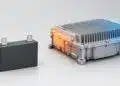
GrapheneGPU, powered by Skeleton Technologies’ patented Curved Graphene, combines peak-shaving supercapacitors with AI-driven control software to smooth out GPU power spikes and significantly enhance energy efficiency. Fully compatible with existing infrastructure, it enables sustainable AI scaling while reducing reliance on additional power generation or costly grid upgrades. Validated under real-world GPU load profiles, GrapheneGPU is certified for data center peak shaving and ready for immediate deployment.

By cutting energy waste and thermal stress, it helps data centers meet performance targets without compromising environmental goals—setting a new standard for efficient, climate-resilient AI infrastructure.

Related

Source: Skeleton

Recent Posts

Samsung Electro-Mechanics Signs 1.5T KRW Silicon Capacitor AI Contract

21.5.2026
8

Hirose Expands Compact High‑Voltage EV connectors

21.5.2026
7

Qi2 Wireless Charging: Inductors, Capacitors and EMC Filters

21.5.2026
13

Samsung Introduced Low ESL 3-Terminal Reverse-Geometry MLCCs for High-Performance ADAS

20.5.2026
25

Würth Elektronik Presents New Bidirectional Digital Isolators

20.5.2026
17

Using Stress–Strain Curves to Diagnose Tantalum Powders for Capacitors

20.5.2026
21

Coilcraft Introduces SMT Current Sense Transformers for High‑Performance Power Electronics

20.5.2026
18

Samsung Launches Ultra-Compact 008004 High Q MLCC for Next-Generation RF Applications

20.5.2026
19

Nichicon Extends Rechargeable Batteries Temperature to Rival Supercapacitors

19.5.2026
25

Upcoming Events

Jun 2
16:00 - 17:00 CEST

Calculation, Simulation and Measurement of 800V EMC Filters

Jun 16
16:00 - 17:00 CEST

EMC with EMC – EMC‑compliant design with electromechanical connectors

View Calendar

Popular Posts

  • Buck Converter Design and Calculation

    0 shares
    Share 0 Tweet 0
  • Boost Converter Design and Calculation

    0 shares
    Share 0 Tweet 0
  • Flyback Converter Design and Calculation

    0 shares
    Share 0 Tweet 0
  • LLC Resonant Converter Design and Calculation

    0 shares
    Share 0 Tweet 0
  • MLCC and Ceramic Capacitors

    0 shares
    Share 0 Tweet 0
  • Capacitor Charging and Discharging

    0 shares
    Share 0 Tweet 0
  • What Electronics Engineer Needs to Know About Passive Low Pass Filters

    0 shares
    Share 0 Tweet 0
  • Dual Active Bridge (DAB) Topology

    0 shares
    Share 0 Tweet 0
  • Ripple Current and its Effects on the Performance of Capacitors

    3 shares
    Share 3 Tweet 0
  • Samsung Electro-Mechanics Releases High-Capacitance MLCCs for AI Server Applications

    0 shares
    Share 0 Tweet 0

Newsletter Subscription


Passive Components Blog

© EPCI - Leading Passive Components Educational and Information Site

  • Home
  • Privacy Policy
  • EPCI Membership & Advertisement
  • About

No Result
View All Result
  • Home
  • Knowledge Blog
  • PCNS

© EPCI - Leading Passive Components Educational and Information Site

This website uses cookies. By continuing to use this website you are giving consent to cookies being used. Visit our Privacy and Cookie Policy.
Go to mobile version