









Passive Components Blog
No Result
View All Result
  • Home
  • NewsFilter
    • All
    • Aerospace & Defence
    • Antenna
    • Applications
    • Automotive
    • Capacitors
    • Circuit Protection Devices
    • electro-mechanical news
    • Filters
    • Fuses
    • Inductors
    • Industrial
    • Integrated Passives
    • inter-connect news
    • Market & Supply Chain
    • Market Insights
    • Medical
    • Modelling and Simulation
    • New Materials & Supply
    • New Technologies
    • Non-linear Passives
    • Oscillators
    • Passive Sensors News
    • Resistors
    • RF & Microwave
    • Telecommunication
    • Weekly Digest

    HEICO’s Exxelia Expands High-Voltage Ceramic Capacitor Portfolio with CalRamic Acquisition

    Vishay Extends Automotive Ferrite Beads for High‑Current EMC Noise Filtering

    CapXon Earns EcoVadis Bronze Medal for Sustainability Performance

    All‑Water Supercapacitor Based on 1‑nm Clay Channels and Nanoconfined Water Electrolyte

    Littelfuse Unveils High‑Current 48V SMD Fuse for AI Data Center Protection

    Modelithics Releases COMPLETE Library v26.2 for Keysight Genesys

    Why Isolated DC/DC Power Supplies Fail Late, Würth Elektronik Podcast

    Wk 23 Electronics Supply Chain Digest

    Power Converter Dossier: Passive Components Design and Selection Guide 2026

    Trending Tags

    • Ripple Current
    • RF
    • Leakage Current
    • Tantalum vs Ceramic
    • Snubber
    • Low ESR
    • Feedthrough
    • Derating
    • Dielectric Constant
    • New Products
    • Market Reports
  • VideoFilter
    • All
    • Antenna videos
    • Capacitor videos
    • Circuit Protection Video
    • Filter videos
    • Fuse videos
    • Inductor videos
    • Inter-Connect Video
    • Non-linear passives videos
    • Oscillator videos
    • Passive sensors videos
    • Resistor videos

    Why Isolated DC/DC Power Supplies Fail Late, Würth Elektronik Podcast

    Designing 800 V DC EMC Filters: Calculation, Simulation and Measurement

    Current Sense Transformer Datasheet and Design‑in Guide

    Designing a USB Type‑C Flyback Planar Transformer with Frenetic’s Planar Tool

    Magnetics Design in High‑Frequency GaN Converters

    Qi2 Wireless Charging: Inductors, Capacitors and EMC Filters

    Two‑capacitor paradox explained for engineers

    Capacitances of Nonlinear MLCCs: What Datasheets Don’t Tell You

    Tapped Inductor Buck Converter Fundamentals

    Trending Tags

    • Capacitors explained
    • Inductors explained
    • Resistors explained
    • Filters explained
    • Application Video Guidelines
    • EMC
    • New Products
    • Ripple Current
    • Simulation
    • Tantalum vs Ceramic
  • Knowledge Blog
  • DossiersNew
  • Suppliers
    • Who is Who
  • PCNS
    • PCNS 2025
    • PCNS 2023
    • PCNS 2021
    • PCNS 2019
    • PCNS 2017
  • Events
  • Home
  • NewsFilter
    • All
    • Aerospace & Defence
    • Antenna
    • Applications
    • Automotive
    • Capacitors
    • Circuit Protection Devices
    • electro-mechanical news
    • Filters
    • Fuses
    • Inductors
    • Industrial
    • Integrated Passives
    • inter-connect news
    • Market & Supply Chain
    • Market Insights
    • Medical
    • Modelling and Simulation
    • New Materials & Supply
    • New Technologies
    • Non-linear Passives
    • Oscillators
    • Passive Sensors News
    • Resistors
    • RF & Microwave
    • Telecommunication
    • Weekly Digest

    HEICO’s Exxelia Expands High-Voltage Ceramic Capacitor Portfolio with CalRamic Acquisition

    Vishay Extends Automotive Ferrite Beads for High‑Current EMC Noise Filtering

    CapXon Earns EcoVadis Bronze Medal for Sustainability Performance

    All‑Water Supercapacitor Based on 1‑nm Clay Channels and Nanoconfined Water Electrolyte

    Littelfuse Unveils High‑Current 48V SMD Fuse for AI Data Center Protection

    Modelithics Releases COMPLETE Library v26.2 for Keysight Genesys

    Why Isolated DC/DC Power Supplies Fail Late, Würth Elektronik Podcast

    Wk 23 Electronics Supply Chain Digest

    Power Converter Dossier: Passive Components Design and Selection Guide 2026

    Trending Tags

    • Ripple Current
    • RF
    • Leakage Current
    • Tantalum vs Ceramic
    • Snubber
    • Low ESR
    • Feedthrough
    • Derating
    • Dielectric Constant
    • New Products
    • Market Reports
  • VideoFilter
    • All
    • Antenna videos
    • Capacitor videos
    • Circuit Protection Video
    • Filter videos
    • Fuse videos
    • Inductor videos
    • Inter-Connect Video
    • Non-linear passives videos
    • Oscillator videos
    • Passive sensors videos
    • Resistor videos

    Why Isolated DC/DC Power Supplies Fail Late, Würth Elektronik Podcast

    Designing 800 V DC EMC Filters: Calculation, Simulation and Measurement

    Current Sense Transformer Datasheet and Design‑in Guide

    Designing a USB Type‑C Flyback Planar Transformer with Frenetic’s Planar Tool

    Magnetics Design in High‑Frequency GaN Converters

    Qi2 Wireless Charging: Inductors, Capacitors and EMC Filters

    Two‑capacitor paradox explained for engineers

    Capacitances of Nonlinear MLCCs: What Datasheets Don’t Tell You

    Tapped Inductor Buck Converter Fundamentals

    Trending Tags

    • Capacitors explained
    • Inductors explained
    • Resistors explained
    • Filters explained
    • Application Video Guidelines
    • EMC
    • New Products
    • Ripple Current
    • Simulation
    • Tantalum vs Ceramic
  • Knowledge Blog
  • DossiersNew
  • Suppliers
    • Who is Who
  • PCNS
    • PCNS 2025
    • PCNS 2023
    • PCNS 2021
    • PCNS 2019
    • PCNS 2017
  • Events
No Result
View All Result
Passive Components Blog
No Result
View All Result

TDK Rechargeable Batteries: CeraCharge™ now available in a small packing unit

25.6.2020
Reading Time: 2 mins read
A A

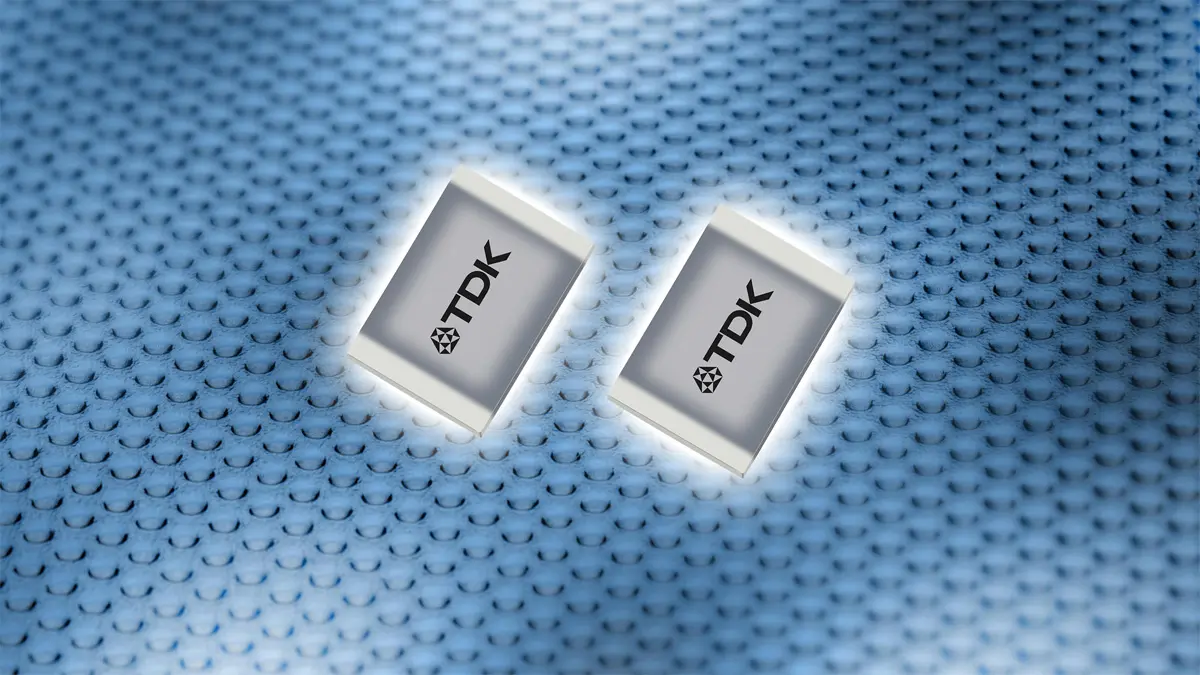
TDK Corporation presents a new packing unit for CeraCharge™, the world’s first SMD technology solid-state rechargeable battery, in the compact size EIA 1812 (4.4 x 3.0 x 1.1 mm3).

The packing unit (B73180A0101M199) includes 10 blister-packed CeraCharge batteries which come in a vacuum-sealed plastic bag. The components are manufactured in regular series production and are suitable for test purposes, prototype construction and the installation of pilot lines. The packing unit can be obtained quickly and easily from selected TDK service distributors.

RelatedPosts

NIC Components Extends SMD High Voltage MLCC Offering

Stackpole Offers RoHS Compliant Lead-Free Thick Film Chip Resistors

Smiths Interconnect’s SMD Power Resistors with Heat Sink Qualified to Space Flights

CeraCharge can be recharged more than 1,000 times, and has a capacity of 100 µAh at a nominal voltage of 1.5 V. Currents in the range of a few mA can also be rapidly drawn. Thanks to the SMD technology, it is simple to fit the batteries and process them in reflow soldering processes, which in turn, reduces the production costs of the device. CeraCharge is designed for a temperature range of -20 °C to +80 °C. 

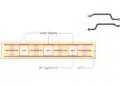
Unlike most ordinary technologies, CeraCharge is a solid-state rechargeable battery that uses a ceramic solid as electrolyte instead of liquid electrolyte, thus eliminating the risk of fire, explosion or leakage of electrolyte fluid. In a similar way to ceramic capacitors, CeraCharge is based on multilayer technology and combines a relatively high energy density in a very compact space, with process security, when manufacturing multilayer construction components. 

To increase capacity and voltage, individual CeraCharge chips can be connected in series and in parallel as required, opening up a very wide spectrum of potential uses – especially in IoT applications. For example, this could include real time clocks, Bluetooth beacons, wearables or energy harvesting.

Main fields of application

  • IoT applications; e.g. real time clocks, Bluetooth beacons, energy harvesting

Main features and benefits

  • Compact SMD size EIA 1812
  • Large temperature range from -20 °C to +80 °C 
  • Rechargeable more than 1,000 times
  • Simple to fit and process with reflow soldering processes
  • Multilayer technology, as is also used in MLCCs
  • The use of a ceramic solid as an electrolyte also eliminates the risk of fire, explosion or leakage of electrolyte fluid


Related

Recent Posts

Exxelia Miniaturized 400 MHz Inverted‑F Antenna

24.3.2026
28

Bourns Extends PPTC Resettable High‑Power, High‑Voltage Protection Fuses

2.3.2026
52

Littelfuse NANO2 415 SMD Fuse Wins 2025 Product of the Year

26.2.2026
25

KYOCERA AVX Extends Ultra‑Broadband RF Capacitor Series

24.2.2026
79

Bourns Extends Multilayer Chip Inductors Offer for RF and Wireless Designs

20.2.2026
38

Murata Releases World’s First Inner Cavity-Structure Ultra-Low-Loss LCP Flexible Substrate

10.12.2025
142

Bourns Releases High Current Metal Alloy-based, Multilayer Power Chip Inductors

31.10.2025
59

Littelfuse Releases First Reflow-Compatible Illuminated Tactile Switch

1.10.2025
27

Components Thermal and Frequency Challenges in 6G Base Stations

30.9.2025
132

Upcoming Events

Jun 16
16:00 - 17:00 CEST

EMC with EMC – EMC‑compliant design with electromechanical connectors

Jul 14
16:00 - 17:00 CEST

EMC Design Essentials: Mastering Varistors and Common Mode Chokes

Jul 21
16:00 - 17:00 CEST

Safety by design: X and Y Interference suppression capacitors for power line filters

View Calendar

Popular Posts

  • Buck Converter Design and Calculation

    0 shares
    Share 0 Tweet 0
  • Boost Converter Design and Calculation

    0 shares
    Share 0 Tweet 0
  • MLCC and Ceramic Capacitors

    0 shares
    Share 0 Tweet 0
  • LLC Resonant Converter Design and Calculation

    0 shares
    Share 0 Tweet 0
  • Flyback Converter Design and Calculation

    0 shares
    Share 0 Tweet 0
  • SEPIC Converter Design and Calculation

    0 shares
    Share 0 Tweet 0
  • What Electronics Engineer Needs to Know About Passive Low Pass Filters

    0 shares
    Share 0 Tweet 0
  • Dual Active Bridge (DAB) Topology

    0 shares
    Share 0 Tweet 0
  • Capacitor Charging and Discharging

    0 shares
    Share 0 Tweet 0
  • Earthing Systems and IEC Classification Explained

    0 shares
    Share 0 Tweet 0

Newsletter Subscription


Passive Components Blog

© EPCI - Leading Passive Components Educational and Information Site

  • Home
  • Privacy Policy
  • EPCI Membership & Advertisement
  • About

No Result
View All Result
  • Home
  • Knowledge Blog
  • Dossiers
  • PCNS

© EPCI - Leading Passive Components Educational and Information Site

This website uses cookies. By continuing to use this website you are giving consent to cookies being used. Visit our Privacy and Cookie Policy.
Go to mobile version