






Passive Components Blog
No Result
View All Result
  • Home
  • NewsFilter
    • All
    • Aerospace & Defence
    • Antenna
    • Applications
    • Automotive
    • Capacitors
    • Circuit Protection Devices
    • electro-mechanical news
    • Filters
    • Fuses
    • Inductors
    • Industrial
    • Integrated Passives
    • inter-connect news
    • Market & Supply Chain
    • Market Insights
    • Medical
    • Modelling and Simulation
    • New Materials & Supply
    • New Technologies
    • Non-linear Passives
    • Oscillators
    • Passive Sensors News
    • Resistors
    • RF & Microwave
    • Telecommunication
    • Weekly Digest

    Circuit Protection Technology Annual Dossier

    ESA SPCD 26 Registration Open

    Capacitances of Nonlinear MLCCs: What Datasheets Don’t Tell You

    Stackpole Releases Automotive Wide‑Termination Resistors

    How a Digital Structural Twin Can Predict Tantalum Capacitor Reliability

    SCHURTER Buys Biaodi to Boost High-Voltage Protection Portfolio

    Binder Hybrid Connector Simplifies One Cable Automation

    Tapped Inductor Buck Converter Fundamentals

    TAIYO YUDEN Releases Mini Metal Power Inductors

    Trending Tags

    • Ripple Current
    • RF
    • Leakage Current
    • Tantalum vs Ceramic
    • Snubber
    • Low ESR
    • Feedthrough
    • Derating
    • Dielectric Constant
    • New Products
    • Market Reports
  • VideoFilter
    • All
    • Antenna videos
    • Capacitor videos
    • Circuit Protection Video
    • Filter videos
    • Fuse videos
    • Inductor videos
    • Inter-Connect Video
    • Non-linear passives videos
    • Oscillator videos
    • Passive sensors videos
    • Resistor videos

    Capacitances of Nonlinear MLCCs: What Datasheets Don’t Tell You

    Tapped Inductor Buck Converter Fundamentals

    Planar vs Conventional Transformer: When it Make Sense

    Modeling Fringing Field Losses in Inductors & Transformers

    Why Power Inductors Use a Ferrite Core With an Air Gap

    Transformer-Based Power-Line Harvester Magnetic Design

    Thermal Modeling of Magnetics

    Standard vs Planar LLC transformers Comparison for Battery Chargers

    How Modern Tools Model Magnetic Components for Power Electronics

    Trending Tags

    • Capacitors explained
    • Inductors explained
    • Resistors explained
    • Filters explained
    • Application Video Guidelines
    • EMC
    • New Products
    • Ripple Current
    • Simulation
    • Tantalum vs Ceramic
  • Knowledge Blog
  • DossiersNew
  • Suppliers
    • Who is Who
  • PCNS
    • PCNS 2025
    • PCNS 2023
    • PCNS 2021
    • PCNS 2019
    • PCNS 2017
  • Events
  • Home
  • NewsFilter
    • All
    • Aerospace & Defence
    • Antenna
    • Applications
    • Automotive
    • Capacitors
    • Circuit Protection Devices
    • electro-mechanical news
    • Filters
    • Fuses
    • Inductors
    • Industrial
    • Integrated Passives
    • inter-connect news
    • Market & Supply Chain
    • Market Insights
    • Medical
    • Modelling and Simulation
    • New Materials & Supply
    • New Technologies
    • Non-linear Passives
    • Oscillators
    • Passive Sensors News
    • Resistors
    • RF & Microwave
    • Telecommunication
    • Weekly Digest

    Circuit Protection Technology Annual Dossier

    ESA SPCD 26 Registration Open

    Capacitances of Nonlinear MLCCs: What Datasheets Don’t Tell You

    Stackpole Releases Automotive Wide‑Termination Resistors

    How a Digital Structural Twin Can Predict Tantalum Capacitor Reliability

    SCHURTER Buys Biaodi to Boost High-Voltage Protection Portfolio

    Binder Hybrid Connector Simplifies One Cable Automation

    Tapped Inductor Buck Converter Fundamentals

    TAIYO YUDEN Releases Mini Metal Power Inductors

    Trending Tags

    • Ripple Current
    • RF
    • Leakage Current
    • Tantalum vs Ceramic
    • Snubber
    • Low ESR
    • Feedthrough
    • Derating
    • Dielectric Constant
    • New Products
    • Market Reports
  • VideoFilter
    • All
    • Antenna videos
    • Capacitor videos
    • Circuit Protection Video
    • Filter videos
    • Fuse videos
    • Inductor videos
    • Inter-Connect Video
    • Non-linear passives videos
    • Oscillator videos
    • Passive sensors videos
    • Resistor videos

    Capacitances of Nonlinear MLCCs: What Datasheets Don’t Tell You

    Tapped Inductor Buck Converter Fundamentals

    Planar vs Conventional Transformer: When it Make Sense

    Modeling Fringing Field Losses in Inductors & Transformers

    Why Power Inductors Use a Ferrite Core With an Air Gap

    Transformer-Based Power-Line Harvester Magnetic Design

    Thermal Modeling of Magnetics

    Standard vs Planar LLC transformers Comparison for Battery Chargers

    How Modern Tools Model Magnetic Components for Power Electronics

    Trending Tags

    • Capacitors explained
    • Inductors explained
    • Resistors explained
    • Filters explained
    • Application Video Guidelines
    • EMC
    • New Products
    • Ripple Current
    • Simulation
    • Tantalum vs Ceramic
  • Knowledge Blog
  • DossiersNew
  • Suppliers
    • Who is Who
  • PCNS
    • PCNS 2025
    • PCNS 2023
    • PCNS 2021
    • PCNS 2019
    • PCNS 2017
  • Events
No Result
View All Result
Passive Components Blog
No Result
View All Result

Littelfuse Releases First Reflow-Compatible Illuminated Tactile Switch

1.10.2025
Reading Time: 3 mins read
A A

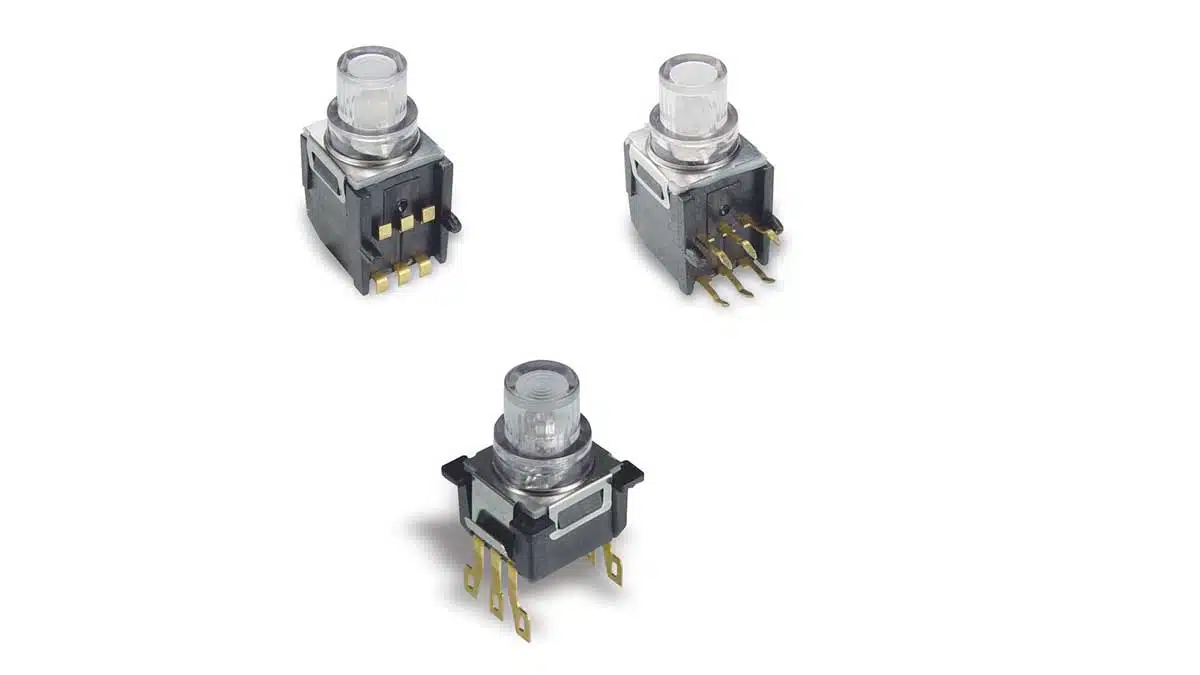
Littelfuse launches first reflow-compatible illuminated tactile switch with SPDT and long travel. The New K5V Series switches combine LED backlighting, gold-plated reliability, and compact, dust-resistant design—now with high-temperature PAR material for streamlined SMT assembly.

Littelfuse, Inc., an industrial technology manufacturing company empowering a sustainable, connected, and safer world, announced the expansion of its K5V Series illuminated Tactile Switch family with the release of new K5V4 models.

RelatedPosts

Littelfuse Expands High-Voltage TVS Diodes

Littelfuse Presents Ultra-Miniature Half-Pitch SMT DIP Switches

Littelfuse NANO2 415 SMD Fuse Wins 2025 Product of the Year

These include the Gull Wing (GH) and 2.1 mm Pin-in-Paste (PIP) versions, which are compatible with reflow soldering. (View the video in English, Chinese, Japanese.)

Built using a high-temperature PAR (polyarylate) material with a 250°C thermal deformation threshold, the new K5V4 switches are ideally suited for manufacturers transitioning from wave to reflow soldering processes. By eliminating the need for silicone sleeves or special handling and enabling direct SMT assembly for the first time, they reduce production costs, support increased throughput, and improve end-product quality – all while maintaining durability and tactile performance.

“These new K5V4 switches are designed to meet the demands of today’s dense electronic systems, where space efficiency, reliability, and user interface feedback are critical,” said Jeremy Hebras, VP, Switches & Sensors Engineering at Littelfuse.

“The K5V switch product series has been created to answer unique customer device architectures where the main board and components are positioned at a 90° angle to the front panel. In combination with long travel, sharp tactile feel, and backlighting, the K5V is ideal when accurate device control is needed—especially where unwanted actuation or lack of immediate user feedback is not acceptable.”

Features

  • Reflow soldering-compatible via PAR material—no sleeve required
  • SPDT contact configuration with normally open and normally closed options
  • Sharp tactile response with audible click and 4N operating force
  • Integrated high-brightness LEDs in multiple colors and bi-color options
  • Compact, dust-resistant design for reliable operation in dense boards
  • Gold-plated dome contacts for superior long-term contact performance
  • Available in SMT (GH) and THT (PIP) versions for design flexibility

Application

  • Data centers and servers: System control and diagnostic interface buttons
  • Network infrastructure: Reset and feedback switches for routers and telecom devices
  • Industrial equipment: Control panel interfaces, safety reset points, and signal input
  • Pro audio/video systems: Tactile response for mixers, switchboards, and low-light interfaces

By delivering the first long-travel, SPDT, illuminated tactile switch in a reflow-capable SMT package, Littelfuse fills a critical gap in the market. Competing solutions often require wave soldering, which adds complexity and cost to the assembly process. The K5V4 Series combines superior ergonomics, visual feedback, and manufacturability in a compact, robust solution.

This expansion reinforces the Littelfuse commitment to advancing tactile switch technology and supporting OEMs with high-performance human-machine interface (HMI) components optimized for modern production environments.


Related

Source: Littelfuse

Recent Posts

Stackpole Releases Automotive Wide‑Termination Resistors

14.5.2026
20

SCHURTER Buys Biaodi to Boost High-Voltage Protection Portfolio

14.5.2026
30

Binder Hybrid Connector Simplifies One Cable Automation

13.5.2026
14

Planar vs Conventional Transformer: When it Make Sense

11.5.2026
59

Nichicon ADN Automotive Hybrid Aluminum Capacitors Now Available in EMEA

11.5.2026
36

Stackpole Expanded its AlN Thick Film Chip Resistors

6.5.2026
24

Würth Elektronik Introduces Compact Flat-wire SMT Power Inductors for Automotive

5.5.2026
59

KYOCERA AVX Extends MLV Varistors for 48V Automotive Protection

5.5.2026
38

YAGEO Introduces C0G Flexible Termination Automotive MLCCs

30.4.2026
44

Upcoming Events

May 19
16:00 - 17:00 CEST

Designing Qi2 Wireless Power Systems: Practical Development and EMC Optimization

Jun 2
16:00 - 17:00 CEST

Calculation, Simulation and Measurement of 800V EMC Filters

Jun 16
16:00 - 17:00 CEST

EMC with EMC – EMC‑compliant design with electromechanical connectors

View Calendar

Popular Posts

  • Buck Converter Design and Calculation

    0 shares
    Share 0 Tweet 0
  • Boost Converter Design and Calculation

    0 shares
    Share 0 Tweet 0
  • Flyback Converter Design and Calculation

    0 shares
    Share 0 Tweet 0
  • LLC Resonant Converter Design and Calculation

    0 shares
    Share 0 Tweet 0
  • MLCC and Ceramic Capacitors

    0 shares
    Share 0 Tweet 0
  • Capacitor Charging and Discharging

    0 shares
    Share 0 Tweet 0
  • Dual Active Bridge (DAB) Topology

    0 shares
    Share 0 Tweet 0
  • What Electronics Engineer Needs to Know About Passive Low Pass Filters

    0 shares
    Share 0 Tweet 0
  • Ripple Current and its Effects on the Performance of Capacitors

    3 shares
    Share 3 Tweet 0
  • MLCC Case Sizes Standards Explained

    0 shares
    Share 0 Tweet 0

Newsletter Subscription


Passive Components Blog

© EPCI - Leading Passive Components Educational and Information Site

  • Home
  • Privacy Policy
  • EPCI Membership & Advertisement
  • About

No Result
View All Result
  • Home
  • Knowledge Blog
  • PCNS

© EPCI - Leading Passive Components Educational and Information Site

This website uses cookies. By continuing to use this website you are giving consent to cookies being used. Visit our Privacy and Cookie Policy.
Go to mobile version