











Passive Components Blog
No Result
View All Result
  • Home
  • NewsFilter
    • All
    • Aerospace & Defence
    • Antenna
    • Applications
    • Automotive
    • Capacitors
    • Circuit Protection Devices
    • electro-mechanical news
    • Filters
    • Fuses
    • Inductors
    • Industrial
    • Integrated Passives
    • inter-connect news
    • Market & Supply Chain
    • Market Insights
    • Medical
    • Modelling and Simulation
    • New Materials & Supply
    • New Technologies
    • Non-linear Passives
    • Oscillators
    • Passive Sensors News
    • Resistors
    • RF & Microwave
    • Telecommunication
    • Weekly Digest

    Binder Hybrid Connector Simplifies One Cable Automation

    Tapped Inductor Buck Converter Fundamentals

    TAIYO YUDEN Releases Mini Metal Power Inductors

    Molecular Memristor Shows Record 145 kH Emergent Inductance

    Planar vs Conventional Transformer: When it Make Sense

    Researchers Propose Next‑Gen Compact Memory Using Ultra-thin Ferroelectric Capacitors

    Nichicon ADN Automotive Hybrid Aluminum Capacitors Now Available in EMEA

    Wk 19 Electronics Supply Chain Digest

    Electrocaloric Multilayer Capacitors: Towards Quiet, Solid‑State Cooling Around Room Temperature

    Trending Tags

    • Ripple Current
    • RF
    • Leakage Current
    • Tantalum vs Ceramic
    • Snubber
    • Low ESR
    • Feedthrough
    • Derating
    • Dielectric Constant
    • New Products
    • Market Reports
  • VideoFilter
    • All
    • Antenna videos
    • Capacitor videos
    • Circuit Protection Video
    • Filter videos
    • Fuse videos
    • Inductor videos
    • Inter-Connect Video
    • Non-linear passives videos
    • Oscillator videos
    • Passive sensors videos
    • Resistor videos

    Tapped Inductor Buck Converter Fundamentals

    Planar vs Conventional Transformer: When it Make Sense

    Modeling Fringing Field Losses in Inductors & Transformers

    Why Power Inductors Use a Ferrite Core With an Air Gap

    Transformer-Based Power-Line Harvester Magnetic Design

    Thermal Modeling of Magnetics

    Standard vs Planar LLC transformers Comparison for Battery Chargers

    How Modern Tools Model Magnetic Components for Power Electronics

    Advanced Loss Modeling for Planar Magnetics in the Frenetic Planar Tool

    Trending Tags

    • Capacitors explained
    • Inductors explained
    • Resistors explained
    • Filters explained
    • Application Video Guidelines
    • EMC
    • New Products
    • Ripple Current
    • Simulation
    • Tantalum vs Ceramic
  • Knowledge Blog
  • DossiersNew
  • Suppliers
    • Who is Who
  • PCNS
    • PCNS 2025
    • PCNS 2023
    • PCNS 2021
    • PCNS 2019
    • PCNS 2017
  • Events
  • Home
  • NewsFilter
    • All
    • Aerospace & Defence
    • Antenna
    • Applications
    • Automotive
    • Capacitors
    • Circuit Protection Devices
    • electro-mechanical news
    • Filters
    • Fuses
    • Inductors
    • Industrial
    • Integrated Passives
    • inter-connect news
    • Market & Supply Chain
    • Market Insights
    • Medical
    • Modelling and Simulation
    • New Materials & Supply
    • New Technologies
    • Non-linear Passives
    • Oscillators
    • Passive Sensors News
    • Resistors
    • RF & Microwave
    • Telecommunication
    • Weekly Digest

    Binder Hybrid Connector Simplifies One Cable Automation

    Tapped Inductor Buck Converter Fundamentals

    TAIYO YUDEN Releases Mini Metal Power Inductors

    Molecular Memristor Shows Record 145 kH Emergent Inductance

    Planar vs Conventional Transformer: When it Make Sense

    Researchers Propose Next‑Gen Compact Memory Using Ultra-thin Ferroelectric Capacitors

    Nichicon ADN Automotive Hybrid Aluminum Capacitors Now Available in EMEA

    Wk 19 Electronics Supply Chain Digest

    Electrocaloric Multilayer Capacitors: Towards Quiet, Solid‑State Cooling Around Room Temperature

    Trending Tags

    • Ripple Current
    • RF
    • Leakage Current
    • Tantalum vs Ceramic
    • Snubber
    • Low ESR
    • Feedthrough
    • Derating
    • Dielectric Constant
    • New Products
    • Market Reports
  • VideoFilter
    • All
    • Antenna videos
    • Capacitor videos
    • Circuit Protection Video
    • Filter videos
    • Fuse videos
    • Inductor videos
    • Inter-Connect Video
    • Non-linear passives videos
    • Oscillator videos
    • Passive sensors videos
    • Resistor videos

    Tapped Inductor Buck Converter Fundamentals

    Planar vs Conventional Transformer: When it Make Sense

    Modeling Fringing Field Losses in Inductors & Transformers

    Why Power Inductors Use a Ferrite Core With an Air Gap

    Transformer-Based Power-Line Harvester Magnetic Design

    Thermal Modeling of Magnetics

    Standard vs Planar LLC transformers Comparison for Battery Chargers

    How Modern Tools Model Magnetic Components for Power Electronics

    Advanced Loss Modeling for Planar Magnetics in the Frenetic Planar Tool

    Trending Tags

    • Capacitors explained
    • Inductors explained
    • Resistors explained
    • Filters explained
    • Application Video Guidelines
    • EMC
    • New Products
    • Ripple Current
    • Simulation
    • Tantalum vs Ceramic
  • Knowledge Blog
  • DossiersNew
  • Suppliers
    • Who is Who
  • PCNS
    • PCNS 2025
    • PCNS 2023
    • PCNS 2021
    • PCNS 2019
    • PCNS 2017
  • Events
No Result
View All Result
Passive Components Blog
No Result
View All Result

TDK Releases Industry’s Highest Rated Current Inductors for Automotive Power over Coax Systems

27.10.2021
Reading Time: 2 mins read
A A

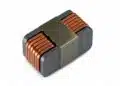
TDK Corporation announces the release of its newly developed ADL3225VM inductors for use in automotive Power over Coax (PoC) systems.

Measuring at 3.2 x 2.5 x 2.5 ㎜ (L x W x H), these inductors provide a compact solution for designers looking to reduce vehicle weight as manufacturers add more sensors and cameras to accommodate expanding automotive and advanced driver-assistance systems (ADAS) applications. The proprietary structural design and wire winding manufacturing process ensure high impedance over a broad bandpass of 1 ㎒ up to 1 ㎓. The inductors are compliant with AEC-Q200 and achieve the highest-rated current in the industry for the 3225 size*. Volume production began in October 2021.

RelatedPosts

TDK Introduces High‑Voltage Common‑Mode Chokes for Compact 1250 V DC Converters

TDK Releases Ultra‑small EMI Noise Suppression Filters

TDK and Nippon Chemical Launch Joint Venture for MLCC Materials

Performance advancements of ADAS applications have resulted in the increased production of electric control units (ECUs), particularly around view cameras and front sensing cameras, escalating the need for high-speed interfaces. Low-voltage differential signaling (LVDS) with transmission rates of up to 1.5 Gbit/s transfer image signals from automotive cameras to the control circuit board. This process involves PoC systems that relay data and power over the same coaxial cable. TDK’s ADL3225VM inductors serve as a blocking coil that separates ringing currents from the power supply, and increases the currents supplied by PoC systems. They support operating temperatures between -55 ℃ and +155 ℃.

In the future, TDK will further expand the product portfolio to meet the needs of higher-speed and larger-volume transmission for an even wider variety of automotive applications.

  • * Source: TDK, as of October 2021

Glossary

  • PoC (Power over Coax): Transmission technology whereby both data and power are simultaneously transmitted over the same coaxial cable

Main applications

  • PoC for ADAS camera system circuits

Main features and benefits

  • Achieves the highest rated current in the industry for the 3.2 ㎜ (L) x 2.5 ㎜ (W) size
  • Achieves high impedance over a broad bandpass
  • Supports a wide operating temperatures range between -55 ℃ and +155 ℃

Key data
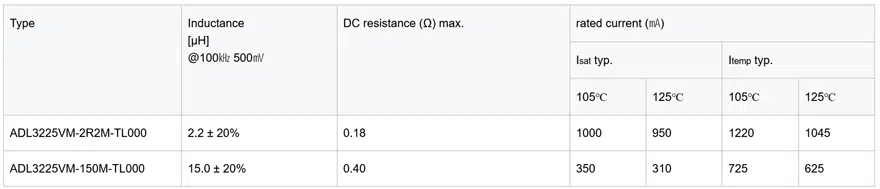
* Isat : when based on inductance variation (30% lower than the nominal inductance value)
** Itemp: 105 ℃ : when based on temperature rise (temperature rise of 40 ℃ by self-heating)
** Itemp: 125 ℃ : when based on temperature rise (temperature rise of 30 ℃ by self-heating)
Values when assessed using a single-layer circuit board with a total thickness of 1 ㎜ and a copper layer thickness of 70 ㎛.

Related

Source: TDK

Recent Posts

Tapped Inductor Buck Converter Fundamentals

13.5.2026
11

TAIYO YUDEN Releases Mini Metal Power Inductors

13.5.2026
9

Planar vs Conventional Transformer: When it Make Sense

11.5.2026
35

Nichicon ADN Automotive Hybrid Aluminum Capacitors Now Available in EMEA

11.5.2026
23

High-Crystallinity Nanocrystalline Composites for MHz Chip Inductors

7.5.2026
63

Würth Elektronik Introduces Compact Flat-wire SMT Power Inductors for Automotive

5.5.2026
50

KYOCERA AVX Extends MLV Varistors for 48V Automotive Protection

5.5.2026
27

YAGEO Introduces C0G Flexible Termination Automotive MLCCs

30.4.2026
41

Murata Introduces Crystal and NTC Set for Automotive UWB Timing

30.4.2026
31

Upcoming Events

May 19
16:00 - 17:00 CEST

Designing Qi2 Wireless Power Systems: Practical Development and EMC Optimization

Jun 2
16:00 - 17:00 CEST

Calculation, Simulation and Measurement of 800V EMC Filters

Jun 16
16:00 - 17:00 CEST

EMC with EMC – EMC‑compliant design with electromechanical connectors

View Calendar

Popular Posts

  • Buck Converter Design and Calculation

    0 shares
    Share 0 Tweet 0
  • Boost Converter Design and Calculation

    0 shares
    Share 0 Tweet 0
  • Flyback Converter Design and Calculation

    0 shares
    Share 0 Tweet 0
  • LLC Resonant Converter Design and Calculation

    0 shares
    Share 0 Tweet 0
  • MLCC and Ceramic Capacitors

    0 shares
    Share 0 Tweet 0
  • Dual Active Bridge (DAB) Topology

    0 shares
    Share 0 Tweet 0
  • Capacitor Charging and Discharging

    0 shares
    Share 0 Tweet 0
  • What Electronics Engineer Needs to Know About Passive Low Pass Filters

    0 shares
    Share 0 Tweet 0
  • Ripple Current and its Effects on the Performance of Capacitors

    3 shares
    Share 3 Tweet 0
  • MLCC Case Sizes Standards Explained

    0 shares
    Share 0 Tweet 0

Newsletter Subscription


Passive Components Blog

© EPCI - Leading Passive Components Educational and Information Site

  • Home
  • Privacy Policy
  • EPCI Membership & Advertisement
  • About

No Result
View All Result
  • Home
  • Knowledge Blog
  • PCNS

© EPCI - Leading Passive Components Educational and Information Site

This website uses cookies. By continuing to use this website you are giving consent to cookies being used. Visit our Privacy and Cookie Policy.
Go to mobile version