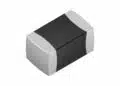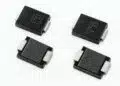



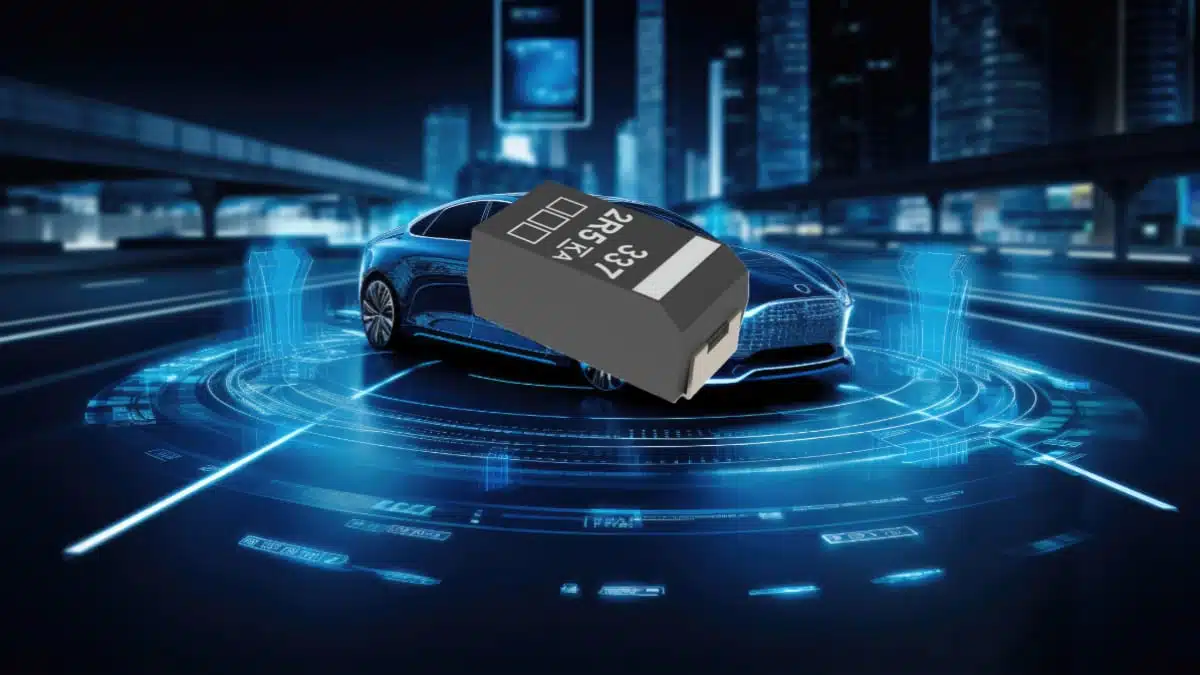
YAGEO Group has extended its T598 automotive-grade tantalum polymer capacitor series with new high-CV parts 1st to Market automotive grade 220-330uF 2.5V with single digit ESR in EIA 3528-20 case size footprint equivalent to 1210 MLCC.
These YAGEO low-voltage, single-digit ESR tantalum polymer capacitors target high-current AI-domain controllers and sensing ECUs where space, efficiency, and long mission profiles are critical.
Key features and benefits
- Automotive-grade qualification with AEC-Q200 certification, supporting reliable use in safety-related ECUs, domain controllers, and sensing units in vehicles according to the manufacturer documentation.
- High capacitance per unit volume in a miniaturized EIA 3528-20 case, enabling replacement of larger footprints or multiple parallel devices in dense boards according to the manufacturer product brief.
- Low ESR (single-digit milliohm) at room temperature and 300 kHz, providing low ripple voltage and reduced self-heating in high-current rails according to the manufacturer product brief.
- Low thermal resistance construction, helping maintain stable electrical parameters even at elevated temperatures and over long mission profiles according to the manufacturer product brief.
- Extended category temperature and life performance, aligned with automotive thermal environments and long operating hours according to the manufacturer product brief.
- Stable electrical parameters (capacitance, ESR, leakage current) over temperature and humidity, simplifying worst-case design and derating strategies according to the manufacturer product brief.
- Not susceptible to flex cracking, thanks to the tantalum construction and compact footprint, reducing field failures related to PCB bending or assembly stresses according to the manufacturer product brief.
Typical applications
The new T598 CV extensions are clearly positioned for modern software-defined vehicles and advanced robotics, where data processing density and power consumption are rising according to YAGEO’s release.
- Autonomous driving domain controllers (DCU, ZCU, CCU) – high-current, low-voltage rails around large SoCs and high-speed memory where stable bulk capacitance and low ESR are essential for transient response.
- Automotive sensing ECUs – RADAR, LiDAR, cameras and other front-end modules needing compact decoupling and DC-link capacitance in constrained housings and thermal environments.
- Robots and humanoids – power systems around high-performance processors, motion controllers and actuators where volumetric efficiency and reliability in human-centric environments are key.
- LEO satellite POL (point-of-load) converters – miniaturized converters on densely packed boards where low ESR and stable capacitance support clean supply rails in space-related electronics.
In all these use cases, the combination of high capacitance density, low ESR and automotive-grade robustness makes the T598 series suitable for rails below 2.5 V carrying tens of amperes, especially around core supplies of advanced SoCs and AI accelerators according to the manufacturer documentation.
Technical highlights
Series and key part numbers
YAGEO references several T598 series parts as representative solutions for high-current low-voltage rails according to the manufacturer release.
| Part number | Capacitance (typ.) | Voltage rating | ESR (RT, 300 kHz) | Case size |
|---|---|---|---|---|
| T598D477M2R5ATE006 | 470 µF (typical, CV extension context) | 2.5 V | Single-digit mΩ range | Larger T598 case (D code) |
| T598D687M2R5ATE006 | 680 µF (typical, CV extension context) | 2.5 V | Single-digit mΩ range | Larger T598 case (D code) |
| T598B337M2R5ATE009 | 330 µF | 2.5 V | ≤ 9 mΩ | EIA 3528-20 (B case) |
Capacitance values for legacy D-case parts are referenced as CV extensions in the manufacturer communication and should be confirmed in the official datasheet for exact numbers. For the new T598B337M2R5ATE009, the press release explicitly states a capacitance of 330 µF at 2.5 V with ESR not exceeding 9 mΩ at room temperature and 300 kHz according to the manufacturer documentation.
Electrical and mechanical parameters
- Voltage rating: 2.5 V nominal, suited for typical core and low-voltage rails of modern SoCs where currents often exceed 25 A according to the manufacturer release.
- Capacitance range: approximately 220–330 µF in the automotive-grade EIA 3528-20 footprint, allowing designers to cover a range of ripple and hold-up requirements according to the manufacturer product brief.
- ESR: ≤ 9 mΩ at 300 kHz and room temperature for the T598B337M2R5ATE009, classified as single-digit ESR, which directly reduces ripple voltage and dissipation in high-frequency DC/DC converters according to the manufacturer product brief.
- Construction: EIA 3528-20 tantalum polymer case (B case), equivalent to 1210 MLCC footprint, giving a relatively low-profile, compact capacitor with high volumetric efficiency according to the manufacturer product brief.
- Qualification: Automotive AEC-Q200, supporting use in demanding temperature and vibration environments with established test regimes according to the manufacturer product brief.
In practice, the combination of low ESR and high capacitance at 2.5 V means these devices are particularly suited as bulk output capacitors in high-current synchronous buck converters, where switching frequencies commonly reach hundreds of kilohertz and currents exceed tens of amperes.
Design-in notes for engineers
For domain controllers and AI-native architectures, these capacitors act as critical elements in the power integrity strategy rather than simple “bulk caps.” The following practical points can help during design-in.
- Use on high-current core rails below 2.5 V where the SoC draws > 25 A and fast load transients occur due to AI processing bursts and memory activity, aligning with the use case described by YAGEO.
- Place close to the DC/DC converter output and high-current IC pins, minimizing loop inductance and exploiting the low ESR and ESL to control transient voltage overshoot and undershoot.
- Combine with smaller ceramic capacitors for high-frequency decoupling while using the T598 polymer devices to handle bulk energy storage and ripple current; this hybrid approach balances low ESL of MLCCs with the high capacitance of tantalum polymer.
- Check ripple current and self-heating in the manufacturer datasheet, and verify that the single-digit ESR at 300 kHz is compatible with the converter’s switching frequency and control loop stability.
- Consider derating and temperature dependencies even with the stated stability: verify capacitance and ESR over the full temperature range expected in the application according to the manufacturer datasheet.
- Use the EIA 3528-20 footprint to optimize layout in dense boards, especially when migrating from larger electrolytic or tantalum cases; note that the construction is less susceptible to flex cracking compared with large MLCC arrays.
- Validate mission profile and lifetime for ADAS, autonomous driving, robotics or LEO satellite applications against the extended life performance indicated by the manufacturer, including high-temperature operation and humidity exposure.
For ADAS and autonomous driving DCUs, designers should consider these parts for intermediate rails feeding high-speed DDR or GDDR memory and advanced sensor fusion SoCs, where long-term stability and low losses can reduce thermal design burden in tightly packed ECUs.
Source
The information in this article is based on the official YAGEO Group press release and accompanying product brief for the T598 automotive-grade tantalum polymer CV extension series, complemented by manufacturer product information available on the YAGEO Group website and part pages.