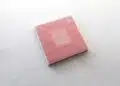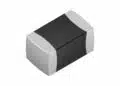







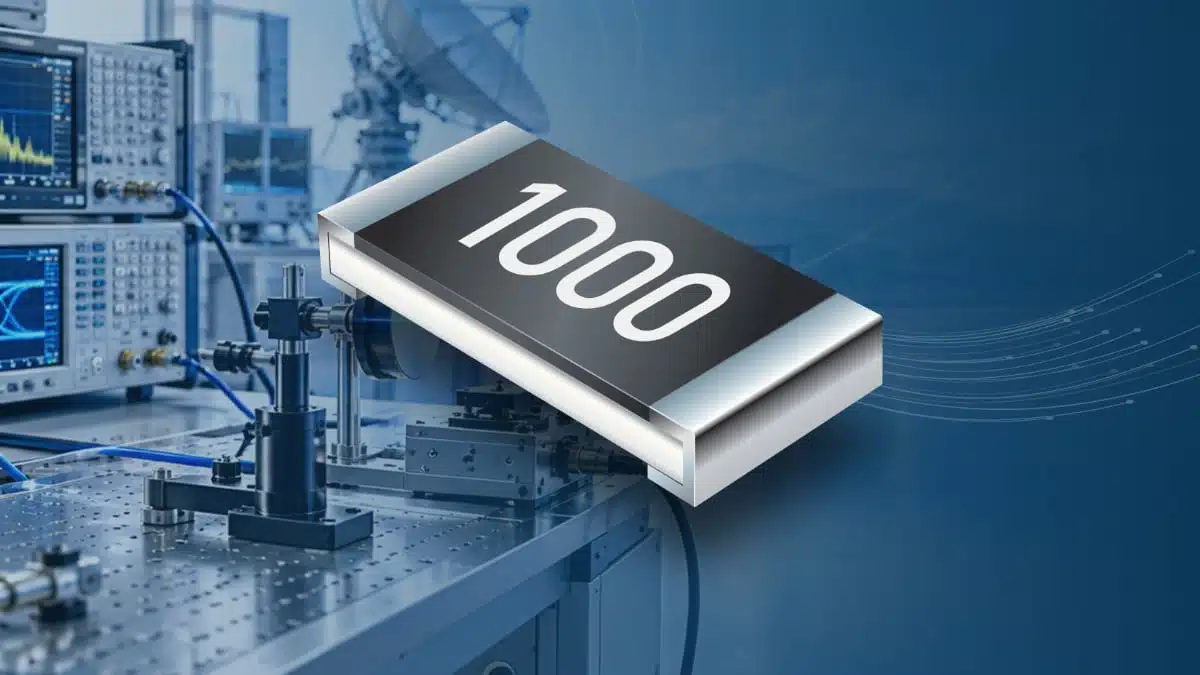
Bourns has introduced the CRT-TN Series of tantalum nitride (TaN) thin-film chip resistors for precision circuits exposed to elevated humidity and sulfur-containing environments.
The new thin-film chip resistors family combines tight tolerance and low TCR options with four standard chip sizes, extending the company’s precision-resistor offering into applications where environmental exposure can affect long-term resistance stability.
Key features and benefits
- Tantalum nitride thin-film resistor element
- Resistance tolerance options from ±0.05% to ±1%
- TCR options from ±10 ppm/°C to ±50 ppm/°C
- Operating temperature range of −55 °C to +155 °C
- Sulfur-resistant design tested to ASTM B809-95
- RoHS-compliant series
- Four chip sizes: 0402, 0603, 0805 and 1206
- Resistance coverage from 10 Ω to 1 MΩ across the family
The key change is the addition of a TaN thin-film family specified for sulfur resistance and high-temperature operation. This provides an option for precision signal paths, sensing networks and measurement circuitry that need controlled initial accuracy and resistance-temperature behaviour in environments where humidity and sulfur contamination must be assessed.
Technical highlights
| Parameter | CRT0402-TN | CRT0603-TN | CRT0805-TN | CRT1206-TN |
|---|---|---|---|---|
| Rated power at 85 °C | 0.063 W | 0.167 W | 0.2 W | 0.5 W |
| Operating temperature | −55 °C to +155 °C | −55 °C to +155 °C | −55 °C to +155 °C | −55 °C to +155 °C |
| Zero-load derating point | +155 °C | +155 °C | +155 °C | +155 °C |
| Maximum working voltage | 50 V | 75 V | 100 V | 200 V |
| Maximum overload voltage | 100 V | 150 V | 200 V | 400 V |
| Resistance range | 40 Ω to 35 kΩ | 40 Ω to 130 kΩ | 10 Ω to 350 kΩ | 10 Ω to 1 MΩ |
All CRT-TN variants offer ±10, ±15, ±25 and ±50 ppm/°C TCR options. Available tolerance grades are ±0.05%, ±0.1%, ±0.25%, ±0.5% and ±1%.
Low TCR constrains the change in resistance caused by temperature variation. In gain-setting, feedback, reference-divider and measurement networks, it is the combination of initial tolerance, TCR grade, resistor-ratio tracking, self-heating and long-term drift that determines the usable system accuracy. A tight absolute tolerance alone does not guarantee a stable ratio across the final operating-temperature range.
The 0402 version offers the smallest footprint but carries the lowest rated power and maximum working voltage. The 1206 version increases the ratings to 0.5 W at 85 °C and 200 V maximum working voltage, while covering the widest resistance range. Selection must therefore consider electrical stress, voltage across the individual resistor, ambient temperature and available board area together.
For broader context on technology selection, see Thin Film and Metal Film Resistors.
Typical applications
Bourns identifies industrial equipment, precision circuits, navigation equipment, telecommunications and precision test devices as target applications. The published tolerance options down to ±0.05%, TCR grades down to ±10 ppm/°C and −55 °C to +155 °C operating range support use in resistance-critical circuit positions, subject to complete system validation.
| Application position | Published selection factors | Design purpose |
|---|---|---|
| Precision feedback network | ±0.05% tolerance, ±10 ppm/°C TCR | Gain and transfer-function control |
| Voltage-divider network | 10 Ω to 1 MΩ range, 50 V to 200 V working voltage | Sensing and reference scaling |
| Instrumentation front end | ±10 ppm/°C TCR, −55 °C to +155 °C | Temperature-stable signal conditioning |
| Test-equipment circuitry | ±0.05% tolerance, sulfur-resistant design | Measurement and calibration paths |
| Telecom control circuitry | 0402 to 1206 sizes, ASTM B809-95 test | Board-level precision functions |
The device working-voltage limit is especially important in divider, sensing and protection-adjacent circuits. A 1206 device has a 200 V maximum working-voltage rating, but the voltage appearing across each series resistor must still be checked during normal operation, start-up, overload, fault and transient conditions. The 400 V maximum overload-voltage figure is not a substitute for continuous working-voltage assessment.
Application fit
The CRT-TN family is relevant where a standard chip resistor must hold a controlled resistance value across temperature while being evaluated for humidity and sulfur exposure. It is not a power-resistor family: the maximum published rating is 0.5 W at 85 °C for the 1206 size, with derating to zero load at +155 °C.
The four package sizes provide a practical trade-off between board density and electrical margin:
- 0402: 0.063 W at 85 °C, 50 V maximum working voltage and 40 Ω to 35 kΩ resistance range
- 0603: 0.167 W at 85 °C, 75 V maximum working voltage and 40 Ω to 130 kΩ range
- 0805: 0.2 W at 85 °C, 100 V maximum working voltage and 10 Ω to 350 kΩ range
- 1206: 0.5 W at 85 °C, 200 V maximum working voltage and 10 Ω to 1 MΩ range
The released documentation names sulfur resistance tested to ASTM B809-95, but no publicly located qualification report, THB report, long-term stability report, impedance model, SPICE model, dedicated land-pattern drawing or lifecycle notice was available for the CRT-TN series at the time of review. The announcement’s environmental positioning should therefore be checked against the current datasheet and any application-specific qualification material requested from Bourns.
Design-in notes for engineers
- Calculate resistor power from the highest sustained voltage, current and ambient-temperature conditions, then apply the published derating limit to +155 °C.
- Check both resistance value and working-voltage rating. Small-package choices can constrain voltage margin before resistance range becomes limiting.
- Select tolerance and TCR as a pair. A ±0.05% initial tolerance and a ±10 ppm/°C TCR grade address different error contributions.
- Assess self-heating in low-drift signal paths. Dissipation changes resistor temperature and can introduce resistance shift even where ambient temperature is controlled.
- Verify the complete resistor network rather than only the individual component. Divider ratio, feedback gain and current-sense accuracy also depend on the other resistor’s tolerance, TCR and thermal coupling.
- Evaluate the actual environment, including humidity, sulfur sources, cleaning residues, conformal coating and enclosure conditions. ASTM B809-95 test coverage does not replace system-level validation.
- Confirm the current manufacturer datasheet, ordering code, availability and any product-specific mounting guidance before schematic, PCB-layout or production release.
Further reading
Source
This article is based on the Bourns CRT-TN Series product announcement and official product documentation. Engineers should consult the current manufacturer datasheet and obtain any required qualification, application and ordering documentation before final qualification and design release.