

TDK Corporation and TAIYO YUDEN have signed a memorandum of understanding to begin discussions on a potential business alliance focused on advanced passive electronic components.
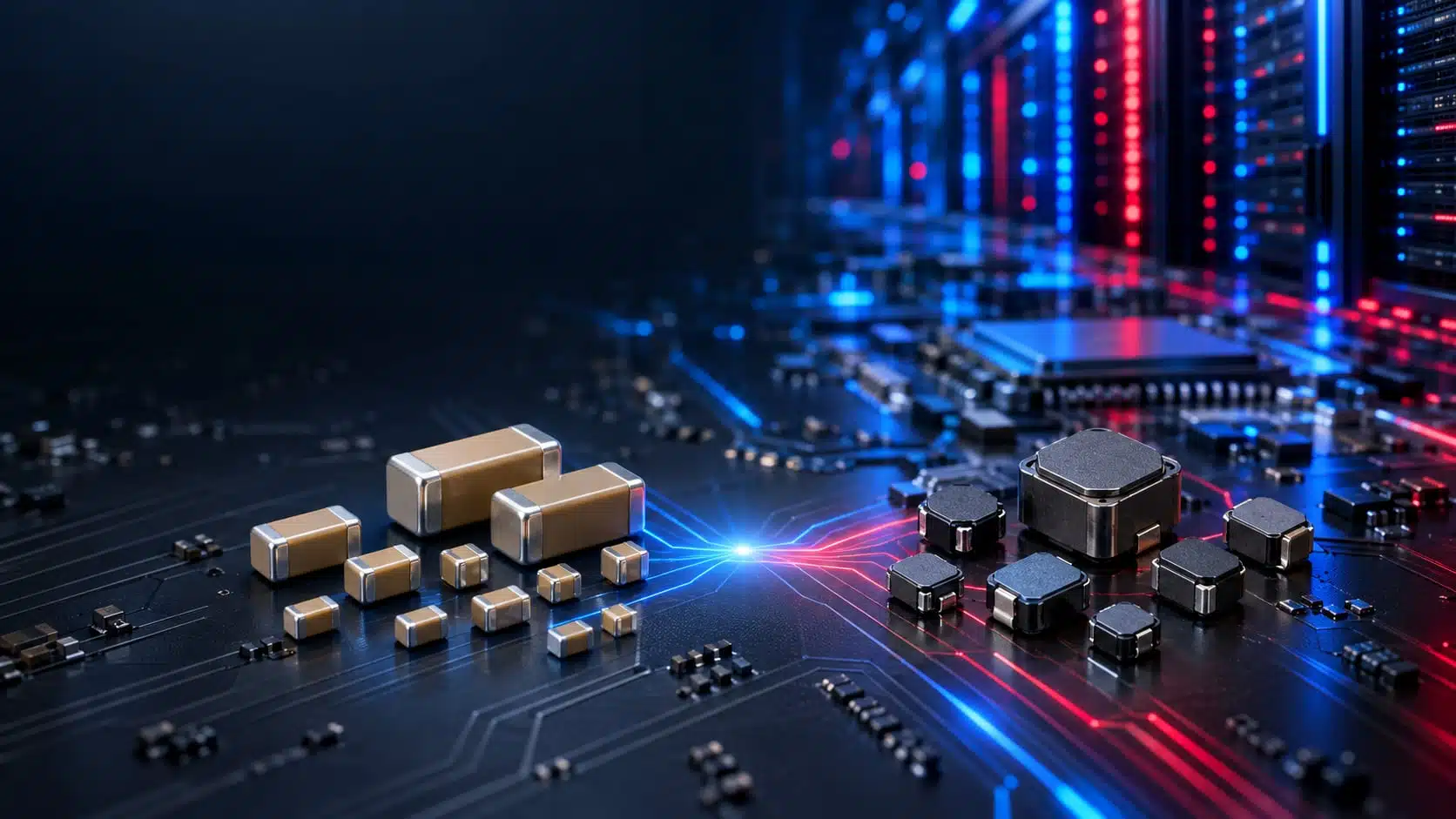
The proposed cooperation centres on joint development of multilayer ceramic capacitors, inductors and related products, with possible collaboration in manufacturing and procurement.
Announced on 29 September 2026, the initiative reflects the rapidly rising component-performance requirements of AI data centres, AI servers and physical AI systems. These applications are increasing demand for compact, high-capacitance and highly reliable components used in power-rail stabilisation, energy storage and high-frequency noise suppression.
Alliance targets advanced component development
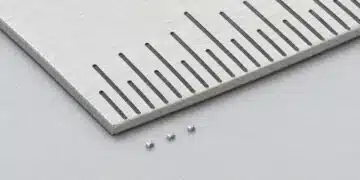
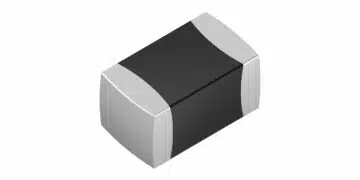
The companies intend to explore a comprehensive alliance that combines joint development with potential cooperation in manufacturing and procurement. TDK and TAIYO YUDEN are both major Japanese suppliers of advanced passive components, particularly multilayer ceramic capacitors (MLCCs), chip inductors and other miniature components used in automotive, industrial, communications and computing equipment.
The central objective is to improve the speed and reliability with which the companies can respond to worldwide customer demand for high-end electronic components. Both suppliers are positioning advanced MLCCs and inductors as strategically important parts of the AI hardware supply chain, where component capability increasingly affects system-level power integrity, thermal performance, switching behaviour and electromagnetic compatibility.
The scope under discussion goes beyond R&D. TDK stated that manufacturing and procurement cooperation are also being considered, signalling that the companies may seek benefits in materials access, production capacity, supply-chain risk management and scale.
Why AI systems need better passive components
AI infrastructure has intensified the technical requirements placed on passive components. Modern processors, accelerators, memory subsystems and high-current voltage-regulator modules require low-impedance power-distribution networks across an increasingly broad frequency range.
High-capacitance MLCCs are used close to semiconductor loads to reduce transient voltage deviation during rapid changes in current demand. Their performance depends not only on nominal capacitance, but also on DC-bias characteristics, equivalent series resistance, equivalent series inductance, temperature behaviour, mechanical reliability and mounting conditions. The growing density of server and accelerator boards makes these characteristics particularly important.
Inductors play an equally important role in point-of-load converters and filtering circuits. In high-current DC-DC converters, they must provide suitable inductance and saturation-current capability while controlling DC resistance, temperature rise and switching-related losses. In data-centre and AI-server platforms, component selection therefore becomes a system-level design decision rather than a simple bill-of-materials exercise.
For readers looking at the broader design context, DC-link capacitor selection for power electronics provides useful background on how capacitance, ripple current and impedance interact in demanding power-conversion designs.
Supply resilience becomes a strategic issue
The memorandum also highlights the strategic importance of passive-component supply. TDK notes that advanced electronic components, including MLCCs, have been designated as Specified Critical Products under Japan’s Economic Security Promotion Act.
The two companies will consider jointly preparing an ensuring-supply plan and applying for approval and support from Japan’s Ministry of Economy, Trade and Industry. While the technical and commercial details have not yet been disclosed, the stated aim is to support a stable supply of advanced electronic components while strengthening Japan’s industrial base and competitiveness in AI-related fields.
This emphasis is significant because the supply chain for premium MLCCs and inductors is tightly connected to specialised ceramic powders, electrode materials, magnetic materials, process know-how, precision manufacturing equipment and high-volume quality control. Cooperation could potentially help the partners reduce exposure to supply disruptions while supporting development of next-generation components.
Possible capital alliance remains under consideration
TDK and TAIYO YUDEN will now begin detailed discussions to define the areas of cooperation and the respective roles of both companies. The companies will also consider the possibility of a future capital alliance.
At this stage, the announcement does not establish a completed merger, a product-line consolidation or a defined production-sharing arrangement. It is a memorandum of understanding that opens formal discussions on a wider business alliance. Any eventual outcome will depend on the specific agreements reached on technology development, manufacturing, procurement, governance and regulatory requirements.
For customers and equipment designers, the announcement is most relevant as an indication that leading Japanese passive-component manufacturers see AI infrastructure, high-performance computing and physical AI as long-term drivers for more advanced MLCC and inductor technologies.
Further reading
- MLCC Multilayer Ceramic Capacitors
- Inductors and Their Applications
- DC-link Capacitor Selection
- EMI Filters and Their Applications
Source
This article is based on the TDK Corporation press release announcing a memorandum of understanding with TAIYO YUDEN to explore a business alliance for advanced electronic components, principally MLCCs and inductors.