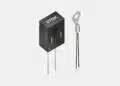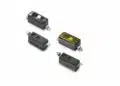







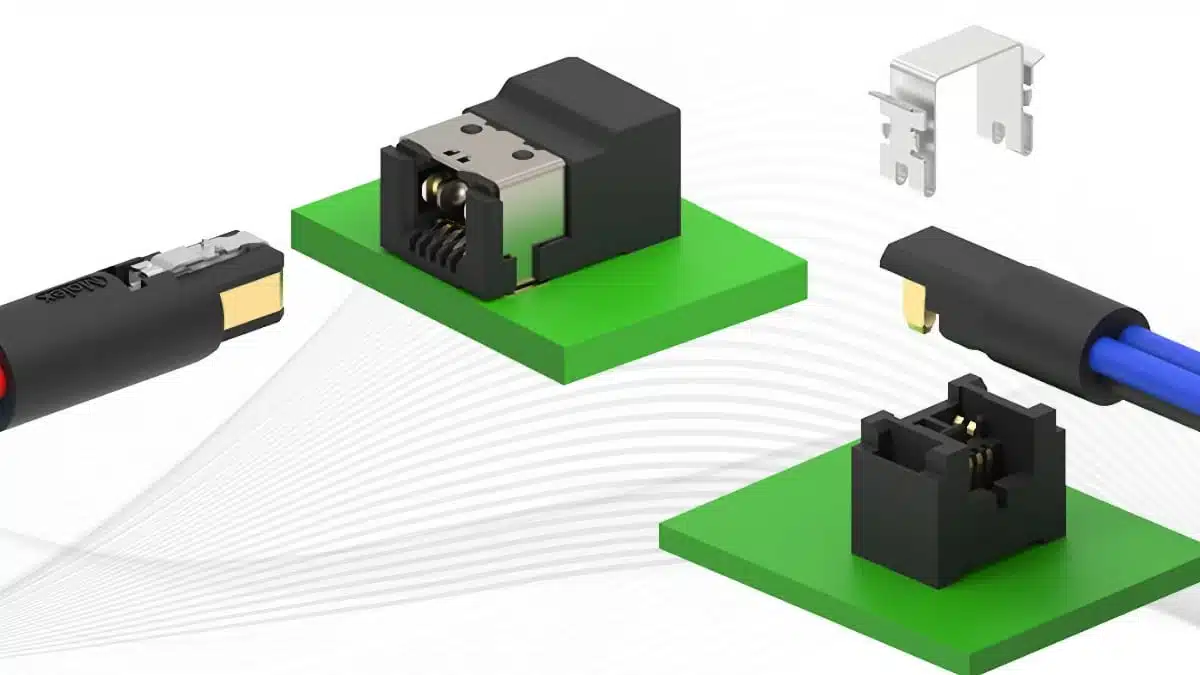
Molex’s new MiniMix hybrid power and signal connectors combine 15.0A power delivery with 1Gbps 1000BASE‑T1 Ethernet in an ultra‑compact form factor targeted at humanoid robot joints, actuators and space‑constrained motion systems.
For engineers, this enables cleaner, more repeatable wiring with pre‑terminated assemblies instead of manual threading and hand‑soldering inside tight mechanical envelopes.
Key features and benefits
- Hybrid interface for power and data – MiniMix integrates up to 15.0A power contacts with 1Gbps 1000BASE‑T1 Ethernet in a single connector, eliminating separate power and signal interfaces and reducing connector count and wiring complexity in articulated joints.
- Ultra‑compact routing profile – The connector system is designed to pass through openings as small as 5.65mm, requiring up to 50% less routing area than alternative options and enabling cable runs through narrow internal channels in wrists, elbows, knees and similar mechanisms.
- Support for pre‑terminated cable assemblies – MiniMix is explicitly optimized for pre‑terminated cable runs, allowing harnesses to be assembled outside the robot and then pulled through the structure without bare‑wire threading or in‑situ soldering.
- Mechanical robustness under continuous motion – The connector’s mechanical design is described as vibration‑resistant and suitable for continuous motion and constant flexing, which is critical for long‑term reliability in multi‑axis humanoid and AMR actuators.
- Vertical and right‑angle orientations – Available mating orientations include vertical and right‑angle versions to optimize PCB and enclosure layouts, improve internal space utilization and reduce cable strain across diverse joint geometries.
- Scalable platform for mass production – The product is positioned as a purpose‑built interconnect platform for OEMs moving from prototype robots to commercial mass production, where repeatable plug‑and‑play wiring becomes a bottleneck.
Typical applications
MiniMix Hybrid Power and Signal Connectors are aimed at next‑generation humanoid robotics, autonomous mobile robots (AMRs) and advanced industrial automation systems where actuator joints are both mechanically crowded and functionally dense. The platform is designed to route high power and high‑speed control data through multi‑axis motion systems without resorting to bare‑wire threading.
Typical use cases include:
- Humanoid robot wrists, elbows, knees, ankles and neck assemblies, where actuators and gearboxes leave limited space for wiring.
- End‑effectors and grippers requiring combined power and high‑speed sensor feedback within slender mechanical fingers or tools.
- AMR steering and drive modules where routing harnesses through rotating housings demands compact, robust cabling paths.
- Articulated industrial robots with dense joint stacks, especially in collaborative robotics where reduced connector bulk supports lighter arms and lower inertia.
- Integrated joint actuator modules supplied as pre‑assembled units, leveraging MiniMix for standardized power and data interfaces across the robot BOM.
For purchasing and project teams, the primary value lies in replacing bespoke manual wiring practices at each joint with standardized, repeatable harness assemblies that can be qualified once and then replicated at scale.
Technical highlights
While the press release does not provide a detailed pin map or full datasheet parameters, it does specify several core characteristics and positioning statements relevant for design‑in. The table below summarizes the key technical aspects as communicated.
MiniMix connector platform – headline parameters
| Parameter | Value / description |
|---|---|
| Power current rating | Up to 15.0A per power contact according to manufacturer materials |
| Signal interface | 1Gbps 1000BASE‑T1 Ethernet‑class communication per integrated channel |
| Routing opening requirement | Cable and connector can pass through openings down to 5.65mm |
| Relative routing area | Up to 50% less routing area than alternative hybrid solutions |
| Mechanical orientations | Vertical and right‑angle connector options |
| Application domain | Humanoid robots, AMRs, advanced industrial automation |
For practical design work, the 15.0A rating suggests suitability for medium‑power joint actuators in humanoid robots, where individual motors are often in the tens to low hundreds of watts range. The inclusion of 1Gbps 1000BASE‑T1 Ethernet aligns with emerging single‑pair automotive Ethernet trends, providing sufficient bandwidth for joint‑level sensor fusion, motor control feedback and diagnostics over a single compact link.
The 5.65mm routing profile is a critical packaging metric: it indicates the minimum aperture size through which the mated connector and cable can be drawn during assembly. In practice, this allows mechanical engineers to design joint passages and hollow shafts with smaller diameters while still supporting pre‑terminated harness installation.
MiniMix within Molex’s robotics interconnect ecosystem
The press release situates MiniMix as part of a broader Molex interconnect portfolio for humanoid robotic systems, spanning AI compute, sensor arrays and power distribution. For system architects, this provides an opportunity to align joint‑level connectivity with higher‑level interfaces.
Key ecosystem relationships include:
- Mirror Mezz mezzanine connectors used as the high‑density interface to AI compute platforms such as NVIDIA Jetson Thor modules.
- Quad‑Row ultra‑miniature board‑to‑board connectors for compact internal PCB stacking near sensors, encoders and control logic.
- High‑Speed FAKRA‑Mini (HFM) interconnects for spatial vision, LiDAR and tactile sensor arrays around the robot body.
- High‑current Mega‑Fit and EXTreme Ten60 power connectors for central power distribution from battery or PSU to regional joint modules.
In this context, MiniMix serves as the localized hybrid link at the joint level, bridging central AI processing and regional power distribution with per‑joint power and data connectivity. For purchasing teams, sourcing multiple interconnect families from a single vendor may simplify qualification, logistics and long‑term support.
Design‑in notes for engineers
- Treat MiniMix as part of the actuator module architecture – Rather than retrofitting it into an existing harness, consider MiniMix at the concept phase as the default interface at each humanoid joint or AMR drive module, and design mechanical channels around the 5.65mm routing profile.
- Align with single‑pair Ethernet topologies – The 1000BASE‑T1 capability implies single‑pair Ethernet‑friendly cabling; coordinate with your control network architecture (ring, daisy‑chain, star) to exploit joint‑level 1Gbps links without over‑specifying heavier multi‑pair cables.
- Minimize manual wiring inside joints – The stated goal of MiniMix is to eliminate hand‑soldering and bare‑wire threading inside joints; design your production process for pre‑terminated cable assemblies that can be pulled through joints and mated, rather than relying on manual wiring at final assembly.
- Use vertical vs right‑angle orientation to manage strain – Choose vertical or right‑angle versions based on PCB location and cable exit path to avoid sharp bends at the connector interface and to maintain strain‑relief under continuous motion.
- Derate and verify under motion – Although the connector is described as vibration‑resistant and suitable for continuous flexing, you should still perform current‑temperature rise and signal‑integrity validation under representative motion profiles and harness clamping strategies, using manufacturer datasheet guidance for derating.
- Plan for field‑replaceability – In humanoid robots with many joints (approximately 50 actuators are mentioned as a reference BOM figure), consider accessibility for connector mating and unmating operations in the field, and ensure that MiniMix harnesses can be replaced without disassembling major structural elements.
Source
This article is based on information provided in Molex’s official press release announcing the MiniMix Hybrid Power and Signal Connector platform, supplemented by the associated product and application pages referenced by the manufacturer.