

- News
- All
- Aerospace & Defence
- Antenna
- Applications
- Automotive
- Capacitors
- Circuit Protection Devices
- electro-mechanical news
- Filters
- Fuses
- Inductors
- Industrial
- Integrated Passives
- inter-connect news
- Market & Supply Chain
- Market Insights
- Medical
- Modelling and Simulation
- New Materials & Supply
- New Technologies
- Non-linear Passives
- Optoelectronics and Isolation
- Oscillators
- Passive Sensors News
- Resistors
- RF & Microwave
- Telecommunication
- Weekly Digest




- News
- All
- Aerospace & Defence
- Antenna
- Applications
- Automotive
- Capacitors
- Circuit Protection Devices
- electro-mechanical news
- Filters
- Fuses
- Inductors
- Industrial
- Integrated Passives
- inter-connect news
- Market & Supply Chain
- Market Insights
- Medical
- Modelling and Simulation
- New Materials & Supply
- New Technologies
- Non-linear Passives
- Optoelectronics and Isolation
- Oscillators
- Passive Sensors News
- Resistors
- RF & Microwave
- Telecommunication
- Weekly Digest

Capacitors e-Blog
From DCL to SSC: Bridging Electrical Symptoms and Structural Indicators in Tantalum Capacitors
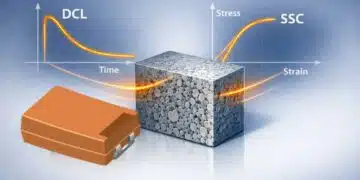
In this article, we look at how tantalum anode SSC (stress–strain characteristics) diagnostics can be used as a structural indicator...
Read moreDetailsEnabling the 800 V AI Server Era: How C0G High-Voltage MLCC Supports Next-Generation Power Architectures

This article, edited from original article by Mark Laps, MLCC specialist at YAGEO Group, reviews why the industry is converging...
Read moreDetailsUsing a Virtual Anode Thermal Model to Evaluate Miniaturization Risk in Tantalum Capacitors
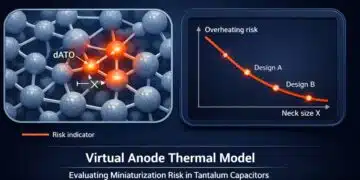
In this article, Dr. Vladimir Azbel presents a virtual anode thermal model that allows engineers to evaluate how far a tantalum...
Read moreDetailsPractical Value of Structural Diagnostics for Tantalum Capacitor Anodes
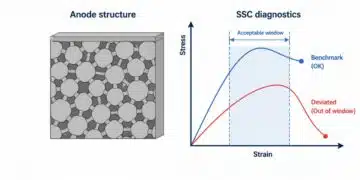
This article, written by Vladimir Azbel, Ph.D., a semiconductor process reliability engineering consultant, and adapted and edited for passive-components.eu, rovides an overview...
Read moreDetailsUltrahigh Energy Storage in Lead‑Free BiFeO₃‑Based Ceramic Capacitors via Local Polar Structure Design
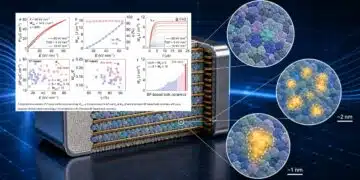
Researchers Ji Zhang, and col., working in materials science and electronic ceramics research institutions in China and Australia published their...
Read moreDetailsAll‑Water Supercapacitor Based on 1‑nm Clay Channels and Nanoconfined Water Electrolyte
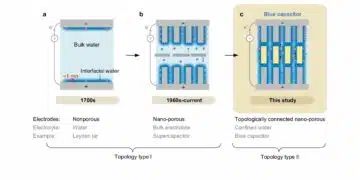
Researchers in Europe with expertise in nanofluidics, electrochemistry, clay mineralogy, and electron microscopy to design and characterize a new type...
Read moreDetailsHow Long-Term Storage Causes Aging in Electronic Components
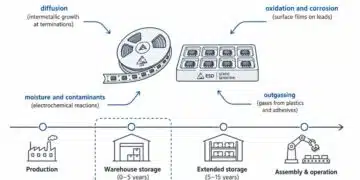
Electronic components are often treated as static building blocks once sealed in bags and placed on warehouse shelves. In reality,...
Read moreDetailsMechanical SSC Testing as a Structural Diagnostic Tool for Tantalum Capacitor Anodes
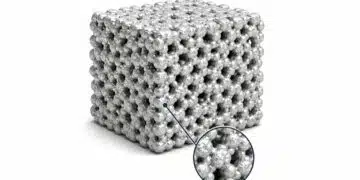
This article, written by Vladimir Azbel, Ph.D., a semiconductor process reliability engineering consultant, and adapted and edited for passive-components.eu, reviews mechanical SSC...
Read moreDetailsUsing Stress–Strain Curves to Diagnose Tantalum Powders for Capacitors
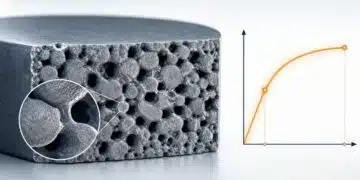
This article based on edited report written by Vladimir Azbel, Ph.D., a semiconductor process reliability engineer consultant, explains and discuss why stress–strain curves...
Read moreDetailsTwo‑capacitor paradox explained for engineers
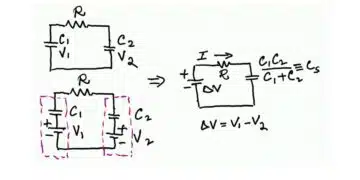
This article based on prof. Sam Ben-Yaakov video explains so‑called two‑capacitor paradox theory and practical implications to hardware designers. The...
Read moreDetailsPopular Posts
-

Buck Converter Design and Calculation
-
Boost Converter Design and Calculation
-
LLC Resonant Converter Design and Calculation
-
Capacitor Charging and Discharging
-
Flyback Converter Design and Calculation
-
Audio Capacitors: Choosing Capacitors for Crossover Circuits
-
MLCC and Ceramic Capacitors
-
Passive Low Pass Filters: Fundamentals and EMI Design
-
RF Connector Types: How To Choose the Right One
-
September 2026 Interconnect, Passives and Electromechanical Components Market Insights



© 2015–2026
All rights reserved