











Passive Components Blog
No Result
View All Result
  • Home
  • NewsFilter
    • All
    • Aerospace & Defence
    • Antenna
    • Applications
    • Automotive
    • Capacitors
    • Circuit Protection Devices
    • electro-mechanical news
    • Filters
    • Fuses
    • Inductors
    • Industrial
    • Integrated Passives
    • inter-connect news
    • Market & Supply Chain
    • Market Insights
    • Medical
    • Modelling and Simulation
    • New Materials & Supply
    • New Technologies
    • Non-linear Passives
    • Oscillators
    • Passive Sensors News
    • Resistors
    • RF & Microwave
    • Telecommunication
    • Weekly Digest

    Skeleton Supercapacitor Achieves UL‑certified 3,500 A Peak Current for AI Data Centers

    Bourns Planar Transformers for SiC and GaN Gate Driver Isolation

    100 V Hybrid Polymer Capacitor from VINA Enesol Targets 48–72 V Power Platforms

    Panasonic Releases Relays for IEC 62955 Compliant Single‑Phase EV Wallboxes

    KYOCERA AVX Releases NTN Antenna Selection Guide Brochure

    Coilcraft Releases 0402 Ferrite-Core Wirewound Chip Inductors for RF and EMI Control

    DigiKey Releases Season Two of Sustainable Futures Series

    Using a Virtual Anode Thermal Model to Evaluate Miniaturization Risk in Tantalum Capacitors

    Bourns Introduced High-Current Coupled Inductor for 48 V Hybrid and IBC Converters

    Trending Tags

    • Ripple Current
    • RF
    • Leakage Current
    • Tantalum vs Ceramic
    • Snubber
    • Low ESR
    • Feedthrough
    • Derating
    • Dielectric Constant
    • New Products
    • Market Reports
  • VideoFilter
    • All
    • Antenna videos
    • Capacitor videos
    • Circuit Protection Video
    • Filter videos
    • Fuse videos
    • Inductor videos
    • Inter-Connect Video
    • Non-linear passives videos
    • Oscillator videos
    • Passive sensors videos
    • Resistor videos

    EMC‑Compliant PCB and Connector Design Guidelines

    Why Isolated DC/DC Power Supplies Fail Late, Würth Elektronik Podcast

    Designing 800 V DC EMC Filters: Calculation, Simulation and Measurement

    Current Sense Transformer Datasheet and Design‑in Guide

    Designing a USB Type‑C Flyback Planar Transformer with Frenetic’s Planar Tool

    Magnetics Design in High‑Frequency GaN Converters

    Qi2 Wireless Charging: Inductors, Capacitors and EMC Filters

    Two‑capacitor paradox explained for engineers

    Capacitances of Nonlinear MLCCs: What Datasheets Don’t Tell You

    Trending Tags

    • Capacitors explained
    • Inductors explained
    • Resistors explained
    • Filters explained
    • Application Video Guidelines
    • EMC
    • New Products
    • Ripple Current
    • Simulation
    • Tantalum vs Ceramic
  • Knowledge Blog
  • DossiersNew
  • Suppliers
    • Who is Who
  • PCNS
    • PCNS 2025
    • PCNS 2023
    • PCNS 2021
    • PCNS 2019
    • PCNS 2017
  • Events
  • Home
  • NewsFilter
    • All
    • Aerospace & Defence
    • Antenna
    • Applications
    • Automotive
    • Capacitors
    • Circuit Protection Devices
    • electro-mechanical news
    • Filters
    • Fuses
    • Inductors
    • Industrial
    • Integrated Passives
    • inter-connect news
    • Market & Supply Chain
    • Market Insights
    • Medical
    • Modelling and Simulation
    • New Materials & Supply
    • New Technologies
    • Non-linear Passives
    • Oscillators
    • Passive Sensors News
    • Resistors
    • RF & Microwave
    • Telecommunication
    • Weekly Digest

    Skeleton Supercapacitor Achieves UL‑certified 3,500 A Peak Current for AI Data Centers

    Bourns Planar Transformers for SiC and GaN Gate Driver Isolation

    100 V Hybrid Polymer Capacitor from VINA Enesol Targets 48–72 V Power Platforms

    Panasonic Releases Relays for IEC 62955 Compliant Single‑Phase EV Wallboxes

    KYOCERA AVX Releases NTN Antenna Selection Guide Brochure

    Coilcraft Releases 0402 Ferrite-Core Wirewound Chip Inductors for RF and EMI Control

    DigiKey Releases Season Two of Sustainable Futures Series

    Using a Virtual Anode Thermal Model to Evaluate Miniaturization Risk in Tantalum Capacitors

    Bourns Introduced High-Current Coupled Inductor for 48 V Hybrid and IBC Converters

    Trending Tags

    • Ripple Current
    • RF
    • Leakage Current
    • Tantalum vs Ceramic
    • Snubber
    • Low ESR
    • Feedthrough
    • Derating
    • Dielectric Constant
    • New Products
    • Market Reports
  • VideoFilter
    • All
    • Antenna videos
    • Capacitor videos
    • Circuit Protection Video
    • Filter videos
    • Fuse videos
    • Inductor videos
    • Inter-Connect Video
    • Non-linear passives videos
    • Oscillator videos
    • Passive sensors videos
    • Resistor videos

    EMC‑Compliant PCB and Connector Design Guidelines

    Why Isolated DC/DC Power Supplies Fail Late, Würth Elektronik Podcast

    Designing 800 V DC EMC Filters: Calculation, Simulation and Measurement

    Current Sense Transformer Datasheet and Design‑in Guide

    Designing a USB Type‑C Flyback Planar Transformer with Frenetic’s Planar Tool

    Magnetics Design in High‑Frequency GaN Converters

    Qi2 Wireless Charging: Inductors, Capacitors and EMC Filters

    Two‑capacitor paradox explained for engineers

    Capacitances of Nonlinear MLCCs: What Datasheets Don’t Tell You

    Trending Tags

    • Capacitors explained
    • Inductors explained
    • Resistors explained
    • Filters explained
    • Application Video Guidelines
    • EMC
    • New Products
    • Ripple Current
    • Simulation
    • Tantalum vs Ceramic
  • Knowledge Blog
  • DossiersNew
  • Suppliers
    • Who is Who
  • PCNS
    • PCNS 2025
    • PCNS 2023
    • PCNS 2021
    • PCNS 2019
    • PCNS 2017
  • Events
No Result
View All Result
Passive Components Blog
No Result
View All Result

Critical Elements’ Countdown to Construction

3.5.2018
Reading Time: 3 mins read
A A

source: Investor intel news

2017 hosted two major lithium milestones: the spot price rose to its highest ever levels, and the rate of growth was greater than in any other year; the race really is on to bring product to market in time for peak pricing. There are, of course, a number of lithium projects in development in anticipation of the supergrowth of the battery sector, but only some will be successfully derisked, proven feasible and ultimately pay dividends.

RelatedPosts

Skeleton Supercapacitor Achieves UL‑certified 3,500 A Peak Current for AI Data Centers

Bourns Planar Transformers for SiC and GaN Gate Driver Isolation

100 V Hybrid Polymer Capacitor from VINA Enesol Targets 48–72 V Power Platforms

Earlier this month, Critical Elements Corp. (TSXV:CRE | OTCQX:CRECF) (“Critical Elements”)  filed a completed NI 43-101 feasibility study for their Rose lithium/tantalum deposit in Quebec, with an estimated production date of 3Q 2020. Having derisked the resource, the company can focus on raising the necessary cash to fund construction, but this deposit is extremely interesting given its dual focus; lithium, of course, is in the midst of a boom period currently, but tantalum also has a prospective future.

As the predominant use of tantalum is confined largely to the manufacture of capacitors for the electronics industry, the market for the transition metal has been in decline as capacitors have become smaller and smaller; however, the last few years has seen dramatically increased interest in supercapacitor arrays due to their ability to take on large amounts of charge in very little time. While capacitors will never entirely replace batteries for energy storage, there are a myriad of applications for which they offer increased efficacy as a result of the practically limitless number of charge cycles they can undergo.

What this all adds up to is a low-risk approach to the battery market for Critical Elements. Rather than relying on a single basket, the company is able to secure their eggs in two, and the combination of a simple open-pit mine and conventional processing technologies means that the Rose deposit is now one of the safest bets in the junior sphere. The fact that the project lies within the mining friendly and low-risk jurisdiction of Quebec is merely the icing on the cake.

According to the study, the open pit will provide a mining rate of 1,610,000 tonnes per year of ore, and the spodumene processing plant has a nameplate capacity of 4,900 tonnes per day. It is expected that this will result in average annual production of 186,327 tonnes of chemical grade lithium concentrate, 50,205 tonnes of technical grade lithium concentrate, 429 tonnes of tantalum concentrate, all over an expected life of mine of 17 years.

For an investor interested in gaining exposure to the project, the average gross margin of 63.6% gives an after-tax NPV of CAN$726 million (at 8% discount rate), after-tax IRR of 34.9% and price assumption of US$1,500 per tonne technical grade lithium concentrate, US$750 per tonne chemical grade lithium concentrate, US$130 per kg tantalum pentoxide. The site’s average operating costs will be pretty low at only CAN$66.56 per tonne milled and CAN$458 (US$344) per tonne of combined concentrate.

The project is 100% owned by Critical Elements, and with an estimated initial capital cost of only CAN$341.2 million, this is an entirely reasonable ask when compared to some of the more complex projects which require upwards of a billion for launch. The Rose project will have a peak of 575 employees during construction and an average of 290 employees for commercial production, adding significant value to both the technology sector and the local labour market. If you’re late to the table and looking for a lithium play for your portfolio, this super-low-risk project has already performed extremely well for Critical Elements; the company’s share price has almost quadrupled over the last year, and it is almost guaranteed to surge further as the construction journey makes additional headway.

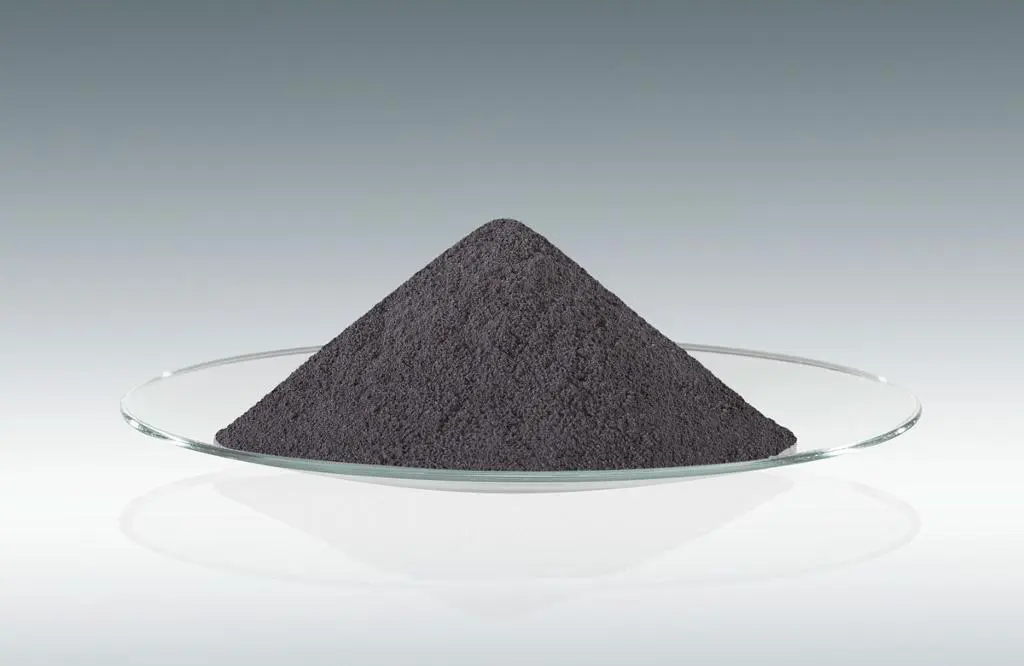
featured image source: HC Starck

 

Related

Recent Posts

Skeleton Supercapacitor Achieves UL‑certified 3,500 A Peak Current for AI Data Centers

26.6.2026
26

100 V Hybrid Polymer Capacitor from VINA Enesol Targets 48–72 V Power Platforms

26.6.2026
57

DigiKey Releases Season Two of Sustainable Futures Series

24.6.2026
22

Using a Virtual Anode Thermal Model to Evaluate Miniaturization Risk in Tantalum Capacitors

24.6.2026
33

High‑Speed Supercapacitor Balancing for AI Data Center Power Systems

23.6.2026
78

Practical Value of Structural Diagnostics for Tantalum Capacitor Anodes

22.6.2026
34

Knowles Expands High‑Q Ceramic Core Inductors for RF designs

19.6.2026
31

TrendForce: CSP in‑house AI ASIC Boom Reshapes Capacitor Demand

18.6.2026
145

Samsung Introduces Automotive 1206 100uF X7T MLCC for Power Rails in ADAS and SoCs

17.6.2026
39

Upcoming Events

Jun 30
17:00 - 18:00 CEST

PSMA Capacitor Committee Webinar: High Voltage Pulse Capacitors

Jul 14
16:00 - 17:00 CEST

EMC Design Essentials: Mastering Varistors and Common Mode Chokes

Jul 21
16:00 - 17:00 CEST

Safety by design: X and Y Interference suppression capacitors for power line filters

View Calendar

Popular Posts

  • Boost Converter Design and Calculation

    0 shares
    Share 0 Tweet 0
  • Buck Converter Design and Calculation

    0 shares
    Share 0 Tweet 0
  • Flyback Converter Design and Calculation

    0 shares
    Share 0 Tweet 0
  • LLC Resonant Converter Design and Calculation

    0 shares
    Share 0 Tweet 0
  • MLCC and Ceramic Capacitors

    0 shares
    Share 0 Tweet 0
  • Nvidia Vera Rubin: Why One AI Rack Needs So Many More MLCC Capacitors

    0 shares
    Share 0 Tweet 0
  • Earthing Systems and IEC Classification Explained

    0 shares
    Share 0 Tweet 0
  • SEPIC Converter Design and Calculation

    0 shares
    Share 0 Tweet 0
  • Dual Active Bridge (DAB) Topology

    0 shares
    Share 0 Tweet 0
  • MLCC Case Sizes Standards Explained

    0 shares
    Share 0 Tweet 0

Newsletter Subscription


Passive Components Blog

© EPCI - Leading Passive Components Educational and Information Site

  • Home
  • Privacy Policy
  • EPCI Membership & Advertisement
  • About

No Result
View All Result
  • Home
  • Knowledge Blog
  • Dossiers
  • PCNS

© EPCI - Leading Passive Components Educational and Information Site

This website uses cookies. By continuing to use this website you are giving consent to cookies being used. Visit our Privacy and Cookie Policy.
Go to mobile version