







Passive Components Blog
No Result
View All Result
  • Home
  • NewsFilter
    • All
    • Aerospace & Defence
    • Antenna
    • Applications
    • Automotive
    • Capacitors
    • Circuit Protection Devices
    • electro-mechanical news
    • Filters
    • Fuses
    • Inductors
    • Industrial
    • Integrated Passives
    • inter-connect news
    • Market & Supply Chain
    • Market Insights
    • Medical
    • Modelling and Simulation
    • New Materials & Supply
    • New Technologies
    • Non-linear Passives
    • Oscillators
    • Passive Sensors News
    • Resistors
    • RF & Microwave
    • Telecommunication
    • Weekly Digest

    ESA SPCD 26 Registration Open

    Capacitances of Nonlinear MLCCs: What Datasheets Don’t Tell You

    Stackpole Releases Automotive Wide‑Termination Resistors

    How a Digital Structural Twin Can Predict Tantalum Capacitor Reliability

    SCHURTER Buys Biaodi to Boost High-Voltage Protection Portfolio

    Binder Hybrid Connector Simplifies One Cable Automation

    Tapped Inductor Buck Converter Fundamentals

    TAIYO YUDEN Releases Mini Metal Power Inductors

    Molecular Memristor Shows Record 145 kH Emergent Inductance

    Trending Tags

    • Ripple Current
    • RF
    • Leakage Current
    • Tantalum vs Ceramic
    • Snubber
    • Low ESR
    • Feedthrough
    • Derating
    • Dielectric Constant
    • New Products
    • Market Reports
  • VideoFilter
    • All
    • Antenna videos
    • Capacitor videos
    • Circuit Protection Video
    • Filter videos
    • Fuse videos
    • Inductor videos
    • Inter-Connect Video
    • Non-linear passives videos
    • Oscillator videos
    • Passive sensors videos
    • Resistor videos

    Capacitances of Nonlinear MLCCs: What Datasheets Don’t Tell You

    Tapped Inductor Buck Converter Fundamentals

    Planar vs Conventional Transformer: When it Make Sense

    Modeling Fringing Field Losses in Inductors & Transformers

    Why Power Inductors Use a Ferrite Core With an Air Gap

    Transformer-Based Power-Line Harvester Magnetic Design

    Thermal Modeling of Magnetics

    Standard vs Planar LLC transformers Comparison for Battery Chargers

    How Modern Tools Model Magnetic Components for Power Electronics

    Trending Tags

    • Capacitors explained
    • Inductors explained
    • Resistors explained
    • Filters explained
    • Application Video Guidelines
    • EMC
    • New Products
    • Ripple Current
    • Simulation
    • Tantalum vs Ceramic
  • Knowledge Blog
  • DossiersNew
  • Suppliers
    • Who is Who
  • PCNS
    • PCNS 2025
    • PCNS 2023
    • PCNS 2021
    • PCNS 2019
    • PCNS 2017
  • Events
  • Home
  • NewsFilter
    • All
    • Aerospace & Defence
    • Antenna
    • Applications
    • Automotive
    • Capacitors
    • Circuit Protection Devices
    • electro-mechanical news
    • Filters
    • Fuses
    • Inductors
    • Industrial
    • Integrated Passives
    • inter-connect news
    • Market & Supply Chain
    • Market Insights
    • Medical
    • Modelling and Simulation
    • New Materials & Supply
    • New Technologies
    • Non-linear Passives
    • Oscillators
    • Passive Sensors News
    • Resistors
    • RF & Microwave
    • Telecommunication
    • Weekly Digest

    ESA SPCD 26 Registration Open

    Capacitances of Nonlinear MLCCs: What Datasheets Don’t Tell You

    Stackpole Releases Automotive Wide‑Termination Resistors

    How a Digital Structural Twin Can Predict Tantalum Capacitor Reliability

    SCHURTER Buys Biaodi to Boost High-Voltage Protection Portfolio

    Binder Hybrid Connector Simplifies One Cable Automation

    Tapped Inductor Buck Converter Fundamentals

    TAIYO YUDEN Releases Mini Metal Power Inductors

    Molecular Memristor Shows Record 145 kH Emergent Inductance

    Trending Tags

    • Ripple Current
    • RF
    • Leakage Current
    • Tantalum vs Ceramic
    • Snubber
    • Low ESR
    • Feedthrough
    • Derating
    • Dielectric Constant
    • New Products
    • Market Reports
  • VideoFilter
    • All
    • Antenna videos
    • Capacitor videos
    • Circuit Protection Video
    • Filter videos
    • Fuse videos
    • Inductor videos
    • Inter-Connect Video
    • Non-linear passives videos
    • Oscillator videos
    • Passive sensors videos
    • Resistor videos

    Capacitances of Nonlinear MLCCs: What Datasheets Don’t Tell You

    Tapped Inductor Buck Converter Fundamentals

    Planar vs Conventional Transformer: When it Make Sense

    Modeling Fringing Field Losses in Inductors & Transformers

    Why Power Inductors Use a Ferrite Core With an Air Gap

    Transformer-Based Power-Line Harvester Magnetic Design

    Thermal Modeling of Magnetics

    Standard vs Planar LLC transformers Comparison for Battery Chargers

    How Modern Tools Model Magnetic Components for Power Electronics

    Trending Tags

    • Capacitors explained
    • Inductors explained
    • Resistors explained
    • Filters explained
    • Application Video Guidelines
    • EMC
    • New Products
    • Ripple Current
    • Simulation
    • Tantalum vs Ceramic
  • Knowledge Blog
  • DossiersNew
  • Suppliers
    • Who is Who
  • PCNS
    • PCNS 2025
    • PCNS 2023
    • PCNS 2021
    • PCNS 2019
    • PCNS 2017
  • Events
No Result
View All Result
Passive Components Blog
No Result
View All Result

Graphene Enables Maintenance-Free Circuit Breakers

20.8.2021
Reading Time: 2 mins read
A A

Circuit breakers are safety-critical components, but as the greases used in conventional circuit breakers can decompose over time, businesses are faced with recurring and costly maintenance. To tackle this problem, the CircuitBreakers Spearhead Project, funded by the Graphene Flagship and led by industrial partners ABB, Nanesa and GraphMaTech AB, is developing a grease-free circuit breaker, using graphene’s self-lubricating properties to save businesses huge maintenance costs.

Low voltage circuit breakers (LVCB) breakers, which are common in domestic and industrial applications, use grease-lubricated steel-steel mechanical joints. The grease in these joints has major limitations. This is due to the fact that it stiffens with age, has a narrow temperature window and moves away from the contact spot during operation.

RelatedPosts

ESA SPCD 26 Registration Open

Capacitances of Nonlinear MLCCs: What Datasheets Don’t Tell You

Stackpole Releases Automotive Wide‑Termination Resistors

Lack of lubrication is the number one problem test technicians find when servicing circuit breakers in the field.While all circuit breakers have lubricant applied to them at the time of manufacture, over time, this lubricant dries out, leaving metal-to-metal wear in its place.

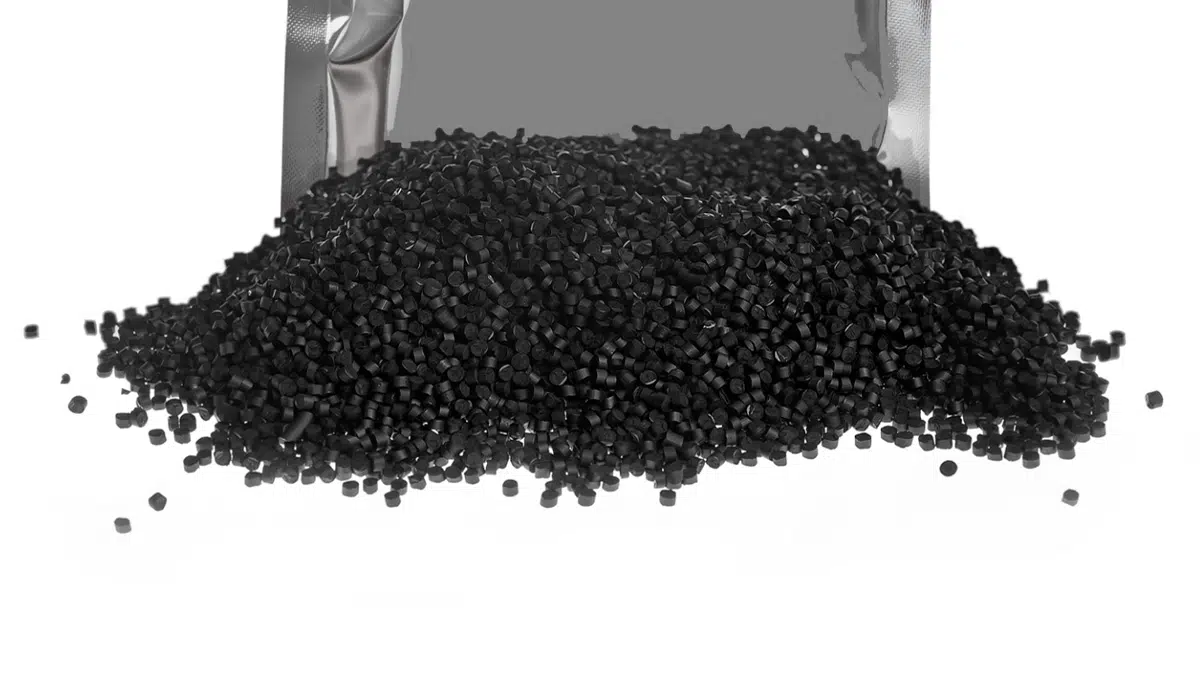
The CircuitBreakers Spearhead Project will see the development of a cost-efficient graphene and related materials (GRM) based circuit breaker prototype, which will enable maintenance free operation. The project aims to deliver stable performance in a wider temperature range than existing circuit breaker options.

“These next generation circuit breakers will enable a robust electrical system that secures the continuous operation of critical facilities, such as renewable-energy generation sources, hospitals and data centres,” explained Anna Andersson, leader for the CircuitBreakers Spearhead Project and principle scientist at ABB corporate research. “Although circuit breakers are designed and thoroughly validated for the application, the risk of any undesired outage of an electrical system due to circuit breaker failure cannot be taken lightly.

“Issues with electro-mechanical operating mechanisms due to lubrication decomposition has been identified has one of the key failure modes in circuit breakers. In this project, a multifunctional metal-GRM composite coating, manufactured by a cost-competitive electroplating process, will be utilized as self-lubricating mechanical components and a new generation of robust lubrication-free circuit breaker prototypes will be built by incorporating this coating into mechanical drive components.”

Copper (Cu)-GRM coatings have so far been successfully produced with the friction properties of this coating proving acceptable and comparable to greased contacts. In addition, the coatings show low wear, good adhesion and better oxidation resistance compared to pure copper. In just three years, the Spearhead Project predicts a fully functional and tested prototype will be ready for industrial implementation.


Related

Source: Graphene Flagship

Recent Posts

Stackpole Releases Automotive Wide‑Termination Resistors

14.5.2026
20

SCHURTER Buys Biaodi to Boost High-Voltage Protection Portfolio

14.5.2026
26

Binder Hybrid Connector Simplifies One Cable Automation

13.5.2026
14

Planar vs Conventional Transformer: When it Make Sense

11.5.2026
56

Nichicon ADN Automotive Hybrid Aluminum Capacitors Now Available in EMEA

11.5.2026
36

Stackpole Expanded its AlN Thick Film Chip Resistors

6.5.2026
23

Würth Elektronik Introduces Compact Flat-wire SMT Power Inductors for Automotive

5.5.2026
56

KYOCERA AVX Extends MLV Varistors for 48V Automotive Protection

5.5.2026
36

YAGEO Introduces C0G Flexible Termination Automotive MLCCs

30.4.2026
44

Upcoming Events

May 19
16:00 - 17:00 CEST

Designing Qi2 Wireless Power Systems: Practical Development and EMC Optimization

Jun 2
16:00 - 17:00 CEST

Calculation, Simulation and Measurement of 800V EMC Filters

Jun 16
16:00 - 17:00 CEST

EMC with EMC – EMC‑compliant design with electromechanical connectors

View Calendar

Popular Posts

  • Buck Converter Design and Calculation

    0 shares
    Share 0 Tweet 0
  • Boost Converter Design and Calculation

    0 shares
    Share 0 Tweet 0
  • Flyback Converter Design and Calculation

    0 shares
    Share 0 Tweet 0
  • LLC Resonant Converter Design and Calculation

    0 shares
    Share 0 Tweet 0
  • MLCC and Ceramic Capacitors

    0 shares
    Share 0 Tweet 0
  • Dual Active Bridge (DAB) Topology

    0 shares
    Share 0 Tweet 0
  • Capacitor Charging and Discharging

    0 shares
    Share 0 Tweet 0
  • What Electronics Engineer Needs to Know About Passive Low Pass Filters

    0 shares
    Share 0 Tweet 0
  • Ripple Current and its Effects on the Performance of Capacitors

    3 shares
    Share 3 Tweet 0
  • MLCC Case Sizes Standards Explained

    0 shares
    Share 0 Tweet 0

Newsletter Subscription


Passive Components Blog

© EPCI - Leading Passive Components Educational and Information Site

  • Home
  • Privacy Policy
  • EPCI Membership & Advertisement
  • About

No Result
View All Result
  • Home
  • Knowledge Blog
  • PCNS

© EPCI - Leading Passive Components Educational and Information Site

This website uses cookies. By continuing to use this website you are giving consent to cookies being used. Visit our Privacy and Cookie Policy.
Go to mobile version