





Modelithics has released version 26.5.11 of its Qorvo GaN Library, adding a nonlinear simulation model for Qorvo’s QPD2562L 200 W GaN transistor.
The update is relevant to RF power-amplifier development because it combines nonlinear active-device behavior with the passive matching, biasing and decoupling networks that often determine real-board performance.
Key features and benefits
- New QPD2562L model: The release adds a nonlinear model for Qorvo’s QPD2562L, specified by the manufacturer as a 200 W GaN transistor.
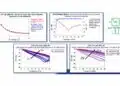
- Load-pull validation: The new model is validated against load-pull measurements at multiple frequencies from 2.5 GHz to 3.5 GHz, supporting impedance optimisation across this RF range.
- Broad EDA compatibility: Version 26.5.11 supports Keysight ADS 2024 through ADS 2027 and multiple versions of the Cadence AWR Design Environment.
- Electrothermal modelling features: Modelithics states that the library models include broadband validation, self-heating effects, temperature scalability and intrinsic I-V sensing.
- Passive-network integration: The related Modelithics COMPLETE Library provides substrate- and part-value-scalable passive models for PA matching and bias networks, enabling more representative circuit-level simulations.
Technical highlights
| Item | Manufacturer-stated detail |
|---|---|
| Library release | Modelithics Qorvo GaN Library v26.5.11 |
| New transistor model | Qorvo QPD2562L |
| Power class | 200 W GaN transistor |
| Validation range | Multiple load-pull frequencies from 2.5 GHz to 3.5 GHz |
| Supported Keysight platform | ADS 2024, ADS 2025, ADS 2026 and ADS 2027 |
| Other supported environment | Multiple Cadence AWR Design Environment versions |
| Model functions | Broadband validation, self-heating, temperature scaling, intrinsic I-V sensing and documentation |
Load-pull validation is particularly important for RF power devices because the impedance presented to the transistor at its terminals directly influences output power, efficiency, gain compression and linearity. A validated nonlinear model allows the engineer to investigate these trade-offs in simulation before committing to a matching-network layout and hardware build.
The stated temperature scalability and self-heating support are also useful in high-power GaN PA work. Junction temperature and thermal operating conditions can affect device characteristics, while their interaction with bias stability, matching-network loss and PCB heat extraction should still be verified in the intended assembly.
Typical applications
The library is aimed at RF and microwave designs using Qorvo GaN die and packaged power transistors. Likely engineering uses include:
- RF power-amplifier stages operating within the model’s validated 2.5 GHz to 3.5 GHz range
- Driver and output stages where load impedance must be tuned for power, efficiency or linearity
- Broadband or frequency-selective PA matching networks
- Bias networks requiring realistic RF decoupling-capacitor selection and choke behavior
- Module-level simulations that combine an active GaN device with PCB-dependent passive components
For RF power stages, the transistor model alone is not sufficient to predict hardware behavior. Output matching, input stabilization, gate and drain bias routing, component mounting orientation, pad geometry and PCB substrate parameters can all introduce parasitics significant enough to shift tuning or degrade stability.
Application fit
| Design task | How the library can help | Passive-component consideration |
|---|---|---|
| Output-match optimisation | Enables nonlinear load-pull-oriented PA simulation across the stated validation range | Model capacitors, inductors and transmission structures at their installed layout conditions |
| Bias-network design | Supports assessment of transistor operating behavior with bias circuitry | Verify RF choke impedance, bypass placement and decoupling-network anti-resonance |
| Thermal sensitivity study | Includes stated self-heating and temperature-scaling functionality | Include temperature-dependent loss and current capability of inductors, resistors and capacitors where relevant |
| Board-level PA development | Can be combined with scalable passive models in the COMPLETE Library | Account for substrate, pads, via inductance, grounding and component orientation |
Design-in notes for engineers
- Use the validated frequency span appropriately. The QPD2562L model is stated to be load-pull validated from 2.5 GHz to 3.5 GHz; simulation results outside that range should be assessed with suitable engineering caution.
- Treat the passive network as part of the device environment. At microwave frequencies, component parasitics and layout can materially alter the impedance seen by the GaN device. For inductive elements, apply established RF inductor selection principles rather than relying on nominal inductance alone.
- Include PCB implementation effects. Substrate thickness, dielectric properties, conductor loss, ground-via placement and pad dimensions can change matching and stability margins relative to an ideal schematic.
- Check thermal and bias margins in hardware. Electrothermal simulation is valuable for early design exploration, but the completed PA still requires measurement under its intended supply, temperature, load mismatch and modulation conditions.
- Use measurement-based passive models where available. Capacitors, inductors and resistors used in matching, damping, termination and bias networks should be selected based on impedance behavior over frequency, not only nominal component value.
- Confirm the latest release content before project sign-off. Model versions, simulator compatibility and device documentation should be checked against the current manufacturer datasheet and release notes.
Further reading
- Modelithics COMPLETE v26.4 Expands RF Passive Models for Keysight ADS
- Modelithics Unveils Qorvo GaN Library v25.5.9
- RF Components for Radar Application
- Tantalum Polymer Use in GaN Based Applications
Source
This article is based on the manufacturer press release from Modelithics. Engineers should consult the current manufacturer datasheet, library release notes and associated documentation for final device qualification, simulator setup and design release.