



Passive Components Blog
No Result
View All Result
  • Home
  • NewsFilter
    • All
    • Aerospace & Defence
    • Antenna
    • Applications
    • Automotive
    • Capacitors
    • Circuit Protection Devices
    • electro-mechanical news
    • Filters
    • Fuses
    • Inductors
    • Industrial
    • Integrated Passives
    • inter-connect news
    • Market & Supply Chain
    • Market Insights
    • Medical
    • Modelling and Simulation
    • New Materials & Supply
    • New Technologies
    • Non-linear Passives
    • Oscillators
    • Passive Sensors News
    • Resistors
    • RF & Microwave
    • Telecommunication
    • Weekly Digest

    Skeleton Technologies Expands in U.S. to Power AI Data Centers

    TDK Releases Stackable µPOL 25A Power Modules

    Wk 6 Electronics Supply Chain Digest

    Smoltek CNF-MIM Capacitors Hit 1,000x Lower Leakage

    DigiKey Expands Line Card with 108K Stock Parts and 364 Suppliers

    Würth Elektronik Announces Partner Program

    Vishay Releases Compact 0806 Low‑DCR Power Inductor

    Murata Opens New Ceramic Capacitor Manufacturing and R&D Center in Japan

    Murata Publishes Power Delivery Guide for AI Servers

    Trending Tags

    • Ripple Current
    • RF
    • Leakage Current
    • Tantalum vs Ceramic
    • Snubber
    • Low ESR
    • Feedthrough
    • Derating
    • Dielectric Constant
    • New Products
    • Market Reports
  • VideoFilter
    • All
    • Antenna videos
    • Capacitor videos
    • Circuit Protection Video
    • Filter videos
    • Fuse videos
    • Inductor videos
    • Inter-Connect Video
    • Non-linear passives videos
    • Oscillator videos
    • Passive sensors videos
    • Resistor videos

    Enabling Software‑Defined Vehicle Architectures: Automotive Ethernet and Zonal Smart Power

    Calculating Resistance Value of a Flyback RC Snubber 

    One‑Pulse Characterization of Nonlinear Power Inductors

    Thermistor Linearization Challenges

    Coaxial Connectors and How to Connect with PCB

    PCB Manufacturing, Test Methods, Quality and Reliability

    Transformer Behavior – Current Transfer and Hidden Feedback

    Choosing the Right Capacitor: The Importance of Accurate Measurements

    RF Inductors: Selection and Design Challenges for High-Frequency Circuits

    Trending Tags

    • Capacitors explained
    • Inductors explained
    • Resistors explained
    • Filters explained
    • Application Video Guidelines
    • EMC
    • New Products
    • Ripple Current
    • Simulation
    • Tantalum vs Ceramic
  • Knowledge Blog
  • DossiersNew
  • Suppliers
    • Who is Who
  • PCNS
    • PCNS 2025
    • PCNS 2023
    • PCNS 2021
    • PCNS 2019
    • PCNS 2017
  • Events
  • Home
  • NewsFilter
    • All
    • Aerospace & Defence
    • Antenna
    • Applications
    • Automotive
    • Capacitors
    • Circuit Protection Devices
    • electro-mechanical news
    • Filters
    • Fuses
    • Inductors
    • Industrial
    • Integrated Passives
    • inter-connect news
    • Market & Supply Chain
    • Market Insights
    • Medical
    • Modelling and Simulation
    • New Materials & Supply
    • New Technologies
    • Non-linear Passives
    • Oscillators
    • Passive Sensors News
    • Resistors
    • RF & Microwave
    • Telecommunication
    • Weekly Digest

    Skeleton Technologies Expands in U.S. to Power AI Data Centers

    TDK Releases Stackable µPOL 25A Power Modules

    Wk 6 Electronics Supply Chain Digest

    Smoltek CNF-MIM Capacitors Hit 1,000x Lower Leakage

    DigiKey Expands Line Card with 108K Stock Parts and 364 Suppliers

    Würth Elektronik Announces Partner Program

    Vishay Releases Compact 0806 Low‑DCR Power Inductor

    Murata Opens New Ceramic Capacitor Manufacturing and R&D Center in Japan

    Murata Publishes Power Delivery Guide for AI Servers

    Trending Tags

    • Ripple Current
    • RF
    • Leakage Current
    • Tantalum vs Ceramic
    • Snubber
    • Low ESR
    • Feedthrough
    • Derating
    • Dielectric Constant
    • New Products
    • Market Reports
  • VideoFilter
    • All
    • Antenna videos
    • Capacitor videos
    • Circuit Protection Video
    • Filter videos
    • Fuse videos
    • Inductor videos
    • Inter-Connect Video
    • Non-linear passives videos
    • Oscillator videos
    • Passive sensors videos
    • Resistor videos

    Enabling Software‑Defined Vehicle Architectures: Automotive Ethernet and Zonal Smart Power

    Calculating Resistance Value of a Flyback RC Snubber 

    One‑Pulse Characterization of Nonlinear Power Inductors

    Thermistor Linearization Challenges

    Coaxial Connectors and How to Connect with PCB

    PCB Manufacturing, Test Methods, Quality and Reliability

    Transformer Behavior – Current Transfer and Hidden Feedback

    Choosing the Right Capacitor: The Importance of Accurate Measurements

    RF Inductors: Selection and Design Challenges for High-Frequency Circuits

    Trending Tags

    • Capacitors explained
    • Inductors explained
    • Resistors explained
    • Filters explained
    • Application Video Guidelines
    • EMC
    • New Products
    • Ripple Current
    • Simulation
    • Tantalum vs Ceramic
  • Knowledge Blog
  • DossiersNew
  • Suppliers
    • Who is Who
  • PCNS
    • PCNS 2025
    • PCNS 2023
    • PCNS 2021
    • PCNS 2019
    • PCNS 2017
  • Events
No Result
View All Result
Passive Components Blog
No Result
View All Result

Murata Announces 0402 Automotive Chip Ferrite Beads for V2X

19.6.2025
Reading Time: 2 mins read
A A

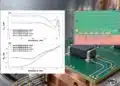
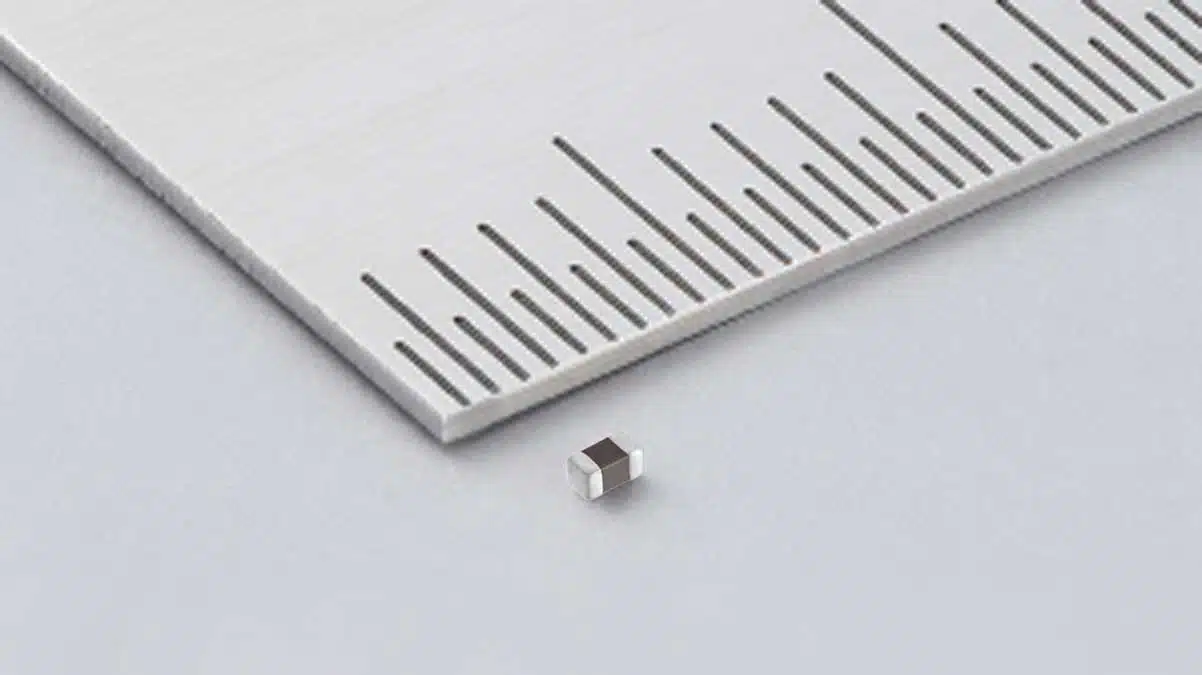
Murata releases automotive-compliant 0402 inch size chip ferrite beads that deliver wide band noise suppression of high-frequency (5.9GHz) vehicle-to-everything (5G-V2X) applications.

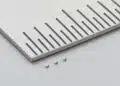
The new BLM15VM series is ideal for automotive powertrains and safety applications. It supports high frequencies. 1000Ω (Typ.) @5.9GHz. With its compact 0402-inch size (1.0×0.5mm) can operate at temperatures ranging from -55 to 150°C. And it is compliant with AEC-Q200.

RelatedPosts

Murata Opens New Ceramic Capacitor Manufacturing and R&D Center in Japan

Murata Publishes Power Delivery Guide for AI Servers

Conductive Polymer Capacitor Market and Design‑In Guide to 2035

Murata Manufacturing Co. Ltd continues to push the envelope in automotive noise suppression technology with another industry first. By leveraging proprietary material technology and optimized structural design, the company’s new BLM15VM series of automotive-compliant chip ferrite beads deliver wide-band noise suppression of high-frequency (5.9GHz) 5G vehicle-to-everything (5G-V2X) applications that exhibit high impedance. Mass production to begin in July 2025.

In recent years, the use of high-frequency wireless communication in the automotive sector has increased. It is primarily used for content distribution for navigation, audio and other infotainment systems. Improving sensitivity and noise suppression in these advanced high-frequency communication systems becomes mission critical to support the connected car for ADAS (Advanced Driver Assistance Systems) and eventually autonomous driving. 

RF inductors typically used for noise suppression in sub-6GHz communication have a narrow frequency band at high impedance, making it necessary to select components that match the noise frequency band. With its broad high-frequency band at high impedance, the BLM15VM series allows easy noise suppression across multiple frequency bands using just one product. Even at 5.9GHz, the chip ferrite beads within the series will typically attain impedance values of 1000Ω.

By enabling error-free high-frequency communication, which is crucial for autonomous driving, the BLM15VM series significantly improves reception sensitivity in V2X communication in the 5.9GHz bands for autonomous driving and stable operation of dedicated short-range communication (DSRC) based control systems, operating in the 5.8GHz band, for improved road safety. Additionally, since Wi-Fi 6E and Wi-Fi 7, the communication standards for wireless LAN, also use the sub-6GHz band, this product can improve sensitivity and suppress noise in consumer communication devices. 

The AEC-Q200-compliant BLM15VM series of chip ferrite beads from Murata supports operating temperatures between -55 to 150°C and is supplied in a compact 0402-inch size(1.0×0.5mm). Murata is committed to expanding its lineup to meet market needs.

For more details about the Product, see the ‘BLM15VM150BH1’ page.

Related

Source: Murata

Recent Posts

Würth Elektronik Announces Partner Program

6.2.2026
18

Vishay Releases Compact 0806 Low‑DCR Power Inductor

5.2.2026
31

Murata Publishes Power Delivery Guide for AI Servers

4.2.2026
94

Selecting Current Sense Transformers with Würth Elektronik REDEXPERT

3.2.2026
24

Enabling Software‑Defined Vehicle Architectures: Automotive Ethernet and Zonal Smart Power

2.2.2026
30

Bourns Releases High‑Q Air Coil Inductors for RF Aplications

29.1.2026
44

CMSE 2026 Announces Call for Presentations on High-Reliability Military and Space Electronics

28.1.2026
51

ESA Call for Papers 6th Space Passive Component Days – SPCD 2026

28.1.2026
49

Würth Elektronik Offers Halogen‑Free EMC Gaskets for Displays and Housings

28.1.2026
16

Upcoming Events

Feb 11
16:00 - 17:00 CET

What’s Next in Power Electronics Design

Feb 24
16:00 - 17:00 CET

Designing Qi2 Wireless Power Systems: Practical Development and EMC Optimization

Mar 3
16:00 - 17:00 CET

Cybersecurity at the Eleventh Hour – from RED to CRA – Information and Discussion

View Calendar

Popular Posts

  • Buck Converter Design and Calculation

    0 shares
    Share 0 Tweet 0
  • Boost Converter Design and Calculation

    0 shares
    Share 0 Tweet 0
  • LLC Resonant Converter Design and Calculation

    0 shares
    Share 0 Tweet 0
  • Flyback Converter Design and Calculation

    0 shares
    Share 0 Tweet 0
  • Ripple Current and its Effects on the Performance of Capacitors

    3 shares
    Share 3 Tweet 0
  • Dual Active Bridge (DAB) Topology

    0 shares
    Share 0 Tweet 0
  • MLCC and Ceramic Capacitors

    0 shares
    Share 0 Tweet 0
  • How Metal Prices Are Driving Passive Component Price Hikes

    0 shares
    Share 0 Tweet 0
  • What is a Dielectric Constant and DF of Plastic Materials?

    4 shares
    Share 4 Tweet 0
  • Degradation of Capacitors and its Failure Mechanisms

    0 shares
    Share 0 Tweet 0

Newsletter Subscription


Passive Components Blog

© EPCI - Leading Passive Components Educational and Information Site

  • Home
  • Privacy Policy
  • EPCI Membership & Advertisement
  • About

No Result
View All Result
  • Home
  • Knowledge Blog
  • PCNS

© EPCI - Leading Passive Components Educational and Information Site

This website uses cookies. By continuing to use this website you are giving consent to cookies being used. Visit our Privacy and Cookie Policy.
Go to mobile version