



Passive Components Blog
No Result
View All Result
  • Home
  • News
    • All
    • Aerospace & Defence
    • Antenna
    • Applications
    • Automotive
    • Capacitors
    • Circuit Protection Devices
    • electro-mechanical news
    • Filters
    • Fuses
    • Inductors
    • Industrial
    • Integrated Passives
    • inter-connect news
    • Market & Supply Chain
    • Market Insights
    • Medical
    • Modelling and Simulation
    • New Materials & Supply
    • New Technologies
    • Non-linear Passives
    • Oscillators
    • Passive Sensors News
    • Resistors
    • RF & Microwave
    • Telecommunication
    • Weekly Digest

    Samsung MLCC Revenue Seen Above KRW 8T by 2027, Murata EOL Actions Reshape Supply

    ROHM SDR01 high anti-surge thick-film chip resistor in 1005 metric 0402 package with 0.33 W rated power

    ROHM Introduces Anti-Surge 0402 Resistors Rated at 0.33 W

    ECIA Industry Pulse Q3 2026 chart showing passive components, semiconductors and electro-mechanical component market sentiment and lead-time pressure

    ECIA Industry Pulse Moderates as Passive Lead Times Tighten

    LG Innotek Demonstrates FC-BGA Substrates With Embedded Silicon Capacitors for AI Power Delivery

    On-Chip 3D-Printed Copper Microinductors: A New Route to Compact RF Electronics

    Emerging Capacitor Markets in Fusion Energy

    Murata DLW32SH_MF 1210 surface-mount common mode choke coil with metal terminals for automotive CAN FD signal-line noise suppression

    Murata Introduces Common Mode Chokes for Automotive CAN FD up to 150°C

    onsemi solid-state transformer concept for 800 V HVDC AI data center power conversion with SiC modules, DC-link capacitors and high-frequency magnetics

    Solid-State Transformers for 800 V AI Data Centers: Passive Component Design Considerations

    Littelfuse TX00AT314AMA omnipolar TMR magnetic switch sensor in a leaded TO-92-3 through-hole package

    Littelfuse Expands Omnipolar TMR Switch with Leaded TO-92 Package Option

    Trending Tags

    • Ripple Current
    • RF
    • Leakage Current
    • Tantalum vs Ceramic
    • Snubber
    • Low ESR
    • Feedthrough
    • Derating
    • Dielectric Constant
    • New Products
    • Market Reports
  • Knowledge Blog
  • Dossiers
    • AI Hardware Dossier
    • Automotive Dossier
    • Industrial Robotics Dossier
    • Power Converter Dossier
    • Capacitor Dossier
    • Resistor Dossier
    • Inductor Dossier
    • Circuit Protection Dossier
  • Suppliers
    • Who is Who
  • PCNS
    • PCNS 2025
    • PCNS 2023
    • PCNS 2021
    • PCNS 2019
    • PCNS 2017
  • Events
  • Home
  • News
    • All
    • Aerospace & Defence
    • Antenna
    • Applications
    • Automotive
    • Capacitors
    • Circuit Protection Devices
    • electro-mechanical news
    • Filters
    • Fuses
    • Inductors
    • Industrial
    • Integrated Passives
    • inter-connect news
    • Market & Supply Chain
    • Market Insights
    • Medical
    • Modelling and Simulation
    • New Materials & Supply
    • New Technologies
    • Non-linear Passives
    • Oscillators
    • Passive Sensors News
    • Resistors
    • RF & Microwave
    • Telecommunication
    • Weekly Digest

    Samsung MLCC Revenue Seen Above KRW 8T by 2027, Murata EOL Actions Reshape Supply

    ROHM SDR01 high anti-surge thick-film chip resistor in 1005 metric 0402 package with 0.33 W rated power

    ROHM Introduces Anti-Surge 0402 Resistors Rated at 0.33 W

    ECIA Industry Pulse Q3 2026 chart showing passive components, semiconductors and electro-mechanical component market sentiment and lead-time pressure

    ECIA Industry Pulse Moderates as Passive Lead Times Tighten

    LG Innotek Demonstrates FC-BGA Substrates With Embedded Silicon Capacitors for AI Power Delivery

    On-Chip 3D-Printed Copper Microinductors: A New Route to Compact RF Electronics

    Emerging Capacitor Markets in Fusion Energy

    Murata DLW32SH_MF 1210 surface-mount common mode choke coil with metal terminals for automotive CAN FD signal-line noise suppression

    Murata Introduces Common Mode Chokes for Automotive CAN FD up to 150°C

    onsemi solid-state transformer concept for 800 V HVDC AI data center power conversion with SiC modules, DC-link capacitors and high-frequency magnetics

    Solid-State Transformers for 800 V AI Data Centers: Passive Component Design Considerations

    Littelfuse TX00AT314AMA omnipolar TMR magnetic switch sensor in a leaded TO-92-3 through-hole package

    Littelfuse Expands Omnipolar TMR Switch with Leaded TO-92 Package Option

    Trending Tags

    • Ripple Current
    • RF
    • Leakage Current
    • Tantalum vs Ceramic
    • Snubber
    • Low ESR
    • Feedthrough
    • Derating
    • Dielectric Constant
    • New Products
    • Market Reports
  • Knowledge Blog
  • Dossiers
    • AI Hardware Dossier
    • Automotive Dossier
    • Industrial Robotics Dossier
    • Power Converter Dossier
    • Capacitor Dossier
    • Resistor Dossier
    • Inductor Dossier
    • Circuit Protection Dossier
  • Suppliers
    • Who is Who
  • PCNS
    • PCNS 2025
    • PCNS 2023
    • PCNS 2021
    • PCNS 2019
    • PCNS 2017
  • Events
No Result
View All Result
Passive Components Blog
No Result
View All Result

New Approach Uses Light Instead of Robots to Assemble Electronic Components

9.11.2017
Reading Time: 4 mins read
A A

source: OSA.org news

WASHINGTON — An international team of researchers has developed a new light-based manipulation method that could one day be used to mass produce electronic components for smartphones, computers and other devices. A cheaper and faster way to produce these components could make it less expensive to connect everyday objects — from clothing to household appliances — to the internet, advancing the concept known as the Internet of Things. The micromanipulation technique might also be used to create a safer and faster-charging replacement for mobile device batteries.
Optical traps, which use light to hold and move small objects in liquid, are a promising non-contact method for assembling electronic and optical devices. However, when using these traps for manufacturing applications, the liquid must be removed, a process that tends to displace any pattern or structure that has been formed using an optical trap.

RelatedPosts

Samsung MLCC Revenue Seen Above KRW 8T by 2027, Murata EOL Actions Reshape Supply

ROHM Introduces Anti-Surge 0402 Resistors Rated at 0.33 W

ECIA Industry Pulse Moderates as Passive Lead Times Tighten

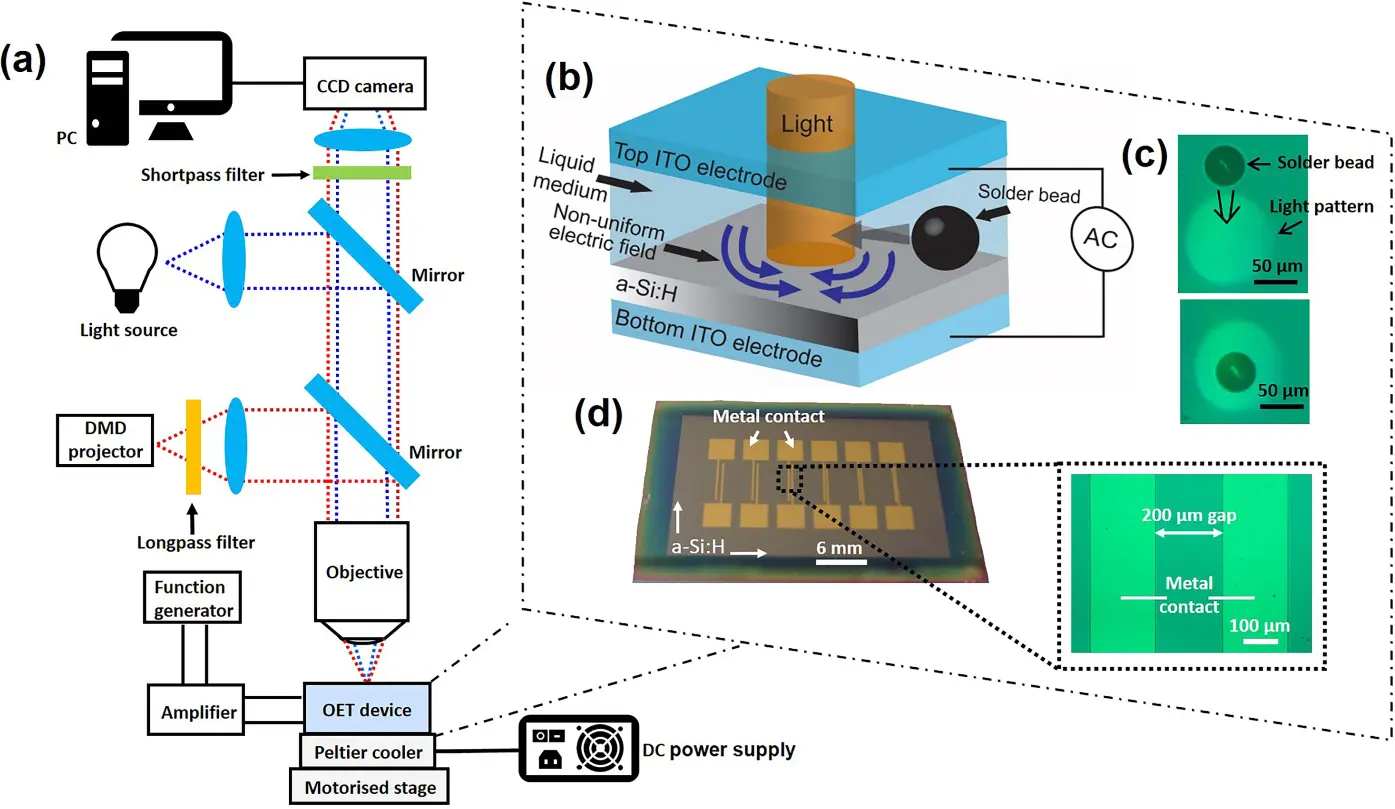
In The Optical Society (OSA) journal Optics Express, researchers in Steven Neale’s Micromanipulation Research Group, University of Glasgow, Scotland, detail their method for using an advanced optical trapping approach known as optoelectronic tweezers to assemble electrical contacts. Thanks to an innovative freeze-drying method developed by Shuailong Zhang, a member of Neale’s research group, the liquid could be removed without disturbing the assembled components.

“The forces formed by these optoelectronic tweezers have been compared to Star-Trek like tractor beams that can move objects through a medium with nothing touching them,” said Neale. “This conjures up images of assembly lines with no robotic arms. Instead, discrete components assemble themselves almost magically as they are guided by the patterns of light.”


After using optoelectronic tweezers to assemble a line of solder beads (a), the researchers froze the liquid (b) and then reduced the pressure so that the frozen liquid turned directly from a solid into a gas, drying out the device (c). They then heated the beads to fuse them into an electrical connection. Image Credit: Shuailong Zhang

The researchers demonstrated the technique by assembling a pattern of tiny solder beads with an optoelectronic trap, removing the liquid, and then heating the pattern to fuse the beads together, forming electrical connections. They used the solder beads to demonstrate that in the future, these microparticles could be assembled and fused to create electrical connections.

“Optoelectronic tweezers are cost-effective and allow parallel micromanipulation of particles,” said Zhang, who is now at the University of Toronto in Canada. “In principle, we can move 10,000 beads at the same time. Combining this with our freeze-drying approach creates a very inexpensive platform that is suitable for use in mass production.”

Improved electronics manufacturing
The new technique could offer an alternative way to make the circuit boards that connect the components found in most of today’s electronics. These types of devices are currently made using automated machines that pick up tiny parts, place them onto the circuit board and solder them into place. This process requires an expensive motorized stage to position the board and a costly high-precision robotic arm to pick up and place the tiny parts onto the device. The cost of these micromanipulation systems continues to rise as the shrinking size of electronics increases precision requirements.

“The optoelectronic tweezers and freeze-drying technique can be used to not only assemble solder beads, but also to assemble a broad range of objects such as semiconductor nanowires, carbon nanotubes, microlasers and microLEDs,” said Zhang. “Eventually, we want to use this tool to assemble electronic components such as capacitors and resistors as well as photonic devices, such as lasers and LEDs, together in a device or system.”

Trapping particles with optoelectronic manipulation
The researchers used optoelectronic tweezers because this optical manipulation approach can form thousands of traps at once, offering the potential of massively parallel assembly. The tweezers are formed using a layer of silicon that changes its electrical conductivity when exposed to light. In the areas exposed to points of light, a non-uniform electric field forms that interacts with particles or beads in a liquid layer on top of the silicon, allowing the particles to be precisely moved by moving the point of light. Creating patterns of light points allows multiple particles to be moved simultaneously.

“Using our method, we can move solder beads measuring from the nanometer range up to about 150 microns,” said Zhang. “We have been able to move objects that are over 150 microns, but it’s more challenging because as the size of the object increases, the frictional force also increases.”

After using the optoelectronic tweezers to assemble a pattern of 40-micron-diameter, commercially available solder beads, the researchers froze the liquid in the optoelectronic tweezer device and then reduced the surrounding pressure to allow the frozen liquid to turn from a solid directly into a gas. This freeze-drying approach allowed the assembled solder beads to remain fixed in place after the liquid was removed. The researchers say it can be used to remove liquid used with any type of optical trap, or even traps formed with acoustic waves.

In addition to assembling the solder beads into different lines, the researchers also demonstrated parallel assembly of several beads and used the beads to form electrical connections. The solder beads exhibit a strong dielectric force, which means they can be moved accurately and fast, allowing very efficient assembly of structures.

The researchers are now working to turn their laboratory-based system into one that would combine the optoelectronic tweezer and freeze-drying process in a single unit. They are also developing a software interface to control the generation of a light pattern based on the number of particles that needed to be trapped.

“We are now using a computer to generate the light pattern to move the beads, but we are working on an app that would allow a tablet or smart phone to be used instead,” said Zhang. “This could allow someone to sit away from the system and use their finger to control the movements of the particles, for example.”

Neale recently received funding to continue this line of research by using the new optical micromanipulation approach to create high energy density capacitors to replace batteries in mobile devices.

The full paper can is available online: S. Zhang, Y. Liu, Y. Qian, W. Li, J. Juvert, P. Tian, J.-C. Navarro, A.W. Clark, E. Gu, M.D. Dawson, J.M. Cooper, S.L. Neale, “Manufacturing with light – micro-assembly of opto-electronic microstructures,” Opt. Express, Volume 25, Issue 23, 28838-28850 (2017).
DOI: 10.1364/OE.25.028838.

Related

Recent Posts

Samsung MLCC Revenue Seen Above KRW 8T by 2027, Murata EOL Actions Reshape Supply

11.9.2026
11
ROHM SDR01 high anti-surge thick-film chip resistor in 1005 metric 0402 package with 0.33 W rated power

ROHM Introduces Anti-Surge 0402 Resistors Rated at 0.33 W

11.9.2026
7

LG Innotek Demonstrates FC-BGA Substrates With Embedded Silicon Capacitors for AI Power Delivery

10.9.2026
24

Emerging Capacitor Markets in Fusion Energy

10.9.2026
30
onsemi solid-state transformer concept for 800 V HVDC AI data center power conversion with SiC modules, DC-link capacitors and high-frequency magnetics

Solid-State Transformers for 800 V AI Data Centers: Passive Component Design Considerations

9.9.2026
66
TDK CN series 10 µF 100 V X7R soft-termination multilayer ceramic capacitor in 3225 EIA 1210 package

TDK Releases 100 V Soft-Termination X7R MLCCs 10 uF in 3225 Package

9.9.2026
14
Compact inductive rotary position encoder sensor near a motor shaft, representing the Vishay RAIK045I MP encoder category

Vishay Introduces 16-Bit Inductive Encoder for Motor-Adjacent Position Sensing

9.9.2026
15
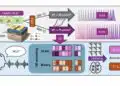
Overview of fabricated ferroelectric capacitors improving hyperdimensional computing task learning accuracy. a The experimental work reported in this study comprises ferroelectric capacitor (FeCAP) device fabrication, structural and electrical characterization, analog state identification and their reliability study. b The computational part of the work explores the benefits of using characteristics from the fabricated devices in a hyperdimensional computing scheme; source: authors

High-Precision Hyperdimensional Computing with Multi-Level Ferroelectric HZO Capacitors

7.9.2026
23

Bourns Releases Low-Profile Incremental Ring Encoder Targets Compact Industrial HMIs

7.9.2026
5

Upcoming Events

Sep 16
17:00 - 18:00 CEST

Designing a 5 kW, 800 V-to-50 V PSFB Converter for Next-Generation Data Centers

Sep 29
16:00 - 17:00 CEST

Cybersecurity 2026

Nov 24
16:00 - 17:00 CET

Component selection with the WE REDEXPERT® DC-DC Converter Designer Tool

View Calendar

Popular Posts

  • Buck Converter Design and Calculation

    0 shares
    Share 0 Tweet 0
  • LLC Resonant Converter Design and Calculation

    0 shares
    Share 0 Tweet 0
  • Boost Converter Design and Calculation

    0 shares
    Share 0 Tweet 0
  • Flyback Converter Design and Calculation

    0 shares
    Share 0 Tweet 0
  • Earthing Systems and IEC Classification Explained

    0 shares
    Share 0 Tweet 0
  • MLCC and Ceramic Capacitors

    0 shares
    Share 0 Tweet 0
  • Resistor Symbols

    0 shares
    Share 0 Tweet 0
  • Capacitor Charging and Discharging

    0 shares
    Share 0 Tweet 0
  • Audio Capacitors: Choosing Capacitors for Crossover Circuits

    0 shares
    Share 0 Tweet 0
  • Thermistors Basics, NTC and PTC Thermistors

    0 shares
    Share 0 Tweet 0

Newsletter Subscription


Passive Components Blog

© 2015–2026
All rights reserved

  • Home
  • Privacy Policy
  • EPCI Membership & Advertisement
  • About

No Result
View All Result
  • Home
  • Knowledge Blog
  • Dossiers
  • PCNS

© 2015–2026
All rights reserved