










Passive Components Blog
No Result
View All Result
  • Home
  • NewsFilter
    • All
    • Aerospace & Defence
    • Antenna
    • Applications
    • Automotive
    • Capacitors
    • Circuit Protection Devices
    • electro-mechanical news
    • Filters
    • Fuses
    • Inductors
    • Industrial
    • Integrated Passives
    • inter-connect news
    • Market & Supply Chain
    • Market Insights
    • Medical
    • Modelling and Simulation
    • New Materials & Supply
    • New Technologies
    • Non-linear Passives
    • Oscillators
    • Passive Sensors News
    • Resistors
    • RF & Microwave
    • Telecommunication
    • Weekly Digest

    Designing a Custom Core Transformer for 10 kW LLC Data Center Power Stages

    Magnetics Design in High‑Frequency GaN Converters

    ECIA Industry Pulse April 2026: Sentiment Cools but Stays Strong

    Industrial Passive Components Markets and Technologies 2026

    Automotive Passive Components Technology Dossier

    Samsung Electro-Mechanics Signs 1.5T KRW Silicon Capacitor AI Contract

    Murata Expands Thermistor Production Capacity at Yokaichi Plant

    Hirose Expands Compact High‑Voltage EV connectors

    Qi2 Wireless Charging: Inductors, Capacitors and EMC Filters

    Trending Tags

    • Ripple Current
    • RF
    • Leakage Current
    • Tantalum vs Ceramic
    • Snubber
    • Low ESR
    • Feedthrough
    • Derating
    • Dielectric Constant
    • New Products
    • Market Reports
  • VideoFilter
    • All
    • Antenna videos
    • Capacitor videos
    • Circuit Protection Video
    • Filter videos
    • Fuse videos
    • Inductor videos
    • Inter-Connect Video
    • Non-linear passives videos
    • Oscillator videos
    • Passive sensors videos
    • Resistor videos

    Magnetics Design in High‑Frequency GaN Converters

    Qi2 Wireless Charging: Inductors, Capacitors and EMC Filters

    Two‑capacitor paradox explained for engineers

    Capacitances of Nonlinear MLCCs: What Datasheets Don’t Tell You

    Tapped Inductor Buck Converter Fundamentals

    Planar vs Conventional Transformer: When it Make Sense

    Modeling Fringing Field Losses in Inductors & Transformers

    Why Power Inductors Use a Ferrite Core With an Air Gap

    Transformer-Based Power-Line Harvester Magnetic Design

    Trending Tags

    • Capacitors explained
    • Inductors explained
    • Resistors explained
    • Filters explained
    • Application Video Guidelines
    • EMC
    • New Products
    • Ripple Current
    • Simulation
    • Tantalum vs Ceramic
  • Knowledge Blog
  • DossiersNew
  • Suppliers
    • Who is Who
  • PCNS
    • PCNS 2025
    • PCNS 2023
    • PCNS 2021
    • PCNS 2019
    • PCNS 2017
  • Events
  • Home
  • NewsFilter
    • All
    • Aerospace & Defence
    • Antenna
    • Applications
    • Automotive
    • Capacitors
    • Circuit Protection Devices
    • electro-mechanical news
    • Filters
    • Fuses
    • Inductors
    • Industrial
    • Integrated Passives
    • inter-connect news
    • Market & Supply Chain
    • Market Insights
    • Medical
    • Modelling and Simulation
    • New Materials & Supply
    • New Technologies
    • Non-linear Passives
    • Oscillators
    • Passive Sensors News
    • Resistors
    • RF & Microwave
    • Telecommunication
    • Weekly Digest

    Designing a Custom Core Transformer for 10 kW LLC Data Center Power Stages

    Magnetics Design in High‑Frequency GaN Converters

    ECIA Industry Pulse April 2026: Sentiment Cools but Stays Strong

    Industrial Passive Components Markets and Technologies 2026

    Automotive Passive Components Technology Dossier

    Samsung Electro-Mechanics Signs 1.5T KRW Silicon Capacitor AI Contract

    Murata Expands Thermistor Production Capacity at Yokaichi Plant

    Hirose Expands Compact High‑Voltage EV connectors

    Qi2 Wireless Charging: Inductors, Capacitors and EMC Filters

    Trending Tags

    • Ripple Current
    • RF
    • Leakage Current
    • Tantalum vs Ceramic
    • Snubber
    • Low ESR
    • Feedthrough
    • Derating
    • Dielectric Constant
    • New Products
    • Market Reports
  • VideoFilter
    • All
    • Antenna videos
    • Capacitor videos
    • Circuit Protection Video
    • Filter videos
    • Fuse videos
    • Inductor videos
    • Inter-Connect Video
    • Non-linear passives videos
    • Oscillator videos
    • Passive sensors videos
    • Resistor videos

    Magnetics Design in High‑Frequency GaN Converters

    Qi2 Wireless Charging: Inductors, Capacitors and EMC Filters

    Two‑capacitor paradox explained for engineers

    Capacitances of Nonlinear MLCCs: What Datasheets Don’t Tell You

    Tapped Inductor Buck Converter Fundamentals

    Planar vs Conventional Transformer: When it Make Sense

    Modeling Fringing Field Losses in Inductors & Transformers

    Why Power Inductors Use a Ferrite Core With an Air Gap

    Transformer-Based Power-Line Harvester Magnetic Design

    Trending Tags

    • Capacitors explained
    • Inductors explained
    • Resistors explained
    • Filters explained
    • Application Video Guidelines
    • EMC
    • New Products
    • Ripple Current
    • Simulation
    • Tantalum vs Ceramic
  • Knowledge Blog
  • DossiersNew
  • Suppliers
    • Who is Who
  • PCNS
    • PCNS 2025
    • PCNS 2023
    • PCNS 2021
    • PCNS 2019
    • PCNS 2017
  • Events
No Result
View All Result
Passive Components Blog
No Result
View All Result

Penn State Demonstrated Polymer Alloy Capacitor Film with 4× Energy Density up to 250C

19.2.2026
Reading Time: 6 mins read
A A
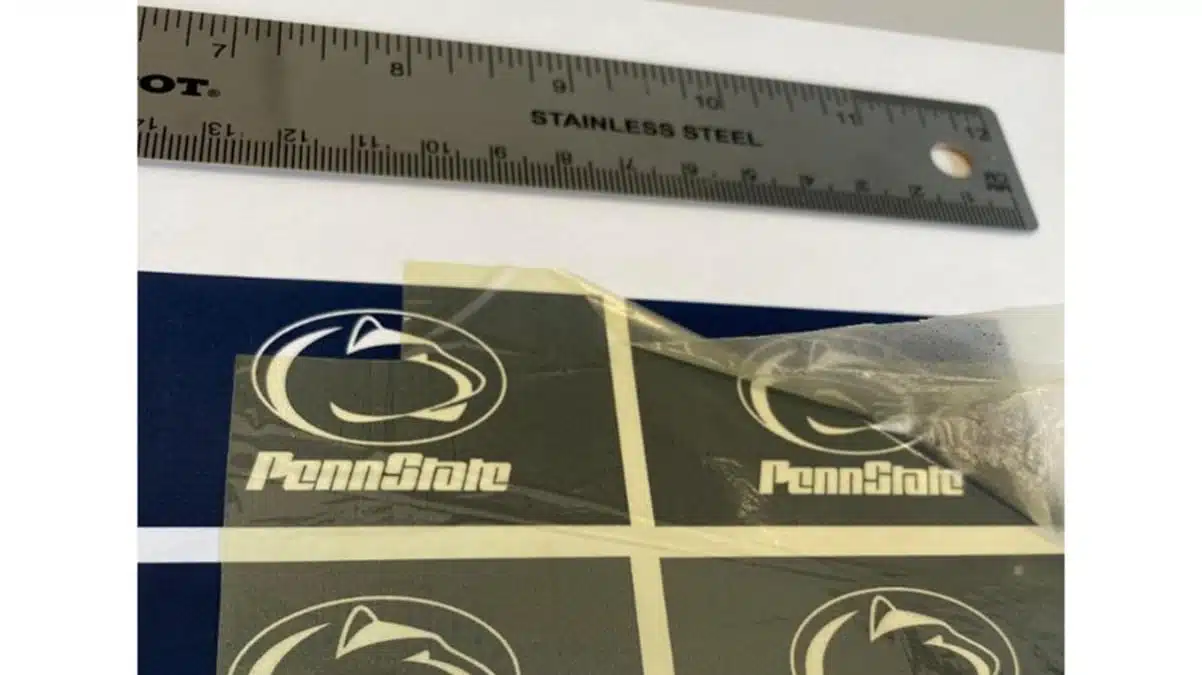
Researchers developed a polymer capacitor by combining two cheap, commercially available plastics. The new polymer capacitor makes use of the transparent material — pictured here, with vintage Penn State athletic marks visible through it — to store four times the energy and withstand significantly more heat.  Credit: Penn State

Researchers developed a polymer capacitor by combining two cheap, commercially available plastics. The new polymer capacitor makes use of the transparent material — pictured here, with vintage Penn State athletic marks visible through it — to store four times the energy and withstand significantly more heat. Credit: Penn State

A Penn State–led team has developed a new polymer “alloy” capacitor film that stores up to four times more energy than today’s state-of-the-art polymer capacitors while operating reliably up to 250 °C (482 °F).

This breakthrough could have major impact on power electronics used in electric vehicles, data centers, space systems and high‑temperature energy infrastructure.

RelatedPosts

Designing a Custom Core Transformer for 10 kW LLC Data Center Power Stages

Magnetics Design in High‑Frequency GaN Converters

ECIA Industry Pulse April 2026: Sentiment Cools but Stays Strong

Why Polymer Capacitors Limit Today’s Power Electronics

Polymer film capacitors are critical wherever short, powerful energy pulses are needed and stable DC bus voltage must be maintained.

  • In electric vehicles, polymer capacitors support inverters, DC‑link stages and power converters that must operate in tight spaces with high ambient temperatures near the drivetrain.
  • In data centers and high‑performance computing, capacitors help smooth power delivery to processors and storage, but current devices must be derated or cooled aggressively once temperatures approach about 100 °C (212 °F).
  • In aerospace, defense and space applications, the low temperature limits of typical polymer dielectrics often force designers toward heavier, more fragile ceramic solutions.

Conventional polymer capacitors typically fail thermally or electrically as they approach 212 °F because their long-chain molecules lose mechanical stability and their internal interfaces start to leak charge. This trade‑off between energy density and temperature robustness has been a fundamental bottleneck in polymer dielectrics.

The New Polymer Alloy Concept

The Penn State researchers tackled this limitation by engineering a nanostructured polymer “alloy” from two commercially available high‑temperature polymers.

  • One component is PEI (polyetherimide), originally produced by General Electric and already used in high‑temperature, high‑strength engineering applications such as pharmaceutical processing equipment.
  • The second component is PBPDA, a polymer known for high heat resistance and strong electrical insulation.

By mixing PEI and PBPDA at carefully controlled ratios and temperatures, the team induced self‑assembly into three‑dimensional nanostructures within thin films. The key parameter is immiscibility: like oil and water, the polymers do not fully mix, and instead phase‑separate at the nanoscale into well‑defined domains.

This controlled immiscibility yields:

  • A dense network of internal interfaces that act as barriers against mobile charge carriers.
  • Enhanced dielectric response compared to either base polymer alone.
  • A mechanically robust, flexible film suitable for practical capacitor fabrication.

Researchers describe this as the first polymer alloy of its kind to combine high energy density with stable performance across a very wide temperature range.

Performance Highlights

In tests reported in Nature, the new polymer alloy capacitor film demonstrated several notable performance gains over typical polymer dielectrics.

  • The dielectric constant K of each individual polymer is below 4, yet the alloy reaches a K of about 13.5.
  • This high K remains essentially constant from about −100 °C (−148 °F) up to 250 °C (482 °F), an exceptionally wide and application-relevant operating window.
  • Capacitors based on this film can store roughly four times the energy of standard polymer capacitors under comparable conditions.

For designers, the practical implications are significant:

  • For a given footprint, the new material can deliver up to four times the stored energy, supporting higher power density in inverters, converters and pulsed power stages.
  • Alternatively, designers can shrink capacitors to about one quarter of their original volume while maintaining the same energy storage, freeing board and system space and reducing weight.
  • The high‑temperature capability reduces or eliminates the need for aggressive cooling of capacitors in environments such as under‑hood automotive electronics and high‑density power modules.

The material’s polymeric nature also avoids the brittleness and processing complexity of ceramic or metal‑based dielectrics, enabling flexible form factors and easier integration.

Materials, Processing and Scalability

A key advantage of the new approach is its reliance on off‑the‑shelf polymers and straightforward processing.

  • Both PEI and PBPDA are already produced at industrial scale and are commercially available.
  • The film fabrication process follows conventional polymer processing methods: mixing at appropriate temperatures, self‑assembly into nanostructures, and formation of thin films that can be metallized to form capacitors.
  • The researchers emphasize that the route is compatible with large‑area manufacturing, making it feasible to produce long rolls of film for wound or stacked capacitors.

Microscopic and computational studies indicate that the self‑assembled interfaces within the alloy are central to both the elevated dielectric constant and the suppression of charge leakage at high fields and high temperatures. This suggests the broader design concept could be extended to other polymer combinations for tailored performance in different voltage and temperature regimes.

Target Applications and Commercialization Outlook

With its unique combination of high energy density, wide temperature stability and scalable processing, the polymer alloy is relevant for several high‑value application domains:

  • Electric vehicles: DC‑link and snubber capacitors in traction inverters, on‑board chargers and auxiliary converters that must survive hot under‑hood environments.
  • Data centers and telecom: High‑density power delivery networks where capacitors must operate reliably in thermally constrained server racks and edge computing units.
  • Aerospace and space: Lightweight, shock‑resistant capacitors that maintain performance across extreme temperatures, from cryogenic conditions to high‑temperature operation near power electronics.
  • Grid and energy infrastructure: High‑temperature capacitor banks for conversion and conditioning in renewable energy integration and high‑voltage DC systems.

The team has already filed a patent on the polymer capacitor technology and is exploring pathways to bring it to market. Future work is likely to focus on scaling the film manufacturing process, optimizing electrode designs, and validating long‑term reliability under realistic electrical and thermal stress profiles.

Source

This article is based on information provided in a Penn State University research news release and the associated peer‑reviewed publication, with additional technical contextualization for power electronics and capacitor applications.

References

  1. Penn State research news: New plastic material could solve energy storage challenge, researchers report
  2. Nature article: High-temperature polymer alloy dielectric for energy-dense capacitors

Related

Recent Posts

Industrial Passive Components Markets and Technologies 2026

21.5.2026
62

Automotive Passive Components Technology Dossier

21.5.2026
46

Samsung Electro-Mechanics Signs 1.5T KRW Silicon Capacitor AI Contract

21.5.2026
42

Hirose Expands Compact High‑Voltage EV connectors

21.5.2026
9

Qi2 Wireless Charging: Inductors, Capacitors and EMC Filters

21.5.2026
22

Samsung Introduced Low ESL 3-Terminal Reverse-Geometry MLCCs for High-Performance ADAS

20.5.2026
46

Würth Elektronik Presents New Bidirectional Digital Isolators

20.5.2026
27

Using Stress–Strain Curves to Diagnose Tantalum Powders for Capacitors

20.5.2026
27

Coilcraft Introduces SMT Current Sense Transformers for High‑Performance Power Electronics

20.5.2026
24

Upcoming Events

Jun 2
16:00 - 17:00 CEST

Calculation, Simulation and Measurement of 800V EMC Filters

Jun 16
16:00 - 17:00 CEST

EMC with EMC – EMC‑compliant design with electromechanical connectors

View Calendar

Popular Posts

  • Buck Converter Design and Calculation

    0 shares
    Share 0 Tweet 0
  • Boost Converter Design and Calculation

    0 shares
    Share 0 Tweet 0
  • Flyback Converter Design and Calculation

    0 shares
    Share 0 Tweet 0
  • LLC Resonant Converter Design and Calculation

    0 shares
    Share 0 Tweet 0
  • MLCC and Ceramic Capacitors

    0 shares
    Share 0 Tweet 0
  • Capacitor Charging and Discharging

    0 shares
    Share 0 Tweet 0
  • What Electronics Engineer Needs to Know About Passive Low Pass Filters

    0 shares
    Share 0 Tweet 0
  • Dual Active Bridge (DAB) Topology

    0 shares
    Share 0 Tweet 0
  • Ripple Current and its Effects on the Performance of Capacitors

    3 shares
    Share 3 Tweet 0
  • Samsung Electro-Mechanics Releases High-Capacitance MLCCs for AI Server Applications

    0 shares
    Share 0 Tweet 0

Newsletter Subscription


Passive Components Blog

© EPCI - Leading Passive Components Educational and Information Site

  • Home
  • Privacy Policy
  • EPCI Membership & Advertisement
  • About

No Result
View All Result
  • Home
  • Knowledge Blog
  • Dossiers
  • PCNS

© EPCI - Leading Passive Components Educational and Information Site

This website uses cookies. By continuing to use this website you are giving consent to cookies being used. Visit our Privacy and Cookie Policy.
Go to mobile version