








Passive Components Blog
No Result
View All Result
  • Home
  • NewsFilter
    • All
    • Aerospace & Defence
    • Antenna
    • Applications
    • Automotive
    • Capacitors
    • Circuit Protection Devices
    • electro-mechanical news
    • Filters
    • Fuses
    • Inductors
    • Industrial
    • Integrated Passives
    • inter-connect news
    • Market & Supply Chain
    • Market Insights
    • Medical
    • Modelling and Simulation
    • New Materials & Supply
    • New Technologies
    • Non-linear Passives
    • Oscillators
    • Passive Sensors News
    • Resistors
    • RF & Microwave
    • Telecommunication
    • Weekly Digest

    YAGEO Introduces Automotive MOV Surge Protection Varistor

    TDK Releases Compact SMD Gate Drive Transformers for xEV

    Wk 26 Electronics Supply Chain Digest

    High-Q RF & Microwave MLCCs: A Cross-Vendor Benchmark

    Molex Unveils Automotive Ethernet Connectors for Next‑Gen SDV Architectures

    TAIYO YUDEN Introduced Hybrid Aluminum Capacitors for 48V Automotive Power Supplies

    ECIA Industry Pulse June 2026 Reaches Five‑Year High

    YAGEO Announces July 2026 Capacitor Price Increase

    YAGEO Presents Single-Phase Common Mode Chokes for Industrial EMI Suppression

    Trending Tags

    • Ripple Current
    • RF
    • Leakage Current
    • Tantalum vs Ceramic
    • Snubber
    • Low ESR
    • Feedthrough
    • Derating
    • Dielectric Constant
    • New Products
    • Market Reports
  • VideoFilter
    • All
    • Antenna videos
    • Capacitor videos
    • Circuit Protection Video
    • Filter videos
    • Fuse videos
    • Inductor videos
    • Inter-Connect Video
    • Non-linear passives videos
    • Oscillator videos
    • Passive sensors videos
    • Resistor videos

    KYOCERA AVX Presents Antenna Integrator Studio Tutorial for Antenna Placement and RF Design

    Power Design Simulation Tools for Faster Inductor Selection and Loss Optimization

    EMC‑Compliant PCB and Connector Design Guidelines

    Why Isolated DC/DC Power Supplies Fail Late, Würth Elektronik Podcast

    Designing 800 V DC EMC Filters: Calculation, Simulation and Measurement

    Current Sense Transformer Datasheet and Design‑in Guide

    Designing a USB Type‑C Flyback Planar Transformer with Frenetic’s Planar Tool

    Magnetics Design in High‑Frequency GaN Converters

    Qi2 Wireless Charging: Inductors, Capacitors and EMC Filters

    Trending Tags

    • Capacitors explained
    • Inductors explained
    • Resistors explained
    • Filters explained
    • Application Video Guidelines
    • EMC
    • New Products
    • Ripple Current
    • Simulation
    • Tantalum vs Ceramic
  • Knowledge Blog
  • DossiersNew
  • Suppliers
    • Who is Who
  • PCNS
    • PCNS 2025
    • PCNS 2023
    • PCNS 2021
    • PCNS 2019
    • PCNS 2017
  • Events
  • Home
  • NewsFilter
    • All
    • Aerospace & Defence
    • Antenna
    • Applications
    • Automotive
    • Capacitors
    • Circuit Protection Devices
    • electro-mechanical news
    • Filters
    • Fuses
    • Inductors
    • Industrial
    • Integrated Passives
    • inter-connect news
    • Market & Supply Chain
    • Market Insights
    • Medical
    • Modelling and Simulation
    • New Materials & Supply
    • New Technologies
    • Non-linear Passives
    • Oscillators
    • Passive Sensors News
    • Resistors
    • RF & Microwave
    • Telecommunication
    • Weekly Digest

    YAGEO Introduces Automotive MOV Surge Protection Varistor

    TDK Releases Compact SMD Gate Drive Transformers for xEV

    Wk 26 Electronics Supply Chain Digest

    High-Q RF & Microwave MLCCs: A Cross-Vendor Benchmark

    Molex Unveils Automotive Ethernet Connectors for Next‑Gen SDV Architectures

    TAIYO YUDEN Introduced Hybrid Aluminum Capacitors for 48V Automotive Power Supplies

    ECIA Industry Pulse June 2026 Reaches Five‑Year High

    YAGEO Announces July 2026 Capacitor Price Increase

    YAGEO Presents Single-Phase Common Mode Chokes for Industrial EMI Suppression

    Trending Tags

    • Ripple Current
    • RF
    • Leakage Current
    • Tantalum vs Ceramic
    • Snubber
    • Low ESR
    • Feedthrough
    • Derating
    • Dielectric Constant
    • New Products
    • Market Reports
  • VideoFilter
    • All
    • Antenna videos
    • Capacitor videos
    • Circuit Protection Video
    • Filter videos
    • Fuse videos
    • Inductor videos
    • Inter-Connect Video
    • Non-linear passives videos
    • Oscillator videos
    • Passive sensors videos
    • Resistor videos

    KYOCERA AVX Presents Antenna Integrator Studio Tutorial for Antenna Placement and RF Design

    Power Design Simulation Tools for Faster Inductor Selection and Loss Optimization

    EMC‑Compliant PCB and Connector Design Guidelines

    Why Isolated DC/DC Power Supplies Fail Late, Würth Elektronik Podcast

    Designing 800 V DC EMC Filters: Calculation, Simulation and Measurement

    Current Sense Transformer Datasheet and Design‑in Guide

    Designing a USB Type‑C Flyback Planar Transformer with Frenetic’s Planar Tool

    Magnetics Design in High‑Frequency GaN Converters

    Qi2 Wireless Charging: Inductors, Capacitors and EMC Filters

    Trending Tags

    • Capacitors explained
    • Inductors explained
    • Resistors explained
    • Filters explained
    • Application Video Guidelines
    • EMC
    • New Products
    • Ripple Current
    • Simulation
    • Tantalum vs Ceramic
  • Knowledge Blog
  • DossiersNew
  • Suppliers
    • Who is Who
  • PCNS
    • PCNS 2025
    • PCNS 2023
    • PCNS 2021
    • PCNS 2019
    • PCNS 2017
  • Events
No Result
View All Result
Passive Components Blog
No Result
View All Result

YAGEO Introduces Automotive MOV Surge Protection Varistor

7.7.2026
Reading Time: 7 mins read
A A

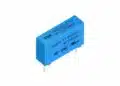
YAGEO Group’s KH-AT Series is a family of automotive‑grade, AEC‑Q200 qualified metal oxide varistors (MOV) designed for surge protection in demanding automotive, industrial and data‑center power electronics.

The YAGEO MOV varistors target AC input and DC bus protection in EV chargers, AI server power shelves, renewable energy systems and telecom infrastructure where high surge endurance and long-term reliability are critical.

RelatedPosts

TDK Releases Compact SMD Gate Drive Transformers for xEV

Wk 26 Electronics Supply Chain Digest

High-Q RF & Microwave MLCCs: A Cross-Vendor Benchmark

Key features and benefits

  • Automotive‑grade construction with qualification to AEC‑Q200 Rev. E, supporting use in safety‑relevant automotive ECUs and power modules exposed to vibration, humidity and wide temperature swings.
  • High surge energy absorption with surge current capability (8/20 µs) up to 10 kA in the largest 20 mm disc size, allowing single‑device protection of high‑power AC lines and DC links.
  • Wide operating voltage range from 130 Vac to 750 Vac (corresponding to 170 Vdc to 990 Vdc) enabling coverage from low‑power single‑phase mains up to high‑voltage three‑phase and industrial supplies.
  • Silicone‑coated, through‑hole package that enhances resistance to high temperature, humidity and mechanical stress, improving robustness in harsh environments such as under‑hood automotive or outdoor equipment.
  • Capability to withstand up to three reflow soldering cycles, enabling manufacturers to keep THT MOVs in an SMT reflow process and reduce or eliminate separate wave soldering steps.
  • Global certifications including UL, CSA and TÜV recognition, supporting use in worldwide OEM platforms without redesign for regional compliance.

Typical applications

The KH‑AT Series is positioned for surge protection across several high‑energy and high‑reliability domains.

  • Electric vehicle on‑board chargers (OBC) in the 3.3 kW to 22 kW range, for AC input protection against differential‑mode and common‑mode surges at the mains interface and within integrated charging systems.
  • Automotive powertrain and motor control units, where the MOVs can clamp transients on the DC bus, auxiliary supplies and I/O lines exposed to load dump and inductive switching events.
  • AI server rack power supplies and battery backup units in data centers, including large GPU systems such as GB200‑class platforms, where the MOVs support high surge endurance and uptime requirements on AC power shelves.
  • Industrial power supplies and power modules used in factory automation and drives, protecting against transient overvoltages from grid disturbances and switching of large loads.
  • Renewable energy and charging infrastructure, including EV charging stations and solar or wind inverters, where grid‑side and DC‑side surge protection is required under outdoor environmental conditions.
  • Smart grid equipment and telecom base stations, providing protection for sensitive control and communication electronics in geographically distributed installations.

Technical highlights

The KH‑AT Series covers multiple disc sizes and voltage classes to fit different surge energy and board space constraints.

Package sizes and ratings

Disc sizeTypical surge current (8/20 µs)Notes
7 mm1.75 kAFor lower power lines and auxiliary supplies.
10 mm3.5 kAFor standard single‑phase mains protection.
14 mm6 kAFor higher energy industrial and EV charger inputs.
20 mm10 kAFor high‑power, high‑energy surge environments.

Operating voltage is specified from 130 Vac to 750 Vac, corresponding approximately to 170 Vdc to 990 Vdc, with varistor voltage values in the range of 200 V to 1200 V at 1 mA test current according to manufacturer datasheet. This allows designers to select a clamping level and continuous voltage rating appropriate to the mains nominal voltage and expected surge profile rather than over‑dimensioning with generic devices.

Qualification and endurance

The series has been qualified with test conditions that mirror harsh automotive and industrial environments.

  • Thermal cycling: 1,000 cycles from –40 °C to +125 °C, representing repeated cold start and high‑temperature operation typical of under‑hood installations.
  • Biased humidity: 1,000 hours at 85 °C / 85% RH with applied voltage, which stresses the silicone coating and internal MOV element under combined moisture and electrical load.
  • Operational life: 1,000 hours at 125 °C maximum operating temperature, supporting long‑term operation near the upper temperature range of many automotive and industrial systems.
  • Storage capability: rated from –40 °C to +150 °C, allowing logistics and field storage in non‑controlled environments without compromising later performance.

These tests underpin the use of KH‑AT devices in applications where surge events occur over many years and where replacement is difficult or impossible once the system is deployed.

Process and ecosystem considerations

The KH‑AT Series supports up to three reflow soldering cycles, which is atypical for THT‑style MOVs and helps maintain a single SMT‑centric assembly flow. This can be particularly valuable in hybrid boards that combine high‑power through‑hole components with dense surface‑mount logic and control circuits.

YAGEO also positions the KH‑AT MOVs within a broader protection ecosystem that includes transient voltage suppressors (TVS), polymer PTC resettable fuses (PPTC) and gas discharge tubes (GDT), allowing coordinated protection schemes from the mains input through to low‑voltage signal lines. For power electronics designers, this makes it easier to architect a layered protection strategy with compatible components from one supplier.

Availability and part numbers

The KH‑AT family spans disc sizes of 7 mm, 10 mm, 14 mm and 20 mm with various voltage classes; specific ordering codes, mechanical dimensions and tolerance classes are listed in the manufacturer product brief and associated datasheets. Devices are available as silicone‑coated through‑hole parts with options such as custom lead forming to fit different PCB layouts and creepage requirements, according to manufacturer documentation.

For sourcing and qualification, YAGEO indicates that KH‑AT MOVs are AEC‑Q200 compliant and recognized by UL, CSA and TÜV, which simplifies approval processes in automotive and industrial projects with global reach. Engineers and purchasing teams can obtain detailed part‑number tables, derating curves and recommended application circuits via the official product brief and online product pages.

Design‑in notes for engineers

  • Select disc size based on surge profile: Use the 7 mm and 10 mm devices for lower‑energy AC inputs and auxiliary lines, and reserve 14 mm and 20 mm discs for high‑power EV OBC stages, industrial drives or three‑phase mains with higher surge requirements.
  • Choose the operating voltage such that the MOV’s maximum continuous voltage comfortably exceeds the nominal line voltage, while keeping the clamping voltage low enough to protect downstream components; refer to varistor voltage and energy ratings in the manufacturer datasheet rather than applying generic rules of thumb.
  • In EV on‑board chargers, place KH‑AT MOVs close to the AC input connector or EMI filter to clamp lightning‑induced surges and switching transients before they reach the PFC and DC‑DC stages.
  • For AI server power shelves and data‑center applications, consider coordinating KH‑AT MOVs with upstream protection elements such as fuses, TVS diodes and GDTs to meet data‑center reliability targets while preventing nuisance trips during minor transient events.
  • When using the reflow‑capable feature, ensure PCB footprints and assembly processes respect the manufacturer’s recommended soldering profiles and maximum of three reflow cycles to maintain varistor performance.
  • In outdoor and high‑humidity environments such as renewable energy and telecom sites, leverage the silicone coating and extended humidity testing by placing the MOVs in positions where moisture exposure is unavoidable, but still follow standard PCB design practices for creepage and clearance.

Source

This article is based on information provided in YAGEO Group’s official press release and product brief for the CPC Automotive Grade KH‑AT Series metal oxide varistors, with technical parameters summarized according to the manufacturer’s documentation.
References

  1. YAGEO Group – CPC Automotive Grade MOV KH‑AT Series press release
  2. YAGEO Group – CPC Automotive Grade MOV Product Brief (PDF)
  3. YAGEO Group – Circuit Protection product family overview

Related

Recent Posts

TDK Releases Compact SMD Gate Drive Transformers for xEV

7.7.2026
1

Molex Unveils Automotive Ethernet Connectors for Next‑Gen SDV Architectures

2.7.2026
29

TAIYO YUDEN Introduced Hybrid Aluminum Capacitors for 48V Automotive Power Supplies

2.7.2026
45

YAGEO Announces July 2026 Capacitor Price Increase

1.7.2026
444

YAGEO Presents Single-Phase Common Mode Chokes for Industrial EMI Suppression

1.7.2026
26

Enabling the 800 V AI Server Era: How C0G High-Voltage MLCC Supports Next-Generation Power Architectures

1.7.2026
122

binder Prints Electronics on 3D Components Connector Surface

1.7.2026
18

Vishay Introduces SMD Polymer PTC Thermistors for Fast Resettable Overcurrent Protection

30.6.2026
42

MLCCs in the Age of AI: Q2 2026 Market Tightness

30.6.2026
342

Upcoming Events

Jul 14
16:00 - 17:00 CEST

EMC Design Essentials: Mastering Varistors and Common Mode Chokes

Jul 21
16:00 - 17:00 CEST

Safety by design: X and Y Interference suppression capacitors for power line filters

Jul 28
8:00 - 11:00 CEST

Post Procurement Testing of EEE Components for LEO Space Applications

View Calendar

Popular Posts

  • Boost Converter Design and Calculation

    0 shares
    Share 0 Tweet 0
  • Buck Converter Design and Calculation

    0 shares
    Share 0 Tweet 0
  • Flyback Converter Design and Calculation

    0 shares
    Share 0 Tweet 0
  • LLC Resonant Converter Design and Calculation

    0 shares
    Share 0 Tweet 0
  • MLCC and Ceramic Capacitors

    0 shares
    Share 0 Tweet 0
  • Nvidia Vera Rubin: Why One AI Rack Needs So Many More MLCC Capacitors

    0 shares
    Share 0 Tweet 0
  • Earthing Systems and IEC Classification Explained

    0 shares
    Share 0 Tweet 0
  • YAGEO Announces July 2026 Capacitor Price Increase

    0 shares
    Share 0 Tweet 0
  • MLCC Case Sizes Standards Explained

    0 shares
    Share 0 Tweet 0
  • Dual Active Bridge (DAB) Topology

    0 shares
    Share 0 Tweet 0

Newsletter Subscription


Passive Components Blog

© EPCI - Leading Passive Components Educational and Information Site

  • Home
  • Privacy Policy
  • EPCI Membership & Advertisement
  • About

No Result
View All Result
  • Home
  • Knowledge Blog
  • Dossiers
  • PCNS

© EPCI - Leading Passive Components Educational and Information Site

This website uses cookies. By continuing to use this website you are giving consent to cookies being used. Visit our Privacy and Cookie Policy.
Go to mobile version