








Passive Components Blog
No Result
View All Result
  • Home
  • NewsFilter
    • All
    • Aerospace & Defence
    • Antenna
    • Applications
    • Automotive
    • Capacitors
    • Circuit Protection Devices
    • electro-mechanical news
    • Filters
    • Fuses
    • Inductors
    • Industrial
    • Integrated Passives
    • inter-connect news
    • Market & Supply Chain
    • Market Insights
    • Medical
    • Modelling and Simulation
    • New Materials & Supply
    • New Technologies
    • Non-linear Passives
    • Oscillators
    • Passive Sensors News
    • Resistors
    • RF & Microwave
    • Telecommunication
    • Weekly Digest

    YAGEO Presents 3.6 kW LLC Transformer Platform

    Empower Extends Embedded Silicon Capacitors for AI

    ECIA February 2026 Industry Pulse Signals Strong Component Growth

    How Modern Tools Model Magnetic Components for Power Electronics

    Inductors and Ferrite Beads Price Hikes 

    TDK Extends Compact ThermoFuse Varistors up to 50 kA

    Samtec ANSI/VITA 90 Connectors: Rugged Small Form Factor Standard

    Resistor Technology Dossier

    Würth Elektronik IQD Awarded by EcoVadis Gold Sustainability Medal

    Trending Tags

    • Ripple Current
    • RF
    • Leakage Current
    • Tantalum vs Ceramic
    • Snubber
    • Low ESR
    • Feedthrough
    • Derating
    • Dielectric Constant
    • New Products
    • Market Reports
  • VideoFilter
    • All
    • Antenna videos
    • Capacitor videos
    • Circuit Protection Video
    • Filter videos
    • Fuse videos
    • Inductor videos
    • Inter-Connect Video
    • Non-linear passives videos
    • Oscillator videos
    • Passive sensors videos
    • Resistor videos

    How Modern Tools Model Magnetic Components for Power Electronics

    Advanced Loss Modeling for Planar Magnetics in the Frenetic Planar Tool

    2026 Power Magnetics Design Trends: Flyback, DAB and Planar

    Enabling Software‑Defined Vehicle Architectures: Automotive Ethernet and Zonal Smart Power

    Calculating Resistance Value of a Flyback RC Snubber 

    One‑Pulse Characterization of Nonlinear Power Inductors

    Thermistor Linearization Challenges

    Coaxial Connectors and How to Connect with PCB

    PCB Manufacturing, Test Methods, Quality and Reliability

    Trending Tags

    • Capacitors explained
    • Inductors explained
    • Resistors explained
    • Filters explained
    • Application Video Guidelines
    • EMC
    • New Products
    • Ripple Current
    • Simulation
    • Tantalum vs Ceramic
  • Knowledge Blog
  • DossiersNew
  • Suppliers
    • Who is Who
  • PCNS
    • PCNS 2025
    • PCNS 2023
    • PCNS 2021
    • PCNS 2019
    • PCNS 2017
  • Events
  • Home
  • NewsFilter
    • All
    • Aerospace & Defence
    • Antenna
    • Applications
    • Automotive
    • Capacitors
    • Circuit Protection Devices
    • electro-mechanical news
    • Filters
    • Fuses
    • Inductors
    • Industrial
    • Integrated Passives
    • inter-connect news
    • Market & Supply Chain
    • Market Insights
    • Medical
    • Modelling and Simulation
    • New Materials & Supply
    • New Technologies
    • Non-linear Passives
    • Oscillators
    • Passive Sensors News
    • Resistors
    • RF & Microwave
    • Telecommunication
    • Weekly Digest

    YAGEO Presents 3.6 kW LLC Transformer Platform

    Empower Extends Embedded Silicon Capacitors for AI

    ECIA February 2026 Industry Pulse Signals Strong Component Growth

    How Modern Tools Model Magnetic Components for Power Electronics

    Inductors and Ferrite Beads Price Hikes 

    TDK Extends Compact ThermoFuse Varistors up to 50 kA

    Samtec ANSI/VITA 90 Connectors: Rugged Small Form Factor Standard

    Resistor Technology Dossier

    Würth Elektronik IQD Awarded by EcoVadis Gold Sustainability Medal

    Trending Tags

    • Ripple Current
    • RF
    • Leakage Current
    • Tantalum vs Ceramic
    • Snubber
    • Low ESR
    • Feedthrough
    • Derating
    • Dielectric Constant
    • New Products
    • Market Reports
  • VideoFilter
    • All
    • Antenna videos
    • Capacitor videos
    • Circuit Protection Video
    • Filter videos
    • Fuse videos
    • Inductor videos
    • Inter-Connect Video
    • Non-linear passives videos
    • Oscillator videos
    • Passive sensors videos
    • Resistor videos

    How Modern Tools Model Magnetic Components for Power Electronics

    Advanced Loss Modeling for Planar Magnetics in the Frenetic Planar Tool

    2026 Power Magnetics Design Trends: Flyback, DAB and Planar

    Enabling Software‑Defined Vehicle Architectures: Automotive Ethernet and Zonal Smart Power

    Calculating Resistance Value of a Flyback RC Snubber 

    One‑Pulse Characterization of Nonlinear Power Inductors

    Thermistor Linearization Challenges

    Coaxial Connectors and How to Connect with PCB

    PCB Manufacturing, Test Methods, Quality and Reliability

    Trending Tags

    • Capacitors explained
    • Inductors explained
    • Resistors explained
    • Filters explained
    • Application Video Guidelines
    • EMC
    • New Products
    • Ripple Current
    • Simulation
    • Tantalum vs Ceramic
  • Knowledge Blog
  • DossiersNew
  • Suppliers
    • Who is Who
  • PCNS
    • PCNS 2025
    • PCNS 2023
    • PCNS 2021
    • PCNS 2019
    • PCNS 2017
  • Events
No Result
View All Result
Passive Components Blog
No Result
View All Result

PP Film Capacitor Technology Upgrade: PolyCharge Double Energy and Increase Operating Temperature to 125C Using its NanoLamTM Process

11.2.2022
Reading Time: 2 mins read
A A

Source: PolyCharge, EPCI

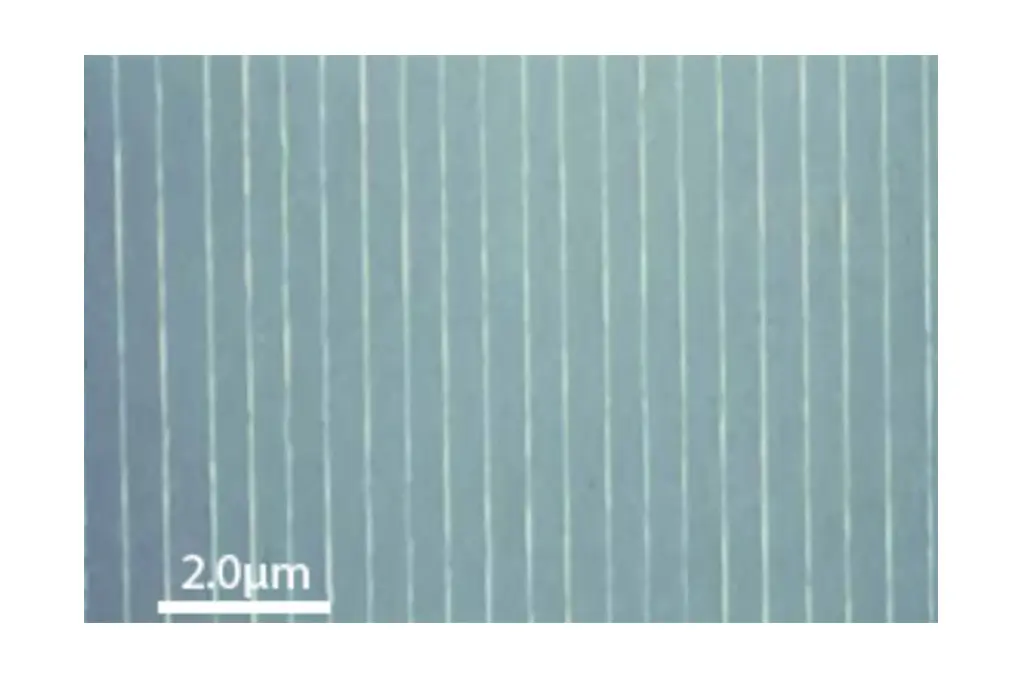
PolyCharge NanoLam™ technology is a proprietary process for producing high energy density film capacitors with high temperature handling capabilities. NanoLam™ capacitors utilize super-thin polymer dielectric layers that are formed inline with the metal electrode deposition process. The result is a self-supported, large area, capacitor composite that is segmented into individual self-healing capacitors. All of this happens in one machine – eliminating the need for extruded films, film metallization, and capacitor winding.

RelatedPosts

Thermoset Polymer Dielectric Capacitors for Harsh Environment Applications 

Solid State Polymer Multilayer Capacitors For High Temperature Application

PolyCharge Partnered with Globe Capacitors to Bring NanoLam Capacitor Technology to India and Global Markets

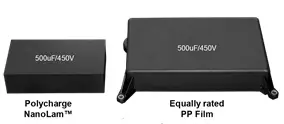
PolyCharge has addressed capacitor size and thermal limitations of metallized polypropylene (PP) DC-link capacitors, used in electric vehicle inverters, by developing solid state, high energy density capacitors, comprising 1000s of nano-thick, cross-linked polymer dielectric layers. PolyCharge NanoLam™ capacitors are ideal for higher voltage applications where space, weight, and high temperature tolerance are demanded.

NanoLam™ capacitors represent a transformational and potentially disruptive process for making polymer capacitors. In a single process step, a large area nanolaminate composite is produced, which is segmented and processed into individual capacitors that have low ESR and ESL, operating temperature >125°C, high current carrying capacity, excellent self-healing properties, and energy density at least double that of existing PP capacitors.
 

PolyCharge was formed by Sigma Technologies in September 2017 to develop and commercialize its NanoLam™ technology for electric drive vehicles, renewable energy inverters, medical, aerospace, and industrial mobility applications. The company’s headquarters, engineering, and product development center are located in Tucson, Arizona, USA. Delphi Technologies PLC a global leader in vehicle propulsion, announced an investment in PolyCharge America, Inc. in January 2018 to commercialize the new capacitor technology.


“PolyCharge is well-positioned to lead in the development of next-generation capacitor products for vehicle electrification and other applications where reductions in weight and volume, as well as performance in harsh operating environments, are required.”said Dr. Angelo Yializis, Chief Executive Officer of PolyCharge.

More details about the state of the art in the technology was disclosed in technical paper “A Disruptive Nano-laminate Polymer Capacitor Technology for Electric Drive Applications” presented by Dr. Yializis during the international PCNS Passive Conference Networking Symposium 10-13th September 2019 in Bucharest, Romania.


more 2nd PCNS symposium technical papers can be viewed and downloaded in pdf from EPCI Academy e-Proceedings:

Related

Recent Posts

YAGEO Presents 3.6 kW LLC Transformer Platform

6.3.2026
2

Empower Extends Embedded Silicon Capacitors for AI

6.3.2026
1

ECIA February 2026 Industry Pulse Signals Strong Component Growth

6.3.2026
1

Inductors and Ferrite Beads Price Hikes 

5.3.2026
29

TDK Extends Compact ThermoFuse Varistors up to 50 kA

5.3.2026
7

Samtec ANSI/VITA 90 Connectors: Rugged Small Form Factor Standard

5.3.2026
3

Resistor Technology Dossier

4.3.2026
20

AI Servers Demand is Driving Tantalum Capacitor Price Hikes

5.3.2026
70

DMASS Reports Europe Components Up 9.8% in Q4 2025

3.3.2026
18

Upcoming Events

Mar 19
13:00 - 14:00 CDT

Smart Consideration of Inductor Thermal Performance

Mar 21
All day

PSMA Capacitor Workshop 2026

Apr 21
16:00 - 17:00 CEST

Heatsink Solutions: Thermal Management in electronic devices

View Calendar

Popular Posts

  • Buck Converter Design and Calculation

    0 shares
    Share 0 Tweet 0
  • Boost Converter Design and Calculation

    0 shares
    Share 0 Tweet 0
  • Flyback Converter Design and Calculation

    0 shares
    Share 0 Tweet 0
  • LLC Resonant Converter Design and Calculation

    0 shares
    Share 0 Tweet 0
  • MLCC Manufacturers Consider Price Increase as AI Demand Outpaces Supply

    0 shares
    Share 0 Tweet 0
  • Dual Active Bridge (DAB) Topology

    0 shares
    Share 0 Tweet 0
  • Ripple Current and its Effects on the Performance of Capacitors

    3 shares
    Share 3 Tweet 0
  • MLCC and Ceramic Capacitors

    0 shares
    Share 0 Tweet 0
  • What is a Dielectric Constant and DF of Plastic Materials?

    4 shares
    Share 4 Tweet 0
  • MLCC Case Sizes Standards Explained

    0 shares
    Share 0 Tweet 0

Newsletter Subscription


Passive Components Blog

© EPCI - Leading Passive Components Educational and Information Site

  • Home
  • Privacy Policy
  • EPCI Membership & Advertisement
  • About

No Result
View All Result
  • Home
  • Knowledge Blog
  • PCNS

© EPCI - Leading Passive Components Educational and Information Site

This website uses cookies. By continuing to use this website you are giving consent to cookies being used. Visit our Privacy and Cookie Policy.
Go to mobile version