




Passive Components Blog
No Result
View All Result
  • Home
  • News
    • All
    • Aerospace & Defence
    • Antenna
    • Applications
    • Automotive
    • Capacitors
    • Circuit Protection Devices
    • electro-mechanical news
    • Filters
    • Fuses
    • Inductors
    • Industrial
    • Integrated Passives
    • inter-connect news
    • Market & Supply Chain
    • Market Insights
    • Medical
    • Modelling and Simulation
    • New Materials & Supply
    • New Technologies
    • Non-linear Passives
    • Optoelectronics and Isolation
    • Oscillators
    • Passive Sensors News
    • Resistors
    • RF & Microwave
    • Telecommunication
    • Weekly Digest
    Exxelia PM film capacitor and passive-component technologies for BepiColombo space electronics

    Exxelia Passive Components Support BepiColombo Mission

    TT Electronics OPI1268T green through-hole phototransistor optocoupler used for optical isolation in power systems.

    Optocoupler Reliability: Designing Optical Isolation for 25-Year Grid Assets

    TDK B43657 and B43658 ultra-compact snap-in aluminum electrolytic capacitors for 500 V DC power-supply and DC-link applications

    TDK Extends Compact Snap-In Capacitors to 500 V for AI Servers

    Stackpole RNAN aluminium nitride thin-film chip resistors in 0603, 0805, 1206 and 2512 package sizes for precision high-power electronics

    Stackpole RNAN AlN Thin-Film Resistors Reach 6 W

    binder angled M12-A midmount panel-mount PCB connector for centric board mounting, showing compact front-facing industrial connector geometry

    binder Adds Midmount M12-A PCB Connectors for Slim Sensors

    Bourns PST065 and PST10 Series compact incremental potentiometers with hollow shafts for rotary position feedback

    Bourns Expands Compact Incremental Potentiometer Offering

    Wk 35 Electronics Supply Chain Digest

    Samsung MLCC Revenue Seen Above KRW 8T by 2027, Murata EOL Actions Reshape Supply

    ROHM SDR01 high anti-surge thick-film chip resistor in 1005 metric 0402 package with 0.33 W rated power

    ROHM Introduces Anti-Surge 0402 Resistors Rated at 0.33 W

    Trending Tags

    • Ripple Current
    • RF
    • Leakage Current
    • Tantalum vs Ceramic
    • Snubber
    • Low ESR
    • Feedthrough
    • Derating
    • Dielectric Constant
    • New Products
    • Market Reports
  • Knowledge Blog
  • Dossiers
    • AI Hardware Dossier
    • Automotive Dossier
    • Industrial Robotics Dossier
    • Power Converter Dossier
    • Capacitor Dossier
    • Resistor Dossier
    • Inductor Dossier
    • Circuit Protection Dossier
  • Suppliers
    • Who is Who
  • PCNS
    • PCNS 2025
    • PCNS 2023
    • PCNS 2021
    • PCNS 2019
    • PCNS 2017
  • Events
  • Home
  • News
    • All
    • Aerospace & Defence
    • Antenna
    • Applications
    • Automotive
    • Capacitors
    • Circuit Protection Devices
    • electro-mechanical news
    • Filters
    • Fuses
    • Inductors
    • Industrial
    • Integrated Passives
    • inter-connect news
    • Market & Supply Chain
    • Market Insights
    • Medical
    • Modelling and Simulation
    • New Materials & Supply
    • New Technologies
    • Non-linear Passives
    • Optoelectronics and Isolation
    • Oscillators
    • Passive Sensors News
    • Resistors
    • RF & Microwave
    • Telecommunication
    • Weekly Digest
    Exxelia PM film capacitor and passive-component technologies for BepiColombo space electronics

    Exxelia Passive Components Support BepiColombo Mission

    TT Electronics OPI1268T green through-hole phototransistor optocoupler used for optical isolation in power systems.

    Optocoupler Reliability: Designing Optical Isolation for 25-Year Grid Assets

    TDK B43657 and B43658 ultra-compact snap-in aluminum electrolytic capacitors for 500 V DC power-supply and DC-link applications

    TDK Extends Compact Snap-In Capacitors to 500 V for AI Servers

    Stackpole RNAN aluminium nitride thin-film chip resistors in 0603, 0805, 1206 and 2512 package sizes for precision high-power electronics

    Stackpole RNAN AlN Thin-Film Resistors Reach 6 W

    binder angled M12-A midmount panel-mount PCB connector for centric board mounting, showing compact front-facing industrial connector geometry

    binder Adds Midmount M12-A PCB Connectors for Slim Sensors

    Bourns PST065 and PST10 Series compact incremental potentiometers with hollow shafts for rotary position feedback

    Bourns Expands Compact Incremental Potentiometer Offering

    Wk 35 Electronics Supply Chain Digest

    Samsung MLCC Revenue Seen Above KRW 8T by 2027, Murata EOL Actions Reshape Supply

    ROHM SDR01 high anti-surge thick-film chip resistor in 1005 metric 0402 package with 0.33 W rated power

    ROHM Introduces Anti-Surge 0402 Resistors Rated at 0.33 W

    Trending Tags

    • Ripple Current
    • RF
    • Leakage Current
    • Tantalum vs Ceramic
    • Snubber
    • Low ESR
    • Feedthrough
    • Derating
    • Dielectric Constant
    • New Products
    • Market Reports
  • Knowledge Blog
  • Dossiers
    • AI Hardware Dossier
    • Automotive Dossier
    • Industrial Robotics Dossier
    • Power Converter Dossier
    • Capacitor Dossier
    • Resistor Dossier
    • Inductor Dossier
    • Circuit Protection Dossier
  • Suppliers
    • Who is Who
  • PCNS
    • PCNS 2025
    • PCNS 2023
    • PCNS 2021
    • PCNS 2019
    • PCNS 2017
  • Events
No Result
View All Result
Passive Components Blog
No Result
View All Result

Quantum Electronics Breakthrough: One Square Inch Spin Capacitor Could Store 100 Terabytes of Data

25.3.2020
Reading Time: 5 mins read
A A

Scientists have made a breakthrough in the development of a new generation of electronics that will require less power and generate less heat. It involves exploiting the complex quantum properties of electrons – in this case, the spin state of electrons. 

“This is an exciting breakthrough. The application of quantum physics to electronics will result in new and novel devices.”

Dr Matthew Rogers, University of Leeds

In a world first, the researchers – led by a team of physicists from the University of Leeds – have announced in the journal Science Advances that they have created a ‘spin capacitor’ that is able to generate and hold the spin state of electrons for a number of hours. 

RelatedPosts

Exxelia Passive Components Support BepiColombo Mission

Optocoupler Reliability: Designing Optical Isolation for 25-Year Grid Assets

TDK Extends Compact Snap-In Capacitors to 500 V for AI Servers

Previous attempts have only ever held the spin state for a fraction of a second.

In electronics, a capacitor holds energy in the form of electric charge. A spin capacitor is a variation on that idea: instead of holding just charge, it also stores the spin state of a group of electrons – in effect it ‘freezes’ the spin position of each of the electrons.

High capacity data storage 

That ability to capture the spin state opens up the possibility that new devices could be developed that store information so efficiently that storage devices could get very small. A spin capacitor measuring just one square inch could store 100 Terabytes of data. 

Dr Oscar Cespedes, Associate Professor in the School of Physics and Astronomy who supervised the research, said: “This is a small but significant breakthrough in what could become a revolution in electronics driven by exploitation of the principles of quantum technology.

“At the moment, up to 70 per cent of the energy used in an electronic device such as a computer or mobile phone is lost as heat, and that is the energy that comes from electrons moving through the device’s circuitry. It results in huge inefficiencies and limits the capabilities and sustainability of current technologies.

“The carbon footprint of the internet is already similar to that of air travel and increases year on year.

“With quantum effects that use light and eco-friendly elements, there could be no heat loss. It means the performance of current technologies can continue to develop in a more efficient and sustainable way that requires much less power.”

Dr Matthew Rogers, one of the lead authors, also from the School of Physics and Astronomy at Leeds, commented: “Our research shows that the devices of the future may not have to rely on magnetic hard disks. Instead. They will have spin capacitors that are operated by light, which would make them very fast, or by an electrical field, which would make they extremely energy efficient.

“This is an exciting breakthrough. The application of quantum physics to electronics will result in new and novel devices.”

How a spin capacitor works

In conventional computing, information is coded and stored as a series of bits: for example, zeroes and ones on a hard disk. Those zeroes and ones can be represented or stored on the hard disc by changes in the polarity of tiny magnetized regions on the disc.

With quantum technology, spin capacitors could write and read information coded into the spin state of electrons by using light or electric fields.

The research team were able to develop the spin capacitor by using an advanced materials interface made of a form of carbon called buckminsterfullerene (buckyballs), manganese oxide and a cobalt magnetic electrode. The interface between the nanocarbon and the oxide is able to trap the spin state of electrons. 

The time it takes for the spin state to decay has been extended by using the interaction between the carbon atoms in the buckyballs and the metal oxide in the presence of a magnetic electrode.  

Some of ther world’s most advanced experimental facilities were used as part of the investigation.

The researchers used the ALBA Synchrotron in Barcelona which uses electron accelerators to produce synchrotron light that allows scientists to visualise the atomic structure of matter and to investigate its properties.

Low energy muon spin spectroscopy at the Paul Scherrer Insitute in Switzerland was used to monitor local spin changes under light and electrical irradiation within billionths of a meter inside the sample. A muon is a sub-atomic particle.

The results of the experimental analysis were interpreted with the assistance of computer scientists at the UK’s Science and Technical Facilities Council, home to one of the UK’s most powerful supercomputers.   

The scientists believe the advances they have made can be built on, most notably towards devices that are able to hold spin state for longer periods of time. 

Further information: 

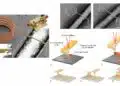
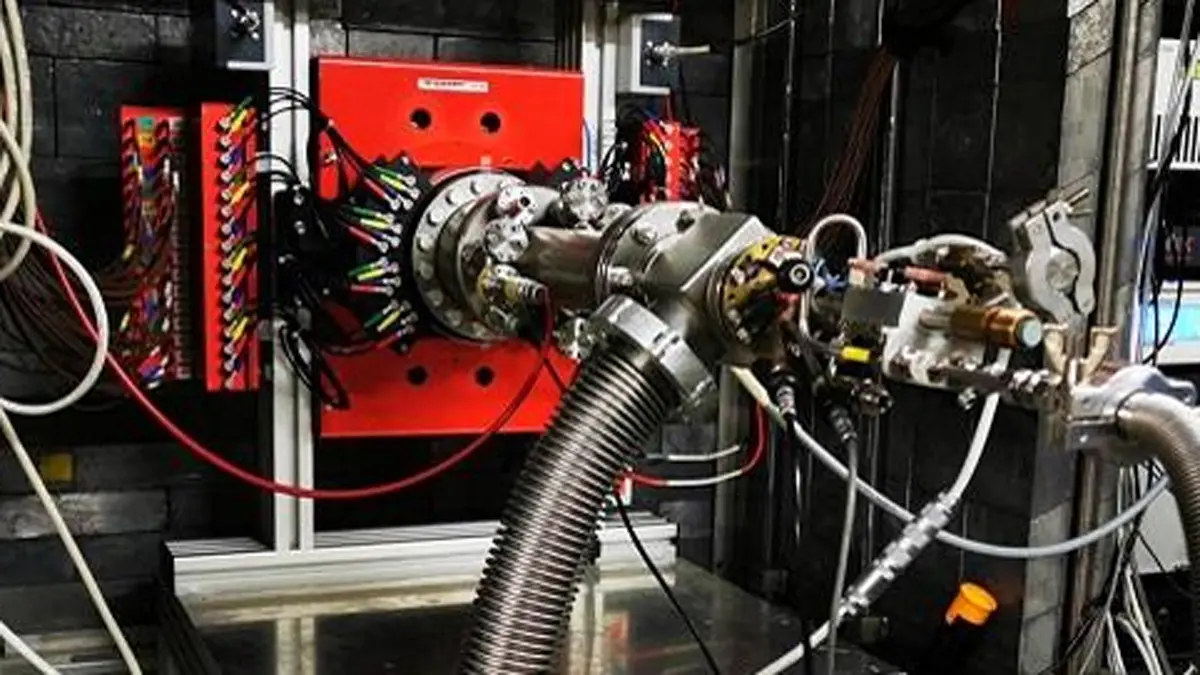
The top image shows a sample of the advanced material undergoing analysis by muon spectroscopy. A muon is a sub-atomic particle. 

The paper, Reversible spin storage in metal oxide—fullerene heterojunctions, was published on 20 March 2020.   

Related

Source: University of Leeds

Recent Posts

Exxelia PM film capacitor and passive-component technologies for BepiColombo space electronics

Exxelia Passive Components Support BepiColombo Mission

16.9.2026
5
TDK B43657 and B43658 ultra-compact snap-in aluminum electrolytic capacitors for 500 V DC power-supply and DC-link applications

TDK Extends Compact Snap-In Capacitors to 500 V for AI Servers

16.9.2026
3

Samsung MLCC Revenue Seen Above KRW 8T by 2027, Murata EOL Actions Reshape Supply

11.9.2026
37

LG Innotek Demonstrates FC-BGA Substrates With Embedded Silicon Capacitors for AI Power Delivery

10.9.2026
41

On-Chip 3D-Printed Copper Microinductors: A New Route to Compact RF Electronics

10.9.2026
27

Emerging Capacitor Markets in Fusion Energy

10.9.2026
52
onsemi solid-state transformer concept for 800 V HVDC AI data center power conversion with SiC modules, DC-link capacitors and high-frequency magnetics

Solid-State Transformers for 800 V AI Data Centers: Passive Component Design Considerations

9.9.2026
111
TDK CN series 10 µF 100 V X7R soft-termination multilayer ceramic capacitor in 3225 EIA 1210 package

TDK Releases 100 V Soft-Termination X7R MLCCs 10 uF in 3225 Package

9.9.2026
26
Overview of fabricated ferroelectric capacitors improving hyperdimensional computing task learning accuracy. a The experimental work reported in this study comprises ferroelectric capacitor (FeCAP) device fabrication, structural and electrical characterization, analog state identification and their reliability study. b The computational part of the work explores the benefits of using characteristics from the fabricated devices in a hyperdimensional computing scheme; source: authors

High-Precision Hyperdimensional Computing with Multi-Level Ferroelectric HZO Capacitors

7.9.2026
23

Upcoming Events

Sep 16
17:00 - 18:00 CEST

Designing a 5 kW, 800 V-to-50 V PSFB Converter for Next-Generation Data Centers

Sep 29
16:00 - 17:00 CEST

Cybersecurity 2026

Nov 24
16:00 - 17:00 CET

Component selection with the WE REDEXPERT® DC-DC Converter Designer Tool

View Calendar

Popular Posts

  • Buck Converter Design and Calculation

    0 shares
    Share 0 Tweet 0
  • LLC Resonant Converter Design and Calculation

    0 shares
    Share 0 Tweet 0
  • Boost Converter Design and Calculation

    0 shares
    Share 0 Tweet 0
  • Flyback Converter Design and Calculation

    0 shares
    Share 0 Tweet 0
  • Earthing Systems and IEC Classification Explained

    0 shares
    Share 0 Tweet 0
  • MLCC and Ceramic Capacitors

    0 shares
    Share 0 Tweet 0
  • Resistor Symbols

    0 shares
    Share 0 Tweet 0
  • Capacitor Charging and Discharging

    0 shares
    Share 0 Tweet 0
  • Audio Capacitors: Choosing Capacitors for Crossover Circuits

    0 shares
    Share 0 Tweet 0
  • Capacitor Symbols

    0 shares
    Share 0 Tweet 0

Newsletter Subscription


Passive Components Blog

© 2015–2026
All rights reserved

  • Home
  • Privacy Policy
  • EPCI Membership & Advertisement
  • About

No Result
View All Result
  • Home
  • Knowledge Blog
  • Dossiers
  • PCNS

© 2015–2026
All rights reserved