



Passive Components Blog
No Result
View All Result
  • Home
  • NewsFilter
    • All
    • Aerospace & Defence
    • Antenna
    • Applications
    • Automotive
    • Capacitors
    • Circuit Protection Devices
    • electro-mechanical news
    • Filters
    • Fuses
    • Inductors
    • Industrial
    • Integrated Passives
    • inter-connect news
    • Market & Supply Chain
    • Market Insights
    • Medical
    • Modelling and Simulation
    • New Materials & Supply
    • New Technologies
    • Non-linear Passives
    • Oscillators
    • Passive Sensors News
    • Resistors
    • RF & Microwave
    • Telecommunication
    • Weekly Digest

    Bourns Releases Compact High Current Shielded Power Inductors

    March 2026 Interconnect, Passives and Electromechanical Components Market Insights

    Molex Completes Acquisition of Smiths Interconnect, Expanding Portfolio of High-Reliability Connectivity Solutions

    APEC 2026 Power Electronics Trends and Implications for Passive Components

    Hydra Enhances Film Capacitor Robustness by Novel Gel Filler

    Würth Elektronik Releases Heat Sinks for TO and IC packages

    Würth Elektronik ICS to Acquire MRS Electronic and Expand Vehicle Electronics Portfolio

    Indias ECMS Wave Brings New Capacity For Passive Components Manufacturing in India

    Binder Introduces Triangular Moulding for M16 and M12 Cable Connectors

    Trending Tags

    • Ripple Current
    • RF
    • Leakage Current
    • Tantalum vs Ceramic
    • Snubber
    • Low ESR
    • Feedthrough
    • Derating
    • Dielectric Constant
    • New Products
    • Market Reports
  • VideoFilter
    • All
    • Antenna videos
    • Capacitor videos
    • Circuit Protection Video
    • Filter videos
    • Fuse videos
    • Inductor videos
    • Inter-Connect Video
    • Non-linear passives videos
    • Oscillator videos
    • Passive sensors videos
    • Resistor videos

    Transformer-Based Power-Line Harvester Magnetic Design

    Thermal Modeling of Magnetics

    Standard vs Planar LLC transformers Comparison for Battery Chargers

    How Modern Tools Model Magnetic Components for Power Electronics

    Advanced Loss Modeling for Planar Magnetics in the Frenetic Planar Tool

    2026 Power Magnetics Design Trends: Flyback, DAB and Planar

    Enabling Software‑Defined Vehicle Architectures: Automotive Ethernet and Zonal Smart Power

    Calculating Resistance Value of a Flyback RC Snubber 

    One‑Pulse Characterization of Nonlinear Power Inductors

    Trending Tags

    • Capacitors explained
    • Inductors explained
    • Resistors explained
    • Filters explained
    • Application Video Guidelines
    • EMC
    • New Products
    • Ripple Current
    • Simulation
    • Tantalum vs Ceramic
  • Knowledge Blog
  • DossiersNew
  • Suppliers
    • Who is Who
  • PCNS
    • PCNS 2025
    • PCNS 2023
    • PCNS 2021
    • PCNS 2019
    • PCNS 2017
  • Events
  • Home
  • NewsFilter
    • All
    • Aerospace & Defence
    • Antenna
    • Applications
    • Automotive
    • Capacitors
    • Circuit Protection Devices
    • electro-mechanical news
    • Filters
    • Fuses
    • Inductors
    • Industrial
    • Integrated Passives
    • inter-connect news
    • Market & Supply Chain
    • Market Insights
    • Medical
    • Modelling and Simulation
    • New Materials & Supply
    • New Technologies
    • Non-linear Passives
    • Oscillators
    • Passive Sensors News
    • Resistors
    • RF & Microwave
    • Telecommunication
    • Weekly Digest

    Bourns Releases Compact High Current Shielded Power Inductors

    March 2026 Interconnect, Passives and Electromechanical Components Market Insights

    Molex Completes Acquisition of Smiths Interconnect, Expanding Portfolio of High-Reliability Connectivity Solutions

    APEC 2026 Power Electronics Trends and Implications for Passive Components

    Hydra Enhances Film Capacitor Robustness by Novel Gel Filler

    Würth Elektronik Releases Heat Sinks for TO and IC packages

    Würth Elektronik ICS to Acquire MRS Electronic and Expand Vehicle Electronics Portfolio

    Indias ECMS Wave Brings New Capacity For Passive Components Manufacturing in India

    Binder Introduces Triangular Moulding for M16 and M12 Cable Connectors

    Trending Tags

    • Ripple Current
    • RF
    • Leakage Current
    • Tantalum vs Ceramic
    • Snubber
    • Low ESR
    • Feedthrough
    • Derating
    • Dielectric Constant
    • New Products
    • Market Reports
  • VideoFilter
    • All
    • Antenna videos
    • Capacitor videos
    • Circuit Protection Video
    • Filter videos
    • Fuse videos
    • Inductor videos
    • Inter-Connect Video
    • Non-linear passives videos
    • Oscillator videos
    • Passive sensors videos
    • Resistor videos

    Transformer-Based Power-Line Harvester Magnetic Design

    Thermal Modeling of Magnetics

    Standard vs Planar LLC transformers Comparison for Battery Chargers

    How Modern Tools Model Magnetic Components for Power Electronics

    Advanced Loss Modeling for Planar Magnetics in the Frenetic Planar Tool

    2026 Power Magnetics Design Trends: Flyback, DAB and Planar

    Enabling Software‑Defined Vehicle Architectures: Automotive Ethernet and Zonal Smart Power

    Calculating Resistance Value of a Flyback RC Snubber 

    One‑Pulse Characterization of Nonlinear Power Inductors

    Trending Tags

    • Capacitors explained
    • Inductors explained
    • Resistors explained
    • Filters explained
    • Application Video Guidelines
    • EMC
    • New Products
    • Ripple Current
    • Simulation
    • Tantalum vs Ceramic
  • Knowledge Blog
  • DossiersNew
  • Suppliers
    • Who is Who
  • PCNS
    • PCNS 2025
    • PCNS 2023
    • PCNS 2021
    • PCNS 2019
    • PCNS 2017
  • Events
No Result
View All Result
Passive Components Blog
No Result
View All Result

Supercapacitor Separator with High Ionic Conductivity Enables Line-Filter Applications at High Power

21.3.2025
Reading Time: 4 mins read
A A

Researchers from Tsinghua University, Beijing, China published their research on supercapacitors separators: “Separator with high ionic conductivity enables electrochemical capacitors to line-filter at high power” in Nature Communications Journal.

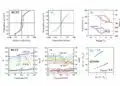
A 3 μm-thick thread-anchor structured separator (TAS) is developed for high-power line filtering supercapacitors – electrochemical capacitors (LFECs). TAS, featuring accelerated ionic transport and reliability, achieves a low ionic resistance of 25 mΩ cm2. With a phase angle of −80° at 120 Hz, the assembled device exhibits an areal capacitance of 6.6 mF cm−2, enabling high-power line filtering with steady ripple suppression and thermal control.

RelatedPosts

Bourns Releases Compact High Current Shielded Power Inductors

March 2026 Interconnect, Passives and Electromechanical Components Market Insights

Molex Completes Acquisition of Smiths Interconnect, Expanding Portfolio of High-Reliability Connectivity Solutions

A thread-anchor structure (TAS) separator, composed of carbon nanotubes (CNFs) and graphene oxide (GO), was developed for electrochemical capacitors. TAS exhibits high tensile strength, low ionic resistance, and excellent stability, outperforming commercial separators. TAS-based electrochemical capacitors (TAS-LFECs) demonstrate superior frequency characteristics and capacitance, with a phase angle of -81° and capacitance of 4.8 mF cm-2 at 120 Hz, making them suitable for line filtering applications.

A highly ionic conductive separator with a thread-anchor structure (TAS) was designed for line-filtering electrochemical capacitors. TAS enables low resistance and high capacitance, achieving 240 mF cm−2 without frequency response decay. This allows for high-power line filtering with reasonable ripple suppression, outperforming commercial electrolytic capacitors.

This study details the fabrication and characterization of a novel line-filtering electrochemical capacitor (LFEC) using graphene oxide (GO) and PEDOT:PSS. The LFEC, integrated with a thin-film active separator (TAS), exhibits high areal capacitance and low resistance, making it suitable for AC line filtering. The study also includes theoretical simulations to understand the LFEC’s performance and optimize its design.

This study explores the use of laser-induced self-organization of TiN(x) nano-filament percolated networks for high-performance surface-mountable filter capacitors. The networks exhibit enhanced conductivity and capacitance, making them suitable for AC line filtering applications. The study also investigates the impact of water on the performance of these capacitors, highlighting the importance of understanding water dynamics for optimizing their functionality.

Key Points

  • Challenges with Line-Filtering Electrochemical Capacitors (LFECs):
  • LFECs have advantages over traditional electrolytic capacitors in line filtering but face limitations in high-frequency capacitance due to excessive ionic resistance.
  • Significance of Separators:
  • Separators play a crucial role in ion migration and capacitance. Conventional separators contribute significantly to ionic resistance, impacting device performance.
  • Innovation – Thread-Anchor Structured Separator (TAS):
  • A 3 μm-thick separator with thread-anchor architecture was developed, combining cellulose nanofibers (CNFs) and graphene oxide (GO) nanosheets.
  • TAS features accelerated ionic transport and mechanical reliability, achieving a low ionic resistance of 25 mΩ cm².
  • Key Electrochemical Achievements:
  • TAS-enabled LFECs exhibit an areal capacitance of 6.6 mF cm⁻² with a phase angle of −80° at 120 Hz.
  • The stack integration of TAS-LFECs in parallel improves capacitance by two orders of magnitude without compromising frequency characteristics.
  • Practical High-Power Line Filtering:
  • TAS-LFECs demonstrate effective ripple suppression for high-power line filtering, maintaining voltage ripple below 5% even with a load power density of 2.5 W cm⁻².
  • Durability and Stability:
  • TAS enhances separator integrity, reducing risks of rupture and ensuring stable performance over extended cycles and in acidic electrolytes.
  • Broader Implications:
  • This development emphasizes the importance of separator engineering for next-generation capacitors, enabling applications in high-power scenarios while reducing the device’s footprint.
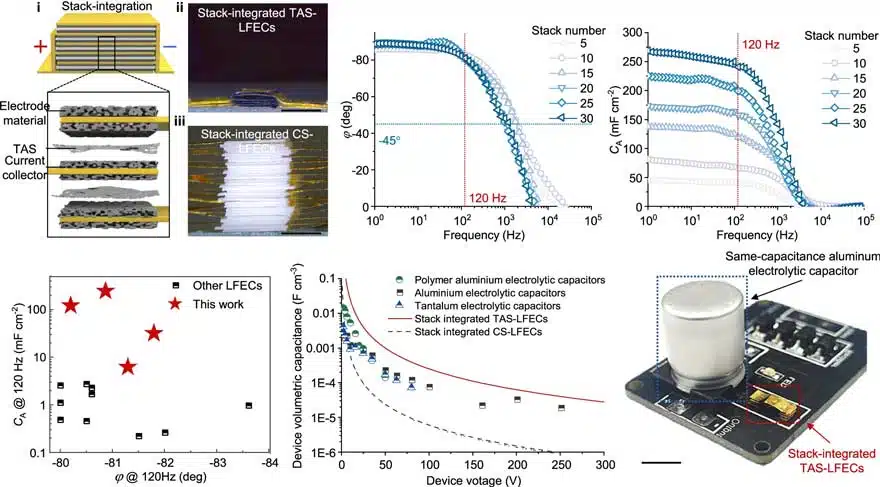
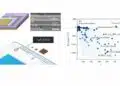
Demonstration of stacked SuperCapacitors for line filters; source: authors

Discussion

In this study, we proposed the significance of separators in line-filtering electrochemical capacitors. A highly ionic conductive separator is designed with a unique thread-anchor structure, which ensures both ionic transport and mechanical strength, realizing low resistance of down to 25 mΩ cm2. By employing it in the device, CA reaches 6.6  mF cm−2 with φ = −80° at 120 Hz and could be boosted to 240 mF cm−2 without frequency responses decay by TAS-enabled stack integration in parallel, overcoming the dilemma of thickening electrode materials. On this basis, high-power line filtering is achieved with reasonable ripple suppression. This work arouses a perspective on line-filtering electrochemical capacitors and promotes their practical applications for high-power scenarios.

Read the full original paper: Hu, Y., Li, P., Lai, G. et al. Separator with high ionic conductivity enables electrochemical capacitors to line-filter at high power. Nat Commun 16, 2772 (2025). https://doi.org/10.1038/s41467-025-58064-2

Related

Source: Nature Communications

Recent Posts

March 2026 Interconnect, Passives and Electromechanical Components Market Insights

2.4.2026
28

APEC 2026 Power Electronics Trends and Implications for Passive Components

1.4.2026
45

Hydra Enhances Film Capacitor Robustness by Novel Gel Filler

1.4.2026
23

Indias ECMS Wave Brings New Capacity For Passive Components Manufacturing in India

31.3.2026
34

Samsung Introduces 35V MLCCs Flying Capacitors for USB PD Fast Charging

27.3.2026
33

New J‑STD‑075B Standard Elevates Process Sensitivity Classification for Passive and Solid-State Components

27.3.2026
44

Modelithics Expands COMPLETE+3D Library for Ansys HFSS

27.3.2026
8

Equivalent Circuit Constants of Crystal Units Explained

26.3.2026
35

Nanocrystalline Cores for Low‑Loss MHz Chip Inductors

25.3.2026
42

Upcoming Events

Apr 8
17:00 - 18:00 CEST

Trade Secrets of the Flyback Converter

Apr 21
16:00 - 17:00 CEST

Heatsink Solutions: Thermal Management in electronic devices

May 5
16:00 - 17:00 CEST

Understanding and Selecting Capacitors – Fundamentals, Technologies and Latest Trends

View Calendar

Popular Posts

  • Buck Converter Design and Calculation

    0 shares
    Share 0 Tweet 0
  • Boost Converter Design and Calculation

    0 shares
    Share 0 Tweet 0
  • Flyback Converter Design and Calculation

    0 shares
    Share 0 Tweet 0
  • LLC Resonant Converter Design and Calculation

    0 shares
    Share 0 Tweet 0
  • Dual Active Bridge (DAB) Topology

    0 shares
    Share 0 Tweet 0
  • MLCC and Ceramic Capacitors

    0 shares
    Share 0 Tweet 0
  • Ripple Current and its Effects on the Performance of Capacitors

    3 shares
    Share 3 Tweet 0
  • Capacitor Charging and Discharging

    0 shares
    Share 0 Tweet 0
  • Plastic Materials Dielectric Constant and DF

    4 shares
    Share 4 Tweet 0
  • MLCC Case Sizes Standards Explained

    0 shares
    Share 0 Tweet 0

Newsletter Subscription


Passive Components Blog

© EPCI - Leading Passive Components Educational and Information Site

  • Home
  • Privacy Policy
  • EPCI Membership & Advertisement
  • About

No Result
View All Result
  • Home
  • Knowledge Blog
  • PCNS

© EPCI - Leading Passive Components Educational and Information Site

This website uses cookies. By continuing to use this website you are giving consent to cookies being used. Visit our Privacy and Cookie Policy.
Go to mobile version