





Passive Components Blog
No Result
View All Result
  • Home
  • News
    • All
    • Aerospace & Defence
    • Antenna
    • Applications
    • Automotive
    • Capacitors
    • Circuit Protection Devices
    • electro-mechanical news
    • Filters
    • Fuses
    • Inductors
    • Industrial
    • Integrated Passives
    • inter-connect news
    • Market & Supply Chain
    • Market Insights
    • Medical
    • Modelling and Simulation
    • New Materials & Supply
    • New Technologies
    • Non-linear Passives
    • Optoelectronics and Isolation
    • Oscillators
    • Passive Sensors News
    • Resistors
    • RF & Microwave
    • Telecommunication
    • Weekly Digest
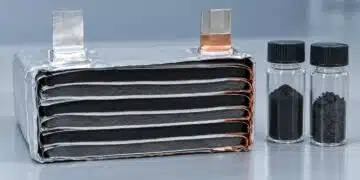
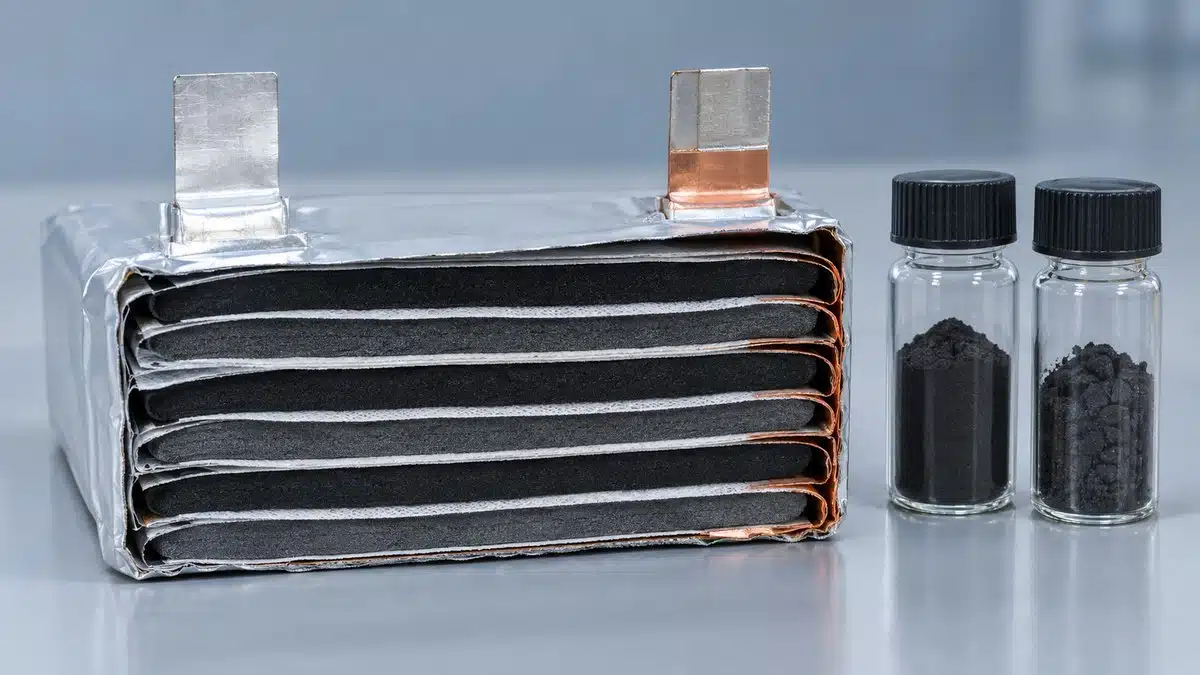
    Cut-open lithium-ion capacitor pouch cell showing stacked carbon electrodes and separators, with vials of carbon powder

    Lithium-Ion Capacitor Review Backs Hard Carbon//AC Pairing

    Rack power shelf in an AI data center with film DC-link capacitors, a supercapacitor bank and a converter board

    800 VDC AI Data Centers Reshape Capacitor Demand for 2027

    Schematic of a titanium nitride thin-film inductor within a CMOS poly-resistor stack beside its integrated resonator circuit.

    TiN Superinductors Bring Compact Cryogenic Inductance to CMOS

    Close-up of reddish-brown metallic rocks illustrating TTI MarketEYE’s connector raw material cost analysis

    Connector Raw Material Costs Rise 20.9% in Q2 2026

    AI and Passive Components: Structural Growth Beyond Data Centers

    YAGEO PMT6397 push-pull transformer with a segmented toroidal winding and surface-mount terminals

    YAGEO Releases Push-Pull Transformers for Isolated 3 W Supplies

    Transformer Losses and Thermal Design: Modelling and Validation

    DMASS Europe Q3 2026 electronic component distribution market overview

    European Component Distribution Jumps 42.7% in Q3 2026

    Bourns MSF series four-terminal current-sense shunt resistor with radial PCB terminals

    Bourns Introduces Four-Terminal Shunt Resistors for Current Sensing

    Trending Tags

    • Ripple Current
    • RF
    • Leakage Current
    • Tantalum vs Ceramic
    • Snubber
    • Low ESR
    • Feedthrough
    • Derating
    • Dielectric Constant
    • New Products
    • Market Reports
  • Knowledge Blog
  • Dossiers
    • Aerospace and Defense Passive Components Dossier
    • AI Hardware Dossier
    • Automotive Dossier
    • Industrial Robotics Dossier
    • Power Converter Dossier
    • Capacitor Dossier
    • Circuit Protection Dossier
    • Inductor Dossier
    • Resistor Dossier
    • Silicon Capacitors and Integrated Passives Dossier
  • Suppliers
    • Who is Who
  • PCNS
    • PCNS 2025
    • PCNS 2023
    • PCNS 2021
    • PCNS 2019
    • PCNS 2017
  • Events
No Result
View All Result
Passive Components Blog
No Result
View All Result

Lithium-Ion Capacitor Review Backs Hard Carbon//AC Pairing

6.11.2026
Reading Time: 7 mins read
A A
Cut-open lithium-ion capacitor pouch cell showing stacked carbon electrodes and separators, with vials of carbon powder

Researchers at the Defence Institute of Advanced Technology (DIAT) in Pune, India, have published a peer-reviewed review on the electrode materials and interfacial chemistry of lithium-ion batteries and the lithium-ion capacitor (LIC).

The paper appeared in Discover Electrochemistry on 31 October 2026. For passive-component engineers, it gives a materials-level view of where LICs fit between supercapacitors and batteries, and which electrode/electrolyte combination the authors consider most practical today.

RelatedPosts

800 VDC AI Data Centers Reshape Capacitor Demand for 2027

TiN Superinductors Bring Compact Cryogenic Inductance to CMOS

Connector Raw Material Costs Rise 20.9% in Q2 2026

Key takeaways

  • The review names prelithiated hard carbon (anode) with activated carbon (cathode) as the most practical lithium-ion capacitor system. It pairs this with a LiPF6 electrolyte, with LiDFOB/LiFSI additives for higher-voltage designs.
  • Commercial LIC ageing data cited in the paper show 94.5% capacity retention after 200,000 cycles at 2.2–3.8 V, versus 73.8% after 80,000 cycles at 2.0–4.0 V.
  • LICs are positioned at 1–10 kW/kg and 10–160 Wh/kg, with more than 100,000 cycles, against batteries at more than 200 Wh/kg but under 1 kW/kg.
  • Graphene, CNT and MXene electrodes show high lab-scale numbers, but these are given per electrode mass and are still at an early stage of development.

Background

A lithium-ion capacitor is a hybrid device. Its negative electrode is a battery-type carbon that stores lithium by intercalation, a faradaic process. Its positive electrode is a high-surface-area carbon that stores charge electrostatically in the double layer, as in an EDLC supercapacitor with carbon electrodes. Prelithiating the anode keeps its potential low and flat. This raises the cell voltage above that of a symmetric EDLC while keeping the capacitive cathode’s fast response and long life.
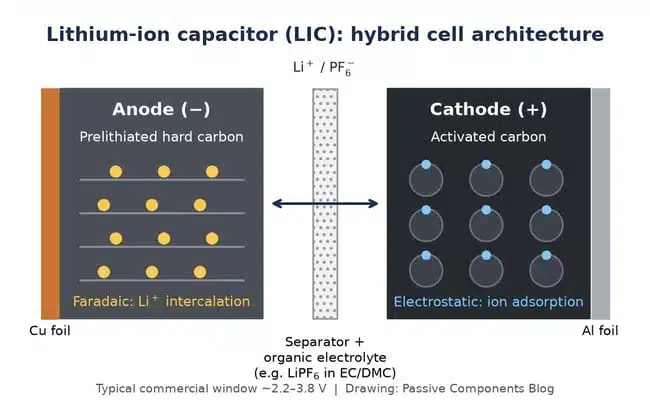
Schematic of a lithium-ion capacitor with prelithiated hard-carbon anode, separator and activated-carbon cathode
Lithium-ion capacitor architecture: prelithiated hard-carbon anode with faradaic Li+ intercalation, separator with organic electrolyte, and activated-carbon cathode with electrostatic ion adsorption

The DIAT review compares lithium-ion batteries (LIBs) and LICs in one framework. It covers carbon and metal-based electrode materials, electrolyte chemistry, solid- and cathode-electrolyte interphase (SEI/CEI) layers, and sustainability. The paper is a review, so it summarizes published work and adds no new experimental results.

What the researchers found

On the anode side, the authors compare graphite, soft carbon, hard carbon, graphene and carbon nanotubes. Graphite delivers about 330–370 mAh/g with high initial coulombic efficiency. Hard carbon reaches roughly 400–600 mAh/g or more, with good rate capability. Its lower first-cycle efficiency is compensated by prelithiation, so the review rates it the best match for LIC anodes. Graphene (about 500–900 mAh/g) and CNTs (above 1,000 mAh/g) offer more capacity, but at higher cost and with processing challenges.

Metal-based anodes are also reviewed: transition-metal oxides, phosphates and layered chalcogenides such as MoS2. They can exceed carbon in capacity, for example around 800 mAh/g for a MoS2/graphene composite at 0.5 A/g. However, they need carbon hybridization or nanostructuring to overcome poor conductivity and volume expansion. The authors single out the Ti3C2 MXene family as the most interesting emerging LIC anode, because of its fast Li+ transport and tunable interlayer spacing.

The key cell-level challenge is kinetics. A battery-type anode responds more slowly than a capacitive cathode. The review cites work showing that a higher anode-to-cathode mass ratio lowers anode overpotential, which makes mass balancing a design parameter rather than a detail.

The most practical result concerns voltage. The review cites ageing data on commercial LICs: cells cycled between 2.0 V and 4.0 V kept 73.8% capacity after 80,000 cycles. Cells limited to 2.2–3.8 V kept 94.5% after 200,000 cycles, which is 2.5 times as many cycles. The authors present the difference as depending on the voltage window and depth of discharge, and use it to argue for electrolytes that stay stable at higher voltage.
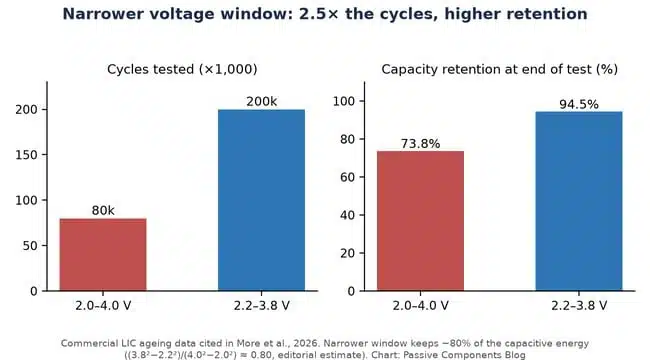
Bar charts comparing cycles and capacity retention of commercial lithium-ion capacitors at 2.0–4.0 V and 2.2–3.8 V
Commercial lithium-ion capacitor ageing: a narrower 2.2–3.8 V window gives 2.5× the cycles and higher capacity retention than 2.0–4.0 V.

For electrolytes, LiPF6 in EC/DEC or EC/DMC remains the baseline. For future high-voltage LICs, the authors recommend LiDFOB and LiFSI blends with film-forming additives such as PS or FEC. LiDFP is listed as a targeted additive where transition-metal dissolution dominates, but the toxicity of its fluorinated decomposition products still needs assessment.

Why it matters for passive components

LICs compete in the same sockets as large EDLCs: hold-up and backup power, peak shaving, regenerative braking, and rack-level energy buffers. The review’s comparison is a useful starting point. LICs offer 1–10 kW/kg and 10–160 Wh/kg with more than 100,000 cycles and low internal resistance, against batteries that offer more energy but fewer cycles and slower charging. Compared with a symmetric EDLC, the main gain is a higher cell voltage and energy density from the prelithiated anode. The differences between hybrid and EDLC supercapacitors are just as important at system level as on the material side.

The voltage-window data have a direct design consequence. Capacitive energy scales with the difference of the squared voltage limits. Reducing the window from 2.0–4.0 V to 2.2–3.8 V therefore keeps about 80% of the usable capacitive energy, (3.8² − 2.2²)/(4.0² − 2.0²) ≈ 0.80, in exchange for much longer life. This is the same derating logic engineers use for supercapacitor degradation and lifetime, now with quantified LIC numbers.

The electrolyte discussion also links to electrolyte selection in supercapacitors. In LICs, the electrolyte must support both lithium intercalation at the anode and anion adsorption at the cathode. This narrows the choice of solvents and additives compared with EDLCs.

From lab to component

The recommended system, prelithiated hard carbon//activated carbon with a LiPF6 organic electrolyte, is the architecture already used in commercial LIC cells. It is at production level. The proposed LiDFOB/LiFSI high-voltage electrolytes are at the laboratory and early-development stage for LICs. Graphene, CNT/rGO and MXene electrodes are at roughly TRL 3–4.

Headline lab results, such as 213 Wh/kg and 45 kW/kg for a CNT/rGO device or 188 Wh/kg at 168 W/kg for another LIC, are calculated on electrode mass. Packaged-cell values are typically several times lower. The authors themselves list electrode kinetic balancing, electrolyte stability and scalable hybrid-electrode manufacturing as the barriers that remain before wider adoption.

What engineers should watch

  • Voltage window in datasheets: compare cycle-life ratings at the same upper and lower limits, as the window can change life by more than a factor of two.
  • Lower voltage limit: LICs must not be discharged to 0 V like EDLCs. The prelithiated anode sets a minimum voltage of about 2.2 V, which affects balancing and shipping conditions.
  • Mass basis of energy claims: separate electrode-level Wh/kg from cell- and module-level figures.
  • Electrolyte additive changes: new high-voltage salts and film-formers may raise rated voltage, but also bring new qualification and safety questions.
  • Temperature rating: verify the actual high- and low-temperature limits on the supplier datasheet rather than relying on generic comparisons.
  • Prelithiation route: watch how suppliers handle prelithiation at production scale, as it affects cost and consistency.

Summary

The DIAT review brings together electrode, electrolyte and interphase research for lithium-ion batteries and lithium-ion capacitors. It concludes that prelithiated hard carbon paired with activated carbon in a LiPF6-based electrolyte is the most practical LIC system, with high-voltage additive blends as the next step. For component engineers, the most useful message is the strong effect of the operating voltage window on cycle life, while the high energy figures for new nanocarbon electrodes should be read as electrode-level laboratory results.

Further reading

  • Toward a low-cost industrialization of lithium-ion capacitors
  • New technology for pre-replenishing lithium for lithium-ion supercapacitors

Source

Snehal S. More, Arpit B. Mendhe, Himanshu Sekhar Panda, “Advances in electrode materials and interfacial chemistry of lithium-ion-based energy storage devices”, Discover Electrochemistry 3, 92 (2026), Springer Nature, open access (CC BY-NC-ND 4.0). https://doi.org/10.1007/s44373-026-00183-6

References

  1. More S. S., Mendhe A. B., Panda H. S., Discover Electrochemistry 3, 92 (2026). https://doi.org/10.1007/s44373-026-00183-6
  2. Zhang X. et al., “Electrochemical impedance spectroscopy study of lithium-ion capacitors: Modeling and capacity fading mechanism”, J. Power Sources 488, 229454 (2021), as cited in the review. https://doi.org/10.1016/j.jpowsour.2021.229454
  3. Dsoke S. et al., “The importance of the electrode mass ratio in a Li-ion capacitor based on activated carbon and Li4Ti5O12”, J. Power Sources 282, 385–393 (2015), as cited in the review. https://doi.org/10.1016/j.jpowsour.2015.02.079
  4. Wang H. et al., “Nonaqueous hybrid lithium-ion and sodium-ion capacitors”, Adv. Mater. 29, 1702093 (2017), as cited in the review. https://doi.org/10.1002/adma.201702093

Related

Recent Posts

Rack power shelf in an AI data center with film DC-link capacitors, a supercapacitor bank and a converter board

800 VDC AI Data Centers Reshape Capacitor Demand for 2027

6.11.2026
0
Schematic of a titanium nitride thin-film inductor within a CMOS poly-resistor stack beside its integrated resonator circuit.

TiN Superinductors Bring Compact Cryogenic Inductance to CMOS

5.11.2026
7
Schematic diagrams illustrating the physical model of the stripline microinductor.

Stripline Microinductors with Nickel–Iron Oxide Cores

4.11.2026
9
Conceptual polypropylene DC-link film capacitor module with parallel cells and copper interconnections

DC-Link Film Capacitor Modules: Inductance and Thermal Design, Jianghai-Europe Tech Memo

3.11.2026
26

Motor Run Capacitor Safety Classes S0–S3: A Design Guide

2.11.2026
26

Elektra Awards 2026: Passive Components and Interconnect Finalists Showcase Advances in Power Integrity, Precision and Reliability

28.10.2026
54
Mathematical state-space illustration of a series-connected memcapacitor oscillator with two constrained memory coordinates

Memcapacitor chaos in a six-state series-connected model

28.10.2026
22
Exxelia capacitor and magnetics innovations for Electronica 2026, including CM-HVLP and CF-PP140 capacitors

Exxelia Brings High-Temperature Passives to Electronica 2026

29.10.2026
41
Samsung Electro-Mechanics CL05Z106MS66PN automotive MLCC illustration with a rectangular ceramic body and metal end terminations

Samsung Adds 0402 10 µF X7T MLCC for ADAS Power Rails

27.10.2026
27

Upcoming Events

Nov 24
16:00 - 17:00 CET

Select the Correct Components for Your DC/DC Converter

Dec 1
16:00 - 17:00 CET

Developing low-noise mixed-signal systems

Dec 8
16:00 - 17:00 CET

WE-CCMF: Design Principles, Layout Guidelines and Measurement Results for High-Speed EMI Filtering

View Calendar

Popular Posts

  • Buck Converter Design and Calculation

    0 shares
    Share 0 Tweet 0
  • September 2026 Interconnect, Passives and Electromechanical Components Market Insights

    0 shares
    Share 0 Tweet 0
  • Boost Converter Design and Calculation

    0 shares
    Share 0 Tweet 0
  • LLC Resonant Converter Design and Calculation

    0 shares
    Share 0 Tweet 0
  • Capacitor Charging and Discharging

    0 shares
    Share 0 Tweet 0
  • RF Connector Types: How To Choose the Right One

    0 shares
    Share 0 Tweet 0
  • Flyback Converter Design and Calculation

    0 shares
    Share 0 Tweet 0
  • Passive Low Pass Filters: Fundamentals and EMI Design

    0 shares
    Share 0 Tweet 0
  • Audio Capacitors: Choosing Capacitors for Crossover Circuits

    0 shares
    Share 0 Tweet 0
  • MLCC and Ceramic Capacitors

    0 shares
    Share 0 Tweet 0

Newsletter Subscription


Passive Components Blog

© 2015–2026
All rights reserved

  • Home
  • Privacy Policy
  • EPCI Membership & Advertisement
  • About

No Result
View All Result
  • Home
  • Knowledge Blog
  • Dossiers
  • PCNS

© 2015–2026
All rights reserved