
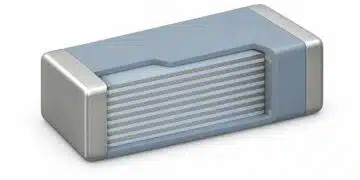


Transformers: How Transformers and Solenoids Work
This article provides a practical introduction to how transformers and solenoids work, their key equations, parasitic effects, and typical applications ...


This article provides a practical introduction to how transformers and solenoids work, their key equations, parasitic effects, and typical applications ...

The article explains basic definition of inductance, impedance and inductive losses. Inductors are not just abstract L symbols in schematics but real ...

Magnetic core materials determine the achievable inductance, saturation margin, power loss, thermal performance and EMI behaviour of inductors and transformers. ...

Magnetic flux density, magnetic flux and Faraday–Lenz law explain why a voltage appears across an inductor when its current changes. ...

Inductors, transformers, ferrite beads and common-mode chokes all rely on the magnetic field produced by electric current. This knowledge article ...

This article provides an overview of common and less-common inductor and transformer symbols. The inductors, coils or chokes are electrical ...

This article explains basics of What is an Inductor? and What is a Choke? to understand the passive electronic component ...

Transformers are magnetic components consisting of two or more inductively coupled windings that transfer energy via a shared core. They ...

High-frequency Helmholtz RF coils are used to generate a controlled, approximately uniform, time-varying magnetic field for sensor calibration, magnetic-field susceptibility ...

© 2015–2026
All rights reserved