










Passive Components Blog
No Result
View All Result
  • Home
  • NewsFilter
    • All
    • Aerospace & Defence
    • Antenna
    • Applications
    • Automotive
    • Capacitors
    • Circuit Protection Devices
    • electro-mechanical news
    • Filters
    • Fuses
    • Inductors
    • Industrial
    • Integrated Passives
    • inter-connect news
    • Market & Supply Chain
    • Market Insights
    • Medical
    • Modelling and Simulation
    • New Materials & Supply
    • New Technologies
    • Non-linear Passives
    • Oscillators
    • Passive Sensors News
    • Resistors
    • RF & Microwave
    • Telecommunication
    • Weekly Digest

    RF Filters and Passive Components Enabling the 7 Missile RF Subsystems

    Ferrite versus Nanocrystalline Power Inductor Cores: Turns, Gap and Size

    YAGEO Presents NANOMET Soft Magnetic Cores for High‑Density Power Conversion

    Coilcraft Releases High-Current Ferrite Beads for CISPR 25 EMC compliance

    From DCL to SSC: Bridging Electrical Symptoms and Structural Indicators in Tantalum Capacitors

    Vishay Unveils Multi-Turn Position Sensor for Harsh Industrial Environments

    YAGEO Introduces Automotive MOV Surge Protection Varistor

    TDK Releases Compact SMD Gate Drive Transformers for xEV

    Wk 26 Electronics Supply Chain Digest

    Trending Tags

    • Ripple Current
    • RF
    • Leakage Current
    • Tantalum vs Ceramic
    • Snubber
    • Low ESR
    • Feedthrough
    • Derating
    • Dielectric Constant
    • New Products
    • Market Reports
  • VideoFilter
    • All
    • Antenna videos
    • Capacitor videos
    • Circuit Protection Video
    • Filter videos
    • Fuse videos
    • Inductor videos
    • Inter-Connect Video
    • Non-linear passives videos
    • Oscillator videos
    • Passive sensors videos
    • Resistor videos

    Ferrite versus Nanocrystalline Power Inductor Cores: Turns, Gap and Size

    KYOCERA AVX Presents Antenna Integrator Studio Tutorial for Antenna Placement and RF Design

    Power Design Simulation Tools for Faster Inductor Selection and Loss Optimization

    EMC‑Compliant PCB and Connector Design Guidelines

    Why Isolated DC/DC Power Supplies Fail Late, Würth Elektronik Podcast

    Designing 800 V DC EMC Filters: Calculation, Simulation and Measurement

    Current Sense Transformer Datasheet and Design‑in Guide

    Designing a USB Type‑C Flyback Planar Transformer with Frenetic’s Planar Tool

    Magnetics Design in High‑Frequency GaN Converters

    Trending Tags

    • Capacitors explained
    • Inductors explained
    • Resistors explained
    • Filters explained
    • Application Video Guidelines
    • EMC
    • New Products
    • Ripple Current
    • Simulation
    • Tantalum vs Ceramic
  • Knowledge Blog
  • Dossiers
    • AI Hardware Dossier
    • Power Converter Dossier
    • Automotive Dossier
    • Capacitor Dossier
    • Resistor Dossier
    • Inductor Dossier
    • Circuit Protection Dossier
  • Suppliers
    • Who is Who
  • PCNS
    • PCNS 2025
    • PCNS 2023
    • PCNS 2021
    • PCNS 2019
    • PCNS 2017
  • Events
  • Home
  • NewsFilter
    • All
    • Aerospace & Defence
    • Antenna
    • Applications
    • Automotive
    • Capacitors
    • Circuit Protection Devices
    • electro-mechanical news
    • Filters
    • Fuses
    • Inductors
    • Industrial
    • Integrated Passives
    • inter-connect news
    • Market & Supply Chain
    • Market Insights
    • Medical
    • Modelling and Simulation
    • New Materials & Supply
    • New Technologies
    • Non-linear Passives
    • Oscillators
    • Passive Sensors News
    • Resistors
    • RF & Microwave
    • Telecommunication
    • Weekly Digest

    RF Filters and Passive Components Enabling the 7 Missile RF Subsystems

    Ferrite versus Nanocrystalline Power Inductor Cores: Turns, Gap and Size

    YAGEO Presents NANOMET Soft Magnetic Cores for High‑Density Power Conversion

    Coilcraft Releases High-Current Ferrite Beads for CISPR 25 EMC compliance

    From DCL to SSC: Bridging Electrical Symptoms and Structural Indicators in Tantalum Capacitors

    Vishay Unveils Multi-Turn Position Sensor for Harsh Industrial Environments

    YAGEO Introduces Automotive MOV Surge Protection Varistor

    TDK Releases Compact SMD Gate Drive Transformers for xEV

    Wk 26 Electronics Supply Chain Digest

    Trending Tags

    • Ripple Current
    • RF
    • Leakage Current
    • Tantalum vs Ceramic
    • Snubber
    • Low ESR
    • Feedthrough
    • Derating
    • Dielectric Constant
    • New Products
    • Market Reports
  • VideoFilter
    • All
    • Antenna videos
    • Capacitor videos
    • Circuit Protection Video
    • Filter videos
    • Fuse videos
    • Inductor videos
    • Inter-Connect Video
    • Non-linear passives videos
    • Oscillator videos
    • Passive sensors videos
    • Resistor videos

    Ferrite versus Nanocrystalline Power Inductor Cores: Turns, Gap and Size

    KYOCERA AVX Presents Antenna Integrator Studio Tutorial for Antenna Placement and RF Design

    Power Design Simulation Tools for Faster Inductor Selection and Loss Optimization

    EMC‑Compliant PCB and Connector Design Guidelines

    Why Isolated DC/DC Power Supplies Fail Late, Würth Elektronik Podcast

    Designing 800 V DC EMC Filters: Calculation, Simulation and Measurement

    Current Sense Transformer Datasheet and Design‑in Guide

    Designing a USB Type‑C Flyback Planar Transformer with Frenetic’s Planar Tool

    Magnetics Design in High‑Frequency GaN Converters

    Trending Tags

    • Capacitors explained
    • Inductors explained
    • Resistors explained
    • Filters explained
    • Application Video Guidelines
    • EMC
    • New Products
    • Ripple Current
    • Simulation
    • Tantalum vs Ceramic
  • Knowledge Blog
  • Dossiers
    • AI Hardware Dossier
    • Power Converter Dossier
    • Automotive Dossier
    • Capacitor Dossier
    • Resistor Dossier
    • Inductor Dossier
    • Circuit Protection Dossier
  • Suppliers
    • Who is Who
  • PCNS
    • PCNS 2025
    • PCNS 2023
    • PCNS 2021
    • PCNS 2019
    • PCNS 2017
  • Events
No Result
View All Result
Passive Components Blog
No Result
View All Result

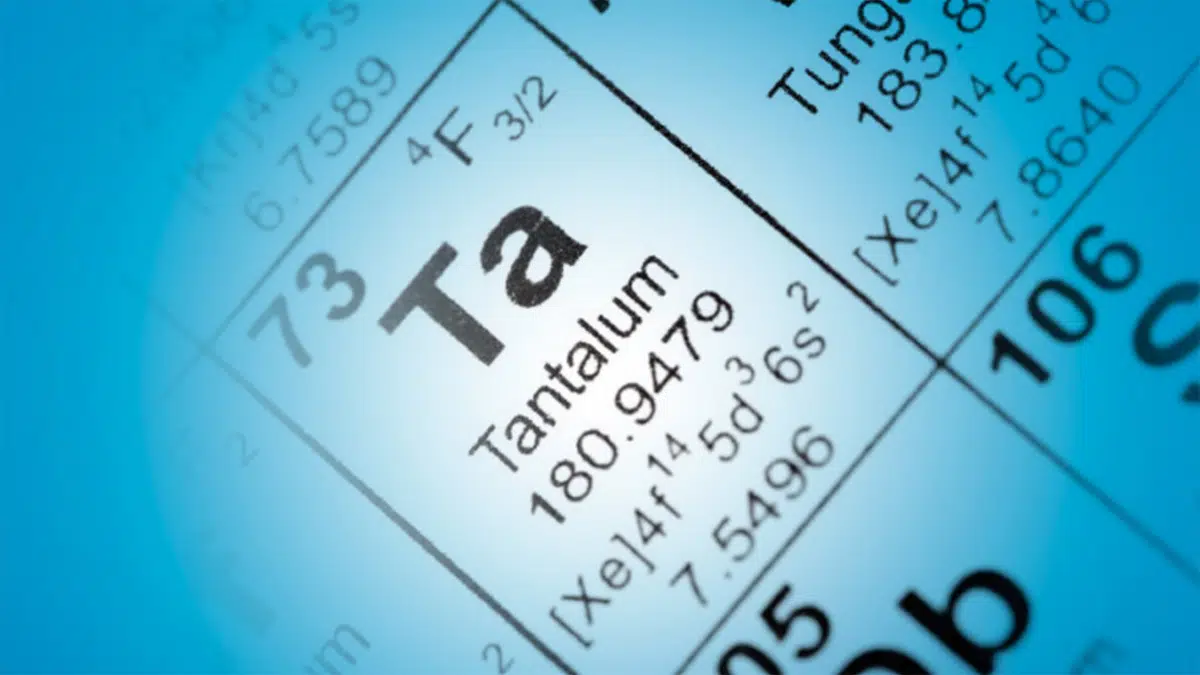
Tantalum in Electronics

6.10.2021
Reading Time: 6 mins read
A A

The electronics industry is booming. The current high-growth environment is poised to continue for some time, driven by a wide variety of technologies like 5G and telecommunications, high-end graphics, hardcore mining processing, wearable devices, remote computing, AI, advanced driver-assistance systems (ADAS) sensors, and so on. Tantalum in various forms is used in the devices supporting these electronics market segments.

Those companies that produce the devices have developed confidence in a reliable and stable supply of tantalum through a globally diverse supply chain with suppliers ranging from six (6) continents and over 31 countries. Further confidence is found in existing and emerging stable tantalum ore sources to feed the growing tantalum and electronics demand.

RelatedPosts

Flaked Tantalum Powders: High Capacitance Powders for High Reliable Tantalum Capacitors

Lithium Mines Impact to Tantalum Supply

Tantalum for Next-Generation Electronics

Thanks to its unique properties, tantalum is used in electronics circuitry in various forms, products, and applications. The three primary devices in which tantalum is used in the electronics industry are capacitors, semiconductors, and surface acoustic wave (SAW) filters. A brief description of each follows:

  • Capacitors: today’s tantalum capacitors can store more energy in smaller devices than any other type of capacitor (high capacitance in small case sizes or volumetric efficiency) while providing high reliability, low direct current (DC) leakage, low equivalent series resistance (ESR) across harsh operating environments. A capacitor is a passive component that can provide DC blocking, output smoothing, frequency tuning, and/or voltage stabilization in a circuit. A capacitor consists of an anode and a cathode separated by a dielectric. In the case of a tantalum capacitor, the anode is tantalum, the cathode can be manganese dioxide (MnO2) or conductive polymer, and the dielectric is tantalum pentoxide with tantalum wire connecting the anode to the circuit.
  • Thin film in Semiconductors: without tantalum, semiconductors would malfunction. The semiconductor manufacturing process uses physical vapor deposition (PVD) to sputter tantalum atoms off a tantalum target onto the semiconductor wafer, creating a thin film. This thin film of tantalum provides a barrier to prevent the diffusion of copper atoms into the silicon wafer. The tantalum film used in semiconductors comes in various forms like tantalum nitride silicide, tantalum nitride carbide, and others. Tantalum is the preferred material for the PVD process in semiconductor manufacturing due to the tantalum-based films having high thermal stability, high conductivity, and superior corrosion resistance.
  • SAW filters: thanks to the tantalum content, SAW filters make audio for electronic devices clear and crisp. Lithium tantalate single crystals are used to create SAW filters for use in smartphones, hi-fi stereos, tablet PCs, notebooks, televisions, and other audio applications. The lithium tantalate compound finds favor in this application thanks to the electronic signal wave dampening and frequency control capabilities providing superior audio output.

The broader electronics industry grew at a 2.1% rate in 2020 and is forecast to grow at a 15.6% clip in 2021 per VLSI Research. The strong 2021 growth is mainly on the back of computers, 5G telecommunications, the electrification of the automobile – both electric vehicles and increased semiconductor content inside – wearable health devices, data storage and solid state drives (SSD’s) and others. Tantalum holds a strong presence in all of the technologies driving growth from 2020 to 2030+.

Tantalum for a Lifetime

Current shortages and concerns over stable supply of critical commodities such as rare earths, cobalt, and nickel are weighing heavily on the downstream electronics, aerospace, automotive and appliance industries. Tantalum ore supply on the other hand is stronger than ever and ready to support increasing demand1 from tantalum capacitor makers, semiconductor manufacturers and other industries.

This is primarily due to:

  • Co-product mining: as demand for lithium continues to rise driven by electric vehicle demand, so too does the volume of tantalum extracted as a co-product of this lithium production. Lithium and tantalum frequently co-exist in hard rock mines in Western Australia, South America, Africa and elsewhere. This tantalum co-product is extracted with relatively minimal incremental environmental impact2, predictable economics, and rising volumes.
  • Traceable “conflict-free” artisanal mining: Trade in elements such as tantalum, tin, tungsten and gold from Central African countries is complicated by fear that such trade could fund and perpetuate conflict in that region. For over a decade, robust traceability programs, from mine source through to OEM product delivery have been implemented. These programs are mature, transparent3, are fully understood throughout the tantalum supply chain, and have opened up markets for legitimate trade in minerals, including tantalum, from this region.
  • Regional supply balance: historically, tantalum ore supply has been skewed towards one region or another. Until the late-2000s, Western Australia was the largest source: a stable industrial scale source that became relatively expensive. This was entirely replaced by supply from Central Africa: an artisanal scale source that is more economical but supply is less stable. Tantalum as a co-product of lithium mining re-introduces industrial scale stability, does so economically, and should result in a balanced global supply without over-reliance on any one region. There is an increasingly healthy balance of tantalum supply from Australia, South America, Central Africa (also other African nations such as Mozambique), China, and emerging supply sources elsewhere. Disruption in any one location should, therefore, not have an oversized impact on global supply of tantalum.
  • Established recycling: each year approximately 30% of all tantalum sold to end users comes from high purity recycled tantalum material. Tantalum recycling is long-established and the material is actively traded and much sought after by processors.
  • Demand stability/supply confidence: fluctuating demand disrupts the upstream supply chain, which in turn creates further demand instability. The supply chain “Bullwhip Effect”4 can be exaggerated when downstream players fear upstream supply shortages. Double ordering or, worse, “design out” occurs. ABT5 has been a refrain in the tantalum industry in the past as a result of this type of instability. In recent years however, end user confidence has been restored. Tantalum demand has stabilized, tantalum is being “designed in” and no one end-use segment dominates. Stable demand begets stable supply which further encourages demand growth.

Quoting Roskill Information Services, a metal market and analyst company, “In the long-term, we expect the (tantalum) industry to see limited deficits and surpluses that will not amount to more than a few weeks of demand in any given year and that will be smoothed out by inventory in most cases.”

Tantalum has indispensable properties when used in electronic components, aircraft engines, medical implants and countless other applications.  Historically, the industry’s Achilles’ heel6 has been intermittent (real or perceived) supply chain disruptions. Existing and emerging stable tantalum sources should alleviate supply concerns.

1 Consumption is currently at approx. 2200 tonnes per year and predicted to grow 3-4% per year through 2029.

2 The tantalum is contained in the same ore body as lithium. To meet the ever increasing demand for electric vehicles, lithium will be mined whether the tantalum is extracted as a co-product or not. So no initial extra mining activity is required to extract the tantalum ore from the mine pit.

3 For example, tantalum and other mineral smelters (a.k.a. processors) are audited annually by the Responsible Minerals Initiative. There are currently approx. 37 tantalum suppliers conformant to this audit protocol. Conformant Tantalum Smelters (responsiblemineralsinitiative.org).

4 The term “Bullwhip Effect” was coined by Stanford University Professor Hau Lee. The Bullwhip Effect in Supply Chains (mit.edu)

5 Anything But Tantalum!

6  Achilles’ mom held his heel and dipped him in the River Styx , the river’s water making him invulnerable. She forgot to dip one part of the poor kid – his heel!


Related

Source: Global Advanced Metals

Recent Posts

RF Filters and Passive Components Enabling the 7 Missile RF Subsystems

9.7.2026
9

From DCL to SSC: Bridging Electrical Symptoms and Structural Indicators in Tantalum Capacitors

7.7.2026
40

High-Q RF & Microwave MLCCs: A Cross-Vendor Benchmark

2.7.2026
76

TAIYO YUDEN Introduced Hybrid Aluminum Capacitors for 48V Automotive Power Supplies

2.7.2026
62

ECIA Industry Pulse June 2026 Reaches Five‑Year High

1.7.2026
73

YAGEO Announces July 2026 Capacitor Price Increase

1.7.2026
601

Enabling the 800 V AI Server Era: How C0G High-Voltage MLCC Supports Next-Generation Power Architectures

1.7.2026
148

MLCCs in the Age of AI: Q2 2026 Market Tightness

30.6.2026
400

AI Hardware Demand for Passive Components Dossier

30.6.2026
138

Upcoming Events

Jul 14
16:00 - 17:00 CEST

EMC Design Essentials: Mastering Varistors and Common Mode Chokes

Jul 21
16:00 - 17:00 CEST

Safety by design: X and Y Interference suppression capacitors for power line filters

Jul 28
8:00 - 11:00 CEST

Post Procurement Testing of EEE Components for LEO Space Applications

View Calendar

Popular Posts

  • Boost Converter Design and Calculation

    0 shares
    Share 0 Tweet 0
  • Buck Converter Design and Calculation

    0 shares
    Share 0 Tweet 0
  • Flyback Converter Design and Calculation

    0 shares
    Share 0 Tweet 0
  • LLC Resonant Converter Design and Calculation

    0 shares
    Share 0 Tweet 0
  • MLCC and Ceramic Capacitors

    0 shares
    Share 0 Tweet 0
  • YAGEO Announces July 2026 Capacitor Price Increase

    0 shares
    Share 0 Tweet 0
  • Earthing Systems and IEC Classification Explained

    0 shares
    Share 0 Tweet 0
  • Nvidia Vera Rubin: Why One AI Rack Needs So Many More MLCC Capacitors

    0 shares
    Share 0 Tweet 0
  • MLCC Case Sizes Standards Explained

    0 shares
    Share 0 Tweet 0
  • Dual Active Bridge (DAB) Topology

    0 shares
    Share 0 Tweet 0

Newsletter Subscription


Passive Components Blog

© EPCI - Leading Passive Components Educational and Information Site

  • Home
  • Privacy Policy
  • EPCI Membership & Advertisement
  • About

No Result
View All Result
  • Home
  • Knowledge Blog
  • Dossiers
  • PCNS

© EPCI - Leading Passive Components Educational and Information Site

This website uses cookies. By continuing to use this website you are giving consent to cookies being used. Visit our Privacy and Cookie Policy.
Go to mobile version