







Passive Components Blog
No Result
View All Result
  • Home
  • News
    • All
    • Aerospace & Defence
    • Antenna
    • Applications
    • Automotive
    • Capacitors
    • Circuit Protection Devices
    • electro-mechanical news
    • Filters
    • Fuses
    • Inductors
    • Industrial
    • Integrated Passives
    • inter-connect news
    • Market & Supply Chain
    • Market Insights
    • Medical
    • Modelling and Simulation
    • New Materials & Supply
    • New Technologies
    • Non-linear Passives
    • Optoelectronics and Isolation
    • Oscillators
    • Passive Sensors News
    • Resistors
    • RF & Microwave
    • Telecommunication
    • Weekly Digest
    electronic components market survey ECIA

    ECIA October 2026: Passive Component Sales Outlook Turns Neutral

    connector-manufacturers-regional-rankings-2025

    Top 10 Connector Manufacturers by Region: 2025 Rankings

    bourns-hvma03f30a-lp8s-automotive-flyback-transformer

    Bourns Introduces HVMA03F30A-LP8S 3 W Automotive Flyback Transformer

    Amphenol Amphe-Lite HV circular power connectors with metal shells and mating interfaces

    Amphenol Releases Amphe-Lite HV Connectors for Electric Aircraft

    Conceptual illustration of Modelithics Library for MATLAB v26.6 with surface-mount capacitors, inductors and resistors on an RF PCB

    Modelithics MATLAB v26.6 Adds RF Passive Component Models

    binder series 707 M5 male and female field-wireable cable connectors with metal housings

    binder Introduces M5 Field-Wireable Connectors for Sensors and Robotics

    Hybrid 2:1 switched-capacitor converter schematic showing a flying capacitor, four switches, an output inductor and a diode freewheeling path

    Hybrid Switched-Capacitor Converters: Lower-Loss Regulation

    Wk 47 Electronics Supply Chain Digest

    Miba Resistors SC-55 surface-mount thick-film power resistor with its body and connection pads visible

    Miba Unveils 55 W SMD Thick-Film Power Resistor in TO-263

    Trending Tags

    • Ripple Current
    • RF
    • Leakage Current
    • Tantalum vs Ceramic
    • Snubber
    • Low ESR
    • Feedthrough
    • Derating
    • Dielectric Constant
    • New Products
    • Market Reports
  • Knowledge Blog
  • Dossiers
    • Aerospace and Defense Passive Components Dossier
    • AI Hardware Dossier
    • Automotive Dossier
    • Industrial Robotics Dossier
    • Power Converter Dossier
    • Capacitor Dossier
    • Circuit Protection Dossier
    • Inductor Dossier
    • Resistor Dossier
    • Silicon Capacitors and Integrated Passives Dossier
  • Suppliers
    • Who is Who
  • PCNS
    • PCNS 2025
    • PCNS 2023
    • PCNS 2021
    • PCNS 2019
    • PCNS 2017
  • Events
No Result
View All Result
Passive Components Blog
No Result
View All Result

Energy Density, Power Density and Capacitor Energy Content

22.5.2026
Reading Time: 12 mins read
A A

This article describes capacitor energy content, what energy can be stored and delivered by the capacitor and what forces present inside a capacitor. It also describe basic concepts of capacitor energy density and power density and their impact on capacitor performance.

Energy density and power density are two crucial yet distinct metrics in the field of energy storage. Understanding the differences between these two metrics is essential for designing efficient energy storage solutions.

RelatedPosts

ESR of Capacitors, Measurements and Applications

Degradation of Capacitors and its Failure Mechanisms

Backup Capacitors – Supercapacitor

Key Takeaways

  • Capacitor energy density measures how much energy a capacitor can store per unit mass or volume, crucial for applications where space is limited.
  • Power density indicates how quickly a capacitor can deliver energy, impacting performance in fast-response applications like lasers or camera flashes.
  • High energy density benefits long-term storage, while high power density allows for rapid energy transfer, necessitating a design balance.
  • Capacitance and voltage determine the energy stored in capacitors, while equivalent series resistance (ESR) affects their power density.
  • Understanding the forces in magnetic and electrostatic fields is vital for analyzing capacitor behavior under high voltage conditions.

Comparing Energy Density and Power Density 

Energy density describes the amount of energy stored in a mass (Wh/kg or J/kg) or volume (Wh/L). High energy density implies the system can store a lot of energy in space- and weight-constrained spaces. This is particularly useful in applications like mobile devices and electric vehicles where board space is a luxury and long-term energy storage is critical for operational efficiency. 

While frequently mentioned together in energy storage discussions, energy density and power density represent distinct performance characteristics. Power density describes how quickly energy can be delivered or absorbed into a system in W/kg or W/m3. High power density tells us a system can release or accept energy at a fast pace. This characteristic best serves applications that require quick bursts of energy like camera flashes or industrial lasers. 

In short, energy density focuses on storage capacity while power density measures the rate of energy transfer, and systems designers are expected to balance the two. For example, batteries with high energy density may not be able to deliver energy as quickly as supercapacitors, which are known for their high power density. 

Capacitor Energy Content and Power Density Math 

The energy stored in a capacitor is expressed using:
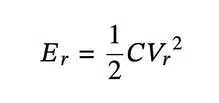
where

  • C is capacitance
  • Vr is the voltage rating of the capacitor.

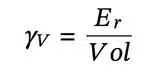
To find the volumetric energy density of a capacitor, divide Er by volume: 
The power rating of a capacitor can be estimated from the rated voltage and current as :
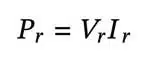
Power density is Pr  divided by volume: 
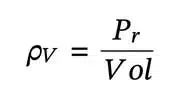
Alternatively, another approach to determining power density is to examine the impedance-matched condition, where the load matches the source impedance (i.e., the capacitor’s equivalent series resistance (ESR)). Under these conditions, we find: 
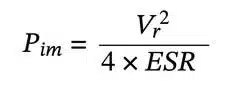
Then, power density is calculated as: 
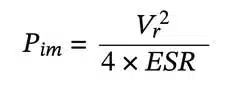
This method reveals that capacitors with high power density require a low ESR to maximize the rate of energy transfer. As a result, innovation in capacitor design focuses on optimizing capacitance and voltage within a compact volume while minimizing internal losses from ESR. 

Electromagnetic Fields Force action

Parallel current carrying conductors are surrounded by magnetic fields exerting forces on each other. If currents flow in the same direction the fields (and the conductors) attract each other. If the current flows in opposite directions they are repelling each other.
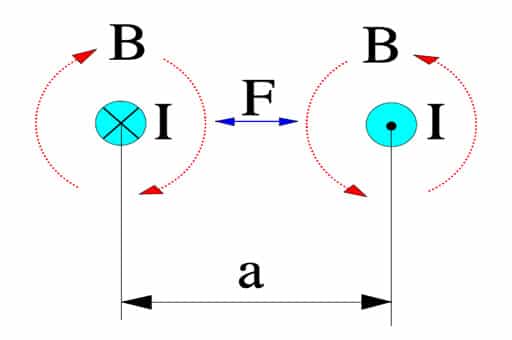
Figure 1. Magnetic force action, F, between conductors with a current flow, I. B = magnetic flux density.

If

  • the conductor length l is expressed in m,
  • the current I is expressed in A and
  • the distance a is expressed in m,

the force per meter between the conductors will be
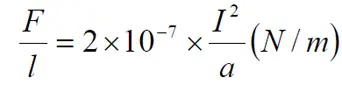
………………………[2]

According to the basic charge formula Q = C x V (As). If this expression is derived we obtain dQ/dt = I = C x dV/dt (A). Pulse loads are not unusual, especially in conditions with high voltage gradients, and thus high charging currents also occur which might cause appreciable magnetic fields between close lead patterns, for example.

Force action in electrostatic fields

Capacitors are typical examples of applications where electrostatic fields are applied. These fields can generate significant mechanical forces­. If we know the electrode distance d (m) it’s easy to determine the electric field strength E (V/m). Then we can outline the force per unit area, i.e. the pressure that the electrodes exert on the dielectric.

This image has an empty alt attribute; its file name is EQ-C1_22.jpg

……………………………….. [3]

Example. Suppose we have an oil impregnated paper capacitor with r = 5 and the dielectric = 15 m (0.6 mils) which is loaded with 250VAC. Then the instantaneous maximum pressure will be

This image has an empty alt attribute; its file name is EQ-C1_22b.jpg

0.1 kp/cm2 !

If we instead calculate on a 35 V solid tantalum capacitor with a typical and approximate dielectric thickness of 0.2 mm (0.008 mils) the formula gives at 30 V DC a pressure of

This image has an empty alt attribute; its file name is EQ-C1_22c.jpg

2 N/mm2 !

It is difficult to determine how much the dielectric is influenced by such forces, especially when the electrodes have such complex configurations. Electrostatic action of such forces here is of vital importance.

Electrostatic Force Potential Impact

We learned in the article about the energy stored in the capacitor, but what is also important and demonstrated is that there is enormous mechanical pressure between the electrodes once voltage is applied.

This can be considered in failure analyses if we have a solid, sharp impurity within the capacitor dielectric – it may degrade the insulator not only by inducing electrical conductivity/increasing leakage current, but also causing a mechanical damage to the dielectric due to the high electrostatic pressure between the electrodes. Hard and sharp micro-crystals in amorphous dielectric could be an example of such defects.

FAQ: Energy Density, Power Density and Capacitor Energy Content

What is energy density in capacitors?

Energy density is the amount of energy stored per unit mass or volume of a capacitor. It is typically measured in Wh/kg or Wh/L, reflecting how much energy can be packed into a limited space. High energy density is essential for efficient storage in mobile and compact devices.

What is power density in capacitors?

Power density measures how quickly a capacitor can deliver or absorb energy, expressed as W/kg or W/m³. High power density means the component can respond rapidly to energy demands, useful for applications requiring fast energy pulses like camera flashes or lasers.

How do energy density and power density differ?

Energy density focuses on total storage capacity, while power density emphasizes the rate of energy transfer. Capacitors may have high power density for fast delivery, whereas batteries typically have higher energy density for longer storage.

What role does ESR play in capacitor performance?

Equivalent Series Resistance (ESR) impacts power density. Low ESR allows capacitors to transfer energy faster, making it a key design factor for high-performance capacitors.

How to Calculate Capacitor Energy Density and Power Density

  1. Calculate Stored Energy

    Use the formula E = ½ × C × V², where C is capacitance and V is the rated voltage.

  2. Determine Volumetric Energy Density

    Divide the stored energy (E) by the capacitor’s volume to obtain energy density in Wh/L or J/m³.

  3. Estimate Power Rating

    Calculate power using the rated voltage and current. Then divide by volume to find power density.

  4. Consider ESR Effects

    Under impedance-matched conditions, low ESR maximizes power density. Always account for ESR when designing capacitors.


Related

Recent Posts

Conceptual illustration of Modelithics Library for MATLAB v26.6 with surface-mount capacitors, inductors and resistors on an RF PCB

Modelithics MATLAB v26.6 Adds RF Passive Component Models

24.11.2026
4
Hybrid 2:1 switched-capacitor converter schematic showing a flying capacitor, four switches, an output inductor and a diode freewheeling path

Hybrid Switched-Capacitor Converters: Lower-Loss Regulation

23.11.2026
13
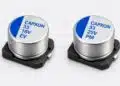
CapXon PM and EV surface-mount capacitors with cylindrical cans and rectangular mounting bases

CapXon Extends Polymer and SMD Aluminum Capacitors

20.11.2026
20
YAGEO Group KEMET VW80808 automotive MLCC illustration with rectangular ceramic bodies and metal end terminations

YAGEO Expands VW80808 Automotive MLCCs with X8R, X8G and C0G

20.11.2026
28
Vishay VJ series surface-mount ceramic safety capacitors with rectangular bodies and metal end terminations

Vishay Introduces X1 Safety MLCCs for AC Line Filtering

20.11.2026
18

Samsung Introduces 630V X7T Molded Frame Capacitor for Automotive

19.11.2026
55

Exxelia Presents Disc Capacitors and Integrated Magnetics for Space

18.11.2026
50
Vishay 259 PHM-SI cylindrical aluminum electrolytic capacitors with blue insulating sleeves and snap-in terminals

Vishay Adds 550 V and 600 V Snap-In Capacitors

18.11.2026
32
illustrative image of film capacitors close to a circuit board

2026 Capacitor Price Shock: Where Film Capacitors Fit

17.11.2026
78

Upcoming Events

Dec 1
16:00 - 17:00 CET

Developing low-noise mixed-signal systems

Dec 8
16:00 - 17:00 CET

WE-CCMF: Design Principles, Layout Guidelines and Measurement Results for High-Speed EMI Filtering

Dec 8
16:00 - 17:00 CET

Design Principles, Layout Guidelines and Measurement Results for High-Speed EMI Filtering

View Calendar

Popular Posts

  • Buck Converter Design and Calculation

    0 shares
    Share 0 Tweet 0
  • Boost Converter Design and Calculation

    0 shares
    Share 0 Tweet 0
  • Capacitor Charging and Discharging

    0 shares
    Share 0 Tweet 0
  • September 2026 Interconnect, Passives and Electromechanical Components Market Insights

    0 shares
    Share 0 Tweet 0
  • RF Connector Types: How To Choose the Right One

    0 shares
    Share 0 Tweet 0
  • LLC Resonant Converter Design and Calculation

    0 shares
    Share 0 Tweet 0
  • Passive Low Pass Filters: Fundamentals and EMI Design

    0 shares
    Share 0 Tweet 0
  • Flyback Converter Design and Calculation

    0 shares
    Share 0 Tweet 0
  • Capacitance and its Calculation

    0 shares
    Share 0 Tweet 0
  • Capacitor Symbols

    0 shares
    Share 0 Tweet 0

Newsletter Subscription


Passive Components Blog

© 2015–2026
All rights reserved

  • Home
  • Privacy Policy
  • EPCI Membership & Advertisement
  • About

No Result
View All Result
  • Home
  • Knowledge Blog
  • Dossiers
  • PCNS

© 2015–2026
All rights reserved