










Passive Components Blog
No Result
View All Result
  • Home
  • NewsFilter
    • All
    • Aerospace & Defence
    • Antenna
    • Applications
    • Automotive
    • Capacitors
    • Circuit Protection Devices
    • electro-mechanical news
    • Filters
    • Fuses
    • Inductors
    • Industrial
    • Integrated Passives
    • inter-connect news
    • Market & Supply Chain
    • Market Insights
    • Medical
    • Modelling and Simulation
    • New Materials & Supply
    • New Technologies
    • Non-linear Passives
    • Oscillators
    • Passive Sensors News
    • Resistors
    • RF & Microwave
    • Telecommunication
    • Weekly Digest

    Exxelia Releases Updated Microwave Materials and Frequency Tuning Catalogues

    Coilcraft Unveils Molded Power Inductors for High‑Current VRMs

    Murata Automotive MLCCs Push Capacitance Limits for ADAS and Power Lines

    TDK Releases Ultra‑small EMI Noise Suppression Filters

    Littelfuse Presents Ultra-Miniature Half-Pitch SMT DIP Switches

    SCHURTER Releases Compact SMT DIP Switches

    TDK and Nippon Chemical Launch Joint Venture for MLCC Materials

    Wk 14 Electronics Supply Chain Digest

    Bourns Releases Compact High Current Shielded Power Inductors

    Trending Tags

    • Ripple Current
    • RF
    • Leakage Current
    • Tantalum vs Ceramic
    • Snubber
    • Low ESR
    • Feedthrough
    • Derating
    • Dielectric Constant
    • New Products
    • Market Reports
  • VideoFilter
    • All
    • Antenna videos
    • Capacitor videos
    • Circuit Protection Video
    • Filter videos
    • Fuse videos
    • Inductor videos
    • Inter-Connect Video
    • Non-linear passives videos
    • Oscillator videos
    • Passive sensors videos
    • Resistor videos

    Transformer-Based Power-Line Harvester Magnetic Design

    Thermal Modeling of Magnetics

    Standard vs Planar LLC transformers Comparison for Battery Chargers

    How Modern Tools Model Magnetic Components for Power Electronics

    Advanced Loss Modeling for Planar Magnetics in the Frenetic Planar Tool

    2026 Power Magnetics Design Trends: Flyback, DAB and Planar

    Enabling Software‑Defined Vehicle Architectures: Automotive Ethernet and Zonal Smart Power

    Calculating Resistance Value of a Flyback RC Snubber 

    One‑Pulse Characterization of Nonlinear Power Inductors

    Trending Tags

    • Capacitors explained
    • Inductors explained
    • Resistors explained
    • Filters explained
    • Application Video Guidelines
    • EMC
    • New Products
    • Ripple Current
    • Simulation
    • Tantalum vs Ceramic
  • Knowledge Blog
  • DossiersNew
  • Suppliers
    • Who is Who
  • PCNS
    • PCNS 2025
    • PCNS 2023
    • PCNS 2021
    • PCNS 2019
    • PCNS 2017
  • Events
  • Home
  • NewsFilter
    • All
    • Aerospace & Defence
    • Antenna
    • Applications
    • Automotive
    • Capacitors
    • Circuit Protection Devices
    • electro-mechanical news
    • Filters
    • Fuses
    • Inductors
    • Industrial
    • Integrated Passives
    • inter-connect news
    • Market & Supply Chain
    • Market Insights
    • Medical
    • Modelling and Simulation
    • New Materials & Supply
    • New Technologies
    • Non-linear Passives
    • Oscillators
    • Passive Sensors News
    • Resistors
    • RF & Microwave
    • Telecommunication
    • Weekly Digest

    Exxelia Releases Updated Microwave Materials and Frequency Tuning Catalogues

    Coilcraft Unveils Molded Power Inductors for High‑Current VRMs

    Murata Automotive MLCCs Push Capacitance Limits for ADAS and Power Lines

    TDK Releases Ultra‑small EMI Noise Suppression Filters

    Littelfuse Presents Ultra-Miniature Half-Pitch SMT DIP Switches

    SCHURTER Releases Compact SMT DIP Switches

    TDK and Nippon Chemical Launch Joint Venture for MLCC Materials

    Wk 14 Electronics Supply Chain Digest

    Bourns Releases Compact High Current Shielded Power Inductors

    Trending Tags

    • Ripple Current
    • RF
    • Leakage Current
    • Tantalum vs Ceramic
    • Snubber
    • Low ESR
    • Feedthrough
    • Derating
    • Dielectric Constant
    • New Products
    • Market Reports
  • VideoFilter
    • All
    • Antenna videos
    • Capacitor videos
    • Circuit Protection Video
    • Filter videos
    • Fuse videos
    • Inductor videos
    • Inter-Connect Video
    • Non-linear passives videos
    • Oscillator videos
    • Passive sensors videos
    • Resistor videos

    Transformer-Based Power-Line Harvester Magnetic Design

    Thermal Modeling of Magnetics

    Standard vs Planar LLC transformers Comparison for Battery Chargers

    How Modern Tools Model Magnetic Components for Power Electronics

    Advanced Loss Modeling for Planar Magnetics in the Frenetic Planar Tool

    2026 Power Magnetics Design Trends: Flyback, DAB and Planar

    Enabling Software‑Defined Vehicle Architectures: Automotive Ethernet and Zonal Smart Power

    Calculating Resistance Value of a Flyback RC Snubber 

    One‑Pulse Characterization of Nonlinear Power Inductors

    Trending Tags

    • Capacitors explained
    • Inductors explained
    • Resistors explained
    • Filters explained
    • Application Video Guidelines
    • EMC
    • New Products
    • Ripple Current
    • Simulation
    • Tantalum vs Ceramic
  • Knowledge Blog
  • DossiersNew
  • Suppliers
    • Who is Who
  • PCNS
    • PCNS 2025
    • PCNS 2023
    • PCNS 2021
    • PCNS 2019
    • PCNS 2017
  • Events
No Result
View All Result
Passive Components Blog
No Result
View All Result

Coilcraft Unveils Molded Power Inductors for High‑Current VRMs

8.4.2026
Reading Time: 7 mins read
A A

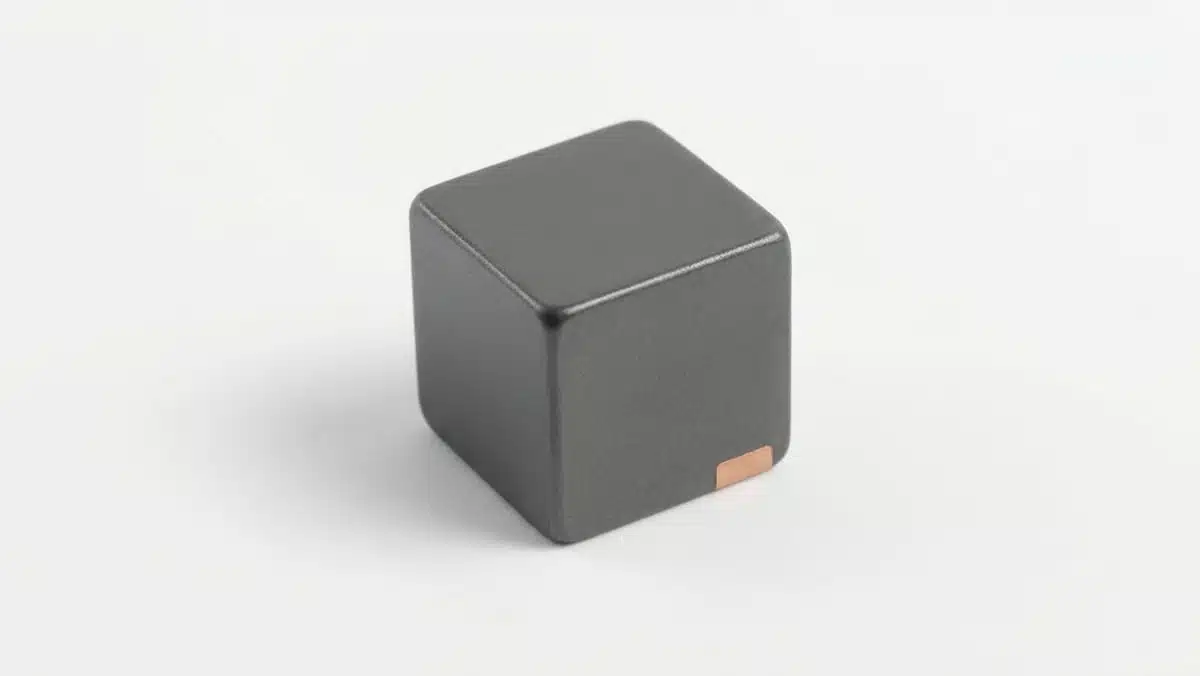
Coilcraft releases KTA5050 series family of molded, shielded power inductors with ultra‑low inductance values optimized for modern low‑voltage, high‑current DC‑DC converters in compact 5.6 × 5.2 × 5.0 mm packages.

These parts extend the KTA molded power inductor family toward higher power levels while maintaining low losses and robust AEC‑Q200 performance for demanding CPU, GPU, ASIC, and automotive power rails.

RelatedPosts

Coilcraft Releases TLVR Inductors for High Density VRMs and PoL Converters

Coilcraft Releases Automotive Common Mode Chokes

Coilcraft Introduces Ultra-Low Loss Shielded Power Inductors

Key features and benefits

The KTA5050 inductors are designed as low‑inductance power chokes for fast transient, high‑current multiphase regulators where board area and efficiency are both critical.

  • Inductance range from approximately 65 nH up to around 600 nH, covering typical values used in single‑phase and multiphase VRMs and point‑of‑load (PoL) converters according to manufacturer datasheet.
  • Compact molded shielded package of about 5.6 mm length, 5.2 mm width, and 5.0 mm height, supporting high current density in space‑constrained server and automotive boards.
  • Composite magnetic core optimized for low AC losses at high switching frequencies used in modern buck converters.
  • Very low DC resistance (DCR) values to minimize conduction loss and improve overall converter efficiency, especially at high load currents.
  • Soft saturation behavior to support large transient load steps without abrupt inductance collapse, which helps keep output voltage within tight tolerance during spikes.
  • AEC‑Q200 qualification and maximum part temperature rating up to 165 °C, enabling robust operation in engine compartments and other harsh environments.
  • RoHS‑compliant, halogen‑free construction and compatibility with standard lead‑free reflow profiles according to Coilcraft specifications.

In practical terms, the combination of low inductance and low inductor losses makes KTA5050 well suited to high switching frequencies, where small inductance values allow tight transient control without sacrificing efficiency. The molded shielded construction also reduces radiated EMI and simplifies layout around sensitive digital ICs.

Typical applications

KTA5050 targets high‑performance power stages where transient performance, efficiency, and thermal margins are critical.

  • Multiphase voltage regulator modules (VRMs) for server and data‑center CPUs and GPUs.
  • PoL regulators for high‑current ASICs and SoCs in networking, AI acceleration, and storage systems.
  • High‑current core and memory rails on graphics cards, accelerator cards, and high‑end embedded compute modules.
  • Automotive ECUs and domain controllers, including ADAS, infotainment, and powertrain control units where AEC‑Q200 and elevated temperature capability are required.
  • Industrial and telecom power supplies where low profile and tight efficiency targets drive selection of low‑inductance, low‑loss chokes.

For many of these use cases, designers operate at low output voltages and high currents, with switching frequencies in the several hundred kilohertz to multi‑megahertz range, which aligns well with the KTA5050 performance envelope specified in the datasheet.

Technical highlights

This section summarizes key technical characteristics of the KTA5050 series; exact values should be taken from the official datasheet for each ordering code.

  • Inductance values
    • Nominal inductance options roughly from 0.065 µH to 0.6 µH.
    • Tolerance is typically ±20% for these low‑inductance, high‑current parts according to manufacturer specifications.
    • Self‑resonant frequency (SRF) values are in the tens of MHz range, depending on part value; higher SRF generally corresponds to lower inductance types.
  • Current ratings
    • High saturation current ratings on the order of several tens of amps, with the lowest inductance types specified up to around 50 A according to manufacturer datasheet.
    • Current ratings normally specified for defined inductance drop criteria (for example, 20% or 30% reduction) and for temperature rise (such as 20 °C or 40 °C rise above ambient); both limits must be considered during design.
    • Soft saturation characteristics help maintain inductance over a wide current range, easing worst‑case transient and short‑circuit analysis.
  • Loss and resistance parameters
    • Very low DCR values in the sub‑milliohm to a few milliohms range depending on inductance option, which directly reduces I²R loss and improves thermal behavior.
    • Inductors are optimized for low AC loss at high switching frequencies, which is crucial when using MHz‑range controllers or spread‑spectrum modulation schemes.
  • Mechanical and environmental data
    • Package size: approximately 5.6 × 5.2 × 5.0 mm molded body footprint for all KTA5050 variants.
    • Terminations: tin‑based, RoHS‑compliant finishes over copper terminations compatible with standard reflow assembly; other termination variants may be available per manufacturer options.
    • Operating and storage temperature ranges, including derating versus current, are specified in the datasheet and should be checked for the chosen part number, especially for designs approaching 165 °C maximum part temperature.

When comparing with other molded shielded inductors, KTA5050 effectively trades a modest increase in footprint for significantly higher current capability and lower DCR, making it attractive wherever several tens of amps per phase are required.

Design‑in notes for engineers

When designing in KTA5050 inductors, several practical points help ensure robust performance and efficient use of the series.

  • Inductance selection
    • For multiphase VRMs and PoL converters, select inductance based on target ripple current, switching frequency, and transient response; lower inductance improves transient response but increases ripple and core loss.
    • Use the manufacturer’s online inductance and current rating data to verify that the selected value meets ripple and transient specs over the full operating current range and temperature.
  • Current and thermal margins
    • Compare application peak current and RMS current against both saturation‑based and temperature‑rise‑based current ratings; the lower of the two is the effective current limit.
    • Pay attention to derating curves versus ambient temperature, particularly in sealed enclosures or under‑hood automotive environments where the inductor body can approach its 165 °C maximum part temperature.
  • Layout and EMI
    • The molded shielded construction reduces stray magnetic fields, but layout still matters: keep current loops tight, minimize loop area between high‑di/dt paths, and avoid routing sensitive signal traces under the inductor.
    • If parallel phases use multiple KTA5050 inductors, keep them aligned and placed symmetrically around the controller to balance parasitics and thermal distribution.
  • Reliability and qualification
    • For automotive and other harsh‑environment designs, confirm AEC‑Q200 qualification for the exact ordering code selected and check any additional OEM‑specific stress test requirements.
    • Ensure that solder‑joint reliability is adequate by following Coilcraft’s recommended land pattern and reflow profile, especially for heavy, high‑current inductors subject to vibration.

Source

This article is based on official technical information and product documentation provided by Coilcraft for the KTA5050 molded shielded power inductor family, interpreted and summarized for design and procurement engineers.


References

  1. Coilcraft KTA5050 product page
  2. Coilcraft KTA family overview
  3. Coilcraft main website

Related

Recent Posts

Murata Automotive MLCCs Push Capacitance Limits for ADAS and Power Lines

8.4.2026
3

Littelfuse Presents Ultra-Miniature Half-Pitch SMT DIP Switches

7.4.2026
5

SCHURTER Releases Compact SMT DIP Switches

7.4.2026
3

Bourns Releases Compact High Current Shielded Power Inductors

2.4.2026
22

March 2026 Interconnect, Passives and Electromechanical Components Market Insights

2.4.2026
60

APEC 2026 Power Electronics Trends and Implications for Passive Components

1.4.2026
82

Hydra Enhances Film Capacitor Robustness by Novel Gel Filler

1.4.2026
26

Würth Elektronik Releases Heat Sinks for TO and IC packages

31.3.2026
25

Würth Elektronik ICS to Acquire MRS Electronic and Expand Vehicle Electronics Portfolio

31.3.2026
26

Upcoming Events

Apr 8
17:00 - 18:00 CEST

Trade Secrets of the Flyback Converter

Apr 21
16:00 - 17:00 CEST

Heatsink Solutions: Thermal Management in electronic devices

May 5
16:00 - 17:00 CEST

Understanding and Selecting Capacitors – Fundamentals, Technologies and Latest Trends

View Calendar

Popular Posts

  • Buck Converter Design and Calculation

    0 shares
    Share 0 Tweet 0
  • Boost Converter Design and Calculation

    0 shares
    Share 0 Tweet 0
  • Flyback Converter Design and Calculation

    0 shares
    Share 0 Tweet 0
  • LLC Resonant Converter Design and Calculation

    0 shares
    Share 0 Tweet 0
  • Dual Active Bridge (DAB) Topology

    0 shares
    Share 0 Tweet 0
  • MLCC and Ceramic Capacitors

    0 shares
    Share 0 Tweet 0
  • Capacitor Charging and Discharging

    0 shares
    Share 0 Tweet 0
  • Ripple Current and its Effects on the Performance of Capacitors

    3 shares
    Share 3 Tweet 0
  • Plastic Materials Dielectric Constant and DF

    4 shares
    Share 4 Tweet 0
  • MLCC Case Sizes Standards Explained

    0 shares
    Share 0 Tweet 0

Newsletter Subscription


Passive Components Blog

© EPCI - Leading Passive Components Educational and Information Site

  • Home
  • Privacy Policy
  • EPCI Membership & Advertisement
  • About

No Result
View All Result
  • Home
  • Knowledge Blog
  • PCNS

© EPCI - Leading Passive Components Educational and Information Site

This website uses cookies. By continuing to use this website you are giving consent to cookies being used. Visit our Privacy and Cookie Policy.
Go to mobile version