












Modelithics has released version 26.1 of its Modelithics COMPLETE Library for Keysight Advanced Design System (ADS), extending high‑accuracy RF and microwave models for passive components, active devices and system‑level parts.
The update is particularly relevant for designers who rely on measurement‑based models to de‑risk high‑frequency designs up into the millimeter‑wave range.
The new Modelithics release adds models from multiple vendors (inductors, capacitors, resistors, resonators and an RF amplifier), and maintains compatibility with the latest Keysight ADS 2026 Update 2 platform according to the manufacturer. This makes it a practical upgrade for both design engineers and purchasing teams standardizing on ADS and needing reliable, supported libraries over the full product lifecycle.
Key features and benefits
- Wide component coverage in a single library – The COMPLETE Library now represents more than 31,000 components from 86 manufacturers, giving design teams a broad set of passives, actives and system‑level elements in one consistent modeling environment according to Modelithics.
- Updated compatibility with Keysight ADS 2026 Update 2 – The v26.1 release is compatible with the latest ADS platform, helping teams avoid version mismatches between their design environment and the component model library.
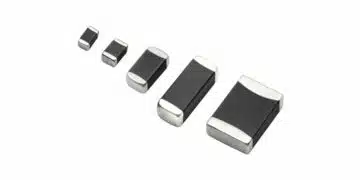
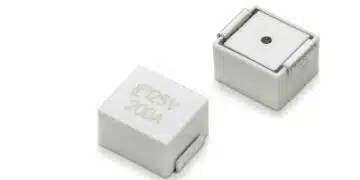
- New Coilcraft inductor models up to millimeter‑wave – Six new Coilcraft inductor models cover wide value ranges with maximum validated frequencies as high as 67 GHz for some series, making them suitable for microwave and early millimeter‑wave designs where lumped element accuracy is critical.
- Dalicap DLC85C capacitor model for wide RF range – A new Dalicap capacitor model (DLC85C) covers capacitance values from 0.1 pF to 1000 pF, with frequency validation through 30 GHz and orientation‑selectable behavior, supporting accurate layout‑dependent simulations in compact RF designs.
- Expanded Vishay resistor coverage to 115 GHz – Four new Vishay resistor models provide extensive resistance ranges, with certain parts measurement‑validated through 115 GHz, which is important where resistors are used as terminations, attenuator elements or bias networks at very high frequency.
- Knowles resonator models in the 5–8 GHz range – Five new Knowles resonator models cover operating frequencies between 5 GHz and 8 GHz, supporting filters and resonant structures in common wireless and radar bands.
- Non‑linear Mini‑Circuits PMA1‑14LN+ amplifier model – A new non‑linear X‑Parameters‑based behavioral model for the Mini‑Circuits PMA1‑14LN+ provides linear accuracy through 14 GHz and non‑linear validation through 12 GHz, enabling more realistic gain compression and intermodulation simulations at the system level.
- Microwave Global Models features across new passives – The newly added passive models include advanced features such as substrate scaling, pad scaling and high‑order resonant behavior, derived from precision impedance and S‑parameter measurements, which helps align simulations with real PCB implementations.
Typical applications
The v26.1 update targets RF and microwave designers working from sub‑GHz up to mmWave, where model quality heavily influences first‑pass success.
- RF front‑ends and LNAs using the Mini‑Circuits PMA1‑14LN+ amplifier model in the 1–12 GHz range for gain, noise figure and linearity optimization.
- Broadband matching networks using Coilcraft inductors and Dalicap capacitors, where accurate parasitics up to tens of GHz are needed to meet return‑loss targets over a wide band.
- Microwave filters and resonant structures in the 5–8 GHz range using Knowles resonator models for Wi‑Fi, radar or communication links.
- Terminations, attenuators and bias networks built with Vishay resistors that must behave predictably up to tens of GHz, for example in measurement fixtures or wideband front‑end modules.
- System‑level RF chain simulations in ADS, combining passive models, resonators and the PMA1‑14LN+ amplifier model to evaluate cascade gain, noise and distortion before hardware build.
New models overview
The table below summarizes the main groups of new models in v26.1 and their focus.
| Vendor / type | Model(s) / series (as described) | Frequency validation focus | Typical design use case |
|---|---|---|---|
| Coilcraft inductors | Six new inductor models | Up to 67 GHz (series‑dependent) | Broadband matching, RF chokes, resonant networks |
| Dalicap capacitor | DLC85C | Up to 30 GHz | RF capacitors in filters, matching, bias decoupling |
| Vishay resistors | Four new resistor models | Up to 115 GHz (part‑dependent) | Terminations, attenuators, biasing and sensing at RF/mmWave |
| Knowles resonators | Five resonator models (5–8 GHz) | 5–8 GHz operating range | Band‑pass filters, oscillators, resonant elements |
| Mini‑Circuits amplifier | PMA1‑14LN+ X‑Parameters model | Linear to 14 GHz, non‑linear to 12 GHz | LNA stages, gain blocks, system‑level RF chains |
All frequency ranges and validations in the table are stated according to the manufacturer press release and should be verified against the corresponding datasheets and release notes for specific designs.
Technical highlights
Library scope and EDA coverage
The Modelithics COMPLETE Library is positioned as a measurement‑based model set for both passive and active devices, covering commercially available component families across many vendors according to Modelithics. In addition to the COMPLETE Library itself, the company also offers related product lines such as the mmWave Library, the System Components Library and the COMPLETE+3D Library, as well as vendor‑specific collections like the Modelithics Qorvo GaN Library.
For ADS users, v26.1 focuses on maintaining up‑to‑date compatibility with ADS 2026 Update 2. This matters in practice because model libraries and design environments must be kept on aligned versions to avoid issues with model formats, user interface integration or simulation engines over the lifetime of a project.
Passive component modeling features
The newly added Coilcraft, Dalicap and Vishay models are described as Microwave Global Models based on precision impedance and S‑parameter measurements across frequency, value and substrate conditions. Key capabilities include:
- Substrate scaling, allowing the same model to be used across different PCB dielectric constants and thicknesses according to Modelithics.
- Pad scaling, capturing the impact of pad geometry and land pattern variations on effective inductance, capacitance and loss.
- High‑order resonant behavior, which is particularly important when passives operate near or above their self‑resonant frequency, as often happens in designs above a few GHz.
In practical terms, these features help close the gap between idealized schematic values and the real behavior seen when components are mounted on specific PCB stack‑ups.
Active and system‑level models
The non‑linear Mini‑Circuits PMA1‑14LN+ behavioral model uses X‑Parameters to extend beyond small‑signal S‑parameter modeling. This enables:
- Simulation of gain compression and intermodulation products when the amplifier is driven near or into non‑linear regions.
- More realistic cascade simulations when combining the amplifier with lossy passives and filters represented by the new Microwave Global Models.
System‑level component models such as the Knowles resonators can also be used as building blocks for filters and oscillators, where the accuracy of resonant frequency and Q‑factor significantly impacts system performance.
Design‑in notes for engineers
- Start from validated frequency ranges – When selecting Coilcraft, Dalicap or Vishay parts from the new models, ensure that the intended operating band falls within the measurement‑validated frequency range stated by Modelithics and by the component datasheet.
- Leverage substrate and pad scaling – Use the substrate scaling and pad scaling features to match your PCB stack‑up and land pattern rather than relying on default settings, especially above a few GHz where parasitics dominate.
- Use Dalicap DLC85C orientation options carefully – Orientation‑selectable features in the DLC85C model let you evaluate how physical placement and rotation affect parasitics; this is particularly useful in dense RF layouts where coupling and lead inductance matter.
- Check non‑linear behavior of PMA1‑14LN+ – For the Mini‑Circuits amplifier, run large‑signal simulations (e.g., two‑tone tests) using the X‑Parameters model to check third‑order intercept, compression points and harmonic content before committing to PCB.
- Model resonators in full context – When using the Knowles resonator models at 5–8 GHz, include nearby passives, line segments and enclosure effects in the simulation to get realistic filter or oscillator performance.
- Coordinate with purchasing and library management – Ensure that the ADS installation, Modelithics COMPLETE Library v26.1 and selected component datasheets are kept in sync under document control, so that the simulated models correspond to the actual sourced parts over the lifetime of the design.
Source
The information in this article is based on the official Modelithics press release announcing the v26.1 update of the Modelithics COMPLETE Library for Keysight ADS, complemented by the general product descriptions from the Modelithics website and related library overview materials.