





Passive Components Blog
No Result
View All Result
  • Home
  • NewsFilter
    • All
    • Aerospace & Defence
    • Antenna
    • Applications
    • Automotive
    • Capacitors
    • Circuit Protection Devices
    • electro-mechanical news
    • Filters
    • Fuses
    • Inductors
    • Industrial
    • Integrated Passives
    • inter-connect news
    • Market & Supply Chain
    • Market Insights
    • Medical
    • Modelling and Simulation
    • New Materials & Supply
    • New Technologies
    • Non-linear Passives
    • Oscillators
    • Passive Sensors News
    • Resistors
    • RF & Microwave
    • Telecommunication
    • Weekly Digest

    Samsung Introduces 35V MLCCs Flying Capacitors for USB PD Fast Charging

    New J‑STD‑075B Standard Elevates Process Sensitivity Classification for Passive and Solid-State Components

    Modelithics Expands COMPLETE+3D Library for Ansys HFSS

    DigiKey Launches “Engineering Unlocked” Video Series

    Equivalent Circuit Constants of Crystal Units Explained

    Vishay Releases Compact High‑Accuracy Hall Effect Linear Position Sensor

    Nanocrystalline Cores for Low‑Loss MHz Chip Inductors

    Exxelia Miniaturized 400 MHz Inverted‑F Antenna

    Würth Elektronik Unveils High-Current Automotive Power Inductor

    Trending Tags

    • Ripple Current
    • RF
    • Leakage Current
    • Tantalum vs Ceramic
    • Snubber
    • Low ESR
    • Feedthrough
    • Derating
    • Dielectric Constant
    • New Products
    • Market Reports
  • VideoFilter
    • All
    • Antenna videos
    • Capacitor videos
    • Circuit Protection Video
    • Filter videos
    • Fuse videos
    • Inductor videos
    • Inter-Connect Video
    • Non-linear passives videos
    • Oscillator videos
    • Passive sensors videos
    • Resistor videos

    Transformer-Based Power-Line Harvester Magnetic Design

    Thermal Modeling of Magnetics

    Standard vs Planar LLC transformers Comparison for Battery Chargers

    How Modern Tools Model Magnetic Components for Power Electronics

    Advanced Loss Modeling for Planar Magnetics in the Frenetic Planar Tool

    2026 Power Magnetics Design Trends: Flyback, DAB and Planar

    Enabling Software‑Defined Vehicle Architectures: Automotive Ethernet and Zonal Smart Power

    Calculating Resistance Value of a Flyback RC Snubber 

    One‑Pulse Characterization of Nonlinear Power Inductors

    Trending Tags

    • Capacitors explained
    • Inductors explained
    • Resistors explained
    • Filters explained
    • Application Video Guidelines
    • EMC
    • New Products
    • Ripple Current
    • Simulation
    • Tantalum vs Ceramic
  • Knowledge Blog
  • DossiersNew
  • Suppliers
    • Who is Who
  • PCNS
    • PCNS 2025
    • PCNS 2023
    • PCNS 2021
    • PCNS 2019
    • PCNS 2017
  • Events
  • Home
  • NewsFilter
    • All
    • Aerospace & Defence
    • Antenna
    • Applications
    • Automotive
    • Capacitors
    • Circuit Protection Devices
    • electro-mechanical news
    • Filters
    • Fuses
    • Inductors
    • Industrial
    • Integrated Passives
    • inter-connect news
    • Market & Supply Chain
    • Market Insights
    • Medical
    • Modelling and Simulation
    • New Materials & Supply
    • New Technologies
    • Non-linear Passives
    • Oscillators
    • Passive Sensors News
    • Resistors
    • RF & Microwave
    • Telecommunication
    • Weekly Digest

    Samsung Introduces 35V MLCCs Flying Capacitors for USB PD Fast Charging

    New J‑STD‑075B Standard Elevates Process Sensitivity Classification for Passive and Solid-State Components

    Modelithics Expands COMPLETE+3D Library for Ansys HFSS

    DigiKey Launches “Engineering Unlocked” Video Series

    Equivalent Circuit Constants of Crystal Units Explained

    Vishay Releases Compact High‑Accuracy Hall Effect Linear Position Sensor

    Nanocrystalline Cores for Low‑Loss MHz Chip Inductors

    Exxelia Miniaturized 400 MHz Inverted‑F Antenna

    Würth Elektronik Unveils High-Current Automotive Power Inductor

    Trending Tags

    • Ripple Current
    • RF
    • Leakage Current
    • Tantalum vs Ceramic
    • Snubber
    • Low ESR
    • Feedthrough
    • Derating
    • Dielectric Constant
    • New Products
    • Market Reports
  • VideoFilter
    • All
    • Antenna videos
    • Capacitor videos
    • Circuit Protection Video
    • Filter videos
    • Fuse videos
    • Inductor videos
    • Inter-Connect Video
    • Non-linear passives videos
    • Oscillator videos
    • Passive sensors videos
    • Resistor videos

    Transformer-Based Power-Line Harvester Magnetic Design

    Thermal Modeling of Magnetics

    Standard vs Planar LLC transformers Comparison for Battery Chargers

    How Modern Tools Model Magnetic Components for Power Electronics

    Advanced Loss Modeling for Planar Magnetics in the Frenetic Planar Tool

    2026 Power Magnetics Design Trends: Flyback, DAB and Planar

    Enabling Software‑Defined Vehicle Architectures: Automotive Ethernet and Zonal Smart Power

    Calculating Resistance Value of a Flyback RC Snubber 

    One‑Pulse Characterization of Nonlinear Power Inductors

    Trending Tags

    • Capacitors explained
    • Inductors explained
    • Resistors explained
    • Filters explained
    • Application Video Guidelines
    • EMC
    • New Products
    • Ripple Current
    • Simulation
    • Tantalum vs Ceramic
  • Knowledge Blog
  • DossiersNew
  • Suppliers
    • Who is Who
  • PCNS
    • PCNS 2025
    • PCNS 2023
    • PCNS 2021
    • PCNS 2019
    • PCNS 2017
  • Events
No Result
View All Result
Passive Components Blog
No Result
View All Result

TDK Develops Miniaturized, High-performance Automotive Power Inductors

13.10.2020
Reading Time: 2 mins read
A A

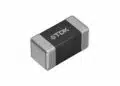
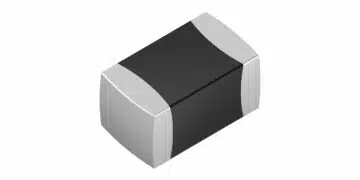
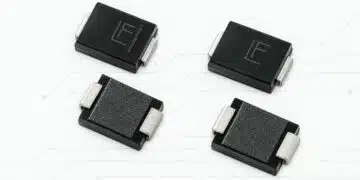
TDK Corporation developed new power inductors, BCL322515RT, for use in automotive electronics, intended for insertion into the power line of an automobile electronic control circuit.

Using TDK’s proprietary material technologies and structure design, the inductors achieve high inductance (47 μH) in a small size (3.2 x 2.5 x 1.5 mm). The saturation current is 0.72 A.

RelatedPosts

Samsung Introduces 35V MLCCs Flying Capacitors for USB PD Fast Charging

New J‑STD‑075B Standard Elevates Process Sensitivity Classification for Passive and Solid-State Components

Modelithics Expands COMPLETE+3D Library for Ansys HFSS

In addition, by using metallic magnetic material as a core material, they were downsized by approximately 35% compared to products that used conventional ferrite material with similar attributes. The rated voltage is 40 V, and they can be used in a primary power supply circuit, which is input directly from an in-vehicle 12 V battery. The operating temperature range is from -55 to +155℃ (including self-temperature rise), which supports severe temperature environments. In addition, the connection structure between the winding wire and the external electrode is designed to reduce open risks, ensuring high reliability.

Recently, automobiles are increasingly likely to have an electronic control unit for information communication and self-driving, resulting in an increased number of inductors for power supply circuits used in the units. TDK will expand its lineup in the BCL series to meet a variety of customer needs for power inductors to be used in automotive electronics, such as downsizing.

Main applications

  • ADAS, a range of ECUs (Electronic Control Unit for automobiles)

Main features and benefits

  • 47 μH achieved in a small size, decreasing inductors used
  • High reliability due to the product structure that reduced open risks
  • Operating temperature range up to 155°C supported. Available for a variety of automotive applications

Key data

TypeInductance
[μH] @1 MHz
DC resistance
[Ω] typ.
Rated current
Isat*
[A] typ.
Rated current
Itemp**
[A] typ.
Rated voltage
[V]
BCL322515RT-470M-D47.0 ± 20%1.220.720.6740
  • * Isat: Based on inductance change ratio (-30% typ.)
  • ** Itemp: Based on self-temperature rise (+40℃ typ.)
Related

Source: TDK

Recent Posts

New J‑STD‑075B Standard Elevates Process Sensitivity Classification for Passive and Solid-State Components

27.3.2026
11

Modelithics Expands COMPLETE+3D Library for Ansys HFSS

27.3.2026
4

Nanocrystalline Cores for Low‑Loss MHz Chip Inductors

25.3.2026
28

Würth Elektronik Unveils High-Current Automotive Power Inductor

24.3.2026
23

Transformer-Based Power-Line Harvester Magnetic Design

24.3.2026
15

Middle East Conflict: The Potential Impact to Passive Components

23.3.2026
122

LLC Transformer: Designing a 2 kW LLC Transformer with Integrated Resonant Inductor

26.3.2026
75

Inductor Technology Dossier

19.3.2026
49

Coilcraft Releases TLVR Inductors for High Density VRMs and PoL Converters

19.3.2026
48

Upcoming Events

Apr 21
16:00 - 17:00 CEST

Heatsink Solutions: Thermal Management in electronic devices

May 5
16:00 - 17:00 CEST

Understanding and Selecting Capacitors – Fundamentals, Technologies and Latest Trends

May 19
16:00 - 17:00 CEST

Designing Qi2 Wireless Power Systems: Practical Development and EMC Optimization

View Calendar

Popular Posts

  • Buck Converter Design and Calculation

    0 shares
    Share 0 Tweet 0
  • Boost Converter Design and Calculation

    0 shares
    Share 0 Tweet 0
  • Flyback Converter Design and Calculation

    0 shares
    Share 0 Tweet 0
  • LLC Resonant Converter Design and Calculation

    0 shares
    Share 0 Tweet 0
  • Dual Active Bridge (DAB) Topology

    0 shares
    Share 0 Tweet 0
  • MLCC and Ceramic Capacitors

    0 shares
    Share 0 Tweet 0
  • Ripple Current and its Effects on the Performance of Capacitors

    3 shares
    Share 3 Tweet 0
  • MLCC Case Sizes Standards Explained

    0 shares
    Share 0 Tweet 0
  • Capacitor Charging and Discharging

    0 shares
    Share 0 Tweet 0
  • What is a Dielectric Constant and DF of Plastic Materials?

    4 shares
    Share 4 Tweet 0

Newsletter Subscription


Passive Components Blog

© EPCI - Leading Passive Components Educational and Information Site

  • Home
  • Privacy Policy
  • EPCI Membership & Advertisement
  • About

No Result
View All Result
  • Home
  • Knowledge Blog
  • PCNS

© EPCI - Leading Passive Components Educational and Information Site

This website uses cookies. By continuing to use this website you are giving consent to cookies being used. Visit our Privacy and Cookie Policy.
Go to mobile version