













Passive Components Blog
No Result
View All Result
  • Home
  • NewsFilter
    • All
    • Aerospace & Defence
    • Antenna
    • Applications
    • Automotive
    • Capacitors
    • Circuit Protection Devices
    • electro-mechanical news
    • Filters
    • Fuses
    • Inductors
    • Industrial
    • Integrated Passives
    • inter-connect news
    • Market & Supply Chain
    • Market Insights
    • Medical
    • Modelling and Simulation
    • New Materials & Supply
    • New Technologies
    • Non-linear Passives
    • Oscillators
    • Passive Sensors News
    • Resistors
    • RF & Microwave
    • Telecommunication
    • Weekly Digest

    How Modern Tools Model Magnetic Components for Power Electronics

    Inductors and Ferrite Beads Price Hikes 

    TDK Extends Compact ThermoFuse Varistors up to 50 kA

    Samtec ANSI/VITA 90 Connectors: Rugged Small Form Factor Standard

    Resistor Technology Dossier

    Würth Elektronik IQD Awarded by EcoVadis Gold Sustainability Medal

    Advanced Loss Modeling for Planar Magnetics in the Frenetic Planar Tool

    AI Servers Demand is Driving Tantalum Capacitor Price Hikes

    DMASS Reports Europe Components Up 9.8% in Q4 2025

    Trending Tags

    • Ripple Current
    • RF
    • Leakage Current
    • Tantalum vs Ceramic
    • Snubber
    • Low ESR
    • Feedthrough
    • Derating
    • Dielectric Constant
    • New Products
    • Market Reports
  • VideoFilter
    • All
    • Antenna videos
    • Capacitor videos
    • Circuit Protection Video
    • Filter videos
    • Fuse videos
    • Inductor videos
    • Inter-Connect Video
    • Non-linear passives videos
    • Oscillator videos
    • Passive sensors videos
    • Resistor videos

    How Modern Tools Model Magnetic Components for Power Electronics

    Advanced Loss Modeling for Planar Magnetics in the Frenetic Planar Tool

    2026 Power Magnetics Design Trends: Flyback, DAB and Planar

    Enabling Software‑Defined Vehicle Architectures: Automotive Ethernet and Zonal Smart Power

    Calculating Resistance Value of a Flyback RC Snubber 

    One‑Pulse Characterization of Nonlinear Power Inductors

    Thermistor Linearization Challenges

    Coaxial Connectors and How to Connect with PCB

    PCB Manufacturing, Test Methods, Quality and Reliability

    Trending Tags

    • Capacitors explained
    • Inductors explained
    • Resistors explained
    • Filters explained
    • Application Video Guidelines
    • EMC
    • New Products
    • Ripple Current
    • Simulation
    • Tantalum vs Ceramic
  • Knowledge Blog
  • DossiersNew
  • Suppliers
    • Who is Who
  • PCNS
    • PCNS 2025
    • PCNS 2023
    • PCNS 2021
    • PCNS 2019
    • PCNS 2017
  • Events
  • Home
  • NewsFilter
    • All
    • Aerospace & Defence
    • Antenna
    • Applications
    • Automotive
    • Capacitors
    • Circuit Protection Devices
    • electro-mechanical news
    • Filters
    • Fuses
    • Inductors
    • Industrial
    • Integrated Passives
    • inter-connect news
    • Market & Supply Chain
    • Market Insights
    • Medical
    • Modelling and Simulation
    • New Materials & Supply
    • New Technologies
    • Non-linear Passives
    • Oscillators
    • Passive Sensors News
    • Resistors
    • RF & Microwave
    • Telecommunication
    • Weekly Digest

    How Modern Tools Model Magnetic Components for Power Electronics

    Inductors and Ferrite Beads Price Hikes 

    TDK Extends Compact ThermoFuse Varistors up to 50 kA

    Samtec ANSI/VITA 90 Connectors: Rugged Small Form Factor Standard

    Resistor Technology Dossier

    Würth Elektronik IQD Awarded by EcoVadis Gold Sustainability Medal

    Advanced Loss Modeling for Planar Magnetics in the Frenetic Planar Tool

    AI Servers Demand is Driving Tantalum Capacitor Price Hikes

    DMASS Reports Europe Components Up 9.8% in Q4 2025

    Trending Tags

    • Ripple Current
    • RF
    • Leakage Current
    • Tantalum vs Ceramic
    • Snubber
    • Low ESR
    • Feedthrough
    • Derating
    • Dielectric Constant
    • New Products
    • Market Reports
  • VideoFilter
    • All
    • Antenna videos
    • Capacitor videos
    • Circuit Protection Video
    • Filter videos
    • Fuse videos
    • Inductor videos
    • Inter-Connect Video
    • Non-linear passives videos
    • Oscillator videos
    • Passive sensors videos
    • Resistor videos

    How Modern Tools Model Magnetic Components for Power Electronics

    Advanced Loss Modeling for Planar Magnetics in the Frenetic Planar Tool

    2026 Power Magnetics Design Trends: Flyback, DAB and Planar

    Enabling Software‑Defined Vehicle Architectures: Automotive Ethernet and Zonal Smart Power

    Calculating Resistance Value of a Flyback RC Snubber 

    One‑Pulse Characterization of Nonlinear Power Inductors

    Thermistor Linearization Challenges

    Coaxial Connectors and How to Connect with PCB

    PCB Manufacturing, Test Methods, Quality and Reliability

    Trending Tags

    • Capacitors explained
    • Inductors explained
    • Resistors explained
    • Filters explained
    • Application Video Guidelines
    • EMC
    • New Products
    • Ripple Current
    • Simulation
    • Tantalum vs Ceramic
  • Knowledge Blog
  • DossiersNew
  • Suppliers
    • Who is Who
  • PCNS
    • PCNS 2025
    • PCNS 2023
    • PCNS 2021
    • PCNS 2019
    • PCNS 2017
  • Events
No Result
View All Result
Passive Components Blog
No Result
View All Result

TDK Releases Compact Automotive PoC Inductors for up to 1600 mA

19.3.2025
Reading Time: 3 mins read
A A

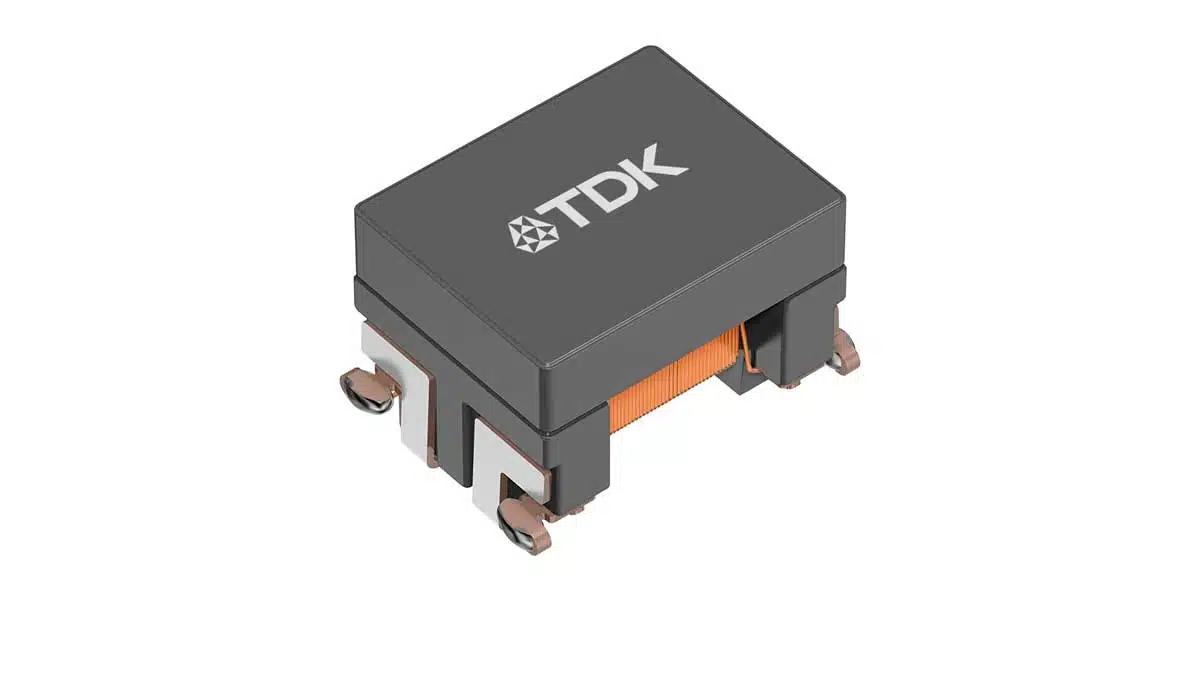
TDK Corporation announces expansion of the ADL3225VF series (3.2 x 2.5 x 2.3 mm; L x W x T) of wire-wound inductors for automotive power-over-coax (PoC). Mass production of these new components began in March 2025.

Advanced driver-assistance systems (ADAS) are designed to enhance vehicle safety by using automotive cameras and sensors that monitor the driving environment.

RelatedPosts

TDK Extends Compact ThermoFuse Varistors up to 50 kA

TDK Introduces 350V Safety Film Capacitors for Compact EMI Suppression

TDK Releases DC Link Aluminum Capacitors for EV On‑Board Chargers

These systems rely on multiple cameras, typically installed at the front, rear, and sides of the vehicle, to capture real-time imagery for safe and secure driving. In standard configurations, automotive cameras require two separate lines for power and signal transmission: a power line connected to the vehicle’s battery and a signal line connected to the electronic control unit (ECU).

However, with PoC technology, a single coaxial cable can simultaneously carry both power and data, simplifying and reducing cabling. This can reduce the vehicle’s weight, which in turn can improve fuel efficiency and lower carbon emissions.

TDK’s new ADL3225VF power inductor series implements a rated current of 1.6 A, which is equivalent to that of the ADL4532VK series, while achieving a reduction in the mounting area of approximately 45%.

The PoC system requires a filter incorporating multiple inductors to separate power from the data signal before processing effectively. In comparison with the conventional products, ADL3225VM-2R2M, the new ADL3225VF series increases the rated current by approximately 20% by using proprietary materials and structural design innovations. At the same time, the ADL3225VF series delivers high impedance across a wide frequency range from tens of megahertz (MHz) to hundreds of megahertz. This reduces the number of inductors used, saving space. Additionally, the inductor ensures high reliability with an upper operation temperature limit of +155 °C. 

Looking ahead, TDK is committed to developing inductors for automotive PoC applications by pursuing optimized design by refining multilayer, wire-winding, and thin-film technologies to address market needs. TDK will expand its lineup of products to improve the quality of PoC transmission signals.

Features

  • Compatible with high currents of up to 1600 mA, with the high functionality of automotive cameras
  • Ensures high impedance across a wide frequency range, helping to reduce the number of inductors used and save space
  • Suitable for high temperature environments; supports a wide operation range of -55 °C to +155 °C

Applications

  • PoC circuits for automotive cameras

Specifications

TypeInductance
@ 100KHz
[μH] ±20%
DC
resistance
(max.)[Ω]
Isat (typ., 25 °C) [mA]Itemp (typ., 105 °C) [mA]Itemp (typ., 125°C) [mA]
ADL3225VF-R49M-TL0000.490.11≥200016001250

Related

Source: TDK

Recent Posts

How Modern Tools Model Magnetic Components for Power Electronics

5.3.2026
5

Inductors and Ferrite Beads Price Hikes 

5.3.2026
11

Resistor Technology Dossier

4.3.2026
10

Advanced Loss Modeling for Planar Magnetics in the Frenetic Planar Tool

4.3.2026
11

DMASS Reports Europe Components Up 9.8% in Q4 2025

3.3.2026
14

Mastering Galvanic Isolation in Power Electronics: Methods, Standards, and Implementation

2.3.2026
27

Bourns Releases Compact Automotive Isolation Power Transformer

2.3.2026
11

VINATech Targets AI Data Center Supercapacitor Boom

26.2.2026
43

TDK Introduces 350V Safety Film Capacitors for Compact EMI Suppression

26.2.2026
35

Upcoming Events

Mar 19
13:00 - 14:00 CDT

Smart Consideration of Inductor Thermal Performance

Mar 21
All day

PSMA Capacitor Workshop 2026

Apr 21
16:00 - 17:00 CEST

Heatsink Solutions: Thermal Management in electronic devices

View Calendar

Popular Posts

  • Buck Converter Design and Calculation

    0 shares
    Share 0 Tweet 0
  • Boost Converter Design and Calculation

    0 shares
    Share 0 Tweet 0
  • Flyback Converter Design and Calculation

    0 shares
    Share 0 Tweet 0
  • LLC Resonant Converter Design and Calculation

    0 shares
    Share 0 Tweet 0
  • MLCC Manufacturers Consider Price Increase as AI Demand Outpaces Supply

    0 shares
    Share 0 Tweet 0
  • Dual Active Bridge (DAB) Topology

    0 shares
    Share 0 Tweet 0
  • Ripple Current and its Effects on the Performance of Capacitors

    3 shares
    Share 3 Tweet 0
  • MLCC and Ceramic Capacitors

    0 shares
    Share 0 Tweet 0
  • What is a Dielectric Constant and DF of Plastic Materials?

    4 shares
    Share 4 Tweet 0
  • MLCC Case Sizes Standards Explained

    0 shares
    Share 0 Tweet 0

Newsletter Subscription


Passive Components Blog

© EPCI - Leading Passive Components Educational and Information Site

  • Home
  • Privacy Policy
  • EPCI Membership & Advertisement
  • About

No Result
View All Result
  • Home
  • Knowledge Blog
  • PCNS

© EPCI - Leading Passive Components Educational and Information Site

This website uses cookies. By continuing to use this website you are giving consent to cookies being used. Visit our Privacy and Cookie Policy.
Go to mobile version