





Passive Components Blog
No Result
View All Result
  • Home
  • NewsFilter
    • All
    • Aerospace & Defence
    • Antenna
    • Applications
    • Automotive
    • Capacitors
    • Circuit Protection Devices
    • electro-mechanical news
    • Filters
    • Fuses
    • Inductors
    • Industrial
    • Integrated Passives
    • inter-connect news
    • Market & Supply Chain
    • Market Insights
    • Medical
    • Modelling and Simulation
    • New Materials & Supply
    • New Technologies
    • Non-linear Passives
    • Oscillators
    • Passive Sensors News
    • Resistors
    • RF & Microwave
    • Telecommunication
    • Weekly Digest

    Circuit Protection Technology Annual Dossier

    ESA SPCD 26 Registration Open

    Capacitances of Nonlinear MLCCs: What Datasheets Don’t Tell You

    Stackpole Releases Automotive Wide‑Termination Resistors

    How a Digital Structural Twin Can Predict Tantalum Capacitor Reliability

    SCHURTER Buys Biaodi to Boost High-Voltage Protection Portfolio

    Binder Hybrid Connector Simplifies One Cable Automation

    Tapped Inductor Buck Converter Fundamentals

    TAIYO YUDEN Releases Mini Metal Power Inductors

    Trending Tags

    • Ripple Current
    • RF
    • Leakage Current
    • Tantalum vs Ceramic
    • Snubber
    • Low ESR
    • Feedthrough
    • Derating
    • Dielectric Constant
    • New Products
    • Market Reports
  • VideoFilter
    • All
    • Antenna videos
    • Capacitor videos
    • Circuit Protection Video
    • Filter videos
    • Fuse videos
    • Inductor videos
    • Inter-Connect Video
    • Non-linear passives videos
    • Oscillator videos
    • Passive sensors videos
    • Resistor videos

    Capacitances of Nonlinear MLCCs: What Datasheets Don’t Tell You

    Tapped Inductor Buck Converter Fundamentals

    Planar vs Conventional Transformer: When it Make Sense

    Modeling Fringing Field Losses in Inductors & Transformers

    Why Power Inductors Use a Ferrite Core With an Air Gap

    Transformer-Based Power-Line Harvester Magnetic Design

    Thermal Modeling of Magnetics

    Standard vs Planar LLC transformers Comparison for Battery Chargers

    How Modern Tools Model Magnetic Components for Power Electronics

    Trending Tags

    • Capacitors explained
    • Inductors explained
    • Resistors explained
    • Filters explained
    • Application Video Guidelines
    • EMC
    • New Products
    • Ripple Current
    • Simulation
    • Tantalum vs Ceramic
  • Knowledge Blog
  • DossiersNew
  • Suppliers
    • Who is Who
  • PCNS
    • PCNS 2025
    • PCNS 2023
    • PCNS 2021
    • PCNS 2019
    • PCNS 2017
  • Events
  • Home
  • NewsFilter
    • All
    • Aerospace & Defence
    • Antenna
    • Applications
    • Automotive
    • Capacitors
    • Circuit Protection Devices
    • electro-mechanical news
    • Filters
    • Fuses
    • Inductors
    • Industrial
    • Integrated Passives
    • inter-connect news
    • Market & Supply Chain
    • Market Insights
    • Medical
    • Modelling and Simulation
    • New Materials & Supply
    • New Technologies
    • Non-linear Passives
    • Oscillators
    • Passive Sensors News
    • Resistors
    • RF & Microwave
    • Telecommunication
    • Weekly Digest

    Circuit Protection Technology Annual Dossier

    ESA SPCD 26 Registration Open

    Capacitances of Nonlinear MLCCs: What Datasheets Don’t Tell You

    Stackpole Releases Automotive Wide‑Termination Resistors

    How a Digital Structural Twin Can Predict Tantalum Capacitor Reliability

    SCHURTER Buys Biaodi to Boost High-Voltage Protection Portfolio

    Binder Hybrid Connector Simplifies One Cable Automation

    Tapped Inductor Buck Converter Fundamentals

    TAIYO YUDEN Releases Mini Metal Power Inductors

    Trending Tags

    • Ripple Current
    • RF
    • Leakage Current
    • Tantalum vs Ceramic
    • Snubber
    • Low ESR
    • Feedthrough
    • Derating
    • Dielectric Constant
    • New Products
    • Market Reports
  • VideoFilter
    • All
    • Antenna videos
    • Capacitor videos
    • Circuit Protection Video
    • Filter videos
    • Fuse videos
    • Inductor videos
    • Inter-Connect Video
    • Non-linear passives videos
    • Oscillator videos
    • Passive sensors videos
    • Resistor videos

    Capacitances of Nonlinear MLCCs: What Datasheets Don’t Tell You

    Tapped Inductor Buck Converter Fundamentals

    Planar vs Conventional Transformer: When it Make Sense

    Modeling Fringing Field Losses in Inductors & Transformers

    Why Power Inductors Use a Ferrite Core With an Air Gap

    Transformer-Based Power-Line Harvester Magnetic Design

    Thermal Modeling of Magnetics

    Standard vs Planar LLC transformers Comparison for Battery Chargers

    How Modern Tools Model Magnetic Components for Power Electronics

    Trending Tags

    • Capacitors explained
    • Inductors explained
    • Resistors explained
    • Filters explained
    • Application Video Guidelines
    • EMC
    • New Products
    • Ripple Current
    • Simulation
    • Tantalum vs Ceramic
  • Knowledge Blog
  • DossiersNew
  • Suppliers
    • Who is Who
  • PCNS
    • PCNS 2025
    • PCNS 2023
    • PCNS 2021
    • PCNS 2019
    • PCNS 2017
  • Events
No Result
View All Result
Passive Components Blog
No Result
View All Result

Development of Nitrogen-Doped Graphene Supercapacitors 

30.9.2025
Reading Time: 4 mins read
A A

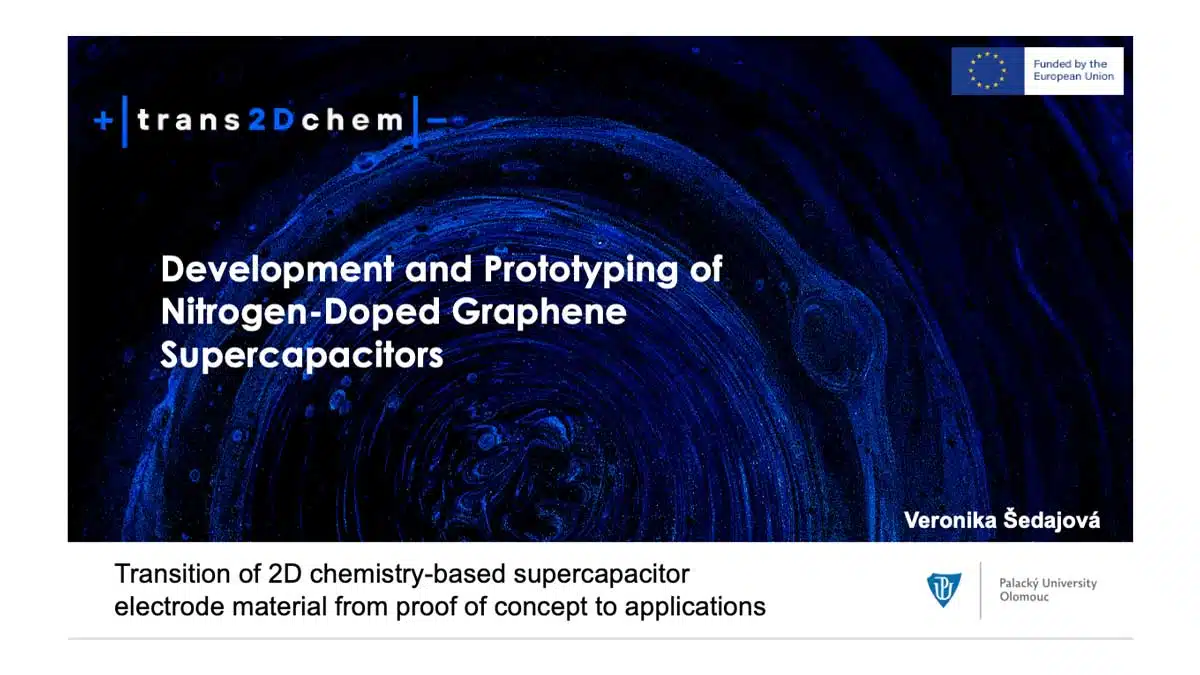
The paper “Development and Prototyping of Nitrogen-Doped Graphene Supercapacitors ” was presented by Veronika Šedajová, Regional Centre of Advanced Technologies and Materials, Czech Advanced Technology and Research Institute (CATRIN), Palacký University Olomouc, Czech Republic at the 5th PCNS Passive Components Networking Symposium 9-12th September 2025, Seville, Spain as paper No. 4.4.

Introduction

The growing demand for reliable, fast, and sustainable energy storage solutions is driven by the rise of electromobility, renewable energy systems, and portable electronics. Traditional lithium-ion batteries dominate high-energy applications but suffer from slow charging, finite cycle life, and thermal limitations.

RelatedPosts

Advances in the Environmental Performance of Polymer Capacitors

How to Manage Supercapacitors Leakage Current and Self Discharge 

Qualification of Commercial Supercapacitors for Space Applications

Supercapacitors, offering rapid charge/discharge cycles, long lifespan, and high power density, are emerging as a critical complement to batteries. Integration of advanced nanomaterials, particularly nitrogen-doped graphene, shows promise for bridging the performance gap between conventional capacitors and batteries.

Key Points

  • Material Innovation: SC-GN3, a nitrogen-doped graphene derived from fluorographene, achieves a record bulk density of 2.8 g/cm³ with 16 at.% nitrogen incorporation.
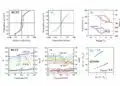
  • Exceptional Performance: Laboratory cells delivered ~200 Wh/L at 2.6 kW/L and >140 Wh/L at 52 kW/L with full capacitance retention over 10,000 cycles.
  • Sustainability: SC-GN3’s metal-free composition (C and N only) supports scalable, environmentally friendly manufacturing.
  • Slurry Optimization: Various conductive additives and binder concentrations were tested; a 10 wt.% binder formulation with Timcal additive was chosen for structural stability.
  • Prototyping: Cylindrical wound-cell prototypes (70 cm and 140 cm electrodes) validated scalability and maintained volumetric energy density.

Extended Summary

This study focuses on the development and prototyping of SC-GN3, a novel nitrogen-doped graphene material designed to meet the growing need for high-performance supercapacitors. Traditional carbon-based electrodes achieve energy densities of 10–90 Wh/kg but are limited by low bulk density and volumetric energy storage. SC-GN3 addresses these challenges through a fluorographene-based synthesis that yields a layered, high-density graphene structure with tailored nitrogen functionalities (pyridinic, pyrrolic, and graphitic sites).

The material demonstrates outstanding electrochemical performance. Symmetric supercapacitor cells incorporating SC-GN3 achieved nearly 200 Wh/L at moderate power outputs and retained over 140 Wh/L at ultra-high power densities of 52 kW/L. Additionally, SC-GN3 exhibited excellent cycling stability, maintaining 100% capacitance after 10,000 high-current cycles, suggesting long-term durability.

To translate this laboratory innovation into practical devices, the research team developed scalable fabrication processes for both pouch and cylindrical formats under the EIC Transition Grant TRANS2DCHEM. Key process steps included optimizing slurry formulations with conductive additives and fluorinated binders to achieve uniform, durable electrodes. Experimental results indicated that a binder content of 10 wt.% provides the best balance between adhesion, cohesion, and electrochemical performance. Using these optimized slurries, over 120 long electrodes (70 cm) were fabricated for pilot-scale studies.

Prototyping involved assembling wound-cell supercapacitors with ionic liquid electrolytes (EMIM-BF4) in humidity-free environments. Electrodes were vacuum-impregnated to ensure complete electrolyte saturation. Testing of both 70 cm and 140 cm electrode prototypes demonstrated scalable performance. While total capacitance increased with electrode length due to greater active material mass, the volumetric energy density remained consistent, confirming effective material utilization and impregnation protocols.

By integrating material design, slurry optimization, and pilot-level prototyping, the study establishes a clear pathway for translating SC-GN3 technology into industrially viable supercapacitors. Its combination of high volumetric energy density, rapid power delivery, long cycle life, and sustainable composition positions SC-GN3 as a promising candidate for applications in electric vehicles, IoT devices, and grid support.

Conclusion

The development and successful prototyping of SC-GN3 mark a significant advancement in supercapacitor technology. This nitrogen-doped graphene offers a rare balance of high energy and power density, exceptional cycling stability, and sustainability due to its metal-free composition. Pilot-scale fabrication of cylindrical wound cells demonstrated that laboratory-level innovation can be translated into industrially relevant prototypes. Future work will focus on increasing mass loading, fine-tuning electrode formulations, and enhancing device assembly to further improve performance. SC-GN3-based supercapacitors have the potential to complement or surpass certain battery applications, paving the way for next-generation, high-efficiency energy storage solutions.

4_4_UPOL RCPTM_PCNS_SedajovaDownload

Related

Source: PCNS

Recent Posts

ESA SPCD 26 Registration Open

15.5.2026
9

Capacitances of Nonlinear MLCCs: What Datasheets Don’t Tell You

14.5.2026
44

How a Digital Structural Twin Can Predict Tantalum Capacitor Reliability

14.5.2026
39

Molecular Memristor Shows Record 145 kH Emergent Inductance

12.5.2026
33

Researchers Propose Next‑Gen Compact Memory Using Ultra-thin Ferroelectric Capacitors

11.5.2026
43

Nichicon ADN Automotive Hybrid Aluminum Capacitors Now Available in EMEA

11.5.2026
36

Electrocaloric Multilayer Capacitors: Towards Quiet, Solid‑State Cooling Around Room Temperature

7.5.2026
204

High-Crystallinity Nanocrystalline Composites for MHz Chip Inductors

7.5.2026
66

KYOCERA 10 µF 0201 MLCC Brings High‑Capacitance into Mobile Designs

6.5.2026
60

Upcoming Events

May 19
16:00 - 17:00 CEST

Designing Qi2 Wireless Power Systems: Practical Development and EMC Optimization

Jun 2
16:00 - 17:00 CEST

Calculation, Simulation and Measurement of 800V EMC Filters

Jun 16
16:00 - 17:00 CEST

EMC with EMC – EMC‑compliant design with electromechanical connectors

View Calendar

Popular Posts

  • Buck Converter Design and Calculation

    0 shares
    Share 0 Tweet 0
  • Boost Converter Design and Calculation

    0 shares
    Share 0 Tweet 0
  • Flyback Converter Design and Calculation

    0 shares
    Share 0 Tweet 0
  • LLC Resonant Converter Design and Calculation

    0 shares
    Share 0 Tweet 0
  • MLCC and Ceramic Capacitors

    0 shares
    Share 0 Tweet 0
  • Dual Active Bridge (DAB) Topology

    0 shares
    Share 0 Tweet 0
  • Capacitor Charging and Discharging

    0 shares
    Share 0 Tweet 0
  • What Electronics Engineer Needs to Know About Passive Low Pass Filters

    0 shares
    Share 0 Tweet 0
  • Ripple Current and its Effects on the Performance of Capacitors

    3 shares
    Share 3 Tweet 0
  • MLCC Case Sizes Standards Explained

    0 shares
    Share 0 Tweet 0

Newsletter Subscription


Passive Components Blog

© EPCI - Leading Passive Components Educational and Information Site

  • Home
  • Privacy Policy
  • EPCI Membership & Advertisement
  • About

No Result
View All Result
  • Home
  • Knowledge Blog
  • PCNS

© EPCI - Leading Passive Components Educational and Information Site

This website uses cookies. By continuing to use this website you are giving consent to cookies being used. Visit our Privacy and Cookie Policy.
Go to mobile version