






Passive Components Blog
No Result
View All Result
  • Home
  • NewsFilter
    • All
    • Aerospace & Defence
    • Antenna
    • Applications
    • Automotive
    • Capacitors
    • Circuit Protection Devices
    • electro-mechanical news
    • Filters
    • Fuses
    • Inductors
    • Industrial
    • Integrated Passives
    • inter-connect news
    • Market & Supply Chain
    • Market Insights
    • Medical
    • Modelling and Simulation
    • New Materials & Supply
    • New Technologies
    • Non-linear Passives
    • Oscillators
    • Passive Sensors News
    • Resistors
    • RF & Microwave
    • Telecommunication
    • Weekly Digest

    When More Capacitance Hurts Reliability: The Role of the Metallic Skeleton in Tantalum Anodes

    Why Power Inductors Use a Ferrite Core With an Air Gap

    Wk 16 Electronics Supply Chain Digest

    YAGEO Introduces High‑Current Y2/X1 Film Capacitors for Wide-bandgap Power Systems

    Amphenol Explanded Liquid Cooling Connectors for AI, ESS and EV Systems

    Hirose Introduced BGA connector for PCIe Gen6 for AI and Edge Computing

    YAGEO Introduces High Rel MLCCs Beyond MIL-Spec Limits

    Würth Elektronik Expanded Capacity for Validation and Services in Asia

    Samsung Introduces Ultra-High-Voltage 1500 V MLCCs for xEV Powertrains

    Trending Tags

    • Ripple Current
    • RF
    • Leakage Current
    • Tantalum vs Ceramic
    • Snubber
    • Low ESR
    • Feedthrough
    • Derating
    • Dielectric Constant
    • New Products
    • Market Reports
  • VideoFilter
    • All
    • Antenna videos
    • Capacitor videos
    • Circuit Protection Video
    • Filter videos
    • Fuse videos
    • Inductor videos
    • Inter-Connect Video
    • Non-linear passives videos
    • Oscillator videos
    • Passive sensors videos
    • Resistor videos

    Why Power Inductors Use a Ferrite Core With an Air Gap

    Transformer-Based Power-Line Harvester Magnetic Design

    Thermal Modeling of Magnetics

    Standard vs Planar LLC transformers Comparison for Battery Chargers

    How Modern Tools Model Magnetic Components for Power Electronics

    Advanced Loss Modeling for Planar Magnetics in the Frenetic Planar Tool

    2026 Power Magnetics Design Trends: Flyback, DAB and Planar

    Enabling Software‑Defined Vehicle Architectures: Automotive Ethernet and Zonal Smart Power

    Calculating Resistance Value of a Flyback RC Snubber 

    Trending Tags

    • Capacitors explained
    • Inductors explained
    • Resistors explained
    • Filters explained
    • Application Video Guidelines
    • EMC
    • New Products
    • Ripple Current
    • Simulation
    • Tantalum vs Ceramic
  • Knowledge Blog
  • DossiersNew
  • Suppliers
    • Who is Who
  • PCNS
    • PCNS 2025
    • PCNS 2023
    • PCNS 2021
    • PCNS 2019
    • PCNS 2017
  • Events
  • Home
  • NewsFilter
    • All
    • Aerospace & Defence
    • Antenna
    • Applications
    • Automotive
    • Capacitors
    • Circuit Protection Devices
    • electro-mechanical news
    • Filters
    • Fuses
    • Inductors
    • Industrial
    • Integrated Passives
    • inter-connect news
    • Market & Supply Chain
    • Market Insights
    • Medical
    • Modelling and Simulation
    • New Materials & Supply
    • New Technologies
    • Non-linear Passives
    • Oscillators
    • Passive Sensors News
    • Resistors
    • RF & Microwave
    • Telecommunication
    • Weekly Digest

    When More Capacitance Hurts Reliability: The Role of the Metallic Skeleton in Tantalum Anodes

    Why Power Inductors Use a Ferrite Core With an Air Gap

    Wk 16 Electronics Supply Chain Digest

    YAGEO Introduces High‑Current Y2/X1 Film Capacitors for Wide-bandgap Power Systems

    Amphenol Explanded Liquid Cooling Connectors for AI, ESS and EV Systems

    Hirose Introduced BGA connector for PCIe Gen6 for AI and Edge Computing

    YAGEO Introduces High Rel MLCCs Beyond MIL-Spec Limits

    Würth Elektronik Expanded Capacity for Validation and Services in Asia

    Samsung Introduces Ultra-High-Voltage 1500 V MLCCs for xEV Powertrains

    Trending Tags

    • Ripple Current
    • RF
    • Leakage Current
    • Tantalum vs Ceramic
    • Snubber
    • Low ESR
    • Feedthrough
    • Derating
    • Dielectric Constant
    • New Products
    • Market Reports
  • VideoFilter
    • All
    • Antenna videos
    • Capacitor videos
    • Circuit Protection Video
    • Filter videos
    • Fuse videos
    • Inductor videos
    • Inter-Connect Video
    • Non-linear passives videos
    • Oscillator videos
    • Passive sensors videos
    • Resistor videos

    Why Power Inductors Use a Ferrite Core With an Air Gap

    Transformer-Based Power-Line Harvester Magnetic Design

    Thermal Modeling of Magnetics

    Standard vs Planar LLC transformers Comparison for Battery Chargers

    How Modern Tools Model Magnetic Components for Power Electronics

    Advanced Loss Modeling for Planar Magnetics in the Frenetic Planar Tool

    2026 Power Magnetics Design Trends: Flyback, DAB and Planar

    Enabling Software‑Defined Vehicle Architectures: Automotive Ethernet and Zonal Smart Power

    Calculating Resistance Value of a Flyback RC Snubber 

    Trending Tags

    • Capacitors explained
    • Inductors explained
    • Resistors explained
    • Filters explained
    • Application Video Guidelines
    • EMC
    • New Products
    • Ripple Current
    • Simulation
    • Tantalum vs Ceramic
  • Knowledge Blog
  • DossiersNew
  • Suppliers
    • Who is Who
  • PCNS
    • PCNS 2025
    • PCNS 2023
    • PCNS 2021
    • PCNS 2019
    • PCNS 2017
  • Events
No Result
View All Result
Passive Components Blog
No Result
View All Result

Electroninks Releases Gold and Platinum Particle-Free Conductive Inks

14.1.2022
Reading Time: 3 mins read
A A

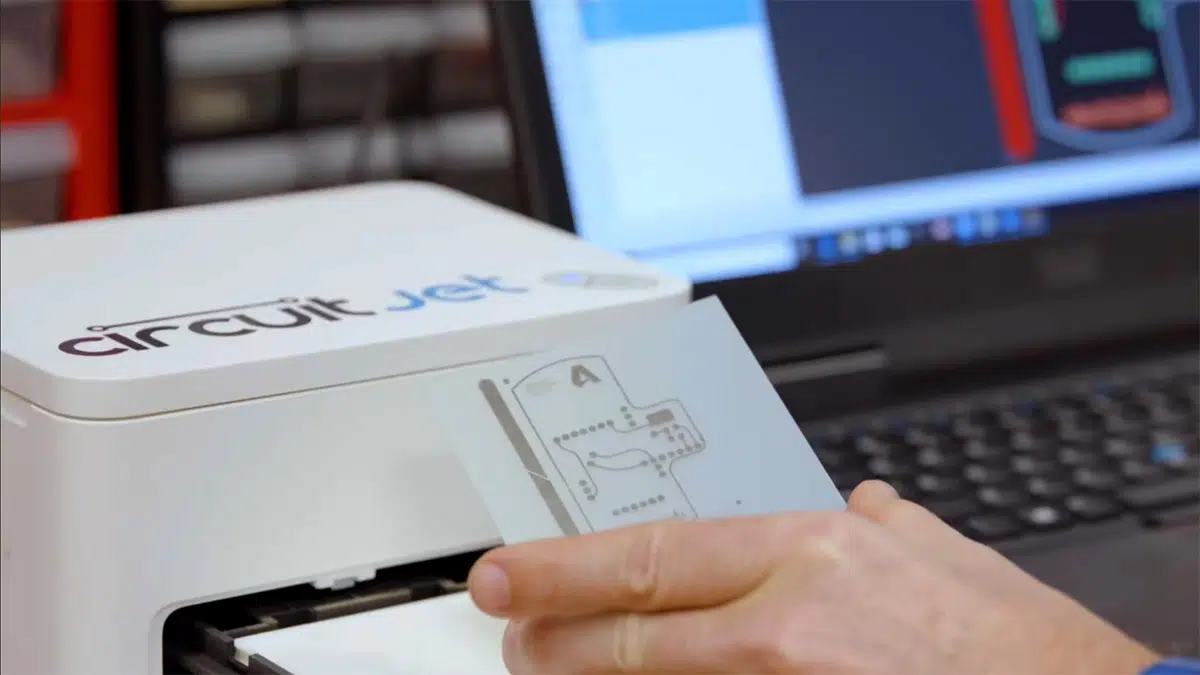
Electroninks expands line of particle-free conductive inks with new gold and platinum formulations. Broader selection of metals fuels innovation in product development and provides greater flexibility in manufacturing.

Electroninks, the leader in particle-free conductive metal inks and advanced materials, announced the addition of gold (Au) and platinum (Pt) particle-free conductive inks to its catalog of products. The addition of gold and platinum inks gives makers of consumer electronics, medical devices, sensors and semiconductors the ability to make lighter, less expensive, and more environmentally friendly products.

RelatedPosts

Peak Nano Installs Production Line for Innovative Capacitor Films

Electrical Properties Study of SMD Resistor Integrated Metallic Yarn for Smart Textiles

Power Paper Shows Promise of Clean High Energy Storing Capability

​​The demand for powerful microelectronics packed into consumer and industrial products of different shapes and sizes has never been greater. From foldable displays in new 5G phones to medical sensors in athletic wear to new materials and architecture in semiconductor packaging, powerful tiny circuitry is making it possible, and Electroninks’ broader line of conductive inks is enabling greater innovation in this field.

Electroninks has already established a superior particle-free ink in the market with its conductive silver ink. The new gold and platinum metal inks consist of metal-organic precursors that decompose cleanly at lower temperatures than nanoparticle inks and can be UV-cured. The inks are unique to the market, providing deep savings on material use (and waste) and costs for customers by enabling similar electrical and reliability properties of vacuum or plated films of gold and platinum.

Opening additional doors in product manufacturing, the new inks are catalytically active (may serve as a seed layer) and have a high corrosion resistance — ideal for protective circuits, gas, thermal and biological sensors. Unlike traditional gold and platinum inks that are based on metal nanoparticles dispersed with organics/polymers which degrades performance, Electroninks’ particle-free inks enable reliable printing and manufacturing in non-typical and even space-like environments for its aerospace and defense customers.

The Particle-Free Difference

Electroninks has developed particle-free inks to provide the markets with a material that can withstand high temperatures and humidity, making them ideal for use in an increasing variety of applications. With the excellent reliability of the material combined with iso-certified manufacturing, Electroninks is the only company to deliver this level of quality and performance from gold and platinum materials. The company aims to be the main supplier of true high-volume manufacturing particle-free metal complex inks on the market. These inks are a direct replacement for nanoparticle inks, metal paste, and sputtered or deposited metals.

Electroninks’ inks resulting films are stretchable, highly reflective, RoHS compliant, catalytically active, and antimicrobial, allowing developers to utilize multi-hour printing to produce products showcasing extreme detail. Particle-free inks also have a longer shelf-life than nanoparticle solutions because traditional binders and surfactants are not used in Electroninks’ metallo-organic inks. Electroninks inks are free from impurities – approaching 99.99% metal in resulting films, providing superior environmental stability and reliability.

Due to the superior conductivity that Electroninks’ particle-free inks offer, the same device performance can be achieved by using much less material at a fraction of the regular production costs. The high prices of gold, platinum and other precious metals have limited their widespread use in the advanced manufacturing industry. Electroninks’ particle-free inks are able to reduce prices without sacrificing quality, which can have a broad impact on the overall conductive precious metals market and their sustainable usage.
Related

Recent Posts

Hirose Introduced BGA connector for PCIe Gen6 for AI and Edge Computing

17.4.2026
5

YAGEO Introduces High Rel MLCCs Beyond MIL-Spec Limits

16.4.2026
37

Vishay Extends Power Inductors for DC/DC with 1212 Compact Case

16.4.2026
16

YAGEO Releases Ferrite Shielded Power Inductors for High‑Density Designs

15.4.2026
13

KYOCERA AVX MIL-PRF-32535 BME NP0 MLCCs Approved to the DLA QPD

16.4.2026
27

ECIA March 2026 Industry Pulse Points to Best Sales Climate in Five Years

13.4.2026
46

Exxelia Releases Updated Microwave Materials and Frequency Tuning Catalogues

8.4.2026
18

SCHURTER Releases Compact SMT DIP Switches

7.4.2026
12

Bourns Releases Compact High Current Shielded Power Inductors

2.4.2026
29

Upcoming Events

Apr 21
16:00 - 17:00 CEST

Heatsink Solutions: Thermal Management in electronic devices

Apr 22
17:00 - 17:30 CEST

Magnetics in a high frequency GaN era

Apr 22
17:00 - 18:00 CEST

Derating Tantalum, Film, and Ceramic Capacitors

View Calendar

Popular Posts

  • Buck Converter Design and Calculation

    0 shares
    Share 0 Tweet 0
  • Boost Converter Design and Calculation

    0 shares
    Share 0 Tweet 0
  • Flyback Converter Design and Calculation

    0 shares
    Share 0 Tweet 0
  • LLC Resonant Converter Design and Calculation

    0 shares
    Share 0 Tweet 0
  • Dual Active Bridge (DAB) Topology

    0 shares
    Share 0 Tweet 0
  • MLCC and Ceramic Capacitors

    0 shares
    Share 0 Tweet 0
  • Capacitor Charging and Discharging

    0 shares
    Share 0 Tweet 0
  • Ripple Current and its Effects on the Performance of Capacitors

    3 shares
    Share 3 Tweet 0
  • Plastic Materials Dielectric Constant and DF

    4 shares
    Share 4 Tweet 0
  • MLCC Case Sizes Standards Explained

    0 shares
    Share 0 Tweet 0

Newsletter Subscription


Passive Components Blog

© EPCI - Leading Passive Components Educational and Information Site

  • Home
  • Privacy Policy
  • EPCI Membership & Advertisement
  • About

No Result
View All Result
  • Home
  • Knowledge Blog
  • PCNS

© EPCI - Leading Passive Components Educational and Information Site

This website uses cookies. By continuing to use this website you are giving consent to cookies being used. Visit our Privacy and Cookie Policy.
Go to mobile version