





Passive Components Blog
No Result
View All Result
  • Home
  • NewsFilter
    • All
    • Aerospace & Defence
    • Antenna
    • Applications
    • Automotive
    • Capacitors
    • Circuit Protection Devices
    • electro-mechanical news
    • Filters
    • Fuses
    • Inductors
    • Industrial
    • Integrated Passives
    • inter-connect news
    • Market & Supply Chain
    • Market Insights
    • Medical
    • Modelling and Simulation
    • New Materials & Supply
    • New Technologies
    • Non-linear Passives
    • Oscillators
    • Passive Sensors News
    • Resistors
    • RF & Microwave
    • Telecommunication
    • Weekly Digest

    Knowles Introduces PP Film Capacitors for High‑Stress Power Electronics

    High‑Power Current Sensing with YAGEO PK Metal Current Sensors

    AI Data Centers Push Aluminium Capacitor Prices Higher

    Murata Releases 1210 Metal Terminal Common Mode Choke for 10Base‑T1S In‑Vehicle Ethernet

    DigiKey Ads 27,000 New In-Stock Parts and 104 Additional Suppliers in Q2 2026

    Würth Elektronik Coupled Inductors Harnessing Leakage Inductance in SEPIC, ZETA and Ćuk Converters

    Samsung Introduces Ultra‑compact, High‑Capacitance MLCCs for AI Edge and Wearable designs

    Knowles Presents Pulse Power Capacitors for Demanding MedTech, Industrial and Defense Applications

    Bourns Introduces LTCC Band Pass Filters for 5G C‑Band RF Front‑End Designs

    Trending Tags

    • Ripple Current
    • RF
    • Leakage Current
    • Tantalum vs Ceramic
    • Snubber
    • Low ESR
    • Feedthrough
    • Derating
    • Dielectric Constant
    • New Products
    • Market Reports
  • VideoFilter
    • All
    • Antenna videos
    • Capacitor videos
    • Circuit Protection Video
    • Filter videos
    • Fuse videos
    • Inductor videos
    • Inter-Connect Video
    • Non-linear passives videos
    • Oscillator videos
    • Passive sensors videos
    • Resistor videos

    EMC Design Fundamentals: Safe Use of Varistors and Common Mode Chokes in Mains and Data-Line Filters

    Ferrite versus Nanocrystalline Power Inductor Cores: Turns, Gap and Size

    KYOCERA AVX Presents Antenna Integrator Studio Tutorial for Antenna Placement and RF Design

    Power Design Simulation Tools for Faster Inductor Selection and Loss Optimization

    EMC‑Compliant PCB and Connector Design Guidelines

    Why Isolated DC/DC Power Supplies Fail Late, Würth Elektronik Podcast

    Designing 800 V DC EMC Filters: Calculation, Simulation and Measurement

    Current Sense Transformer Datasheet and Design‑in Guide

    Designing a USB Type‑C Flyback Planar Transformer with Frenetic’s Planar Tool

    Trending Tags

    • Capacitors explained
    • Inductors explained
    • Resistors explained
    • Filters explained
    • Application Video Guidelines
    • EMC
    • New Products
    • Ripple Current
    • Simulation
    • Tantalum vs Ceramic
  • Knowledge Blog
  • Dossiers
    • AI Hardware Dossier
    • Power Converter Dossier
    • Automotive Dossier
    • Capacitor Dossier
    • Resistor Dossier
    • Inductor Dossier
    • Circuit Protection Dossier
  • Suppliers
    • Who is Who
  • PCNS
    • PCNS 2025
    • PCNS 2023
    • PCNS 2021
    • PCNS 2019
    • PCNS 2017
  • Events
  • Home
  • NewsFilter
    • All
    • Aerospace & Defence
    • Antenna
    • Applications
    • Automotive
    • Capacitors
    • Circuit Protection Devices
    • electro-mechanical news
    • Filters
    • Fuses
    • Inductors
    • Industrial
    • Integrated Passives
    • inter-connect news
    • Market & Supply Chain
    • Market Insights
    • Medical
    • Modelling and Simulation
    • New Materials & Supply
    • New Technologies
    • Non-linear Passives
    • Oscillators
    • Passive Sensors News
    • Resistors
    • RF & Microwave
    • Telecommunication
    • Weekly Digest

    Knowles Introduces PP Film Capacitors for High‑Stress Power Electronics

    High‑Power Current Sensing with YAGEO PK Metal Current Sensors

    AI Data Centers Push Aluminium Capacitor Prices Higher

    Murata Releases 1210 Metal Terminal Common Mode Choke for 10Base‑T1S In‑Vehicle Ethernet

    DigiKey Ads 27,000 New In-Stock Parts and 104 Additional Suppliers in Q2 2026

    Würth Elektronik Coupled Inductors Harnessing Leakage Inductance in SEPIC, ZETA and Ćuk Converters

    Samsung Introduces Ultra‑compact, High‑Capacitance MLCCs for AI Edge and Wearable designs

    Knowles Presents Pulse Power Capacitors for Demanding MedTech, Industrial and Defense Applications

    Bourns Introduces LTCC Band Pass Filters for 5G C‑Band RF Front‑End Designs

    Trending Tags

    • Ripple Current
    • RF
    • Leakage Current
    • Tantalum vs Ceramic
    • Snubber
    • Low ESR
    • Feedthrough
    • Derating
    • Dielectric Constant
    • New Products
    • Market Reports
  • VideoFilter
    • All
    • Antenna videos
    • Capacitor videos
    • Circuit Protection Video
    • Filter videos
    • Fuse videos
    • Inductor videos
    • Inter-Connect Video
    • Non-linear passives videos
    • Oscillator videos
    • Passive sensors videos
    • Resistor videos

    EMC Design Fundamentals: Safe Use of Varistors and Common Mode Chokes in Mains and Data-Line Filters

    Ferrite versus Nanocrystalline Power Inductor Cores: Turns, Gap and Size

    KYOCERA AVX Presents Antenna Integrator Studio Tutorial for Antenna Placement and RF Design

    Power Design Simulation Tools for Faster Inductor Selection and Loss Optimization

    EMC‑Compliant PCB and Connector Design Guidelines

    Why Isolated DC/DC Power Supplies Fail Late, Würth Elektronik Podcast

    Designing 800 V DC EMC Filters: Calculation, Simulation and Measurement

    Current Sense Transformer Datasheet and Design‑in Guide

    Designing a USB Type‑C Flyback Planar Transformer with Frenetic’s Planar Tool

    Trending Tags

    • Capacitors explained
    • Inductors explained
    • Resistors explained
    • Filters explained
    • Application Video Guidelines
    • EMC
    • New Products
    • Ripple Current
    • Simulation
    • Tantalum vs Ceramic
  • Knowledge Blog
  • Dossiers
    • AI Hardware Dossier
    • Power Converter Dossier
    • Automotive Dossier
    • Capacitor Dossier
    • Resistor Dossier
    • Inductor Dossier
    • Circuit Protection Dossier
  • Suppliers
    • Who is Who
  • PCNS
    • PCNS 2025
    • PCNS 2023
    • PCNS 2021
    • PCNS 2019
    • PCNS 2017
  • Events
No Result
View All Result
Passive Components Blog
No Result
View All Result

Knowles Introduces PP Film Capacitors for High‑Stress Power Electronics

30.7.2026
Reading Time: 7 mins read
A A

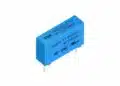
Knowles, Cornell Dubilier brand, has introduced the Type PPH series of double‑metallized polypropylene film capacitors for high‑voltage, high‑stress automotive and industrial power electronics.

These Knowles film capacitors target snubber, commutation and pulse applications where switching devices face high dv/dt, ripple current and demanding environmental conditions.

RelatedPosts

Knowles Presents Pulse Power Capacitors for Demanding MedTech, Industrial and Defense Applications

RF Filters and Passive Components Enabling the 7 Missile RF Subsystems

Knowles Expands High‑Q Ceramic Core Inductors for RF designs

Key features and benefits

  • Double‑metallized polypropylene film construction for stable capacitance, low dielectric losses and good pulse endurance in demanding power circuits.
  • Epoxy‑encapsulated plastic box package with tinned copper leads, providing mechanical robustness and reliable PCB mounting in automotive and industrial assemblies.
  • Capacitance range from approximately 0.001 µF to 4.7 µF, supporting use from very fast, low‑energy snubbers up to higher‑energy pulse and commutation networks.
  • Voltage ratings up to 2000 VDC, making the series suitable for high‑voltage DC links, snubbers in traction inverters, and protection around SiC and IGBT modules.
  • Wide operating temperature range from −55 °C to +105 °C, allowing use in under‑hood automotive, industrial cabinet and outdoor power installations.
  • High ripple current capability, supporting continuous operation in high‑frequency switching converters and pulse circuits without excessive self‑heating.
  • Self‑healing dielectric, where local breakdowns of the metallized film tend to clear without catastrophic failure, improving long‑term reliability.
  • Low loss and minimal inherent temperature rise, helping engineers to meet efficiency and thermal design targets in compact power converter layouts.
  • AEC‑Q200 qualification, aligning the series with automotive‑grade requirements including extended temperature and humidity testing.

Typical applications

Type PPH capacitors are intended for power electronics circuits where switching devices are repeatedly exposed to high voltage transients. They are used to shape voltage and current waveforms, absorb spikes and limit dv/dt seen by semiconductor devices.

Power switching and protection

  • Snubber networks across IGBTs, MOSFETs and rectifiers in hard‑switched converters and inverters.
  • Commutation circuits in SCR‑based power controls, including industrial drives and soft‑start units.
  • Protection of IGBT and SiC MOSFET modules in traction, industrial and renewable energy inverters.

Automotive and transportation

  • Automotive powertrains and onboard electronics where high‑voltage switching is used for motor control and DC‑DC conversion.
  • EV charging systems, including on‑board chargers and external DC fast chargers with high‑voltage stages.
  • Auxiliary converters and power distribution units in electrified vehicles requiring automotive‑qualified passive components.

Industrial and energy

  • Industrial power supplies and inverters for motion control, robotics and process automation.
  • Renewable and alternative energy systems such as PV string inverters and battery energy storage converters.
  • High‑frequency switching circuits where repetitive pulses and high dv/dt must be controlled to protect semiconductors.

Technical highlights

The Type PPH series combines a specific film construction with a protected box housing and radial leads aimed at both electrical performance and mechanical reliability.

Construction and materials

  • Double‑sided metallized polypropylene film as the dielectric and electrode system, optimized for low losses and self‑healing behavior.
  • Epoxy resin encapsulation in a plastic box, shielding the element from humidity and contaminants while improving mechanical stability.
  • Two tinned copper wire leads suitable for through‑hole mounting and soldering into standard power electronics assemblies.

Electrical and environmental performance

  • Capacitance values roughly spanning 0.001 µF to 4.7 µF according to the manufacturer datasheet, covering typical snubber and pulse energy requirements.
  • Voltage ratings up to 2000 VDC, enabling use on high‑voltage rails and across switching devices in traction and industrial inverters.
  • Operating temperature range of −55 °C to +105 °C, supporting designs with wide ambient and internal temperature variations.
  • Performance validated under high temperature and humidity conditions (85 °C / 85% RH for 2,000 hours) in line with AEC‑Q200 testing.

Summary table of key parameters

ParameterTypical Type PPH characteristic
DielectricPolypropylene film, double‑metallized
Capacitance rangeApprox. 0.001 µF to 4.7 µF (per manufacturer datasheet)
Maximum voltage ratingUp to 2000 VDC
Operating temperature range−55 °C to +105 °C
QualificationAEC‑Q200
Package styleEpoxy‑encapsulated plastic box, radial tinned copper leads

Values and ranges should be confirmed against the latest manufacturer datasheet for the specific part number selected.

Design‑in notes for engineers

When designing snubber and commutation networks, engineers must balance energy handling, dv/dt, thermal behavior and mechanical integration. The Type PPH series provides a standardized platform for these tasks in automotive and industrial contexts.

  • Verify energy per pulse and average power dissipation in the snubber or pulse circuit, and select a PPH value whose capacitance and voltage rating can safely absorb the expected transients according to the datasheet.
  • Check peak dv/dt and ripple current against the series capabilities to avoid excessive self‑heating, especially in high‑frequency converters and SiC‑based designs where edge rates are very high.
  • Use the self‑healing behavior of metallized polypropylene as an advantage, but still design for appropriate margins in voltage and temperature to maximize service life in harsh environments.
  • Pay attention to creepage, clearance and lead spacing when placing PPH capacitors near high‑voltage nodes, ensuring that PCB layout and case dimensions meet system‑level insulation requirements.
  • Consider the AEC‑Q200 qualification when selecting parts for automotive projects, noting that this helps align with OEM and Tier‑1 qualification expectations.
  • Review humidity and temperature derating curves from the datasheet, especially for applications near the upper temperature limit or in high‑humidity locations such as under‑hood or outdoor enclosures.
  • Plan for mechanical support in environments subject to vibration and shock, using the box package and radial leads in combination with appropriate PCB mounting and, if necessary, additional mechanical fixation.

For high‑frequency and high‑voltage systems using SiC MOSFETs or fast IGBTs, careful snubber design with suitable film capacitors like the PPH series can significantly reduce switching losses and improve device reliability.

Source

This article is based on information provided in Knowles’ press release introducing the Cornell Dubilier Type PPH capacitor series and the associated PPH series datasheet.
References

  1. Manufacturer press release – Introducing Knowles Type PPH Capacitors
  2. Cornell Dubilier Type PPH series overview and product selector
  3. Type PPH capacitor datasheet (PDF)

Related

Recent Posts

High‑Power Current Sensing with YAGEO PK Metal Current Sensors

30.7.2026
1

AI Data Centers Push Aluminium Capacitor Prices Higher

30.7.2026
3

Murata Releases 1210 Metal Terminal Common Mode Choke for 10Base‑T1S In‑Vehicle Ethernet

30.7.2026
2

Würth Elektronik Coupled Inductors Harnessing Leakage Inductance in SEPIC, ZETA and Ćuk Converters

29.7.2026
28

Samsung Introduces Ultra‑compact, High‑Capacitance MLCCs for AI Edge and Wearable designs

29.7.2026
21

Knowles Presents Pulse Power Capacitors for Demanding MedTech, Industrial and Defense Applications

29.7.2026
19

YAGEO Extends its Supercapacitor Series Line-Up

28.7.2026
46

SCHURTER Presents EKO High‑Voltage Fuses for Global Energy Systems

28.7.2026
16

June 2026: AI Demand Pushes Japanese and Korean MLCC Makers to Five‑Year Shipment High

28.7.2026
56

Upcoming Events

Sep 29
16:00 - 17:00 CEST

Cybersecurity 2026

View Calendar

Popular Posts

  • Buck Converter Design and Calculation

    0 shares
    Share 0 Tweet 0
  • YAGEO Announces July 2026 Capacitor Price Increase

    0 shares
    Share 0 Tweet 0
  • Boost Converter Design and Calculation

    0 shares
    Share 0 Tweet 0
  • LLC Resonant Converter Design and Calculation

    0 shares
    Share 0 Tweet 0
  • MLCCs in the Age of AI: Q2 2026 Market Tightness

    0 shares
    Share 0 Tweet 0
  • Flyback Converter Design and Calculation

    0 shares
    Share 0 Tweet 0
  • MLCC and Ceramic Capacitors

    0 shares
    Share 0 Tweet 0
  • Earthing Systems and IEC Classification Explained

    0 shares
    Share 0 Tweet 0
  • Dual Active Bridge (DAB) Topology

    0 shares
    Share 0 Tweet 0
  • Nvidia Vera Rubin: Why One AI Rack Needs So Many More MLCC Capacitors

    0 shares
    Share 0 Tweet 0

Newsletter Subscription


Passive Components Blog

© EPCI - Leading Passive Components Educational and Information Site

  • Home
  • Privacy Policy
  • EPCI Membership & Advertisement
  • About

No Result
View All Result
  • Home
  • Knowledge Blog
  • Dossiers
  • PCNS

© EPCI - Leading Passive Components Educational and Information Site

This website uses cookies. By continuing to use this website you are giving consent to cookies being used. Visit our Privacy and Cookie Policy.