



Modern pulse power systems rely on capacitors that can store significant energy and release it in precisely timed bursts, often under harsh electrical, thermal and environmental stress.
Knowles has highlighted in his post how film and ceramic high‑energy pulse discharge capacitors are being used to meet these requirements across a wide range of applications, from neuromodulation therapies to CO₂ lasers and downhole perforation systems.
Key features and benefits
Pulse power applications are designed around defined energy discharges, where both the amount of energy and the timing of its delivery must be tightly controlled. In these architectures, capacitors largely determine the precision of energy storage, the reliability of energy release and the consistency of system performance over time.
- Support for low‑energy and high‑energy pulse regimes in a single portfolio, covering medical, industrial and defense use cases according to manufacturer datasheets.
- Film high‑energy pulse discharge capacitors optimized for bulk energy storage and controlled discharge in demanding environments.
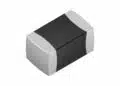
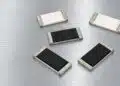
- Ceramic high‑energy pulse discharge capacitors designed for high‑voltage, compact pulse delivery where space and form factor are critical.
- Emphasis on precision: pulses must fire at the right moment, at the right level, every time, even under electrical, thermal and environmental stress.
- Focus on consistency and reliability as systems move from the lab into real‑world deployment, with components expected to perform repeatedly over long lifetimes.
- Investment in advanced testing and process controls to support custom, application‑specific pulse power solutions at scale.
Typical applications
Pulse power capacitors have been used across a broad range of markets where precision energy delivery is central to system operation. These include both low‑energy medical therapies and high‑energy industrial and exploration systems.
Medical and MedTech
- Neuromodulation therapies for pain management, using low‑energy pulses to stimulate nerves through carefully controlled electrical signals.
- Life‑saving medical equipment such as defibrillators, where capacitor‑based energy storage and discharge define shock energy and waveform shape.
- Advanced imaging systems that rely on high‑voltage pulse circuits for modalities like X‑ray or similar technologies.
Industrial and semiconductor manufacturing
- CO₂ lasers used in semiconductor manufacturing, driven by capacitor banks that charge and discharge to excite the laser medium.
- Other industrial pulse systems where repeatable energy delivery is needed to control process uniformity and throughput according to manufacturer datasheets.
Energy exploration and defense
- Downhole perforation systems in energy exploration, where controlled high‑energy pulses or events create channels in geological formations.[knowles]
- Aerospace and defense pulse power systems requiring precise, repeatable energy delivery under extreme environmental and mechanical conditions.[knowles]
Technical highlights
In pulse power systems, the design focus shifts from continuous power flow to discrete energy packets with tight tolerances on amplitude and timing. Capacitors in these architectures must therefore be specified and qualified not only for nominal ratings, but also for their behaviour under repetitive high‑stress conditions.
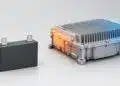
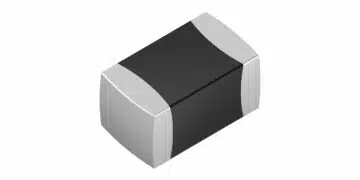
Both film capacitors and ceramic capacitors dedicated for pulse power lines are available that support high‑energy pulse discharge, detonation and other demanding applications.
Pulse energy and timing
- Engineers design around defined energy discharges; a typical design will set the required energy per pulse and charge voltage, then select appropriate capacitance according to manufacturer datasheets.
- Timing characteristics such as rise time, pulse width and repetition rate are strongly influenced by capacitor ESR, ESL and dielectric properties.
- Precision in energy storage and release is essential to maintain repeatable outcomes in medical therapy, laser processing and perforation operations.
Film pulse discharge capacitors
- Film high‑energy pulse discharge capacitors are used where bulk energy storage, controlled discharge and predictable failure modes are required.
- These components are suited to applications such as CO₂ laser capacitor banks, downhole perforation energy storage and industrial pulse systems.
- According to the manufacturer, dedicated high‑energy and pulse discharge film families are available to support these use cases.
Ceramic detonation and pulse discharge capacitors
- Ceramic high‑energy pulse discharge capacitors are aimed at high‑voltage, compact solutions for detonation and pulse energy applications.
- Their smaller form factor makes them attractive when space, weight or integration constraints are tight, for example in aerospace or specialized defense systems.
- The manufacturer provides specific ceramic families for detonation and pulse energy circuits.
- Suitable for circuits requiring high voltage in compact packages with repeatable pulse behaviour.
- Detailed specifications, including voltage ranges, capacita
Summary of application focus
| Application area | Capacitor focus | Product families (per manufacturer) |
|---|---|---|
| Neuromodulation, MedTech | Low‑energy, precise pulses | High‑performance pulse power capacitors |
| CO₂ lasers, industrial | High‑energy, repetitive discharge | Film high‑energy and pulse discharge capacitors |
| Downhole perforation | Rugged, high‑energy pulses | High‑energy film pulse discharge families |
| Detonation, defense | High‑voltage, compact pulse solutions | Ceramic detonation and pulse‑energy capacitors |
| Defibrillators, imaging | Precise medical energy delivery | High‑performance medical pulse power capacitors |
Design‑in notes for engineers
When selecting pulse power capacitors, several design and qualification themes are useful to keep in mind. These themes complement the detailed electrical and mechanical data available in manufacturers’ datasheets.
- Start from the required energy per pulse and allowable charge voltage, then determine the necessary capacitance from manufacturer datasheet values.
- Consider pulse repetition rate and duty cycle; verify capacitor temperature rise, lifetime and parameter stability under representative pulse profiles.
- Pay attention to ESR and ESL figures, as these will shape the pulse waveform, rise time and peak current in practical circuits.
- For downhole and aerospace/defense use cases, review mechanical shock, vibration and environmental ratings, not only electrical specifications.
- For medical devices (neuromodulation, defibrillators, imaging), align component selection with regulatory and safety requirements and verify long‑term reliability data.
- Use manufacturer application support where available: Knowles explicitly mentions investing in application‑specific design expertise and advanced testing for pulse power solutions.
- For custom solutions, clarify operating conditions, target lifetime and acceptable degradation, so that capacitor design and validation can be tailored accordingly.
Source
This article is based on information published by Knowles Corporation in its July 2026 press release on pulse power capacitors, complemented by information based on family pages for film and ceramic high‑energy pulse discharge components.