


Passive Components Blog
No Result
View All Result
  • Home
  • News
    • All
    • Aerospace & Defence
    • Antenna
    • Applications
    • Automotive
    • Capacitors
    • Circuit Protection Devices
    • electro-mechanical news
    • Filters
    • Fuses
    • Inductors
    • Industrial
    • Integrated Passives
    • inter-connect news
    • Market & Supply Chain
    • Market Insights
    • Medical
    • Modelling and Simulation
    • New Materials & Supply
    • New Technologies
    • Non-linear Passives
    • Oscillators
    • Passive Sensors News
    • Resistors
    • RF & Microwave
    • Telecommunication
    • Weekly Digest

    Samsung Electro-Mechanics Secures KRW 1.0722 Trillion AI Server MLCC Supply Contract

    KYOCERA AVX Adds 0201 C0G RF MLCCs to KGU Ultra-Low-ESR Capacitor Series

    Vishay Extends High-Current Common-Mode Chokes with 30 A EMI Filtering up to 150 °C

    Bourns Copper-Electrode MOV Series Targets High-Energy Line Surge Protection

    Bourns Expands 12 mm SMD Incremental Encoder with Shaft-Length Options for Compact HMI Controls

    KEMET HRA X7R High-Reliability MLCCs Target Higher Capacitance in Defense and Aerospace Electronics

    B–H Curve-Based Inductor Modelling in LTspice: A Current-Dependent Magnetic Model

    Bourns UT-A Wirewound Power Resistors Target High-Temperature and Pulse-Load Applications

    Connector Industry Performance Accelerates Through Mid-2026

    Trending Tags

    • Ripple Current
    • RF
    • Leakage Current
    • Tantalum vs Ceramic
    • Snubber
    • Low ESR
    • Feedthrough
    • Derating
    • Dielectric Constant
    • New Products
    • Market Reports
  • Knowledge Blog
  • Dossiers
    • AI Hardware Dossier
    • Automotive Dossier
    • Industrial Robotics Dossier
    • Power Converter Dossier
    • Capacitor Dossier
    • Resistor Dossier
    • Inductor Dossier
    • Circuit Protection Dossier
  • Suppliers
    • Who is Who
  • PCNS
    • PCNS 2025
    • PCNS 2023
    • PCNS 2021
    • PCNS 2019
    • PCNS 2017
  • Events
  • Home
  • News
    • All
    • Aerospace & Defence
    • Antenna
    • Applications
    • Automotive
    • Capacitors
    • Circuit Protection Devices
    • electro-mechanical news
    • Filters
    • Fuses
    • Inductors
    • Industrial
    • Integrated Passives
    • inter-connect news
    • Market & Supply Chain
    • Market Insights
    • Medical
    • Modelling and Simulation
    • New Materials & Supply
    • New Technologies
    • Non-linear Passives
    • Oscillators
    • Passive Sensors News
    • Resistors
    • RF & Microwave
    • Telecommunication
    • Weekly Digest

    Samsung Electro-Mechanics Secures KRW 1.0722 Trillion AI Server MLCC Supply Contract

    KYOCERA AVX Adds 0201 C0G RF MLCCs to KGU Ultra-Low-ESR Capacitor Series

    Vishay Extends High-Current Common-Mode Chokes with 30 A EMI Filtering up to 150 °C

    Bourns Copper-Electrode MOV Series Targets High-Energy Line Surge Protection

    Bourns Expands 12 mm SMD Incremental Encoder with Shaft-Length Options for Compact HMI Controls

    KEMET HRA X7R High-Reliability MLCCs Target Higher Capacitance in Defense and Aerospace Electronics

    B–H Curve-Based Inductor Modelling in LTspice: A Current-Dependent Magnetic Model

    Bourns UT-A Wirewound Power Resistors Target High-Temperature and Pulse-Load Applications

    Connector Industry Performance Accelerates Through Mid-2026

    Trending Tags

    • Ripple Current
    • RF
    • Leakage Current
    • Tantalum vs Ceramic
    • Snubber
    • Low ESR
    • Feedthrough
    • Derating
    • Dielectric Constant
    • New Products
    • Market Reports
  • Knowledge Blog
  • Dossiers
    • AI Hardware Dossier
    • Automotive Dossier
    • Industrial Robotics Dossier
    • Power Converter Dossier
    • Capacitor Dossier
    • Resistor Dossier
    • Inductor Dossier
    • Circuit Protection Dossier
  • Suppliers
    • Who is Who
  • PCNS
    • PCNS 2025
    • PCNS 2023
    • PCNS 2021
    • PCNS 2019
    • PCNS 2017
  • Events
No Result
View All Result
Passive Components Blog
No Result
View All Result

Samsung Electro-Mechanics Secures KRW 1.0722 Trillion AI Server MLCC Supply Contract

3.9.2026
Reading Time: 4 mins read
A A

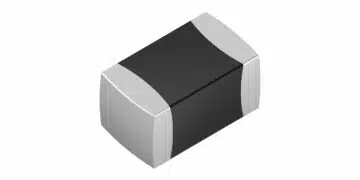
Samsung Electro-Mechanics has signed a KRW 1.0722 trillion (approximately USD 780 million) supply agreement with an unnamed global major corporation for multilayer ceramic capacitors used in AI servers.

The one-year contract, running from 1 January through 31 December 2027, is described by the company as its largest MLCC supply contract to date.

RelatedPosts

Samsung Introduces Ultra‑compact, High‑Capacitance MLCCs for AI Edge and Wearable designs

June 2026: AI Demand Pushes Japanese and Korean MLCC Makers to Five‑Year Shipment High

Samsung Introduces 1000V C0G and X7 MLCCs for 800V DC Systems

Long-term demand visibility for AI-grade MLCCs

The agreement adds to Samsung Electro-Mechanics’ portfolio of long-term supply agreements with more than ten global customers. The company says it is also pursuing further long-term contracts, reinforcing its strategy to expand the proportion of high-value AI-oriented passive components in its business mix.

Since May 2026, Samsung Electro-Mechanics has announced long-term agreements for AI-server MLCCs and silicon capacitors worth approximately KRW 3.32 trillion in total. For the company, the contracts provide a more predictable demand base at a time when AI data-centre infrastructure is driving accelerated investment in high-performance computing hardware.

Why AI servers need specialised MLCCs

Multilayer ceramic capacitors (MLCCs) provide local decoupling, transient-current support and high-frequency noise suppression across processor, accelerator, memory and voltage-regulator power rails. In AI servers, these functions become significantly more demanding because GPUs, AI accelerators and associated memory subsystems create rapid and high-amplitude current transients.

Samsung Electro-Mechanics highlights 24/7 operation, elevated temperature, higher operating voltages, high capacitance requirements and reliability as key differentiators for AI-server MLCCs. These requirements favour suppliers able to combine high capacitance density with controlled electrical performance and robust manufacturing and quality assurance.

The company states that AI servers can employ more than ten times as many MLCCs as general-purpose servers. This reflects the growing number of power domains and the need for dense capacitor arrays positioned close to high-current devices, where low parasitic resistance and inductance are essential to managing voltage droop during fast load steps.

Strategic implication for the supply chain

The size and duration of the deal underline the shift from spot purchasing toward strategic capacity reservation for premium MLCC categories. Unlike broad commodity MLCC demand, AI-server applications concentrate requirements in high-capacitance, high-reliability and temperature-capable parts, for which qualified supply remains limited.

Samsung Electro-Mechanics says it holds more than 40% share of the AI-server MLCC market. The company cited an estimated expansion of the market from USD 1.4 billion in 2025 to USD 5.8 billion in 2030, equivalent to approximately 34% average annual growth.

Design perspective

For power-integrity engineers, capacitor selection should not be based on nominal capacitance alone. Effective AI-server decoupling requires an impedance strategy that considers DC-bias behaviour, temperature performance, ESR, ESL, mounting location, PCB parasitics and the target frequency range of the voltage-regulator module and processor load transient.

High-CV MLCC arrays located close to GPUs, CPUs and ASICs can address fast transients, while other capacitor technologies may provide complementary mid-frequency and bulk-energy support. The practical objective is to maintain a low and controlled power-distribution-network impedance across the relevant frequency range rather than relying on one capacitor type alone.

Further reading

  • Nvidia Vera Rubin: Why One AI Rack Needs So Many More MLCC Capacitors
  • Samsung Three Pillars MLCC Strategy for AI Hardware Topology
  • Murata Publishes Power Delivery Guide for AI Servers
  • Temperature, Bias and Ageing Impact to MLCC Ceramic Capacitors

Source

This article is based on a Samsung Electro-Mechanics press release announcing its AI-server MLCC supply agreement and the company’s stated market, contract and product-positioning information.

References

  1. Samsung Electro-Mechanics press release
  2. Samsung Electro-Mechanics MLCC product overview
  3. Samsung Electro-Mechanics AI server application overview

Related

Recent Posts

KYOCERA AVX Adds 0201 C0G RF MLCCs to KGU Ultra-Low-ESR Capacitor Series

3.9.2026
1

KEMET HRA X7R High-Reliability MLCCs Target Higher Capacitance in Defense and Aerospace Electronics

1.9.2026
19

Connector Industry Performance Accelerates Through Mid-2026

31.8.2026
24

Filter Capacitors in Electric Vehicles: Knowles Safety MLCCs for BMS and Isolated DC/DC Converters

28.8.2026
39

YAGEO Expands Aluminum Polymer Capacitors for High-Temperature AI Server Power Rails

28.8.2026
43

Modelithics COMPLETE v26.4 Expands RF Passive Models for Keysight ADS

28.8.2026
12

Murata Launches 100V 10 µF Lead-Type MLCCs for 48V Systems

27.8.2026
47

KYOCERA AVX Releases Vibration-Proof SMD Aluminum Electrolytic Capacitors for Harsh Industrial Designs

26.8.2026
42

YAGEO Adds X8 Flexible-Termination Automotive MLCCs for 150°C Designs

25.8.2026
70

Upcoming Events

Sep 10
11:00 - 12:00 CEST

Equipment models and model strategies for Space Missions

Sep 16
17:00 - 18:00 CEST

Designing a 5 kW, 800 V-to-50 V PSFB Converter for Next-Generation Data Centers

Sep 29
16:00 - 17:00 CEST

Cybersecurity 2026

View Calendar

Popular Posts

  • Buck Converter Design and Calculation

    0 shares
    Share 0 Tweet 0
  • LLC Resonant Converter Design and Calculation

    0 shares
    Share 0 Tweet 0
  • Boost Converter Design and Calculation

    0 shares
    Share 0 Tweet 0
  • Earthing Systems and IEC Classification Explained

    0 shares
    Share 0 Tweet 0
  • MLCC and Ceramic Capacitors

    0 shares
    Share 0 Tweet 0
  • Flyback Converter Design and Calculation

    0 shares
    Share 0 Tweet 0
  • Capacitor Charging and Discharging

    0 shares
    Share 0 Tweet 0
  • Audio Capacitors: Choosing Capacitors for Crossover Circuits

    0 shares
    Share 0 Tweet 0
  • Thermistors Basics, NTC and PTC Thermistors

    0 shares
    Share 0 Tweet 0
  • Resistor Symbols

    0 shares
    Share 0 Tweet 0

Newsletter Subscription


Passive Components Blog

© 2015–2026
All rights reserved

  • Home
  • Privacy Policy
  • EPCI Membership & Advertisement
  • About

No Result
View All Result
  • Home
  • Knowledge Blog
  • Dossiers
  • PCNS

© 2015–2026
All rights reserved