




Passive Components Blog
No Result
View All Result
  • Home
  • News
    • All
    • Aerospace & Defence
    • Antenna
    • Applications
    • Automotive
    • Capacitors
    • Circuit Protection Devices
    • electro-mechanical news
    • Filters
    • Fuses
    • Inductors
    • Industrial
    • Integrated Passives
    • inter-connect news
    • Market & Supply Chain
    • Market Insights
    • Medical
    • Modelling and Simulation
    • New Materials & Supply
    • New Technologies
    • Non-linear Passives
    • Optoelectronics and Isolation
    • Oscillators
    • Passive Sensors News
    • Resistors
    • RF & Microwave
    • Telecommunication
    • Weekly Digest
    illustrative image of film capacitors close to a circuit board

    2026 Capacitor Price Shock: Where Film Capacitors Fit

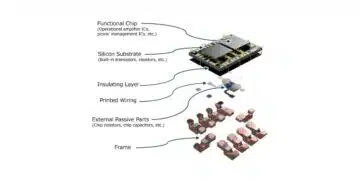
    Exploded view of the Nisshinbo Silicon Motherboard: functional chip, silicon substrate, insulating layer, printed wiring, external passive parts and frame

    Nisshinbo Silicon Motherboard Integrates ICs and Passives

    Murata MGJ2T2 SIP isolated DC-DC converter for SiC gate-drive power

    Murata Unveils Isolated DC-DC for SiC Gate Drives

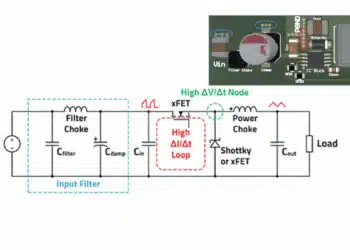
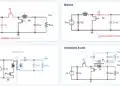
    Simplified buck, boost, flyback and isolated buck power-stage schematics showing switches, inductors, coupled magnetics, diodes and output capacitors.

    SMPS Topology Selection: From Buck and Boost to Flyback and LLC

    Littelfuse AK-FB and AK-A high-power TVS diodes in axial-leaded packages

    Littelfuse Introduces TVS Diodes for HVDC Protection

    Wk 46 Electronics Supply Chain Digest

    VACUUMSCHMELZE VACODUR Max cobalt-iron lamination material illustrated as thin metallic rotor and stator stacks.

    VACUUMSCHMELZE Introduced VACODUR Max Cobalt-Iron Alloy for Motor Laminations

    Stackpole RPCQ thick-film chip resistors in rectangular surface-mount packages with end terminations

    Stackpole Releases Pulse-Withstanding Chip Resistors up to 4 W

    Bourns CRT-G thin film chip resistor illustration with a rectangular body and metallic end terminations

    Bourns Introduces Precision Thin Film Resistors for Measurement

    Trending Tags

    • Ripple Current
    • RF
    • Leakage Current
    • Tantalum vs Ceramic
    • Snubber
    • Low ESR
    • Feedthrough
    • Derating
    • Dielectric Constant
    • New Products
    • Market Reports
  • Knowledge Blog
  • Dossiers
    • Aerospace and Defense Passive Components Dossier
    • AI Hardware Dossier
    • Automotive Dossier
    • Industrial Robotics Dossier
    • Power Converter Dossier
    • Capacitor Dossier
    • Circuit Protection Dossier
    • Inductor Dossier
    • Resistor Dossier
    • Silicon Capacitors and Integrated Passives Dossier
  • Suppliers
    • Who is Who
  • PCNS
    • PCNS 2025
    • PCNS 2023
    • PCNS 2021
    • PCNS 2019
    • PCNS 2017
  • Events
No Result
View All Result
Passive Components Blog
No Result
View All Result

Memcapacitor chaos in a six-state series-connected model

28.10.2026
Reading Time: 9 mins read
A A
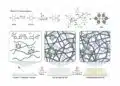
Mathematical state-space illustration of a series-connected memcapacitor oscillator with two constrained memory coordinates

Memcapacitor chaos is the subject of a computational study by I. O. Ajayi, published in Discover Electronics on 12 October 2026.

The paper examines an existing series-connected memory-capacitor oscillator model rather than introducing a new dielectric or manufactured capacitor; the author’s institutional affiliation could not be independently verified from the accessible source material.

RelatedPosts

2026 Capacitor Price Shock: Where Film Capacitors Fit

Nisshinbo Silicon Motherboard Integrates ICs and Passives

Murata Unveils Isolated DC-DC for SiC Gate Drives

Key takeaways

  • At the published baseline parameter set and initial condition, the six-state model produces a largest Lyapunov exponent of approximately +0.08244+0.08244 per model time unit, supporting chaotic dynamics.
  • The second exponent, approximately +9.897×10⁻⁵+9.897 \times 10^{-5} per model time unit, falls below the paper’s 10−410^{-4} classification threshold. The investigated operating point is therefore classified as chaotic, not hyperchaotic.
  • Numerical integration uses a step of 0.001 model time units over 10,000 time units, discarding the first 5,000 as a transient.
  • The two memory coordinates obey v1−v2=Cv_1-v_2=C. Their initial difference is conserved, constraining the accessible dynamics despite the six-variable formulation.
  • These are circuit-model results—not measurements of capacitance, dielectric loss, breakdown strength, endurance or commercial component performance.

Background

A memory capacitor has a charge–voltage response that depends on an evolving internal state, not just the instantaneous terminal voltage. That state introduces a history dependence into the circuit equations and can change how an oscillator responds to previous excitation and its starting conditions.

This distinction matters because nonlinear capacitance and memory are not interchangeable concepts. A voltage-dependent capacitor can have a nonlinear charge–voltage curve without necessarily reproducing the particular internal-state dynamics assumed in a memcapacitor model. The practical distinction between charge-to-voltage ratio and differential capacitance is explained in Capacitance Definition of Non-Linear Voltage Dependent Capacitors.

The paper builds on a series-connected memcapacitor architecture previously reported by Adelakun and colleagues. In the present analysis, two nonlinear memory elements interact through an active nonlinear feedback network. The active network is important: this is not evidence that two ordinary passive capacitors connected in series will spontaneously generate sustained chaos.

The engineering question is whether the published equations genuinely support persistent chaotic motion, and how their mathematical structure affects that interpretation.

What the researchers found: memcapacitor chaos

The model contains six state variables: four oscillator-related electrical states, x,y,z,wx,y,z,w, and two internal memory coordinates, v1,v2v_1,v_2. Its nonlinear coupling includes squared and fourth-power memory terms.

The reference calculation starts from

X0=(0.6,0.5,0.45,0.1,0.5,0.5)T.X_0=(0.6,\;0.5,\;0.45,\;0.1,\;0.5,\;0.5)^T.

These are model coordinates, not verified terminal voltages in volts. Likewise, the integration duration is expressed in model time units; it should not be converted into seconds or an operating frequency without a physical scaling relationship.

The calculation uses fourth-order Runge–Kutta integration. Lyapunov exponents are obtained by evolving small perturbations alongside the trajectory and periodically applying QR orthonormalization, which keeps the perturbation directions numerically distinguishable.

A Lyapunov exponent measures the average exponential growth or decay of a small disturbance. A robust positive exponent indicates sensitivity to initial conditions. Hyperchaos requires more than one independently established expanding direction.

Here, the largest exponent is clearly positive, while the next is close to zero and below the adopted positive threshold. The paper therefore identifies ordinary chaos at the investigated baseline, rather than treating every numerically positive value as evidence of hyperchaos.

Two structural findings help explain the result.

First, both memory coordinates obey the same evolution equation:

v˙1=y,v˙2=y.\dot v_1=y,\qquad \dot v_2=y.

Consequently,

ddt(v1−v2)=0.\frac{d}{dt}(v_1-v_2)=0.

Because the baseline starts with equal memory coordinates, they remain equal in the ideal equations. A six-dimensional state vector therefore does not mean six independently evolving degrees of freedom along that trajectory.

Second, the equilibrium set is a continuum:

E=(0,0,0,w,v1,v2).E=(0,0,0,w,v_1,v_2).

The remaining three coordinates can vary while the system stays at equilibrium. Startup and memory-state initialization therefore deserve attention alongside the nominal parameter values.

The reported mean phase-space divergence is approximately −0.52541859479-0.52541859479 per model time unit. Its agreement with the reported Lyapunov sum, approximately −0.52541858891-0.52541858891, provides a numerical consistency check. Negative average divergence describes contraction of nearby state-space volumes; it is not a measurement of dielectric loss or circuit power dissipation.

Why it matters for passive components

The immediate relevance is to behavioral modeling of memory-capacitive elements and their interaction with active circuits—not to higher capacitance density or improved energy storage.

For component engineers, the important lesson is that a history-dependent element may need more than a static capacitance-versus-voltage curve. A useful model must also describe how its internal state changes, how it is initialized and whether that state relaxes when excitation is removed.

Physical memory-capacitive devices are a separate research task. Earlier coverage of bio-inspired memcapacitors and other memory elements describes a material implementation; it should not be confused with validation of the equations examined here.

The paper discusses possible relevance to secure communications, neuromorphic computation and chaos-based information processing. Those remain application motivations rather than demonstrated system capabilities in this study. A positive Lyapunov exponent alone does not establish cryptographic security, useful random-number quality or a computing advantage.

From lab to component

An editorial maturity estimate is TRL 2: a formulated circuit concept supported here by analytical and numerical investigation. This estimate applies to the contribution of this paper, not to the maturity of every memcapacitor emulator or physical memory device cited in its introduction.

The next step is a physically scaled implementation that reproduces the modeled relationships. That could involve an active emulator or a material device, but the distinction must remain explicit. An emulator can reproduce a terminal response without establishing that a manufacturable passive material follows the same internal-state law.

Physical implementation also introduces effects absent from the ideal equations: finite amplifier bandwidth, supply limits, offsets, noise, component tolerances, leakage and parasitic impedances. In particular, unequal leakage or drift could break the exact conservation of v1−v2v_1-v_2.

The accessible methods do not provide a fabricated sample population, temperature sweep, humidity exposure, endurance test or component qualification campaign. Nor do they establish process compatibility, production cost, RoHS compliance or electrode integration. Those questions cannot be answered from an abstract oscillator model.

The mathematical interpretation needs similar care. Average phase-space contraction is a useful diagnostic, but it does not by itself prove that all trajectories remain bounded. The reported bounded numerical trajectory and the paper’s broader global claims should therefore be assessed separately.

What engineers should watch

  • Physical scaling: a documented mapping from model coordinates and time to volts, amperes, farads and seconds.
  • Device-law validation: measured charge–voltage behavior and internal-state evolution that support the assumed nonlinear terms.
  • Initialization sensitivity: repeatable startup tests with different memory-state differences, including realistic reset and power-cycle conditions.
  • Nonideal robustness: persistence of the identified regime with leakage, noise, tolerances, bandwidth limits and supply saturation.
  • Numerical reproducibility: executable code, smaller-step results and longer runs demonstrating that near-zero exponents do not change the classification.
  • Hardware repeatability: measurements across multiple implementations, followed by application-specific stability and reliability testing.

Summary

The study reports chaotic motion in a six-state series-connected memcapacitor model, with one clearly positive Lyapunov exponent at the reference operating point. Its conserved memory-state difference is an important constraint on how the nominal dimensionality and near-zero exponents should be interpreted.

For designers, the useful takeaway is methodological: memory-dependent capacitive behavior requires explicit state and initialization models. The work does not yet supply a new capacitor technology, qualified device or component-selection advantage.

Further reading

  • Dielectric, Permittivity, Dipoles and Dielectric Absorption
  • Scientists Report Physical Evidence of Meminductance

Source

This article is based on a published research article in Discover Electronics, identified by the publisher as open access.

References

  1. I. O. Ajayi, “Chaotic dynamics, basin structure and global dynamical analysis of a six-dimensional series memcapacitor system,” Discover Electronics, vol. 3, article 147, 2026. Published 12 October 2026. https://doi.org/10.1007/s44291-026-00297-6. Publisher-labeled open access; specific license not verified. The indexed publisher text supplied the model, numerical protocol and reported results used above.
Related

Recent Posts

illustrative image of film capacitors close to a circuit board

2026 Capacitor Price Shock: Where Film Capacitors Fit

17.11.2026
2
Simplified buck, boost, flyback and isolated buck power-stage schematics showing switches, inductors, coupled magnetics, diodes and output capacitors.

SMPS Topology Selection: From Buck and Boost to Flyback and LLC

16.11.2026
9
Schematic of six-arm nitrene crosslinker joining PEI polymer chains in a free-standing dielectric film.

Crosslinked PEI Film Capacitor Dielectrics Reach 6 J/cm³ at 200°C

11.11.2026
33
Conceptual illustration of Peak Nano NanoPlex HDC capacitor dielectric film rolls beside a cast-film production line

Peak Nano Scales NanoPlex HDC Capacitor Film Production 20-Fold

10.11.2026
35
Reference tantalum capacitor anode characterization, tantalum anode modeling, process selection and life-test verification.

Tantalum Anode Design Combines Structural Benchmarks and Modeling

9.11.2026
29
Illustration of a thin-film capacitor stack with TiN electrodes and an ultrathin hafnium zirconium oxide ferroelectric layer on silicon

Sub-Volt Ferroelectric HZO Capacitor Pairs Speed and Endurance

6.11.2026
27
Cut-open lithium-ion capacitor pouch cell showing stacked carbon electrodes and separators, with vials of carbon powder

Lithium-Ion Capacitor Review Backs Hard Carbon//AC Pairing

6.11.2026
27
Rack power shelf in an AI data center with film DC-link capacitors, a supercapacitor bank and a converter board

800 VDC AI Data Centers Reshape Capacitor Demand for 2027

6.11.2026
118
Conceptual polypropylene DC-link film capacitor module with parallel cells and copper interconnections

DC-Link Film Capacitor Modules: Inductance and Thermal Design, Jianghai-Europe Tech Memo

3.11.2026
49

Upcoming Events

Nov 24
16:00 - 17:00 CET

Select the Correct Components for Your DC/DC Converter

Dec 1
16:00 - 17:00 CET

Developing low-noise mixed-signal systems

Dec 8
16:00 - 17:00 CET

WE-CCMF: Design Principles, Layout Guidelines and Measurement Results for High-Speed EMI Filtering

View Calendar

Popular Posts

  • Buck Converter Design and Calculation

    0 shares
    Share 0 Tweet 0
  • September 2026 Interconnect, Passives and Electromechanical Components Market Insights

    0 shares
    Share 0 Tweet 0
  • Boost Converter Design and Calculation

    0 shares
    Share 0 Tweet 0
  • Capacitor Charging and Discharging

    0 shares
    Share 0 Tweet 0
  • LLC Resonant Converter Design and Calculation

    0 shares
    Share 0 Tweet 0
  • RF Connector Types: How To Choose the Right One

    0 shares
    Share 0 Tweet 0
  • Passive Low Pass Filters: Fundamentals and EMI Design

    0 shares
    Share 0 Tweet 0
  • Flyback Converter Design and Calculation

    0 shares
    Share 0 Tweet 0
  • MLCC and Ceramic Capacitors

    0 shares
    Share 0 Tweet 0
  • Capacitor Symbols

    0 shares
    Share 0 Tweet 0

Newsletter Subscription


Passive Components Blog

© 2015–2026
All rights reserved

  • Home
  • Privacy Policy
  • EPCI Membership & Advertisement
  • About

No Result
View All Result
  • Home
  • Knowledge Blog
  • Dossiers
  • PCNS

© 2015–2026
All rights reserved