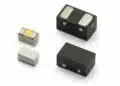

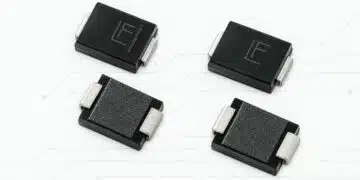







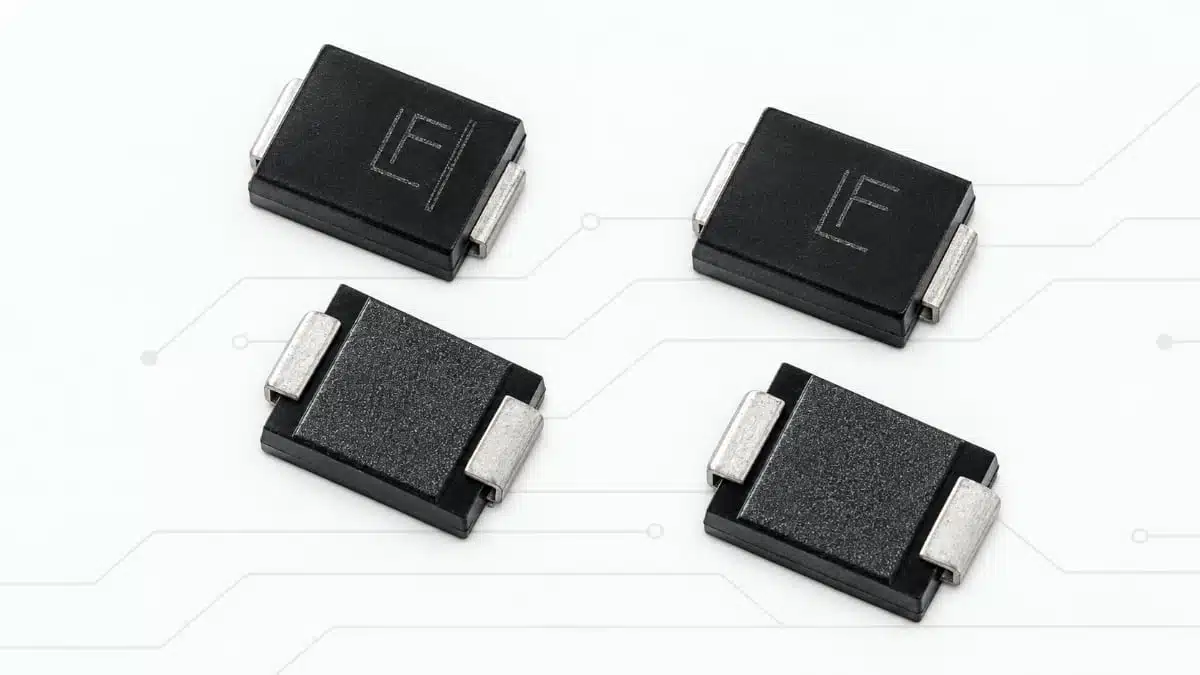
Littelfuse has introduced the TP7.0SMD-XC series of automotive transient voltage suppression diodes, led by the TP7.0SMD24CA-XC.
The Littelfuse transient voltage suppression diodes combines a 24 V foldback clamping characteristic with up to 7000 W peak pulse power in a DO-214AB surface-mount package. Its protection function targets automotive supply circuits containing ICs and MOSFETs whose absolute maximum voltage ratings constrain the allowable transient voltage.
Key features and benefits
- Foldback technology produces a flat clamping response, with a 24 V clamping voltage for the TP7.0SMD24CA-XC.
- Peak pulse-power capability reaches 7000 W for a 10/1000 µs waveform.
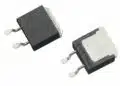
- The DO-214AB, or SMC, package supports surface-mount assembly.
- AEC-Q101 qualification and PPAP capability support automotive component qualification and production approval workflows.
- Operating junction temperature spans −65 °C to +175 °C.
- ESD protection reaches 30 kV for air and contact discharge under IEC 61000-4-2.
- IEC 61000-4-4 EFT protection supports data-line protection.
- Terminations use matte tin lead-free plating; the series is halogen-free and RoHS compliant.
Technical highlights
The new combination is foldback clamping and 7000 W pulse-power capability in an SMC package. The foldback characteristic supports a flat voltage response during transient conduction, addressing circuits where the protected semiconductor’s absolute maximum rating leaves a restricted voltage margin.
| Parameter | Value | Condition or format |
|---|---|---|
| Lead device | TP7.0SMD24CA-XC | TP7.0SMD-XC series |
| Clamping voltage | 24 V | Foldback response |
| Peak pulse power | Up to 7000 W | 10/1000 µs waveform |
| Package | DO-214AB | SMC surface mount |
| Junction temperature | −65 °C to +175 °C | Operating range |
| Automotive qualification | AEC-Q101 | PPAP capable |
| ESD protection | Up to 30 kV | Air and contact |
| ESD standard | IEC 61000-4-2 | Electrostatic discharge |
| EFT standard | IEC 61000-4-4 | Data-line protection |
| Packaging quantity | 3000 devices | Tape and reel |
Clamping voltage governs the transient stress passed to the protected circuit. It is distinct from the normal operating voltage of the supply and should be assessed against the absolute maximum ratings of the connected ICs and MOSFETs.
The 7000 W value is a peak pulse rating tied to the 10/1000 µs waveform, not a continuous dissipation rating. Pulse duration and the required transient conditions therefore belong in the selection process alongside clamping voltage.
Typical applications
Target applications include:
- Automotive 12 V battery systems.
- Zone control units.
- Anti-reverse protection circuits.
- Advanced driver-assistance systems.
- I/O interfaces and VCC buses.
- Automotive 48 V battery protection using a series connection with a conventional TVS diode.
For 12 V battery-powered modules, the combination of 24 V clamping and 7000 W peak pulse-power capability addresses transient protection where downstream semiconductor voltage ratings constrain component selection. The series also supports automotive 12 V and 24 V jump-start compliance requirements.
Application fit
Supply protection for voltage-sensitive electronics
The TP7.0SMD24CA-XC targets circuits that need transient clamping close to the working supply voltage. Its 24 V clamp is relevant to the voltage margin available at protected ICs and MOSFETs. MOSFET voltage-rating selection should account for both the clamp level and the complete circuit’s operating and transient requirements.
A single SMC device combines the foldback response and pulse-power capability. This provides a single-device protection option for applicable 12 V battery circuits rather than requiring a series TVS arrangement to achieve the intended clamping behaviour.
Series protection for 48 V battery systems
The TP7.0SMD-XC series can extend protection to 48 V battery systems when connected in series with a conventional TVS diode. This is a combined protection network: the additional TVS device forms part of the voltage-selection and transient-handling design.
The standalone 24 V clamping value should not be treated as the clamping voltage of the complete series network. Selection must address the behaviour of both devices under the required operating and surge conditions.
Design-in notes for engineers
- Separate normal supply voltage, jump-start conditions and transient clamping requirements when selecting the protection circuit.
- Compare the voltage at the protected load with the absolute maximum ratings of its ICs and MOSFETs.
- Assess the 7000 W rating with its 10/1000 µs waveform; use the application’s pulse conditions when evaluating surge suitability.
- For 48 V applications, select the conventional series TVS as part of the complete protection network.
- Treat −65 °C to +175 °C as the operating junction-temperature range, rather than an ambient-temperature allowance.
- Address AEC-Q101 qualification and PPAP requirements within the component and assembly approval process.
- Validate final selection under the actual operating conditions before schematic, layout or production release.
The TP7.0SMD24CA-XC is available in tape-and-reel packaging containing 3000 devices. Samples are available through authorised Littelfuse distributors worldwide.
Further reading
- Littelfuse Announced TVS Diodes for 48 V Automotive Systems
- Littelfuse Releases TVS Diodes for ISO 7637-2 Pulse 5b Load-Dump Protection
Source
This article is based on the Littelfuse product announcement and official product documentation. Engineers should refer to the current manufacturer datasheet for final design and qualification.
References
- Littelfuse Launches TP7.0SMD-XC Automotive TVS Diodes with Extremely Low Clamping Voltage, Littelfuse, October 13, 2026.