



Passive Components Blog
No Result
View All Result
  • Home
  • News
    • All
    • Aerospace & Defence
    • Antenna
    • Applications
    • Automotive
    • Capacitors
    • Circuit Protection Devices
    • electro-mechanical news
    • Filters
    • Fuses
    • Inductors
    • Industrial
    • Integrated Passives
    • inter-connect news
    • Market & Supply Chain
    • Market Insights
    • Medical
    • Modelling and Simulation
    • New Materials & Supply
    • New Technologies
    • Non-linear Passives
    • Oscillators
    • Passive Sensors News
    • Resistors
    • RF & Microwave
    • Telecommunication
    • Weekly Digest

    Samsung MLCC Revenue Seen Above KRW 8T by 2027, Murata EOL Actions Reshape Supply

    ROHM SDR01 high anti-surge thick-film chip resistor in 1005 metric 0402 package with 0.33 W rated power

    ROHM Introduces Anti-Surge 0402 Resistors Rated at 0.33 W

    ECIA Industry Pulse Q3 2026 chart showing passive components, semiconductors and electro-mechanical component market sentiment and lead-time pressure

    ECIA Industry Pulse Moderates as Passive Lead Times Tighten

    LG Innotek Demonstrates FC-BGA Substrates With Embedded Silicon Capacitors for AI Power Delivery

    On-Chip 3D-Printed Copper Microinductors: A New Route to Compact RF Electronics

    Emerging Capacitor Markets in Fusion Energy

    Murata DLW32SH_MF 1210 surface-mount common mode choke coil with metal terminals for automotive CAN FD signal-line noise suppression

    Murata Introduces Common Mode Chokes for Automotive CAN FD up to 150°C

    onsemi solid-state transformer concept for 800 V HVDC AI data center power conversion with SiC modules, DC-link capacitors and high-frequency magnetics

    Solid-State Transformers for 800 V AI Data Centers: Passive Component Design Considerations

    Littelfuse TX00AT314AMA omnipolar TMR magnetic switch sensor in a leaded TO-92-3 through-hole package

    Littelfuse Expands Omnipolar TMR Switch with Leaded TO-92 Package Option

    Trending Tags

    • Ripple Current
    • RF
    • Leakage Current
    • Tantalum vs Ceramic
    • Snubber
    • Low ESR
    • Feedthrough
    • Derating
    • Dielectric Constant
    • New Products
    • Market Reports
  • Knowledge Blog
  • Dossiers
    • AI Hardware Dossier
    • Automotive Dossier
    • Industrial Robotics Dossier
    • Power Converter Dossier
    • Capacitor Dossier
    • Resistor Dossier
    • Inductor Dossier
    • Circuit Protection Dossier
  • Suppliers
    • Who is Who
  • PCNS
    • PCNS 2025
    • PCNS 2023
    • PCNS 2021
    • PCNS 2019
    • PCNS 2017
  • Events
  • Home
  • News
    • All
    • Aerospace & Defence
    • Antenna
    • Applications
    • Automotive
    • Capacitors
    • Circuit Protection Devices
    • electro-mechanical news
    • Filters
    • Fuses
    • Inductors
    • Industrial
    • Integrated Passives
    • inter-connect news
    • Market & Supply Chain
    • Market Insights
    • Medical
    • Modelling and Simulation
    • New Materials & Supply
    • New Technologies
    • Non-linear Passives
    • Oscillators
    • Passive Sensors News
    • Resistors
    • RF & Microwave
    • Telecommunication
    • Weekly Digest

    Samsung MLCC Revenue Seen Above KRW 8T by 2027, Murata EOL Actions Reshape Supply

    ROHM SDR01 high anti-surge thick-film chip resistor in 1005 metric 0402 package with 0.33 W rated power

    ROHM Introduces Anti-Surge 0402 Resistors Rated at 0.33 W

    ECIA Industry Pulse Q3 2026 chart showing passive components, semiconductors and electro-mechanical component market sentiment and lead-time pressure

    ECIA Industry Pulse Moderates as Passive Lead Times Tighten

    LG Innotek Demonstrates FC-BGA Substrates With Embedded Silicon Capacitors for AI Power Delivery

    On-Chip 3D-Printed Copper Microinductors: A New Route to Compact RF Electronics

    Emerging Capacitor Markets in Fusion Energy

    Murata DLW32SH_MF 1210 surface-mount common mode choke coil with metal terminals for automotive CAN FD signal-line noise suppression

    Murata Introduces Common Mode Chokes for Automotive CAN FD up to 150°C

    onsemi solid-state transformer concept for 800 V HVDC AI data center power conversion with SiC modules, DC-link capacitors and high-frequency magnetics

    Solid-State Transformers for 800 V AI Data Centers: Passive Component Design Considerations

    Littelfuse TX00AT314AMA omnipolar TMR magnetic switch sensor in a leaded TO-92-3 through-hole package

    Littelfuse Expands Omnipolar TMR Switch with Leaded TO-92 Package Option

    Trending Tags

    • Ripple Current
    • RF
    • Leakage Current
    • Tantalum vs Ceramic
    • Snubber
    • Low ESR
    • Feedthrough
    • Derating
    • Dielectric Constant
    • New Products
    • Market Reports
  • Knowledge Blog
  • Dossiers
    • AI Hardware Dossier
    • Automotive Dossier
    • Industrial Robotics Dossier
    • Power Converter Dossier
    • Capacitor Dossier
    • Resistor Dossier
    • Inductor Dossier
    • Circuit Protection Dossier
  • Suppliers
    • Who is Who
  • PCNS
    • PCNS 2025
    • PCNS 2023
    • PCNS 2021
    • PCNS 2019
    • PCNS 2017
  • Events
No Result
View All Result
Passive Components Blog
No Result
View All Result

University of Manchester Discovers ‘radically different’ Physics in Graphene that Can Lead to Development of New Electronic Devices

16.11.2020
Reading Time: 4 mins read
A A
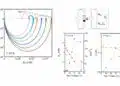
The magnetic field is varied along the vertical axis. Horizontal Yellow streaks show propagation of Brown-Zak fermions, propagating along straight trajectories with high mobility (low resistance), whereas slanted indigo lines show the cyclotron motion around Brown-Zak fermions. The slope of these lines enabled us to get the degeneracy (and find an additional quantum number) of these new quasiparticles. Credit: Julien Barrier, University of Manchester

The magnetic field is varied along the vertical axis. Horizontal Yellow streaks show propagation of Brown-Zak fermions, propagating along straight trajectories with high mobility (low resistance), whereas slanted indigo lines show the cyclotron motion around Brown-Zak fermions. The slope of these lines enabled us to get the degeneracy (and find an additional quantum number) of these new quasiparticles. Credit: Julien Barrier, University of Manchester

A group of researchers led by Sir Andre Geim and Dr Alexey Berdyugin at The University of Manchester have discovered and characterised a new family of quasiparticles named ‘Brown-Zak fermions’ in graphene-based superlattices.

The team achieved this breakthrough by aligning the atomic lattice of a graphene layer to that of an insulating boron nitride sheet, dramatically changing the properties of the graphene sheet.

RelatedPosts

Samsung MLCC Revenue Seen Above KRW 8T by 2027, Murata EOL Actions Reshape Supply

ROHM Introduces Anti-Surge 0402 Resistors Rated at 0.33 W

ECIA Industry Pulse Moderates as Passive Lead Times Tighten

The study follows years of successive advances in graphene-boron nitride superlattices which allowed the observation of a fractal pattern known as the Hofstadter’s butterfly – and today (Friday, November 13) the researchers report another highly surprising behaviour of particles in such structures under applied magnetic field.

“It is well known, that in a zero magnetic field, electrons move in straight trajectories and if you apply a magnetic field they start to bend and move in circles”, explain Julien Barrier and Dr Piranavan Kumaravadivel, who carried out the experimental work.

“In a graphene layer which has been aligned with the boron nitride, electrons also start to bend – but if you set the magnetic field at specific values, the electrons move in straight line trajectories again, as if there is no magnetic field anymore!”

“Such behaviour is radically different from textbook physics.” adds Dr Piranavan Kumaravadivel.

“We attribute this fascinating behaviour to the formation of novel quasiparticles at high magnetic field,” says Dr Alexey Berdyugin.  “Those quasiparticles have their own unique properties and exceptionally high mobility despite the extremely high magnetic field.”

As published in Nature Communications, the work describes how electrons behave in an ultra-high-quality superlattice of graphene with a revised framework for the fractal features of the Hofstadter’s butterfly. Fundamental improvements in graphene device fabrication and measurement techniques in the past decade have made this work possible.

A new quasiparticle

“The concept of quasiparticles is arguably one of the most important in condensed matter physics and quantum many-body systems. It was introduced by the theoretical physicist Lev Landau in the 1940s to depict collective effects as a ‘one particle excitation’,” explains Julien Barrier “They are used in a number of complex systems to account for many-body effects.”

Until now, the behaviour of collective electrons in graphene superlattices were thought in terms of the Dirac fermion, a quasiparticle that has unique properties resembling photons (particles with no mass), that replicate at high magnetic fields. However, this did not account for some experimental features, like the additional degeneracy of the states, nor did it match the finite mass of the quasiparticle in this state.

The authors propose ‘Brown-Zak fermions’ to be the family of quasiparticles existing in superlattices under high magnetic field. This is characterised by a new quantum number that can directly be measured. Interestingly, working at lower temperatures allowed them to lift the degeneracy with exchange interactions at ultra-low temperatures.

“Under the presence of a magnetic field, electrons in graphene start rotating with quantised orbits. For Brown-Zak fermions, we managed to restore a straight trajectory of tens of micrometres under high magnetic fields up to 16T (500,000 times earth’s magnetic field). Under specific conditions, the ballistic quasiparticles feel no effective magnetic field,” explain Dr Kumaravadivel and Dr Berdyugin.

High mobility of Brown Zak fermions

In an electronic system, the mobility is defined as the capacity for a particle to travel upon the application of an electrical current. High mobilities have long been the Holy Grail when fabricating 2D systems such as graphene because such materials would present additional properties (integer and fractional quantum hall effects), and potentially allow the creation of ultra-high frequency transistors, the components at the heart of a computer processor.

“For this study we prepared graphene devices that are extra-large with a very high level of purity”. says Dr Kumaravadivel. This allowed us to achieve mobilities of several millions of cm²/Vs, which means particles would travel straight across the entire device without scattering. Importantly, this was not only the case for classical Dirac fermions in graphene, but also realised for the Brown-Zak fermions reported in the work.

These Brown-Zak fermions define new metallic states, that are generic to any superlattice system, not just graphene and offers a playground for new condensed matter physics problems in other 2D material based superlattices.

Julien Barrier added “The findings are important, of course for fundamental studies in electron transport, but we believe that understanding quasiparticles in novel superlattice devices under high magnetic fields can lead to the development of new electronic devices.”

The high mobility means that a transistor made from such a device could operate at higher frequencies, allowing a processor made out of this material to perform more calculations per unit of time, resulting in a faster computer. Applying a magnetic field would usually scale down the mobility and make such a device unusable for certain applications. The high mobilities of Brown-Zak fermions at high magnetic fields open a new perspective for electronic devices operating under extreme conditions.

The paper, Long-range ballistic transport of Brown-Zak fermions in graphene superlattices, is published in Nature Communications (Friday, 13 November 2020).
Related

Source: University of Manchester

Recent Posts

On-Chip 3D-Printed Copper Microinductors: A New Route to Compact RF Electronics

10.9.2026
20
Overview of fabricated ferroelectric capacitors improving hyperdimensional computing task learning accuracy. a The experimental work reported in this study comprises ferroelectric capacitor (FeCAP) device fabrication, structural and electrical characterization, analog state identification and their reliability study. b The computational part of the work explores the benefits of using characteristics from the fabricated devices in a hyperdimensional computing scheme; source: authors

High-Precision Hyperdimensional Computing with Multi-Level Ferroelectric HZO Capacitors

7.9.2026
23

Ultrahigh Energy Storage in Lead‑Free BiFeO₃‑Based Ceramic Capacitors via Local Polar Structure Design

16.6.2026
78

Imec Presents High-density MIMCAP RF interposer for III-V chiplets

15.6.2026
142

All‑Water Supercapacitor Based on 1‑nm Clay Channels and Nanoconfined Water Electrolyte

10.6.2026
108

Molecular Memristor Shows Record 145 kH Emergent Inductance

12.5.2026
82

Researchers Propose Next‑Gen Compact Memory Using Ultra-thin Ferroelectric Capacitors

11.5.2026
161

Electrocaloric Multilayer Capacitors: Towards Quiet, Solid‑State Cooling Around Room Temperature

7.5.2026
407

High-Crystallinity Nanocrystalline Composites for MHz Chip Inductors

7.5.2026
213

Upcoming Events

Sep 16
17:00 - 18:00 CEST

Designing a 5 kW, 800 V-to-50 V PSFB Converter for Next-Generation Data Centers

Sep 29
16:00 - 17:00 CEST

Cybersecurity 2026

Nov 24
16:00 - 17:00 CET

Component selection with the WE REDEXPERT® DC-DC Converter Designer Tool

View Calendar

Popular Posts

  • Buck Converter Design and Calculation

    0 shares
    Share 0 Tweet 0
  • LLC Resonant Converter Design and Calculation

    0 shares
    Share 0 Tweet 0
  • Boost Converter Design and Calculation

    0 shares
    Share 0 Tweet 0
  • Flyback Converter Design and Calculation

    0 shares
    Share 0 Tweet 0
  • Earthing Systems and IEC Classification Explained

    0 shares
    Share 0 Tweet 0
  • MLCC and Ceramic Capacitors

    0 shares
    Share 0 Tweet 0
  • Resistor Symbols

    0 shares
    Share 0 Tweet 0
  • Capacitor Charging and Discharging

    0 shares
    Share 0 Tweet 0
  • Audio Capacitors: Choosing Capacitors for Crossover Circuits

    0 shares
    Share 0 Tweet 0
  • Ohm’s Law Answers Your Questions

    0 shares
    Share 0 Tweet 0

Newsletter Subscription


Passive Components Blog

© 2015–2026
All rights reserved

  • Home
  • Privacy Policy
  • EPCI Membership & Advertisement
  • About

No Result
View All Result
  • Home
  • Knowledge Blog
  • Dossiers
  • PCNS

© 2015–2026
All rights reserved