




Passive Components Blog
No Result
View All Result
  • Home
  • NewsFilter
    • All
    • Aerospace & Defence
    • Antenna
    • Applications
    • Automotive
    • Capacitors
    • Circuit Protection Devices
    • electro-mechanical news
    • Filters
    • Fuses
    • Inductors
    • Industrial
    • Integrated Passives
    • inter-connect news
    • Market & Supply Chain
    • Market Insights
    • Medical
    • Modelling and Simulation
    • New Materials & Supply
    • New Technologies
    • Non-linear Passives
    • Oscillators
    • Passive Sensors News
    • Resistors
    • RF & Microwave
    • Telecommunication
    • Weekly Digest

    Power Converter Dossier: Passive Components Design and Selection Guide 2026

    Evans Group Unifies Four High-Rel Capacitor Leaders

    Skeleton Releases Graphene‑Based UPS for AI Data Centers

    Designing 800 V DC EMC Filters: Calculation, Simulation and Measurement

    TDK Releases DC-link Film Capacitors with Ultra-low Inductance for SiC Power Converters

    Murata Introduces World First 2.2uF 100V Soft‑Term MLCC in 0805 Size for Automotive

    Murata and Xona Partner on LEO Satellite Navigation for Industrial Applications

    Bourns Offers Custom Magnetics for 3‑Phase Flying Capacitor Inverters

    YAGEO Releases Cost Efficient Pt‑RTD Sensors with Ni wires

    Trending Tags

    • Ripple Current
    • RF
    • Leakage Current
    • Tantalum vs Ceramic
    • Snubber
    • Low ESR
    • Feedthrough
    • Derating
    • Dielectric Constant
    • New Products
    • Market Reports
  • VideoFilter
    • All
    • Antenna videos
    • Capacitor videos
    • Circuit Protection Video
    • Filter videos
    • Fuse videos
    • Inductor videos
    • Inter-Connect Video
    • Non-linear passives videos
    • Oscillator videos
    • Passive sensors videos
    • Resistor videos

    Designing 800 V DC EMC Filters: Calculation, Simulation and Measurement

    Current Sense Transformer Datasheet and Design‑in Guide

    Designing a USB Type‑C Flyback Planar Transformer with Frenetic’s Planar Tool

    Magnetics Design in High‑Frequency GaN Converters

    Qi2 Wireless Charging: Inductors, Capacitors and EMC Filters

    Two‑capacitor paradox explained for engineers

    Capacitances of Nonlinear MLCCs: What Datasheets Don’t Tell You

    Tapped Inductor Buck Converter Fundamentals

    Planar vs Conventional Transformer: When it Make Sense

    Trending Tags

    • Capacitors explained
    • Inductors explained
    • Resistors explained
    • Filters explained
    • Application Video Guidelines
    • EMC
    • New Products
    • Ripple Current
    • Simulation
    • Tantalum vs Ceramic
  • Knowledge Blog
  • DossiersNew
  • Suppliers
    • Who is Who
  • PCNS
    • PCNS 2025
    • PCNS 2023
    • PCNS 2021
    • PCNS 2019
    • PCNS 2017
  • Events
  • Home
  • NewsFilter
    • All
    • Aerospace & Defence
    • Antenna
    • Applications
    • Automotive
    • Capacitors
    • Circuit Protection Devices
    • electro-mechanical news
    • Filters
    • Fuses
    • Inductors
    • Industrial
    • Integrated Passives
    • inter-connect news
    • Market & Supply Chain
    • Market Insights
    • Medical
    • Modelling and Simulation
    • New Materials & Supply
    • New Technologies
    • Non-linear Passives
    • Oscillators
    • Passive Sensors News
    • Resistors
    • RF & Microwave
    • Telecommunication
    • Weekly Digest

    Power Converter Dossier: Passive Components Design and Selection Guide 2026

    Evans Group Unifies Four High-Rel Capacitor Leaders

    Skeleton Releases Graphene‑Based UPS for AI Data Centers

    Designing 800 V DC EMC Filters: Calculation, Simulation and Measurement

    TDK Releases DC-link Film Capacitors with Ultra-low Inductance for SiC Power Converters

    Murata Introduces World First 2.2uF 100V Soft‑Term MLCC in 0805 Size for Automotive

    Murata and Xona Partner on LEO Satellite Navigation for Industrial Applications

    Bourns Offers Custom Magnetics for 3‑Phase Flying Capacitor Inverters

    YAGEO Releases Cost Efficient Pt‑RTD Sensors with Ni wires

    Trending Tags

    • Ripple Current
    • RF
    • Leakage Current
    • Tantalum vs Ceramic
    • Snubber
    • Low ESR
    • Feedthrough
    • Derating
    • Dielectric Constant
    • New Products
    • Market Reports
  • VideoFilter
    • All
    • Antenna videos
    • Capacitor videos
    • Circuit Protection Video
    • Filter videos
    • Fuse videos
    • Inductor videos
    • Inter-Connect Video
    • Non-linear passives videos
    • Oscillator videos
    • Passive sensors videos
    • Resistor videos

    Designing 800 V DC EMC Filters: Calculation, Simulation and Measurement

    Current Sense Transformer Datasheet and Design‑in Guide

    Designing a USB Type‑C Flyback Planar Transformer with Frenetic’s Planar Tool

    Magnetics Design in High‑Frequency GaN Converters

    Qi2 Wireless Charging: Inductors, Capacitors and EMC Filters

    Two‑capacitor paradox explained for engineers

    Capacitances of Nonlinear MLCCs: What Datasheets Don’t Tell You

    Tapped Inductor Buck Converter Fundamentals

    Planar vs Conventional Transformer: When it Make Sense

    Trending Tags

    • Capacitors explained
    • Inductors explained
    • Resistors explained
    • Filters explained
    • Application Video Guidelines
    • EMC
    • New Products
    • Ripple Current
    • Simulation
    • Tantalum vs Ceramic
  • Knowledge Blog
  • DossiersNew
  • Suppliers
    • Who is Who
  • PCNS
    • PCNS 2025
    • PCNS 2023
    • PCNS 2021
    • PCNS 2019
    • PCNS 2017
  • Events
No Result
View All Result
Passive Components Blog
No Result
View All Result

Moving Upwards in Supply Chain, EPCI Interview with Dr.Schnitter, H.C.Starck, Technology Metals Supplier

24.5.2022
Reading Time: 6 mins read
A A

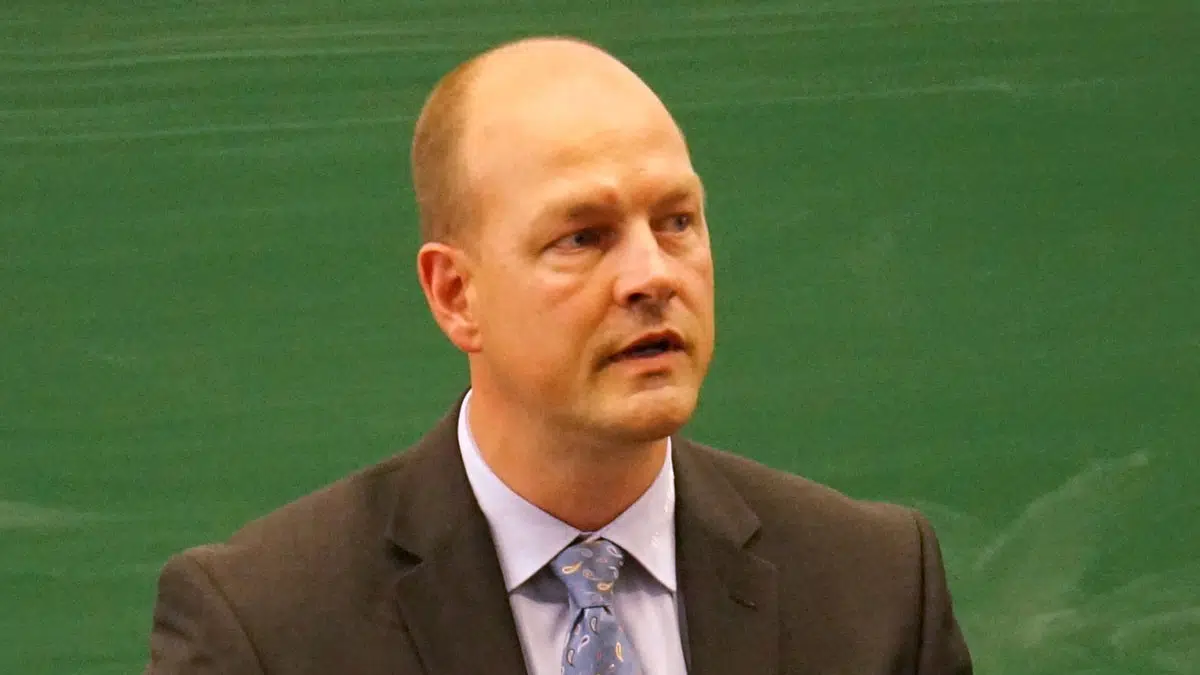
“The last interview of the month with Bill Millman raised a high level of interest what is going on within the components’ supply chain. The responsibility of manufacturers and the material usage trends will be followed in the next interview. Let’s move one step up upwards in the material supply chain tree. The interview invitation was accepted by Dr. Christoph Schnitter, R&D director of metal powder processor and smelter company H.C.Starck. I know Christoph for many years as the knowledgable material scientist from technical discussions about tantalum/niobium powders and its structures” T.Zednicek EPCI

> Q1 EPCI: Hello Christoph, can you please briefly introduce yourselves, your current position, scope of your work and your experience/relation to the passive components supply chain?

Dr. Schnitter:

RelatedPosts

Power Converter Dossier: Passive Components Design and Selection Guide 2026

Evans Group Unifies Four High-Rel Capacitor Leaders

Skeleton Releases Graphene‑Based UPS for AI Data Centers

Thank you Tomas. My experience in materials for passive components goes back for more than 18 years now. After getting my diploma and PhD in inorganic chemistry, I joined the central R&D division of H.C. Starck in 1998 as a project manager. One of my first projects was the development of niobium based capacitor powders which we have successfully started to supply to the market starting in 2001 until today. Later on, I worked on several development projects in the field of tantalum and niobium based materials for capacitors. In 2004, I became group manager for the capacitor material development including tantalum and niobium as well as the development of PEDOT-based conductive polymer materials. In 2009, I was promoted to the director of the R&D department for powder development of H.C.Starck . I was responsible for the development of Ta, Nb, W, Mo, Re metal powders and ceramic powders like carbides, nitrides, silicides for many different applications in various industries, many of them in electronics. Currently, I am holding the position of the head of R&D of the H.C. Starck Tantalum and Niobium GmbH.

In the field of capacitor materials, we develop new powders allowing our customers to follow the current major trends like miniaturization, reduction of ESR and ESL or operation in harsher environments. For Ta powders, the major focus is to maximize the CV and to optimize ESR capability of our powders over the whole voltage range by optimizing the microstructure. Just recently, we introduced a new class of powders for high voltage applications up to 300 V allowing us to achieve distinctly higher energy densities of Ta capacitors made therefrom and showing low ESR in parallel.

However, we are also looking more forward to new technologies and materials. For example, there is an increasing demand to lower the height of the passive components more and more with the final target of embedded devices. We have developed a Ta paste technology allowing us to produce ultrathin Ta capacitors with heights below 0.2 mm.
As the current dielectric materials are getting closer to their physical limits, we are actively researching in new materials with superior properties.

> Q2 EPCI: Some component manufacturers have decided to secure their supply chain by a vertical integration that is including material mining and processing. Do you see this as a general trend that may impact also your business model / need change of your strategy on market?

Dr. Schnitter:

We do not see this as a global trend. Next to vertical integration there is other options to solve some concerns about supply security and price volatility. Each player in the industry has to find his own way of how to deal with market challenges..

For a fully vertically integrated company, you need to take care that you are the best in all disciplines and you have also to be innovative in all fields. This is hardly to achieve, but it is understandable from history why some manufactures started to set up their vertical supply chain. However, we believe that the most important task for the Ta capacitor industry altogether is to develop future applications. We appreciate the activities of our customers when they head for design-ins and extend the capabilities and usage of Ta capacitors. Our competence is to develop the materials to fulfill the needs of the new applications. We are happy to enter our material expertise/competence into this race. against alternative technologies and rely on the great competence and work of our customer to develop and improve the device.

> Q3 EPCI: What is a current usage trend of technological materials in your segment and what is your expectation for future ? Is the passive component industry consuming more and more of the “conventional material” under cost down pressure or is the trend to focus on lower volume production, but more advanced high tech “supermaterials” – new composition, with extreme purity, fine/nano structured particles etc.

Dr. Schnitter:

A good balance is always important. Providing “conventional material” and also develop new super materials. As you know, we have a strong footprint in Tantalum capacitor technology, but also have quite some competence in high purity oxides used in SAW filters or we provide Niobates for piezo components. These are very specific materials providing high performance in other electronic applications. Some materials such as e.g. CVD precursor materials for Ta, Nb or W are still niche applications.

Also in Ta cap powders, we provide the whole spectra of products. Sometimes already established products also need some further development to open up new applications as an example high voltage powders. Already some years ago, we also started to improve materials having higher capacity also for voltage ranges of 16V and higher. By providing excellent homogeneity, we are able to optimize the capacity achieved from used Tantalum.

The search for the new “super material” is also ongoing and some compositions showed some promising results. Via high throughput screening, we have a systematic and easy approach to find the optimum composition. However, before having electronic components from these materials available, there is still a long way of development to go.

> Q4 EPCI: The new trend seen everywhere is a 3D printing that is now progressing by a number of different technologies. Are you preparing some materials specifically for the 3D metal printing techniques ? Do you think that this technology will be soon adopted to mass production or it will be long term growing but more as a niche-like application ?

Dr. Schnitter:

Yes, we are preparing solutions for this trend and we are convinced that this technology is going into mass production. This technology will to some extend revolutionize the industry. It will be always the question in which application it will offer a cost efficient alternative to current technologies. If there will be such fields in the electronic industry, it is so far not foreseeable. Currently, our focus is in different directions but we are monitoring this technology very carefully.

> Q5 EPCI: We see a large scale of alternative new non-metallic materials that are offering attractive features replacing the conventional technology metals … is there still a place for mass consumed conventional materials or these are more and more pushed to niche. Is there some “new metal based material” on horizon that can significantly impact some components and its applications?

Dr. Schnitter:

As explained above, our focus is not only metal. All our products in our division are somehow related with Tantalum, Niobium and sometimes also Tungsten. However, we offer them in very different appearances but always customized to the needs of the application and our customer. These metals are offered as metals, ceramic compounds, oxides, chlorides or even complex water soluble compounds. Our competence is to develop and offer the materials as customized composition and we tune their performance in the final application by designing the Micro-, Macro- and Meso- structure of our powders. That is our material competence we offer to all our customers and partners to bring the application to market.

Thank you Christoph for your time and willingness to share your opinions with us.

The more about the H.C.Starck company can be found at the company’s homepage here.

Related

Recent Posts

Power Converter Dossier: Passive Components Design and Selection Guide 2026

5.6.2026
13

Evans Group Unifies Four High-Rel Capacitor Leaders

5.6.2026
12

Murata and Xona Partner on LEO Satellite Navigation for Industrial Applications

3.6.2026
32

Nvidia Vera Rubin: Why One AI Rack Needs So Many More MLCC Capacitors

2.6.2026
157

Passive Components in 2026: From Invisible Commodity to Design Parameter

2.6.2026
61

May 2026 Interconnect, Passives and Electromechanical Components Market Insights

29.5.2026
109

ECIA Industry Pulse April 2026: Sentiment Cools but Stays Strong

21.5.2026
78

Industrial Passive Components Markets and Technologies 2026

21.5.2026
164

Automotive Passive Components Technology Dossier

5.6.2026
89

Upcoming Events

Jun 16
16:00 - 17:00 CEST

EMC with EMC – EMC‑compliant design with electromechanical connectors

View Calendar

Popular Posts

  • Buck Converter Design and Calculation

    0 shares
    Share 0 Tweet 0
  • Boost Converter Design and Calculation

    0 shares
    Share 0 Tweet 0
  • MLCC and Ceramic Capacitors

    0 shares
    Share 0 Tweet 0
  • Flyback Converter Design and Calculation

    0 shares
    Share 0 Tweet 0
  • LLC Resonant Converter Design and Calculation

    0 shares
    Share 0 Tweet 0
  • Dual Active Bridge (DAB) Topology

    0 shares
    Share 0 Tweet 0
  • What Electronics Engineer Needs to Know About Passive Low Pass Filters

    0 shares
    Share 0 Tweet 0
  • Capacitor Charging and Discharging

    0 shares
    Share 0 Tweet 0
  • SEPIC Converter Design and Calculation

    0 shares
    Share 0 Tweet 0
  • Earthing Systems and IEC Classification Explained

    0 shares
    Share 0 Tweet 0

Newsletter Subscription


Passive Components Blog

© EPCI - Leading Passive Components Educational and Information Site

  • Home
  • Privacy Policy
  • EPCI Membership & Advertisement
  • About

No Result
View All Result
  • Home
  • Knowledge Blog
  • Dossiers
  • PCNS

© EPCI - Leading Passive Components Educational and Information Site

This website uses cookies. By continuing to use this website you are giving consent to cookies being used. Visit our Privacy and Cookie Policy.
Go to mobile version