

Passive Components Blog
No Result
View All Result
  • Home
  • News
    • All
    • Aerospace & Defence
    • Antenna
    • Applications
    • Automotive
    • Capacitors
    • Circuit Protection Devices
    • electro-mechanical news
    • Filters
    • Fuses
    • Inductors
    • Industrial
    • Integrated Passives
    • inter-connect news
    • Market & Supply Chain
    • Market Insights
    • Medical
    • Modelling and Simulation
    • New Materials & Supply
    • New Technologies
    • Non-linear Passives
    • Oscillators
    • Passive Sensors News
    • Resistors
    • RF & Microwave
    • Telecommunication
    • Weekly Digest

    Bourns Automotive BMS Signal Transformer Combines Reinforced Isolation and Common-Mode Noise Rejection

    Murata Launches 100V 10 µF Lead-Type MLCCs for 48V Systems

    Bourns Extends Current Sense Resistors for High-Current Power Designs with 0.1 mΩ, 15 W

    KYOCERA AVX Releases Vibration-Proof SMD Aluminum Electrolytic Capacitors for Harsh Industrial Designs

    Vishay Introduces Automotive Low Loss SMD Common-Mode Chokes

    YAGEO Adds X8 Flexible-Termination Automotive MLCCs for 150°C Designs

    Current-Dependent Inductors: Using Non-Linear Inductance in Buck Converters and PFC Stages

    Vishay Releases High-Power Thick Film Resistors for Compact Power Modules

    Wk 32 Electronics Supply Chain Digest

    Trending Tags

    • Ripple Current
    • RF
    • Leakage Current
    • Tantalum vs Ceramic
    • Snubber
    • Low ESR
    • Feedthrough
    • Derating
    • Dielectric Constant
    • New Products
    • Market Reports
  • Knowledge Blog
  • Dossiers
    • AI Hardware Dossier
    • Automotive Dossier
    • Industrial Robotics Dossier
    • Power Converter Dossier
    • Capacitor Dossier
    • Resistor Dossier
    • Inductor Dossier
    • Circuit Protection Dossier
  • Suppliers
    • Who is Who
  • PCNS
    • PCNS 2025
    • PCNS 2023
    • PCNS 2021
    • PCNS 2019
    • PCNS 2017
  • Events
  • Home
  • News
    • All
    • Aerospace & Defence
    • Antenna
    • Applications
    • Automotive
    • Capacitors
    • Circuit Protection Devices
    • electro-mechanical news
    • Filters
    • Fuses
    • Inductors
    • Industrial
    • Integrated Passives
    • inter-connect news
    • Market & Supply Chain
    • Market Insights
    • Medical
    • Modelling and Simulation
    • New Materials & Supply
    • New Technologies
    • Non-linear Passives
    • Oscillators
    • Passive Sensors News
    • Resistors
    • RF & Microwave
    • Telecommunication
    • Weekly Digest

    Bourns Automotive BMS Signal Transformer Combines Reinforced Isolation and Common-Mode Noise Rejection

    Murata Launches 100V 10 µF Lead-Type MLCCs for 48V Systems

    Bourns Extends Current Sense Resistors for High-Current Power Designs with 0.1 mΩ, 15 W

    KYOCERA AVX Releases Vibration-Proof SMD Aluminum Electrolytic Capacitors for Harsh Industrial Designs

    Vishay Introduces Automotive Low Loss SMD Common-Mode Chokes

    YAGEO Adds X8 Flexible-Termination Automotive MLCCs for 150°C Designs

    Current-Dependent Inductors: Using Non-Linear Inductance in Buck Converters and PFC Stages

    Vishay Releases High-Power Thick Film Resistors for Compact Power Modules

    Wk 32 Electronics Supply Chain Digest

    Trending Tags

    • Ripple Current
    • RF
    • Leakage Current
    • Tantalum vs Ceramic
    • Snubber
    • Low ESR
    • Feedthrough
    • Derating
    • Dielectric Constant
    • New Products
    • Market Reports
  • Knowledge Blog
  • Dossiers
    • AI Hardware Dossier
    • Automotive Dossier
    • Industrial Robotics Dossier
    • Power Converter Dossier
    • Capacitor Dossier
    • Resistor Dossier
    • Inductor Dossier
    • Circuit Protection Dossier
  • Suppliers
    • Who is Who
  • PCNS
    • PCNS 2025
    • PCNS 2023
    • PCNS 2021
    • PCNS 2019
    • PCNS 2017
  • Events
No Result
View All Result
Passive Components Blog
No Result
View All Result

Embedded sodium electrodes boost efficiency in super capacitors and solar cells

22.12.2016
Reading Time: 2 mins read
A A

source: EETimes article

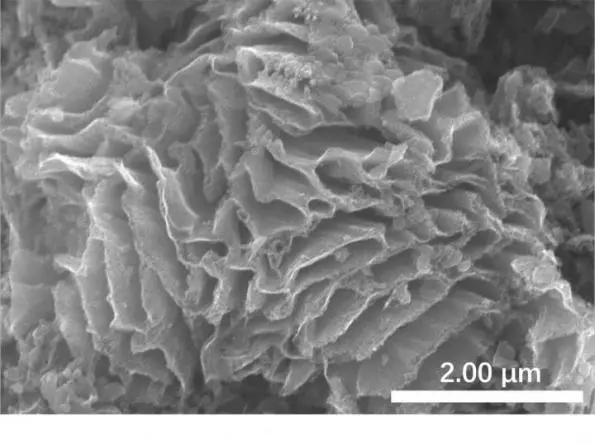
Embedding sodium in carbon nanowalls can tremendously improve electrodes in batteries, supercapacitors and solar cells say researchers from Michigan Technological University
The team, led by Yun Hang Hu, the Charles and Carroll McArthur Professor of materials science and engineering at Michigan Tech, created a new way to synthesize sodium-embedded carbon nanowalls that previously were only theoretical.

RelatedPosts

Bourns Automotive BMS Signal Transformer Combines Reinforced Isolation and Common-Mode Noise Rejection

Murata Launches 100V 10 µF Lead-Type MLCCs for 48V Systems

Bourns Extends Current Sense Resistors for High-Current Power Designs with 0.1 mΩ, 15 W

Amorphous carbon has low conductivity but large surface area. Graphite, on the other hand, has high conductivity but low surface area. Three-dimensional graphene has the best of both properties–and the sodium-embedded carbon invented by Hu at Michigan Tech is even better.

“Sodium-embedded carbon’s conductivity is two orders of magnitude larger than three-dimensional graphene,” Hu says. “The nanowall structure, with all its channels and pores, also has a large accessible surface area comparable to graphene.”

This is different from metal-doped carbon where metals are simply on the surface of carbon and are easily oxidized; embedding a metal in the actual carbon structure helps protect it. To make the material, Hu and his team had to create a new process. They used a temperature-controlled reaction between sodium metal and carbon monoxide to create a black carbon powder that trapped sodium atoms. Working with researchers at University of Michigan and University of Texas at Austin, they demonstrated that the sodium was embedded inside the carbon instead of adhered on the surface of the carbon. The team then tested the material in several energy devices.

In the dye-sensitized solar cell world, every tenth of a percent counts in making devices more efficient and commercially viable. In the study, the platinum-based solar cell reached a power conversion efficiency of 7.89 percent, which is considered standard. In comparison, a solar cell using Hu’s sodium-embedded carbon reached efficiencies of 11.03 percent.

Supercapacitors can accept and deliver charges much faster than rechargeable batteries and are ideal for cars, trains, elevators and other heavy-duty equipment where activated carbon is commonly used with a charge density of 71 F/g. Three-dimensional graphene has more power with a 112 F/g and sodium-embedded carbon provides 145 F/g measurement. After 5,000 charge/discharge cycles, the material also retains a 96.4 percent capacity, which indicates electrode stability.

Source:www.mtu.edu
Related

Recent Posts

Murata Launches 100V 10 µF Lead-Type MLCCs for 48V Systems

27.8.2026
15

KYOCERA AVX Releases Vibration-Proof SMD Aluminum Electrolytic Capacitors for Harsh Industrial Designs

26.8.2026
21

YAGEO Adds X8 Flexible-Termination Automotive MLCCs for 150°C Designs

25.8.2026
42

Passive Components for Industrial Automation and Robotics (Dossier Report 08/26)

20.8.2026
104

Advanced Electronics Markets Reshape Capacitor Demand for 2026/2027

20.8.2026
94

Panasonic Introduces Metallized Polypropylene Film Capacitors for Industrial and Automotive DC Applications

19.8.2026
65

Zowie Targets Embedded AI/HPC PDNs With Ultra-Thin Double-Sided MLPC Capacitors

19.8.2026
108

Modelithics CapV MVP Library: Measurement-Based Models for Varactor Chip Simulation

18.8.2026
30

Single Pair Ethernet for Humanoid Robot In-Robot Networks

17.8.2026
140

Upcoming Events

Sep 10
11:00 - 12:00 CEST

Equipment models and model strategies for Space Missions

Sep 29
16:00 - 17:00 CEST

Cybersecurity 2026

Nov 24
16:00 - 17:00 CET

Component selection with the WE REDEXPERT® DC-DC Converter Designer Tool

View Calendar

Popular Posts

  • Buck Converter Design and Calculation

    0 shares
    Share 0 Tweet 0
  • Boost Converter Design and Calculation

    0 shares
    Share 0 Tweet 0
  • LLC Resonant Converter Design and Calculation

    0 shares
    Share 0 Tweet 0
  • Earthing Systems and IEC Classification Explained

    0 shares
    Share 0 Tweet 0
  • MLCC and Ceramic Capacitors

    0 shares
    Share 0 Tweet 0
  • Flyback Converter Design and Calculation

    0 shares
    Share 0 Tweet 0
  • MLCCs in the Age of AI: Q2 2026 Market Tightness

    0 shares
    Share 0 Tweet 0
  • Capacitor Charging and Discharging

    0 shares
    Share 0 Tweet 0
  • Audio Capacitors: Choosing Capacitors for Crossover Circuits

    0 shares
    Share 0 Tweet 0
  • Thermistors Basics, NTC and PTC Thermistors

    0 shares
    Share 0 Tweet 0

Newsletter Subscription


Passive Components Blog

© 2015–2026
All rights reserved

  • Home
  • Privacy Policy
  • EPCI Membership & Advertisement
  • About

No Result
View All Result
  • Home
  • Knowledge Blog
  • Dossiers
  • PCNS

© 2015–2026
All rights reserved