
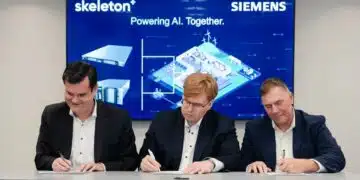

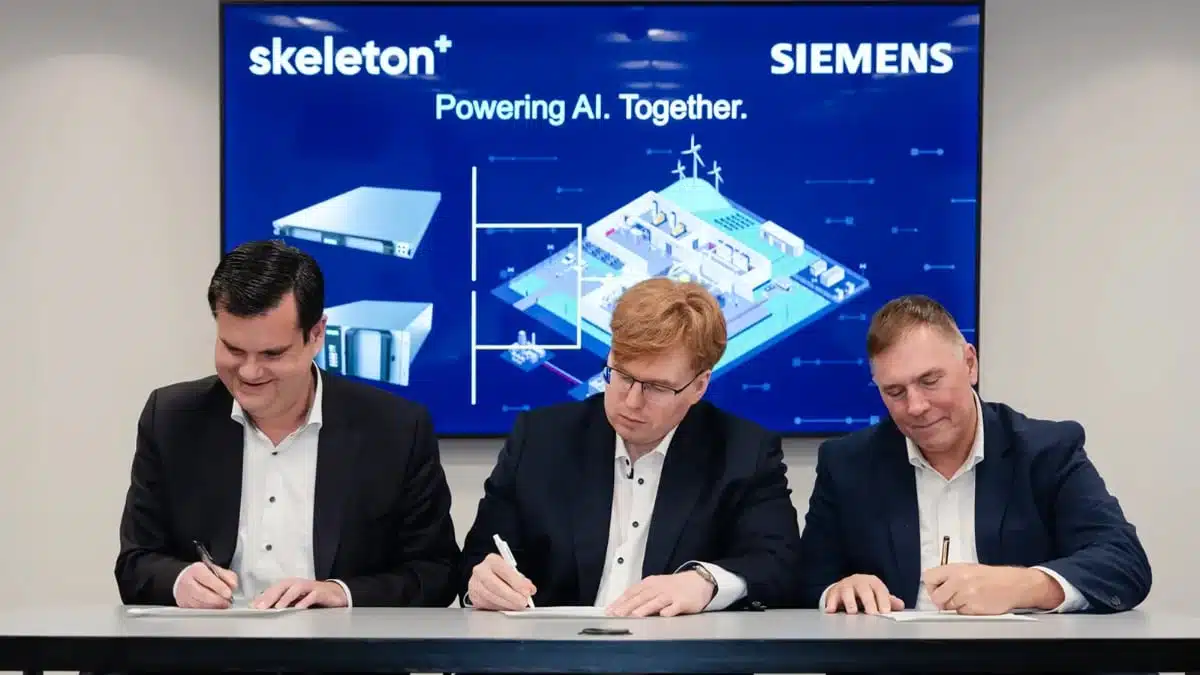
Skeleton Technologies has announced a Siemens-led strategic investment round that values the company at more than $1 billion and supports the expansion of its US manufacturing and Silicon Valley R&D activities.
Announced on October 14, 2026, the investment targets growing demand for high-power systems that manage rapid load fluctuations in AI data centers.
Skeleton also plans to invest more than $200 million in operational scale-up and R&D in Silicon Valley, working directly with hyperscale data-center operators. Its US expansion includes planned domestic cell manufacturing, with the objective of building an integrated supply chain from energy-storage cells to complete power systems.
Investment Targets US Manufacturing and Customer Proximity
Skeleton CEO Taavi Madiberk described the financing as a nine-digit investment round led by Siemens. The announcement does not disclose the exact amount raised or Siemens’ individual contribution. The planned investment of more than $200 million is presented as Skeleton’s operational and R&D expansion plan, rather than as the disclosed size of the financing round.
The expansion is intended to bring manufacturing and engineering closer to Skeleton’s major US AI infrastructure customers. Establishing domestic cell production would extend that presence beyond system integration to the underlying energy-storage components.
Why AI Data Centers Need Fast-Response Power Systems
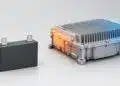
AI infrastructure presents a power-delivery challenge as well as an energy-supply challenge. GPU clusters can change operating states within milliseconds, producing rapid load swings that electrical infrastructure must accommodate. Skeleton’s approach combines energy-storage cells, power electronics and system-level controls to manage these fluctuations close to the workload.
Supercapacitors are relevant to this task because they can absorb and release energy rapidly. Their role is to provide a high-power buffer for short-duration demand changes, rather than simply maximize stored energy. This distinction helps explain their use alongside other elements of a data-center power architecture.
Skeleton bases its cells on its proprietary Curved Graphene material, which the company says supports fast power delivery, high efficiency and long cell life. The investment therefore supports both component manufacturing and the development of complete, controlled power systems.
Performance Claims Need a Defined System Boundary
Skeleton reports that its high-power systems can deliver up to 40% energy savings and double-digit improvements in GPU performance while managing rapid power fluctuations and addressing harmonics. These are manufacturer-stated system-level benefits, not standalone supercapacitor specifications.
The announcement does not provide the workload profiles, comparison baseline, measurement boundary or detailed test conditions behind those figures. For engineering evaluation, the distinction is important: a reduction in peak power demand, a reduction in electricity consumption and an increase in computing throughput are different metrics and should not be treated as interchangeable.
The central technical proposition is buffering: using fast-response energy storage and controlled power conversion to reduce the impact of rapidly changing GPU demand on the upstream electrical supply. The achievable benefit must be assessed for the specific installation rather than inferred directly from a headline percentage.
Siemens Partnership Extends from Factory Automation to AI Power
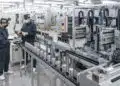
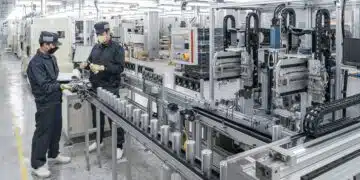
The investment builds on an existing relationship. Siemens supported Skeleton’s expansion in 2023, and Siemens Digital Industries designed and automated the company’s Leipzig SuperFactory in Germany.
The next phase combines Siemens’ electrical infrastructure capabilities with Skeleton’s fast-response power systems. The companies plan to develop and commercialize products for next-generation AI data centers, addressing power infrastructure from the grid connection to the rack.
“Skeleton’s portfolio perfectly complements Siemens’ comprehensive data center offering,” said Markus Grabmeier, President of Electrical Products at Siemens AG. He said the companies’ combined roadmap would be supported by manufacturing operations across Europe and the United States.
What the Announcement Means for the Component Supply Chain
For the passive-component industry, the announcement highlights the growing connection between supercapacitor cell technology, power-conversion hardware and application-level controls. Skeleton’s expansion strategy encompasses the complete chain rather than cell production alone.
However, the release remains an investment and expansion announcement, not a new component datasheet or factory commissioning notice. It does not specify the US cell-factory location, production capacity, commissioning schedule or electrical ratings for new products. Those details will be needed to assess future availability and design-in opportunities.
Further reading
- Supercapacitors Structure and How it Works
- Supercapacitor Degradation and Life-time
- Skeleton Releases Graphene‑Based UPS for AI Data Centers
Source
This article is based on Skeleton Technologies’ manufacturer press release dated October 14, 2026. Investment plans, technology descriptions and performance figures are attributed to the company; technical context distinguishes the announced expansion from product specifications and independently verified performance.