

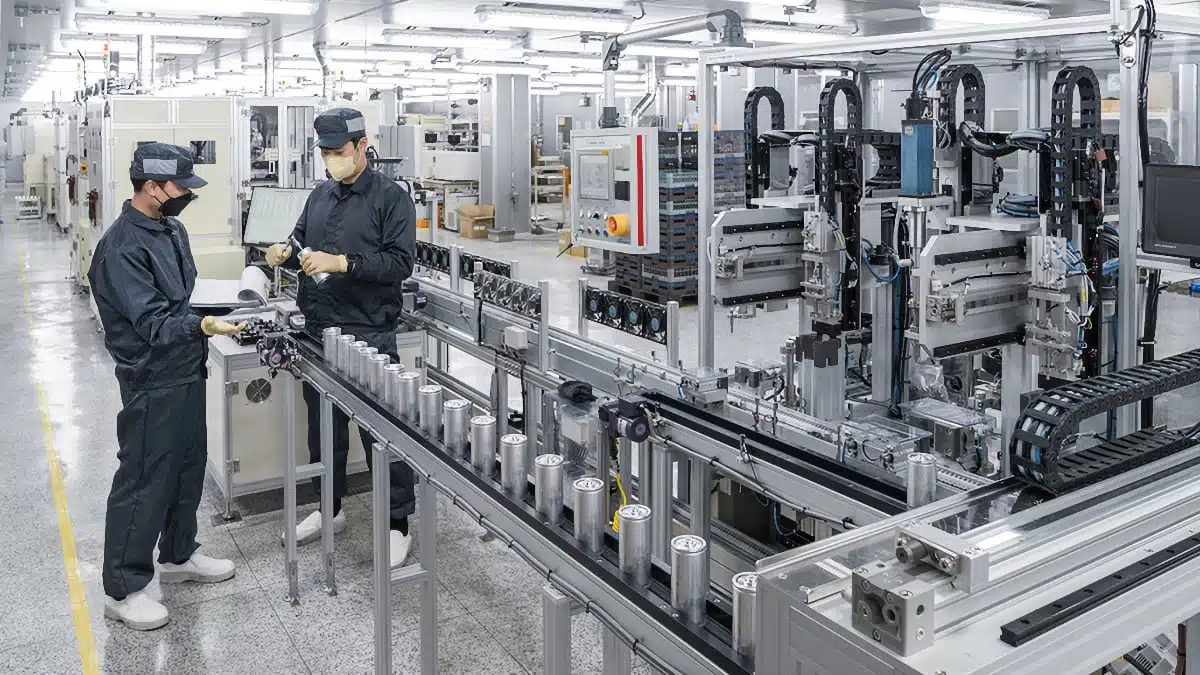
LS Materials has announced a $51.5 million order to supply supercapacitors for AI data center power systems to a U.S. hydrogen fuel-cell company.
The manufacturer describes the agreement as the largest export contract in South Korea’s supercapacitor industry, marking a significant expansion into AI power infrastructure.
Announced on October 13, 2026, the contract is valued at approximately KRW 69 billion. Deliveries are scheduled to begin in April 2027 and continue for approximately one year.
A Major Expansion into AI Power Infrastructure
The new order follows an initial agreement with the same customer in July 2026, worth approximately $4.7 million, or KRW 6.3 billion. Deliveries under that initial agreement are scheduled to start in November 2026.
The latest contract alone is approximately 2.4 times LS Materials’ 2025 standalone revenue of around KRW 29 billion. This comparison illustrates the scale of the order relative to the company’s existing business; it does not represent revenue already recognized or a forecast of annual sales.
LS Materials’ established ultracapacitor applications include wind turbines, automated guided vehicles and uninterruptible power supplies. The AI data center order extends that industrial energy-storage business into fuel-cell-based power infrastructure.
Contract Highlights
- Manufacturer: LS Materials.
- Application: ultracapacitors for AI data center fuel-cell power systems.
- Customer: a U.S. hydrogen fuel-cell company.
- New contract value: approximately $51.5 million, or KRW 69 billion.
- Delivery schedule: approximately one year, beginning in April 2027.
- Earlier order: approximately $4.7 million, signed in July 2026, with deliveries beginning in November 2026.
Why Supercapacitors Matter in Fuel-Cell Power Systems
Ultracapacitors, also known as supercapacitors, provide short-duration energy storage with high power capability and rapid charging and discharging. Their role differs from that of a fuel cell or a battery: they are particularly useful for buffering brief changes in power demand rather than supplying sustained energy over long periods.
In a fuel-cell-based power architecture, the fuel cell supplies the underlying energy, while an ultracapacitor bank can help accommodate transient demand. This separation of energy delivery and fast power response is relevant to AI data centers, where electrical loads can change rapidly.
Power Buffering Rather Than Long-Duration Backup
An ultracapacitor system can release stored energy during a short demand peak and recharge when conditions permit. This helps bridge the mismatch between an instantaneous load change and the response of the main power source.
The distinction is important: an ultracapacitor installation should not automatically be interpreted as a replacement for batteries, UPS equipment or other long-duration backup resources. Its value lies primarily in rapid power delivery, repeated cycling and short-duration support within the overall power-management architecture.
Engineering Considerations for System Integration
The commercial announcement establishes the application and supply scale, but it should not be treated as a product datasheet. Specifications for LS Materials’ general ultracapacitor portfolio do not, by themselves, identify the configuration supplied under this contract.
For engineers evaluating comparable systems, the key considerations include:
- Usable energy: the energy available across the permitted operating-voltage range, rather than capacitance alone.
- Internal resistance: its effect on voltage drop, peak-current capability and heat generation.
- Thermal management: cooling requirements under repetitive charge and discharge cycles.
- Cell-voltage control: balancing and protection when multiple cells are connected in series.
- Power-conversion integration: coordination between the storage bank, converter, fuel-cell source and load.
- Lifetime requirements: operating temperature, applied voltage and duty cycle, not simply a headline cycle-life figure.
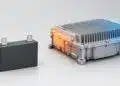
Supercapacitor module design and cell balancing are particularly relevant when moving from individual low-voltage cells to higher-voltage power systems.
LS Materials’ general product information highlights low internal resistance, individual-cell balancing and overvoltage protection, high-voltage module construction and heat-transfer design. These characteristics explain the technology’s suitability for high-power buffering, but contract-specific ratings require separate confirmation.
What the Order Means for the Passive Component Market
The agreement illustrates how ultracapacitors are expanding beyond established industrial applications into AI data center power infrastructure. In this application, the passive-component contribution is not sustained energy generation but fast, repeatable energy exchange that supports power-system stability.
For component suppliers and system designers, the significance lies in the combination of storage cells, module protection, thermal design and power electronics. The performance of the complete system depends on how these elements work together, not on capacitance or cycle life in isolation.
Further reading
- Supercapacitors Benefits in Power Back Up Applications
- Supercapacitors Structure and How it Works
- Recent Developments in Supercapacitors
Source
This article is based on LS Materials’ Korean-language announcement published on the official LS Cable & System website on October 13, 2026. The engineering discussion adds context from LS Materials’ ultracapacitor technology overview and Passive Components Blog explainers; it does not imply that a particular product series or electrical configuration has been confirmed for the order.