




Passive Components Blog
No Result
View All Result
  • Home
  • NewsFilter
    • All
    • Aerospace & Defence
    • Antenna
    • Applications
    • Automotive
    • Capacitors
    • Circuit Protection Devices
    • electro-mechanical news
    • Filters
    • Fuses
    • Inductors
    • Industrial
    • Integrated Passives
    • inter-connect news
    • Market & Supply Chain
    • Market Insights
    • Medical
    • Modelling and Simulation
    • New Materials & Supply
    • New Technologies
    • Non-linear Passives
    • Oscillators
    • Passive Sensors News
    • Resistors
    • RF & Microwave
    • Telecommunication
    • Weekly Digest

    Designing a Custom Core Transformer for 10 kW LLC Data Center Power Stages

    Magnetics Design in High‑Frequency GaN Converters

    ECIA Industry Pulse April 2026: Sentiment Cools but Stays Strong

    Industrial Passive Components Markets and Technologies 2026

    Automotive Passive Components Technology Dossier

    Samsung Electro-Mechanics Signs 1.5T KRW Silicon Capacitor AI Contract

    Murata Expands Thermistor Production Capacity at Yokaichi Plant

    Hirose Expands Compact High‑Voltage EV connectors

    Qi2 Wireless Charging: Inductors, Capacitors and EMC Filters

    Trending Tags

    • Ripple Current
    • RF
    • Leakage Current
    • Tantalum vs Ceramic
    • Snubber
    • Low ESR
    • Feedthrough
    • Derating
    • Dielectric Constant
    • New Products
    • Market Reports
  • VideoFilter
    • All
    • Antenna videos
    • Capacitor videos
    • Circuit Protection Video
    • Filter videos
    • Fuse videos
    • Inductor videos
    • Inter-Connect Video
    • Non-linear passives videos
    • Oscillator videos
    • Passive sensors videos
    • Resistor videos

    Magnetics Design in High‑Frequency GaN Converters

    Qi2 Wireless Charging: Inductors, Capacitors and EMC Filters

    Two‑capacitor paradox explained for engineers

    Capacitances of Nonlinear MLCCs: What Datasheets Don’t Tell You

    Tapped Inductor Buck Converter Fundamentals

    Planar vs Conventional Transformer: When it Make Sense

    Modeling Fringing Field Losses in Inductors & Transformers

    Why Power Inductors Use a Ferrite Core With an Air Gap

    Transformer-Based Power-Line Harvester Magnetic Design

    Trending Tags

    • Capacitors explained
    • Inductors explained
    • Resistors explained
    • Filters explained
    • Application Video Guidelines
    • EMC
    • New Products
    • Ripple Current
    • Simulation
    • Tantalum vs Ceramic
  • Knowledge Blog
  • DossiersNew
  • Suppliers
    • Who is Who
  • PCNS
    • PCNS 2025
    • PCNS 2023
    • PCNS 2021
    • PCNS 2019
    • PCNS 2017
  • Events
  • Home
  • NewsFilter
    • All
    • Aerospace & Defence
    • Antenna
    • Applications
    • Automotive
    • Capacitors
    • Circuit Protection Devices
    • electro-mechanical news
    • Filters
    • Fuses
    • Inductors
    • Industrial
    • Integrated Passives
    • inter-connect news
    • Market & Supply Chain
    • Market Insights
    • Medical
    • Modelling and Simulation
    • New Materials & Supply
    • New Technologies
    • Non-linear Passives
    • Oscillators
    • Passive Sensors News
    • Resistors
    • RF & Microwave
    • Telecommunication
    • Weekly Digest

    Designing a Custom Core Transformer for 10 kW LLC Data Center Power Stages

    Magnetics Design in High‑Frequency GaN Converters

    ECIA Industry Pulse April 2026: Sentiment Cools but Stays Strong

    Industrial Passive Components Markets and Technologies 2026

    Automotive Passive Components Technology Dossier

    Samsung Electro-Mechanics Signs 1.5T KRW Silicon Capacitor AI Contract

    Murata Expands Thermistor Production Capacity at Yokaichi Plant

    Hirose Expands Compact High‑Voltage EV connectors

    Qi2 Wireless Charging: Inductors, Capacitors and EMC Filters

    Trending Tags

    • Ripple Current
    • RF
    • Leakage Current
    • Tantalum vs Ceramic
    • Snubber
    • Low ESR
    • Feedthrough
    • Derating
    • Dielectric Constant
    • New Products
    • Market Reports
  • VideoFilter
    • All
    • Antenna videos
    • Capacitor videos
    • Circuit Protection Video
    • Filter videos
    • Fuse videos
    • Inductor videos
    • Inter-Connect Video
    • Non-linear passives videos
    • Oscillator videos
    • Passive sensors videos
    • Resistor videos

    Magnetics Design in High‑Frequency GaN Converters

    Qi2 Wireless Charging: Inductors, Capacitors and EMC Filters

    Two‑capacitor paradox explained for engineers

    Capacitances of Nonlinear MLCCs: What Datasheets Don’t Tell You

    Tapped Inductor Buck Converter Fundamentals

    Planar vs Conventional Transformer: When it Make Sense

    Modeling Fringing Field Losses in Inductors & Transformers

    Why Power Inductors Use a Ferrite Core With an Air Gap

    Transformer-Based Power-Line Harvester Magnetic Design

    Trending Tags

    • Capacitors explained
    • Inductors explained
    • Resistors explained
    • Filters explained
    • Application Video Guidelines
    • EMC
    • New Products
    • Ripple Current
    • Simulation
    • Tantalum vs Ceramic
  • Knowledge Blog
  • DossiersNew
  • Suppliers
    • Who is Who
  • PCNS
    • PCNS 2025
    • PCNS 2023
    • PCNS 2021
    • PCNS 2019
    • PCNS 2017
  • Events
No Result
View All Result
Passive Components Blog
No Result
View All Result

KYOCERA AVX Extends Automotive MLCCs

16.7.2024
Reading Time: 3 mins read
A A

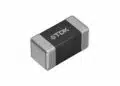
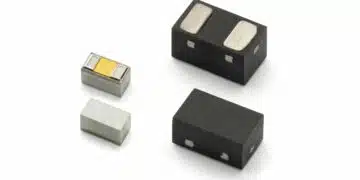
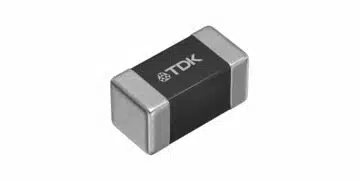
KYOCERA AVX, a leading global manufacturer of advanced electronic components engineered to accelerate technological innovation and build a better future, has expanded its line of KAM Series automotive MLCC ceramic capacitors with the addition of 20 new components.

Manufactured using miniaturization and high-capacity atomization technologies developed for smartphones and materials proven to maintain high-reliability performance in automotive environments, KAM Series automotive MLCCs are available in an extensive range of case sizes, capacitance values, and voltage ratings optimized for use in small, densely packed automotive circuits with fast processing speeds.

RelatedPosts

KYOCERA 10 µF 0201 MLCC Brings High‑Capacitance into Mobile Designs

KYOCERA AVX Extends MLV Varistors for 48V Automotive Protection

Kyocera Developed Multilayer Ceramic Core Substrate for AI Packages

These compact and lightweight surface-mount components minimize board space requirements and deliver capacitance values high enough to reduce capacitor component counts, both of which are essential to helping automotive engineers overcome some of the many challenges posed by evolving electric vehicle (EV), advanced driver assistance system (ADAS) and automated driving system (ADS) designs.

KAM Series automotive MLCCs are designed, manufactured, and tested to ensure that they meet the high quality and reliability standards of automotive industry applications. They are compliant with the AEC-Q200 Stress Test Qualification for Passive Components standard, manufactured in IATF, QS9000, and VDA 6.4-approved facilities, and continuously tested in quality assurance (QA) laboratories to ensure superior quality and performance. QA methods include 100% visual inspection, increased sampling for accelerated wave soldering, and lot-by-lot reliability testing. All KAM Series automotive MLCCs are also RoHS compliant and designed to be operated below the rated voltage.

The latest expansion of the KAM Series automotive MLCCs includes 20 new components. The new releases are available in four case sizes (0201, 0402, 0603, and 0805) with thicknesses extending from 0.33mm to 1.45mm, nickel/tin terminations, two dielectrics (X7R and X7T), four voltage ratings (4, 6.3, 10, and 16V), capacitance values extending from 0.1–22µF (±10%), and 7” reels loaded with paper or embossed plastic tape.

Ideal applications for the new KAM Series automotive MLCCs include electric vehicle (EV), automated driver assistance system (ADAS), and automated driving system (ADS) engine control units (ECUs), powertrains, central gateway (CGW) communication nodes, cluster heads-up displays (HUDs), door control units (DCUs), cameras, radar, LiDAR, memory, CPU/MPU decoupling, and other low-voltage safety systems with space constraints and high capacitance demands. They are also well suited for use in high-reliability applications outside of the automotive industry.

With this latest extension, the KAM Series automotive MLCCs is now available with nine case sizes (0201, 0402, 0603, 0805, 1206, 1210, 1808, 1812, and 2220), two termination styles (nickel/tin and FLEXITERM), six dielectrics (C0G/NP0, X7R, X7T, X8R, X8L, and X8G), 16 voltages extending from 4V to 3,000V, capacitance values extending from 0.5pF to 22µF, eight capacitance tolerances spanning¬ ±0.1pF to ±20%, and 7” and 13” reels loaded with paper or embossed plastic tape.

As such, KAM Series MLCCs are also well suited for use in hybrid automotive battery control, inverter, converter, motor control, and water pump applications; on-engine automotive applications; hybrid electric commercial applications, including emergency circuits, sensors, and temperature regulation devices; oil exploration applications; and other applications with a 150°C operating requirement.

“KYOCERA AVX has been a trusted supplier of automotive MLCCs for several decades and is very proud to introduce the new small-case-size, high-capacitance-value, wide-voltage-range, and AEC-Q200-qualified KAM Series automotive MLCCs to market,” said Kensuke Ikeda, Senior Manager – MLCC Development, KYOCERA Corporation.

“The number of MLCCs mounted in circuits related to EV, ADAS, and autonomous driving systems is steadily increasing, accelerating market demand for miniature components, and the voltage ratings of the ICs employed in these systems is decreasing, driving new demand for low-voltage MLCCs. Our evolving line of KAM Series capacitors satisfy these market demands. For example, when 5VDC is applied to our 0805 X7R dielectric MLCC rated for 10V and 10µF, it maintains 86.3% of its capacitance due to excellent DC bias characteristics. In addition, KAM Series MLCCs are precision engineered, manufactured, and tested to provide optimal solutions for EV, AD, and ADAS circuits and will continue to satisfy evolving automotive market demands with future series extensions.”


Related

Source: KYOCERA AVX

Recent Posts

Industrial Passive Components Markets and Technologies 2026

21.5.2026
66

Automotive Passive Components Technology Dossier

21.5.2026
49

Samsung Electro-Mechanics Signs 1.5T KRW Silicon Capacitor AI Contract

21.5.2026
43

Hirose Expands Compact High‑Voltage EV connectors

21.5.2026
9

Qi2 Wireless Charging: Inductors, Capacitors and EMC Filters

21.5.2026
23

Samsung Introduced Low ESL 3-Terminal Reverse-Geometry MLCCs for High-Performance ADAS

20.5.2026
47

Würth Elektronik Presents New Bidirectional Digital Isolators

20.5.2026
28

Using Stress–Strain Curves to Diagnose Tantalum Powders for Capacitors

20.5.2026
27

Samsung Launches Ultra-Compact 008004 High Q MLCC for Next-Generation RF Applications

20.5.2026
31

Upcoming Events

Jun 2
16:00 - 17:00 CEST

Calculation, Simulation and Measurement of 800V EMC Filters

Jun 16
16:00 - 17:00 CEST

EMC with EMC – EMC‑compliant design with electromechanical connectors

View Calendar

Popular Posts

  • Buck Converter Design and Calculation

    0 shares
    Share 0 Tweet 0
  • Boost Converter Design and Calculation

    0 shares
    Share 0 Tweet 0
  • Flyback Converter Design and Calculation

    0 shares
    Share 0 Tweet 0
  • LLC Resonant Converter Design and Calculation

    0 shares
    Share 0 Tweet 0
  • MLCC and Ceramic Capacitors

    0 shares
    Share 0 Tweet 0
  • What Electronics Engineer Needs to Know About Passive Low Pass Filters

    0 shares
    Share 0 Tweet 0
  • Capacitor Charging and Discharging

    0 shares
    Share 0 Tweet 0
  • Dual Active Bridge (DAB) Topology

    0 shares
    Share 0 Tweet 0
  • Ripple Current and its Effects on the Performance of Capacitors

    3 shares
    Share 3 Tweet 0
  • Samsung Electro-Mechanics Releases High-Capacitance MLCCs for AI Server Applications

    0 shares
    Share 0 Tweet 0

Newsletter Subscription


Passive Components Blog

© EPCI - Leading Passive Components Educational and Information Site

  • Home
  • Privacy Policy
  • EPCI Membership & Advertisement
  • About

No Result
View All Result
  • Home
  • Knowledge Blog
  • Dossiers
  • PCNS

© EPCI - Leading Passive Components Educational and Information Site

This website uses cookies. By continuing to use this website you are giving consent to cookies being used. Visit our Privacy and Cookie Policy.
Go to mobile version