










Passive Components Blog
No Result
View All Result
  • Home
  • NewsFilter
    • All
    • Aerospace & Defence
    • Antenna
    • Applications
    • Automotive
    • Capacitors
    • Circuit Protection Devices
    • electro-mechanical news
    • Filters
    • Fuses
    • Inductors
    • Industrial
    • Integrated Passives
    • inter-connect news
    • Market & Supply Chain
    • Market Insights
    • Medical
    • Modelling and Simulation
    • New Materials & Supply
    • New Technologies
    • Non-linear Passives
    • Oscillators
    • Passive Sensors News
    • Resistors
    • RF & Microwave
    • Telecommunication
    • Weekly Digest

    VINATech Targets AI Data Center Supercapacitor Boom

    Littelfuse NANO2 415 SMD Fuse Wins 2025 Product of the Year

    TDK Introduces 350V Safety Film Capacitors for Compact EMI Suppression

    Molex Extends Cardinal Multi‑Port Coax Assemblies to 145 GHz for AI and 6G Test

    Samsung Launches Worlds First Automotive 47uF 4V MLCC in 0805 Size

    Würth Elektronik Present in IEEE APEC

    Samsung Three Pillars MLCC Strategy for AI Hardware Topology

    Bourns Releases High Clearance Transformer for Isolated DC/DC Supplies

    KYOCERA AVX Extends Ultra‑Broadband RF Capacitor Series

    Trending Tags

    • Ripple Current
    • RF
    • Leakage Current
    • Tantalum vs Ceramic
    • Snubber
    • Low ESR
    • Feedthrough
    • Derating
    • Dielectric Constant
    • New Products
    • Market Reports
  • VideoFilter
    • All
    • Antenna videos
    • Capacitor videos
    • Circuit Protection Video
    • Filter videos
    • Fuse videos
    • Inductor videos
    • Inter-Connect Video
    • Non-linear passives videos
    • Oscillator videos
    • Passive sensors videos
    • Resistor videos

    2026 Power Magnetics Design Trends: Flyback, DAB and Planar

    Enabling Software‑Defined Vehicle Architectures: Automotive Ethernet and Zonal Smart Power

    Calculating Resistance Value of a Flyback RC Snubber 

    One‑Pulse Characterization of Nonlinear Power Inductors

    Thermistor Linearization Challenges

    Coaxial Connectors and How to Connect with PCB

    PCB Manufacturing, Test Methods, Quality and Reliability

    Transformer Behavior – Current Transfer and Hidden Feedback

    Choosing the Right Capacitor: The Importance of Accurate Measurements

    Trending Tags

    • Capacitors explained
    • Inductors explained
    • Resistors explained
    • Filters explained
    • Application Video Guidelines
    • EMC
    • New Products
    • Ripple Current
    • Simulation
    • Tantalum vs Ceramic
  • Knowledge Blog
  • DossiersNew
  • Suppliers
    • Who is Who
  • PCNS
    • PCNS 2025
    • PCNS 2023
    • PCNS 2021
    • PCNS 2019
    • PCNS 2017
  • Events
  • Home
  • NewsFilter
    • All
    • Aerospace & Defence
    • Antenna
    • Applications
    • Automotive
    • Capacitors
    • Circuit Protection Devices
    • electro-mechanical news
    • Filters
    • Fuses
    • Inductors
    • Industrial
    • Integrated Passives
    • inter-connect news
    • Market & Supply Chain
    • Market Insights
    • Medical
    • Modelling and Simulation
    • New Materials & Supply
    • New Technologies
    • Non-linear Passives
    • Oscillators
    • Passive Sensors News
    • Resistors
    • RF & Microwave
    • Telecommunication
    • Weekly Digest

    VINATech Targets AI Data Center Supercapacitor Boom

    Littelfuse NANO2 415 SMD Fuse Wins 2025 Product of the Year

    TDK Introduces 350V Safety Film Capacitors for Compact EMI Suppression

    Molex Extends Cardinal Multi‑Port Coax Assemblies to 145 GHz for AI and 6G Test

    Samsung Launches Worlds First Automotive 47uF 4V MLCC in 0805 Size

    Würth Elektronik Present in IEEE APEC

    Samsung Three Pillars MLCC Strategy for AI Hardware Topology

    Bourns Releases High Clearance Transformer for Isolated DC/DC Supplies

    KYOCERA AVX Extends Ultra‑Broadband RF Capacitor Series

    Trending Tags

    • Ripple Current
    • RF
    • Leakage Current
    • Tantalum vs Ceramic
    • Snubber
    • Low ESR
    • Feedthrough
    • Derating
    • Dielectric Constant
    • New Products
    • Market Reports
  • VideoFilter
    • All
    • Antenna videos
    • Capacitor videos
    • Circuit Protection Video
    • Filter videos
    • Fuse videos
    • Inductor videos
    • Inter-Connect Video
    • Non-linear passives videos
    • Oscillator videos
    • Passive sensors videos
    • Resistor videos

    2026 Power Magnetics Design Trends: Flyback, DAB and Planar

    Enabling Software‑Defined Vehicle Architectures: Automotive Ethernet and Zonal Smart Power

    Calculating Resistance Value of a Flyback RC Snubber 

    One‑Pulse Characterization of Nonlinear Power Inductors

    Thermistor Linearization Challenges

    Coaxial Connectors and How to Connect with PCB

    PCB Manufacturing, Test Methods, Quality and Reliability

    Transformer Behavior – Current Transfer and Hidden Feedback

    Choosing the Right Capacitor: The Importance of Accurate Measurements

    Trending Tags

    • Capacitors explained
    • Inductors explained
    • Resistors explained
    • Filters explained
    • Application Video Guidelines
    • EMC
    • New Products
    • Ripple Current
    • Simulation
    • Tantalum vs Ceramic
  • Knowledge Blog
  • DossiersNew
  • Suppliers
    • Who is Who
  • PCNS
    • PCNS 2025
    • PCNS 2023
    • PCNS 2021
    • PCNS 2019
    • PCNS 2017
  • Events
No Result
View All Result
Passive Components Blog
No Result
View All Result

KYOCERA AVX Extends High-Temp Max-Cap Wet Tantalum Capacitors

14.12.2023
Reading Time: 2 mins read
A A

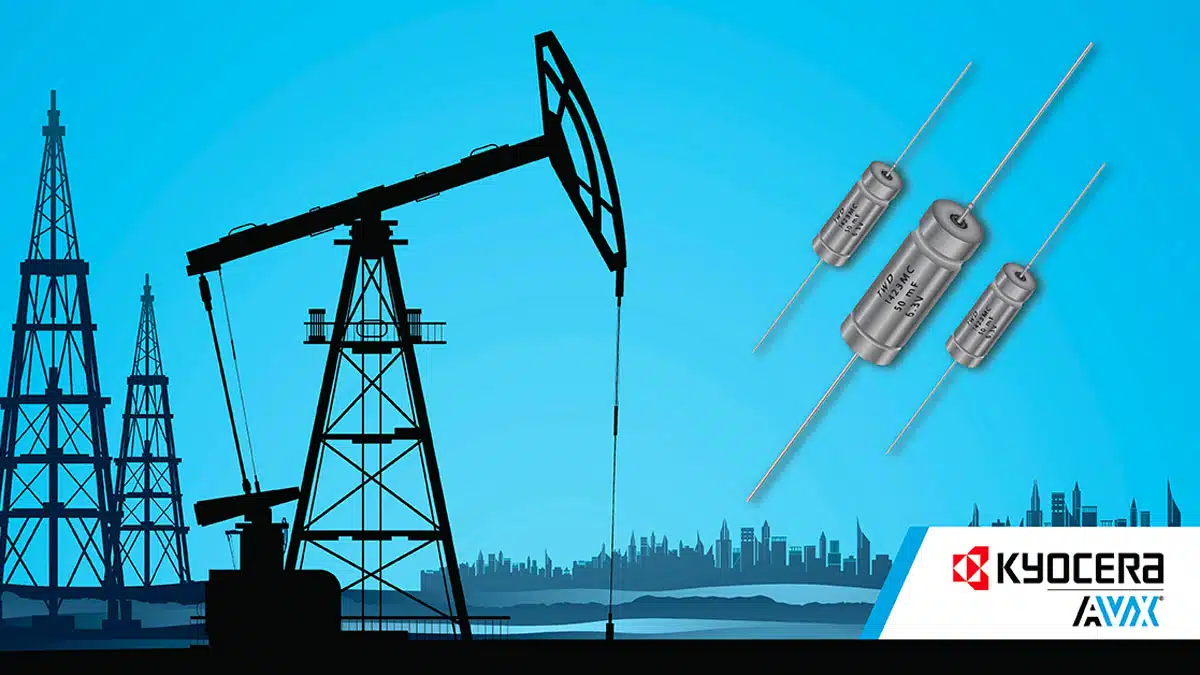
KYOCERA AVX, a leading global manufacturer of advanced electronic components engineered to accelerate technological innovation and build a better future, added a new 100mF/3V rating to its TWD High-Temp Max-Cap (HTMC) Series hermetically sealed and axial leaded DLA T4-size wet tantalum capacitors.

Initially released to market in 2016 with only two ratings (25mF/10V and 50mF/6.3V), the TWD HTMC Series delivers extremely high capacitance values, comparable to those of supercapacitors, as well as stable, high-reliability long-lifetime performance in industrial, oil & gas, defense, and avionics applications exposed to environmental hazards including mechanical shock, high-frequency vibration, and operating temperatures up to 175°C.

RelatedPosts

KYOCERA AVX Extends Ultra‑Broadband RF Capacitor Series

Kyocera Offers Small SAW Filters for IoT RF Modules

Miniaturization of MLCCs and Electrolytics, KAVX Tech Chat

TWD HTMC Series capacitors are manufactured using high-purity tantalum powders and KYOCERA AVX’s well-established wet tantalum design, which features a hermetically sealed welded tantalum can with a unique cathode system that enables extraordinary CV/cc performance and an optional insulation sleeve.

They exhibit rugged resistance to shock and vibration per MIL-PRF-39006, stable electrical parameters over the full range of operating temperatures extending from -55°C to +175°C, and outstanding reliability, offering extended lifetimes of up to 10,000 hours at +105°C and rated voltage and up to 2,000 hours at +175°C and rated voltage.

Ideal applications for the series include DC hold-up and low-frequency pulse circuits in specialized industrial, avionics, defense, and oil & gas applications that require high-reliability high-capacitance performance at high temperatures, such as downhole drilling equipment.

“We are very pleased to expand on our field-proven TWD HTMC Series hermetically sealed and axial leaded wet tantalum capacitors,” said Allen Mayar, Global Product Manager at KYOCERA AVX. “These capacitors are produced and qualified at our highly accredited facility in Lanskroun, Czech Republic, and deliver high-reliability long-lifetime performance and extremely high capacitance, comparable to that of supercapacitors, in harsh-environment applications with operating temperatures up to 175°C.”

TWD HTMC Series capacitors are currently available in three ratings — 25mF/10V, 50mF/6.3V, and 100mF/3V with ±10% and ±20% capacitance tolerance — and in standard DLA T4 cases with an optional insulating sleeve and one of two termination finishes: Sn/Pb (60/40) or RoHS-compliant and lead-free compatible pure matte tin. They are shipped in tray packs and suitable for automatic mounting and soldering. Current lead-time for the series is 10–14 weeks.


Related

Source: KYOCERA AVX

Recent Posts

VINATech Targets AI Data Center Supercapacitor Boom

26.2.2026
17

Littelfuse NANO2 415 SMD Fuse Wins 2025 Product of the Year

26.2.2026
8

TDK Introduces 350V Safety Film Capacitors for Compact EMI Suppression

26.2.2026
11

Samsung Launches Worlds First Automotive 47uF 4V MLCC in 0805 Size

24.2.2026
22

Würth Elektronik Present in IEEE APEC

24.2.2026
16

Samsung Three Pillars MLCC Strategy for AI Hardware Topology

24.2.2026
48

Bourns Releases High Clearance Transformer for Isolated DC/DC Supplies

24.2.2026
15

KYOCERA AVX Extends Ultra‑Broadband RF Capacitor Series

24.2.2026
23

Kyocera Offers Small SAW Filters for IoT RF Modules

23.2.2026
15

Upcoming Events

Mar 3
16:00 - 17:00 CET

Cybersecurity at the Eleventh Hour – from RED to CRA – Information and Discussion

Mar 21
All day

PSMA Capacitor Workshop 2026

Apr 21
16:00 - 17:00 CEST

Heatsink Solutions: Thermal Management in electronic devices

View Calendar

Popular Posts

  • Buck Converter Design and Calculation

    0 shares
    Share 0 Tweet 0
  • Boost Converter Design and Calculation

    0 shares
    Share 0 Tweet 0
  • Flyback Converter Design and Calculation

    0 shares
    Share 0 Tweet 0
  • LLC Resonant Converter Design and Calculation

    0 shares
    Share 0 Tweet 0
  • MLCC Manufacturers Consider Price Increase as AI Demand Outpaces Supply

    0 shares
    Share 0 Tweet 0
  • Dual Active Bridge (DAB) Topology

    0 shares
    Share 0 Tweet 0
  • Ripple Current and its Effects on the Performance of Capacitors

    3 shares
    Share 3 Tweet 0
  • What is a Dielectric Constant and DF of Plastic Materials?

    4 shares
    Share 4 Tweet 0
  • MLCC and Ceramic Capacitors

    0 shares
    Share 0 Tweet 0
  • MLCC Case Sizes Standards Explained

    0 shares
    Share 0 Tweet 0

Newsletter Subscription


Passive Components Blog

© EPCI - Leading Passive Components Educational and Information Site

  • Home
  • Privacy Policy
  • EPCI Membership & Advertisement
  • About

No Result
View All Result
  • Home
  • Knowledge Blog
  • PCNS

© EPCI - Leading Passive Components Educational and Information Site

This website uses cookies. By continuing to use this website you are giving consent to cookies being used. Visit our Privacy and Cookie Policy.
Go to mobile version