



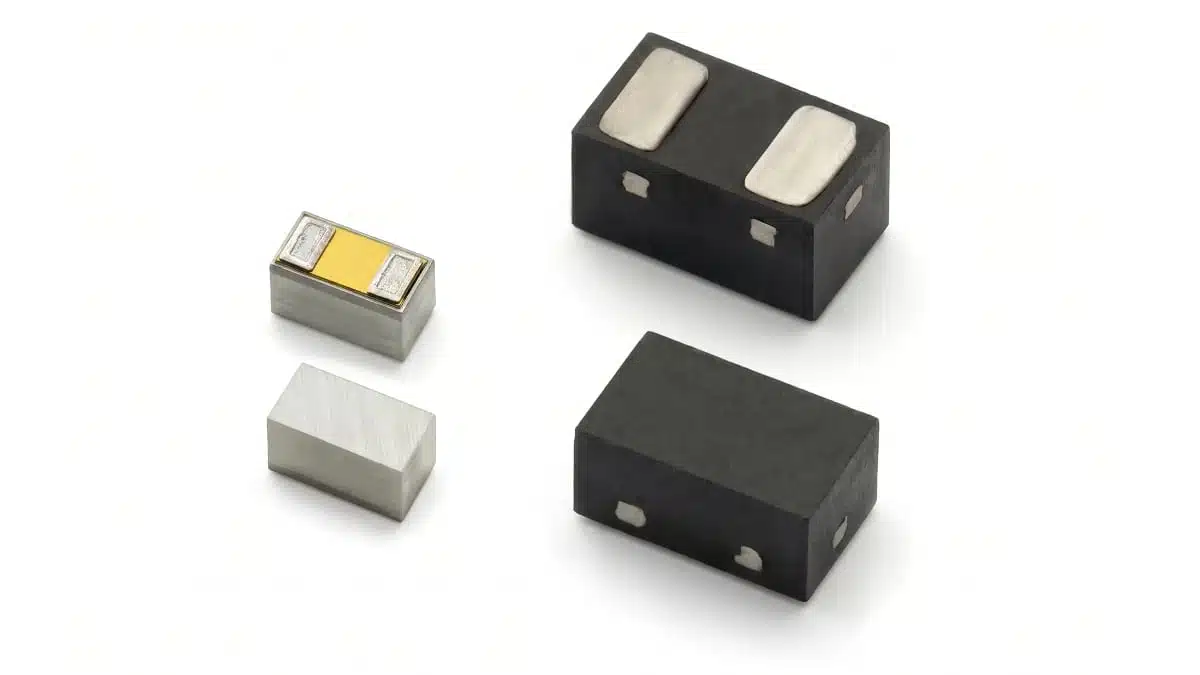
Littelfuse has announced AQ4315-01ETG and SP4315-01WTG bidirectional TVS diode arrays for electrostatic-discharge protection of automotive and consumer data interfaces.
The Littelfuse additions to its SPA diode portfolio address the selection trade-off between clamping voltage, capacitive loading and package size.
Technical highlights
The announcement identifies two devices and two package formats. No additional ordering variants or sub-families are named.
Both devices provide bidirectional TVS overvoltage protection.
Littelfuse positions the launch around combining low clamping voltage with low capacitance, rather than reducing either parameter in isolation.
| Device | Announced package | Market positioning |
|---|---|---|
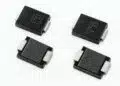
| AQ4315-01ETG | SOD-882 / DFN1006 | Automotive interfaces |
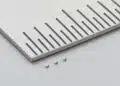
| SP4315-01WTG | 0201 WLCSP flip-chip | Consumer and computing |
Applications and selection
Littelfuse names automotive ADAS, DisplayPort, GMSL, GVIF, LVDS and automotive Ethernet as target applications for AQ4315-01ETG. Its consumer positioning for SP4315-01WTG includes Thunderbolt, USB, DisplayPort, LVDS and Ethernet. These are announced targets, not interface-compliance conclusions established by the source sweep.
An official USB-C protection presentation independently places SP4315-01WTG on the device-side USB4 and Thunderbolt data paths. It distinguishes this position from VBUS protection and CC/SBU protection, which use other components. This is an important circuit-level distinction: selecting a data-line ESD suppressor does not establish suitability for the connector’s power or configuration lines.
Selection should address the following parameters together:
- Working voltage and leakage at the full normal signal excursion.
- Clamping voltage at a specified pulse current and waveform.
- Capacitance under the published measurement conditions.
- ESD withstand levels and the associated test configuration.
- Package geometry, land pattern and assembly requirements.
- Temperature limits and application-specific qualification evidence.
Low capacitance addresses channel loading; clamping voltage addresses transient stress at the protected input. Neither alone establishes that the assembled interface will meet its signal-integrity and immunity requirements.
Design-in checks
- Obtain both current datasheets before fixing the schematic. Confirm the working-voltage limits, leakage conditions, capacitance limits and clamping test conditions rather than transferring headline figures from the announcement.
- Check the protected transceiver’s transient tolerance against the complete protection path. Device clamping performance does not replace system-level validation.
- Validate signal integrity with the selected package and final PCB routing. Include the protection device and its connections in the channel assessment.
- Confirm the manufacturer’s outline drawing, recommended land pattern and soldering requirements before layout release. The package names alone are insufficient to define a production footprint.
- Request the relevant automotive qualification and PPAP documentation for AQ4315-01ETG where required. Detailed qualification reports were not verified during this review.
- Ask Littelfuse for available simulation models, S-parameters, clamping curves and lifecycle notices. No device-specific files in these categories were successfully accessed; that does not establish that they are unavailable publicly.
- Confirm sampling and production dates with the supplier. The announcement’s FAQ schedules both for October 20, 2026, while its availability paragraph describes the devices as already available. Purchasing should resolve that inconsistency before committing a build.
Further reading
- Overvoltage Protection Selection Guidelines: TVS Diodes, MOVs, and ESD MOV Varistors
- ESD Protection by MLCC Ceramic Capacitors
Source
This article is based on the Littelfuse announcement and official product-selection and USB-C application documentation. The linked device datasheets could not be retrieved during preparation, so numerical specifications have been withheld pending verification. Engineers should consult the current manufacturer datasheets and supporting documentation for final qualification and design release.
References
- Littelfuse Unveils Ultra-Low Capacitance TVS Diode Arrays with Industry’s Lowest Clamping Voltage, October 6, 2026; announcement text accessed through search retrieval.
- Low & Ultra-Low Capacitance TVS Diode Arrays, official product finder and portfolio overview.
- USB-C Protection Solutions: Charger, Device, and Cable, revision REV1025; device-side data-line application positioning.