














Passive Components Blog
No Result
View All Result
  • Home
  • NewsFilter
    • All
    • Aerospace & Defence
    • Antenna
    • Applications
    • Automotive
    • Capacitors
    • Circuit Protection Devices
    • electro-mechanical news
    • Filters
    • Fuses
    • Inductors
    • Industrial
    • Integrated Passives
    • inter-connect news
    • Market & Supply Chain
    • Market Insights
    • Medical
    • Modelling and Simulation
    • New Materials & Supply
    • New Technologies
    • Non-linear Passives
    • Oscillators
    • Passive Sensors News
    • Resistors
    • RF & Microwave
    • Telecommunication
    • Weekly Digest

    SCHURTER Releases Intelligent Three‑Terminal Fuses for Safer Li‑ion Battery Systems

    Can Copper Conductive Inks Displace Silver in Hybrid Electronics?

    Square-Wave Harmonics and RMS Currents in Power Converters

    LeanBOM: Practical Cross‑Technology Capacitor Search by Real Working Conditions

    In the Age of AI, Every Watt Counts: Implications for Components

    Stackpole Extends Resistance Range of 2512 High‑Power Current Sense Resistors

    Wk 27 Electronics Supply Chain Digest

    Littelfuse Announced TVS Diodes for 48 V Automotive Systems

    Spectrum Controls Joins Modelithics Program to Offer High‑Fidelity RF Models for Resistors, Attenuators and Terminations

    Trending Tags

    • Ripple Current
    • RF
    • Leakage Current
    • Tantalum vs Ceramic
    • Snubber
    • Low ESR
    • Feedthrough
    • Derating
    • Dielectric Constant
    • New Products
    • Market Reports
  • VideoFilter
    • All
    • Antenna videos
    • Capacitor videos
    • Circuit Protection Video
    • Filter videos
    • Fuse videos
    • Inductor videos
    • Inter-Connect Video
    • Non-linear passives videos
    • Oscillator videos
    • Passive sensors videos
    • Resistor videos

    Ferrite versus Nanocrystalline Power Inductor Cores: Turns, Gap and Size

    KYOCERA AVX Presents Antenna Integrator Studio Tutorial for Antenna Placement and RF Design

    Power Design Simulation Tools for Faster Inductor Selection and Loss Optimization

    EMC‑Compliant PCB and Connector Design Guidelines

    Why Isolated DC/DC Power Supplies Fail Late, Würth Elektronik Podcast

    Designing 800 V DC EMC Filters: Calculation, Simulation and Measurement

    Current Sense Transformer Datasheet and Design‑in Guide

    Designing a USB Type‑C Flyback Planar Transformer with Frenetic’s Planar Tool

    Magnetics Design in High‑Frequency GaN Converters

    Trending Tags

    • Capacitors explained
    • Inductors explained
    • Resistors explained
    • Filters explained
    • Application Video Guidelines
    • EMC
    • New Products
    • Ripple Current
    • Simulation
    • Tantalum vs Ceramic
  • Knowledge Blog
  • Dossiers
    • AI Hardware Dossier
    • Power Converter Dossier
    • Automotive Dossier
    • Capacitor Dossier
    • Resistor Dossier
    • Inductor Dossier
    • Circuit Protection Dossier
  • Suppliers
    • Who is Who
  • PCNS
    • PCNS 2025
    • PCNS 2023
    • PCNS 2021
    • PCNS 2019
    • PCNS 2017
  • Events
  • Home
  • NewsFilter
    • All
    • Aerospace & Defence
    • Antenna
    • Applications
    • Automotive
    • Capacitors
    • Circuit Protection Devices
    • electro-mechanical news
    • Filters
    • Fuses
    • Inductors
    • Industrial
    • Integrated Passives
    • inter-connect news
    • Market & Supply Chain
    • Market Insights
    • Medical
    • Modelling and Simulation
    • New Materials & Supply
    • New Technologies
    • Non-linear Passives
    • Oscillators
    • Passive Sensors News
    • Resistors
    • RF & Microwave
    • Telecommunication
    • Weekly Digest

    SCHURTER Releases Intelligent Three‑Terminal Fuses for Safer Li‑ion Battery Systems

    Can Copper Conductive Inks Displace Silver in Hybrid Electronics?

    Square-Wave Harmonics and RMS Currents in Power Converters

    LeanBOM: Practical Cross‑Technology Capacitor Search by Real Working Conditions

    In the Age of AI, Every Watt Counts: Implications for Components

    Stackpole Extends Resistance Range of 2512 High‑Power Current Sense Resistors

    Wk 27 Electronics Supply Chain Digest

    Littelfuse Announced TVS Diodes for 48 V Automotive Systems

    Spectrum Controls Joins Modelithics Program to Offer High‑Fidelity RF Models for Resistors, Attenuators and Terminations

    Trending Tags

    • Ripple Current
    • RF
    • Leakage Current
    • Tantalum vs Ceramic
    • Snubber
    • Low ESR
    • Feedthrough
    • Derating
    • Dielectric Constant
    • New Products
    • Market Reports
  • VideoFilter
    • All
    • Antenna videos
    • Capacitor videos
    • Circuit Protection Video
    • Filter videos
    • Fuse videos
    • Inductor videos
    • Inter-Connect Video
    • Non-linear passives videos
    • Oscillator videos
    • Passive sensors videos
    • Resistor videos

    Ferrite versus Nanocrystalline Power Inductor Cores: Turns, Gap and Size

    KYOCERA AVX Presents Antenna Integrator Studio Tutorial for Antenna Placement and RF Design

    Power Design Simulation Tools for Faster Inductor Selection and Loss Optimization

    EMC‑Compliant PCB and Connector Design Guidelines

    Why Isolated DC/DC Power Supplies Fail Late, Würth Elektronik Podcast

    Designing 800 V DC EMC Filters: Calculation, Simulation and Measurement

    Current Sense Transformer Datasheet and Design‑in Guide

    Designing a USB Type‑C Flyback Planar Transformer with Frenetic’s Planar Tool

    Magnetics Design in High‑Frequency GaN Converters

    Trending Tags

    • Capacitors explained
    • Inductors explained
    • Resistors explained
    • Filters explained
    • Application Video Guidelines
    • EMC
    • New Products
    • Ripple Current
    • Simulation
    • Tantalum vs Ceramic
  • Knowledge Blog
  • Dossiers
    • AI Hardware Dossier
    • Power Converter Dossier
    • Automotive Dossier
    • Capacitor Dossier
    • Resistor Dossier
    • Inductor Dossier
    • Circuit Protection Dossier
  • Suppliers
    • Who is Who
  • PCNS
    • PCNS 2025
    • PCNS 2023
    • PCNS 2021
    • PCNS 2019
    • PCNS 2017
  • Events
No Result
View All Result
Passive Components Blog
No Result
View All Result

SCHURTER Releases Intelligent Three‑Terminal Fuses for Safer Li‑ion Battery Systems

14.7.2026
Reading Time: 6 mins read
A A

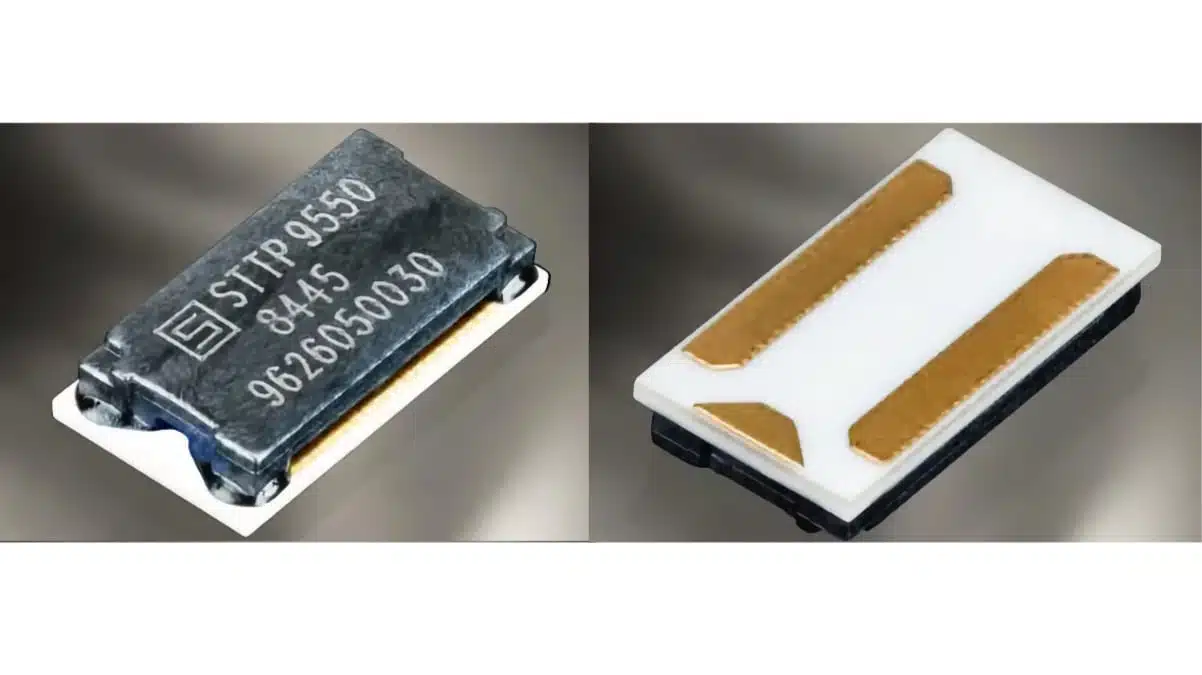
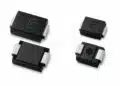
SCHURTER introduces STTP 9550 three‑terminal fuse is a compact protection device specifically designed for lithium‑ion battery packs, combining conventional overcurrent protection with an actively triggered overcharge protection function.

This architecture enables battery designers to implement redundant, intelligent safety concepts that go beyond what standard two‑terminal fuses or protection ICs alone can provide. For engineers working on multi‑cell battery packs in tools, mobility, and stationary storage, the SCHURTER STTP intelligent fuse family offers a ready‑made building block to meet modern safety and reliability requirements.

RelatedPosts

SCHURTER Introduces PPTC Resettable Overcurrent Protection for Compact Electronics

SCHURTER Buys Biaodi to Boost High-Voltage Protection Portfolio

SCHURTER Releases SMT Micro Switch for Compact HMIs

Key features and benefits

  • Combined passive and active protection
    The STTP 9550 integrates a conventional current‑dependent fuse function with a separate trigger terminal for actively initiated disconnection, enabling both self‑acting and controlled protection in one device.
  • Active overcharge protection capability
    The dedicated trigger terminal allows a battery management system (BMS) or safety controller to open the fuse deliberately in defined fault scenarios such as overcharge, over‑temperature, or detected component failure, rather than relying only on overcurrent thresholds.
  • Redundant safety path for protection IC/FET failure
    By providing an additional disconnection path independent of the main protection IC or FETs, the three‑terminal design addresses single‑point‑of‑failure concerns in high‑energy Li‑ion packs and supports safety‑critical architectures.
  • Gold‑plated terminals for stable performance
    Gold‑plated contacts help maintain low and stable contact resistance over life, improving efficiency and minimizing heat generation at the fuse interface, while also enhancing signal integrity when the device is used in monitored protection schemes.
  • Compact footprint for high power density packs
    The package is optimized for space‑constrained battery designs, supporting packs from approximately 1 up to 24 series cells according to manufacturer documentation, which is key for portable and e‑mobility applications.
  • Support for modern safety standards
    The STTP three‑terminal fuse concept is intended for use in redundant protection architectures as required by contemporary battery safety standards and UL approvals, helping design teams align with compliance and certification targets.

Typical applications

The STTP 9550 intelligent fuse has been designed with a broad range of Li‑ion battery‑based equipment in mind, where both energy content and safety requirements are increasing:

  • Stationary and residential energy storage systems (ESS) and backup battery cabinets
  • Uninterruptible power supplies (UPS) and industrial backup modules
  • Power tools and cordless professional equipment
  • E‑bikes and e‑scooters with multi‑cell battery packs
  • Automated guided vehicles (AGVs) and other battery‑powered logistics platforms
  • Compact battery modules for industrial and building automation

In these systems, the three‑terminal fuse can serve as the last line of defense against abnormal charge or discharge conditions while interacting closely with the BMS for intelligent fault handling. It fits particularly well in designs where high power density, tight packaging, and strict safety regulations converge.

Technical highlights

  • Three‑terminal architecture
    Two terminals act as the main current‑carrying path similar to a conventional fuse, while the third terminal is used to actively trigger disconnection under control of the BMS or protection circuitry.
  • Current‑dependent interruption
    The primary fuse element is designed to open when current exceeds a defined threshold for a specified time, protecting against short circuits and severe overcurrents according to manufacturer datasheet values.
  • Actively triggered opening
    When the trigger terminal is driven according to the recommended application circuit, the fuse can be opened independent of the instantaneous load current, enabling targeted interventions such as controlled pack shutdown.
  • Gold‑plated contact system
    The gold‑plated terminals contribute to low contact resistance and high corrosion resistance, which is important in environments with temperature cycling, humidity, or long service life expectations.
  • Cell count flexibility
    The STTP 9550 is specified for battery packs from single‑cell up to 24‑cell configurations according to manufacturer documentation, covering typical voltage ranges used in e‑mobility, tools, and small ESS modules.

Design engineers should consult the STTP datasheet for detailed electrical ratings, recommended operating conditions, and mechanical dimensions. Parameters such as rated current, breaking capacity, and time‑current characteristics must be aligned with the specific pack configuration and fault scenarios.

STTP 9550 application overview

Parameter / aspectDescription
Protection functionsOvercurrent fuse plus actively triggered disconnection
Battery chemistryLithium‑ion battery systems
Supported series cell countApproximately 1 to 24 cells (per manufacturer documentation)
Typical system categoriesESS, UPS, power tools, e‑bikes/e‑scooters, AGVs and mobile equipment

Design‑in notes for engineers

  • Define the protection concept early
    Decide how the three‑terminal fuse will interact with your BMS and other safety components, including which fault states should trigger active disconnection (for example overcharge, over‑temperature, or detected FET short).
  • Coordinate current ratings with pack design
    Select the fuse rating based on maximum continuous current, expected peak loads, and short‑circuit scenarios, ensuring that the time‑current characteristic matches the thermal and electrical limits of cells, busbars, and switching devices.
  • Implement robust trigger control
    The trigger terminal must be driven according to the manufacturer’s recommended circuit, with attention to isolation, noise immunity, and fail‑safe behavior so that unintended opening or failure to open is avoided.
  • Consider redundancy and diagnostics
    Use the three‑terminal fuse as part of a redundant protection chain, and where possible monitor its status via the BMS so that opened devices can be detected and handled at system level (for example locking out charging until service).
  • Plan thermal and mechanical layout
    Place the fuse in a location that minimizes hot spots and mechanical stress, while ensuring accessibility and clear routing of main and trigger connections in the pack layout.
  • Follow datasheet guidance for standards compliance
    Align your implementation with the application notes and standards references provided by SCHURTER, particularly when designing systems that must meet UL and other regulatory requirements.

Source

This article is based on information provided in SCHURTER’s official press release on intelligent fuse solutions for battery systems and the associated STTP product documentation, interpreted and structured for design engineers and component purchasers.

References

  1. SCHURTER press release – STTP: Intelligent Fuse Solutions for Battery Systems
  2. SCHURTER STTP 9550 datasheet
  3. SCHURTER global catalog overview

Related

Recent Posts

Stackpole Extends Resistance Range of 2512 High‑Power Current Sense Resistors

13.7.2026
13

Littelfuse Announced TVS Diodes for 48 V Automotive Systems

10.7.2026
22

Coilcraft Releases High-Current Ferrite Beads for CISPR 25 EMC compliance

8.7.2026
43

Vishay Unveils Multi-Turn Position Sensor for Harsh Industrial Environments

7.7.2026
31

YAGEO Introduces Automotive MOV Surge Protection Varistor

7.7.2026
30

TDK Releases Compact SMD Gate Drive Transformers for xEV

7.7.2026
45

Molex Unveils Automotive Ethernet Connectors for Next‑Gen SDV Architectures

2.7.2026
42

TAIYO YUDEN Introduced Hybrid Aluminum Capacitors for 48V Automotive Power Supplies

2.7.2026
76

YAGEO Announces July 2026 Capacitor Price Increase

1.7.2026
753

Upcoming Events

Jul 21
16:00 - 17:00 CEST

Safety by design: X and Y Interference suppression capacitors for power line filters

Jul 28
8:00 - 11:00 CEST

Post Procurement Testing of EEE Components for LEO Space Applications

Sep 29
16:00 - 17:00 CEST

Cybersecurity 2026

View Calendar

Popular Posts

  • Boost Converter Design and Calculation

    0 shares
    Share 0 Tweet 0
  • Buck Converter Design and Calculation

    0 shares
    Share 0 Tweet 0
  • Flyback Converter Design and Calculation

    0 shares
    Share 0 Tweet 0
  • LLC Resonant Converter Design and Calculation

    0 shares
    Share 0 Tweet 0
  • YAGEO Announces July 2026 Capacitor Price Increase

    0 shares
    Share 0 Tweet 0
  • MLCC and Ceramic Capacitors

    0 shares
    Share 0 Tweet 0
  • Earthing Systems and IEC Classification Explained

    0 shares
    Share 0 Tweet 0
  • Nvidia Vera Rubin: Why One AI Rack Needs So Many More MLCC Capacitors

    0 shares
    Share 0 Tweet 0
  • MLCCs in the Age of AI: Q2 2026 Market Tightness

    0 shares
    Share 0 Tweet 0
  • Dual Active Bridge (DAB) Topology

    0 shares
    Share 0 Tweet 0

Newsletter Subscription


Passive Components Blog

© EPCI - Leading Passive Components Educational and Information Site

  • Home
  • Privacy Policy
  • EPCI Membership & Advertisement
  • About

No Result
View All Result
  • Home
  • Knowledge Blog
  • Dossiers
  • PCNS

© EPCI - Leading Passive Components Educational and Information Site

This website uses cookies. By continuing to use this website you are giving consent to cookies being used. Visit our Privacy and Cookie Policy.
Go to mobile version