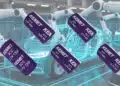




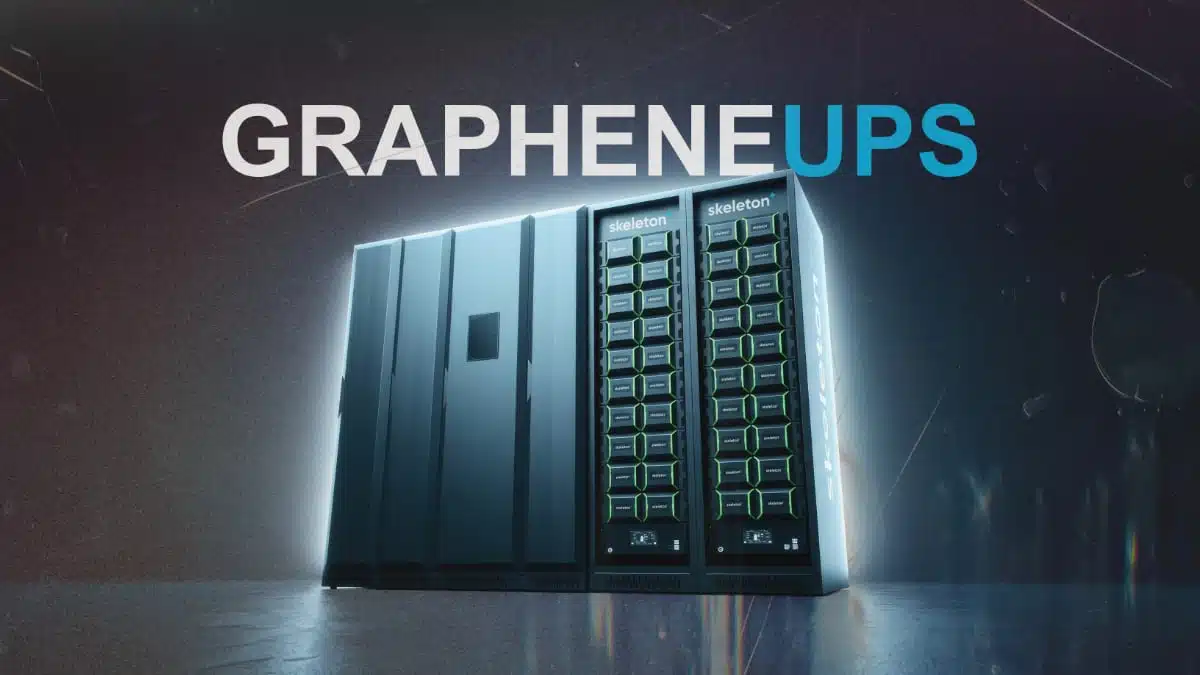
Skeleton Technologies has introduced GrapheneUPS, a high‑density double‑conversion UPS system aimed at AI data centers that need both continuous power protection and compliance with increasingly stringent grid connection codes.
The system combines load‑proximate backup with grid‑stabilizing functions and relies on Skeleton’s inherently safe, fast‑cycling energy storage technology, making it an instructive case study for engineers working with high‑power supercapacitor and SuperBattery‑class storage in modern UPS architectures.
Key features and benefits
- Double‑conversion architecture for clean power: GrapheneUPS continuously converts incoming AC power to DC and back to AC, isolating sensitive AI computing equipment from grid disturbances such as voltage dips, short interruptions, and fluctuations during grid restoration events.
- Active grid stabilization built in: In contrast to traditional UPS units that mainly protect downstream loads, GrapheneUPS is designed to actively stabilize the grid interface, helping data centers meet evolving grid connection and grid code requirements without separate stabilization equipment at the point of connection.
- Higher computing power with smaller grid connection: The system is specified to enable a 40% increase in computing power while requiring up to 44% less grid connection capacity, which is highly relevant where grid access is constrained or subject to strict connection limits.
- High power density and compact footprint: GrapheneUPS is described as delivering about 50% lower volume for the same performance compared to conventional systems, allowing deployment in white space, gray space, or as a containerized outdoor solution without consuming excessive floor area in the data hall.
- Safe supercapacitor‑based energy storage concept: The energy storage layer is based on Skeleton’s inherently safe approach, intended to mitigate key lithium‑ion risks such as thermal runaway, and is closely related to their supercapacitor and SuperBattery product families. For data center operators, this can simplify fire safety concepts and potentially reduce cooling and containment complexity compared to large lithium‑ion battery racks.
- Short‑duration backup, long life: The system is positioned as a short‑duration, high‑power backup and power smoothing layer, complementing site‑level battery energy storage systems optimized for longer‑duration campus reserve and energy shifting—an application where supercapacitors are particularly strong due to their high cycle life and power density.
Typical applications
GrapheneUPS is clearly targeted at high‑power computing and infrastructure rather than general IT or small commercial installations. Typical application areas include:
- AI and GPU‑heavy data centers that operate large, rapidly varying loads and need smooth power at the rack or row level.
- High‑performance computing (HPC) clusters where short‑duration disturbances and fast load transients must be absorbed locally without tripping upstream protection or violating grid codes.
- Data centers in locations with weak or volatile grids, where stricter grid connection requirements and frequent disturbances demand an integrated approach to UPS and grid support.
- Facilities deploying separate battery energy storage at the campus level but needing a load‑proximate, no‑break layer to protect critical IT loads and provide sub‑minute backup.
For engineers, the interesting point is the architectural split: a fast, supercapacitor‑enabled UPS close to the IT load, paired with a more energy‑oriented storage system at the medium‑voltage or campus level.
Technical highlights
While the press release does not list detailed electrical ratings, it provides several architectural and functional clues that are relevant for power‑electronics and passive‑component design.
- Double‑conversion UPS topology:
- Continuous AC‑DC‑AC conversion with no‑break transfer.
- Strong isolation of downstream IT loads from upstream grid transients.
- Requires robust DC link capacitors and EMI filtering on both AC and DC sides to manage switching noise and maintain low total harmonic distortion.
- AC‑connected sidecar configuration:
- GrapheneUPS connects to standard three‑phase low‑voltage AC distribution as a “sidecar” unit, then delivers stabilized DC power to the IT racks.
- This implies the presence of high‑power rectifiers, DC bus stages, and downstream DC distribution converters—all of which place significant demands on film capacitors, high‑ripple electrolytics, DC link capacitors, and EMI filter components.
- Support for multiple DC voltage levels:
- The system is aligned with evolving high‑voltage data center roadmaps and supports integration across multiple DC voltage levels, with readiness for future higher‑voltage standards.
- Higher DC distribution voltages reduce current for a given power level but raise insulation and creepage/clearance requirements, affecting capacitor dielectric selection, film thickness, and surge‑voltage margins.
- Short‑duration, high‑power storage:
- The storage layer is optimized for short‑duration backup and power smoothing rather than long‑duration energy shifting.
- This is a natural fit for supercapacitors and SuperBattery‑type devices, which provide high power, rapid charge/discharge capability, and very high cycle life, at the cost of lower energy density than lithium‑ion cells.
Architecture and component implications
From a passive‑components perspective, GrapheneUPS showcases several important trends.
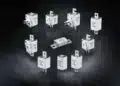
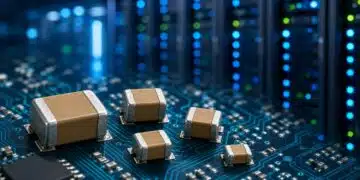
- Increased use of high‑power DC bus capacitors to stabilize DC rails feeding GPU racks, favoring low‑ESR, high‑ripple film capacitors or specialized electrolytics, combined with high‑frequency ceramic decoupling at the module level.
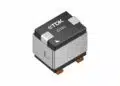
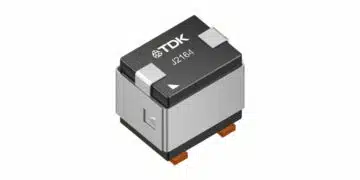
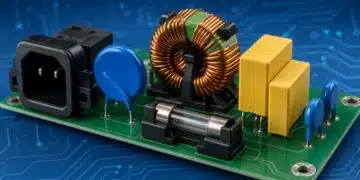
- Strong emphasis on EMI and harmonic control, requiring multi‑stage line filters with common‑mode chokes, X and Y capacitors, and appropriate surge suppression at the AC interface; double‑conversion systems must maintain good power quality to avoid penalizing the grid connection.
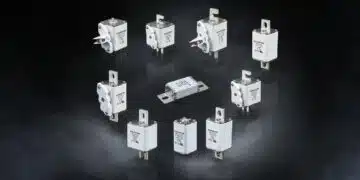
- A hybrid protection concept, where fast‑acting solid‑state control (inverters, converters) is paired with passive protection (MOVs, gas discharge tubes, coordinated fusing) to handle fault energy and short‑circuit events at high DC voltages.
Role of supercapacitors and SuperBattery in GrapheneUPS
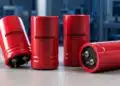
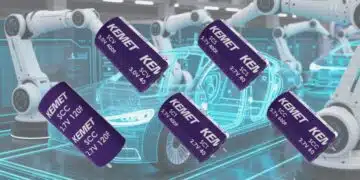
Skeleton’s broader portfolio and blog material emphasize supercapacitors and SuperBattery technology for short‑duration UPS and peak‑shaving applications, including a dedicated article on “SuperBattery‑based short‑duration UPS: Safe backup power for up to 15 minutes.” In the context of GrapheneUPS, supercapacitors play several key roles:
- High‑power energy buffer: Supercapacitors act as the primary buffer for rapid charge and discharge events, smoothing fast load steps from AI and GPU clusters and handling severe but short‑lived grid disturbances without significant degradation.
- Extreme cycle life: Unlike lithium‑ion storage that is typically limited in the number of deep cycles, supercapacitors can withstand hundreds of thousands to millions of high‑power cycles, making them ideal for frequent grid support events, ride‑through operations, and power‑ramp control.
- Fast response and recharge: The low internal resistance and capacitive behavior of supercapacitors allow almost instantaneous response to voltage dips and rapid recharging once the disturbance is over, which is particularly useful when the same hardware must support multiple events per day.
- Safety‑driven design: Supercapacitors and SuperBattery cells are engineered for intrinsically safer failure modes compared with conventional lithium‑ion modules, supporting Skeleton’s focus on mitigating thermal‑runaway risk in a high‑power UPS environment.
For data center power architects, this means that GrapheneUPS leverages supercapacitor behaviour where it matters most: at the intersection of grid support, short‑duration backup, and protection of highly dynamic AI workloads.
Technical highlights table
| Aspect | Description |
|---|---|
| UPS topology | Double‑conversion (continuous AC‑DC‑AC), no‑break operation |
| Target environment | AI data centers, GPU clusters, high‑performance computing |
| Installation options | White space, gray space, or containerized outdoor deployment |
| Power density | Approx. 50% lower volume for same performance compared to conventional systems |
| Grid interaction | Active grid stabilization, supports compliant grid connection without additional stabilization equipment |
| Storage type (conceptual) | Inherently safe, short‑duration energy storage based on supercapacitors and related technologies, optimized for high power and cycle life |
| DC distribution | Stabilized DC output to racks, supports multiple DC voltage levels and future higher‑voltage DC standards |
| Role in site architecture | Load‑proximate, short‑duration backup layer complementing site‑level, longer‑duration battery energy storage |
Exact power ratings, DC voltages, and storage module specifications should be taken from the manufacturer datasheets and system documentation once available.
Source
This article is based on information from Skeleton Technologies’ official press release on GrapheneUPS and related materials on their website, combined with independent technical interpretation from the perspective of passive components, supercapacitors, and power‑electronics design.