










Passive Components Blog
No Result
View All Result
  • Home
  • NewsFilter
    • All
    • Aerospace & Defence
    • Antenna
    • Applications
    • Automotive
    • Capacitors
    • Circuit Protection Devices
    • electro-mechanical news
    • Filters
    • Fuses
    • Inductors
    • Industrial
    • Integrated Passives
    • inter-connect news
    • Market & Supply Chain
    • Market Insights
    • Medical
    • Modelling and Simulation
    • New Materials & Supply
    • New Technologies
    • Non-linear Passives
    • Oscillators
    • Passive Sensors News
    • Resistors
    • RF & Microwave
    • Telecommunication
    • Weekly Digest

    Littelfuse NANO2 415 SMD Fuse Wins 2025 Product of the Year

    TDK Introduces 350V Safety Film Capacitors for Compact EMI Suppression

    Molex Extends Cardinal Multi‑Port Coax Assemblies to 145 GHz for AI and 6G Test

    Samsung Launches Worlds First Automotive 47uF 4V MLCC in 0805 Size

    Würth Elektronik Present in IEEE APEC

    Samsung Three Pillars MLCC Strategy for AI Hardware Topology

    Bourns Releases High Clearance Transformer for Isolated DC/DC Supplies

    KYOCERA AVX Extends Ultra‑Broadband RF Capacitor Series

    Earthing Systems and IEC Classification Explained

    Trending Tags

    • Ripple Current
    • RF
    • Leakage Current
    • Tantalum vs Ceramic
    • Snubber
    • Low ESR
    • Feedthrough
    • Derating
    • Dielectric Constant
    • New Products
    • Market Reports
  • VideoFilter
    • All
    • Antenna videos
    • Capacitor videos
    • Circuit Protection Video
    • Filter videos
    • Fuse videos
    • Inductor videos
    • Inter-Connect Video
    • Non-linear passives videos
    • Oscillator videos
    • Passive sensors videos
    • Resistor videos

    2026 Power Magnetics Design Trends: Flyback, DAB and Planar

    Enabling Software‑Defined Vehicle Architectures: Automotive Ethernet and Zonal Smart Power

    Calculating Resistance Value of a Flyback RC Snubber 

    One‑Pulse Characterization of Nonlinear Power Inductors

    Thermistor Linearization Challenges

    Coaxial Connectors and How to Connect with PCB

    PCB Manufacturing, Test Methods, Quality and Reliability

    Transformer Behavior – Current Transfer and Hidden Feedback

    Choosing the Right Capacitor: The Importance of Accurate Measurements

    Trending Tags

    • Capacitors explained
    • Inductors explained
    • Resistors explained
    • Filters explained
    • Application Video Guidelines
    • EMC
    • New Products
    • Ripple Current
    • Simulation
    • Tantalum vs Ceramic
  • Knowledge Blog
  • DossiersNew
  • Suppliers
    • Who is Who
  • PCNS
    • PCNS 2025
    • PCNS 2023
    • PCNS 2021
    • PCNS 2019
    • PCNS 2017
  • Events
  • Home
  • NewsFilter
    • All
    • Aerospace & Defence
    • Antenna
    • Applications
    • Automotive
    • Capacitors
    • Circuit Protection Devices
    • electro-mechanical news
    • Filters
    • Fuses
    • Inductors
    • Industrial
    • Integrated Passives
    • inter-connect news
    • Market & Supply Chain
    • Market Insights
    • Medical
    • Modelling and Simulation
    • New Materials & Supply
    • New Technologies
    • Non-linear Passives
    • Oscillators
    • Passive Sensors News
    • Resistors
    • RF & Microwave
    • Telecommunication
    • Weekly Digest

    Littelfuse NANO2 415 SMD Fuse Wins 2025 Product of the Year

    TDK Introduces 350V Safety Film Capacitors for Compact EMI Suppression

    Molex Extends Cardinal Multi‑Port Coax Assemblies to 145 GHz for AI and 6G Test

    Samsung Launches Worlds First Automotive 47uF 4V MLCC in 0805 Size

    Würth Elektronik Present in IEEE APEC

    Samsung Three Pillars MLCC Strategy for AI Hardware Topology

    Bourns Releases High Clearance Transformer for Isolated DC/DC Supplies

    KYOCERA AVX Extends Ultra‑Broadband RF Capacitor Series

    Earthing Systems and IEC Classification Explained

    Trending Tags

    • Ripple Current
    • RF
    • Leakage Current
    • Tantalum vs Ceramic
    • Snubber
    • Low ESR
    • Feedthrough
    • Derating
    • Dielectric Constant
    • New Products
    • Market Reports
  • VideoFilter
    • All
    • Antenna videos
    • Capacitor videos
    • Circuit Protection Video
    • Filter videos
    • Fuse videos
    • Inductor videos
    • Inter-Connect Video
    • Non-linear passives videos
    • Oscillator videos
    • Passive sensors videos
    • Resistor videos

    2026 Power Magnetics Design Trends: Flyback, DAB and Planar

    Enabling Software‑Defined Vehicle Architectures: Automotive Ethernet and Zonal Smart Power

    Calculating Resistance Value of a Flyback RC Snubber 

    One‑Pulse Characterization of Nonlinear Power Inductors

    Thermistor Linearization Challenges

    Coaxial Connectors and How to Connect with PCB

    PCB Manufacturing, Test Methods, Quality and Reliability

    Transformer Behavior – Current Transfer and Hidden Feedback

    Choosing the Right Capacitor: The Importance of Accurate Measurements

    Trending Tags

    • Capacitors explained
    • Inductors explained
    • Resistors explained
    • Filters explained
    • Application Video Guidelines
    • EMC
    • New Products
    • Ripple Current
    • Simulation
    • Tantalum vs Ceramic
  • Knowledge Blog
  • DossiersNew
  • Suppliers
    • Who is Who
  • PCNS
    • PCNS 2025
    • PCNS 2023
    • PCNS 2021
    • PCNS 2019
    • PCNS 2017
  • Events
No Result
View All Result
Passive Components Blog
No Result
View All Result

Sustainable Nitrogen Doped Graphene Electrode Material Yield Record High Energy and Power Density Supercapacitors

30.5.2022
Reading Time: 3 mins read
A A
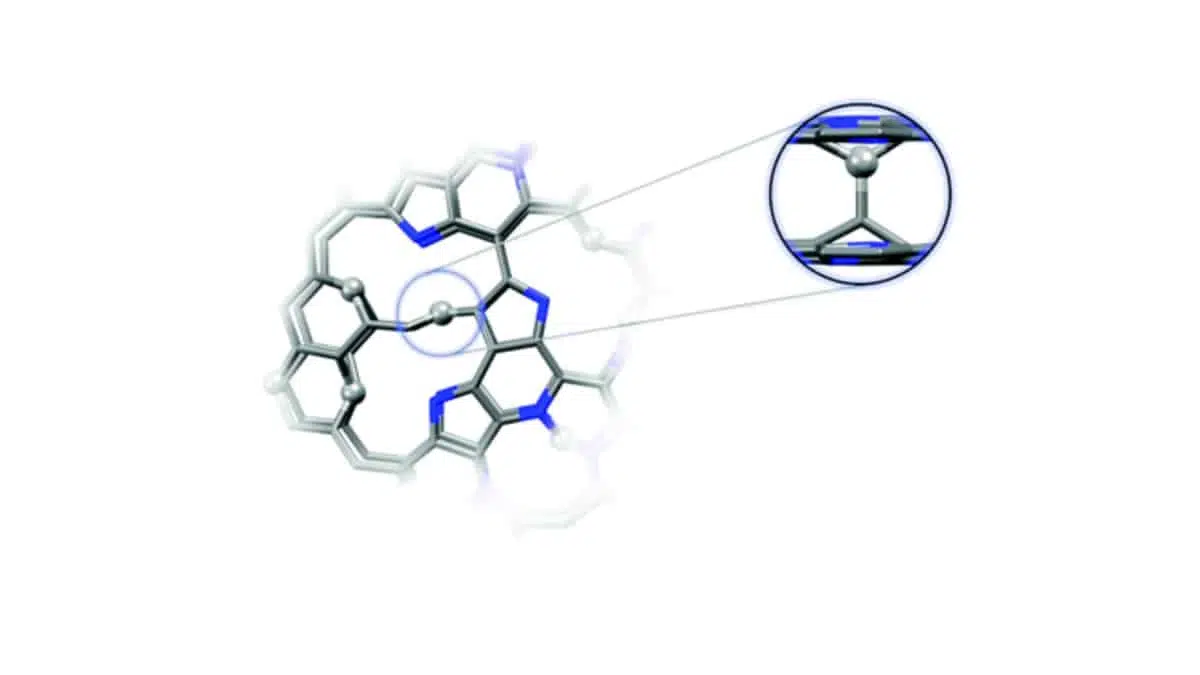
Theoretical model of GN3 structural fragment; image credit: CATRIN RCPTM

Theoretical model of GN3 structural fragment; image credit: CATRIN RCPTM

Nitrogen-enriched graphene material developed by researchers from CATRIN Regional Centre of Advanced Technologies and Materials (RCPTM), Olomouc, Czech Republic is proving to be a very promising electrode material for use in supercapacitors that yield in record high both energy and power density levels.

This result of Olomouc scientists is responding to the worldwide demand for electrochemical energy storage devices with better performance, higher safety, lower costs, and lower environmental impact. Scientists report on the benefits of the new material in the journal Energy & Environmental Science.

RelatedPosts

Researchers to Translate Nitrogen-Doped Graphene into High Energy Supercapacitor Prototypes  

Researchers Aim Prototyping of Next Gen High-Energy Graphene Supercapacitors

Researchers at RCPTM Olomouc Developed Graphene Based Materials Boosting Supercapacitors Energy and Power Density to the World Record Values

Abstract

Supercapacitors have attracted great interest because of their fast, reversible operation and sustainability. However, their energy densities remain lower than those of batteries. In the last decade, supercapacitors with an energy content of ∼110 W h L−1 at a power of ∼1 kW L−1 were developed by leveraging the open framework structure of graphene-related architectures. Here, we report that the reaction of fluorographene with azide anions enables the preparation of a material combining graphene-type sp2 layers with tetrahedral carbon–carbon bonds and nitrogen (pyridinic and pyrrolic) superdoping (16%). Theoretical investigations showed that the C–C bonds develop between carbon-centered radicals, which emerge in the vicinity of the nitrogen dopants. This material, with diamond-like bonds and an ultra-high mass density of 2.8 g cm−3, is an excellent host for the ions, delivering unprecedented energy densities of 200 W h L−1 at a power of 2.6 kW L−1 and 143 W h L−1 at 52 kW L−1. These findings open a route to materials whose properties may enable a transformative improvement in the performance of supercapacitor components.

“We prepared nitrogen-doped graphene for use in supercapacitors deploying fluorographene chemistry. The material has high density, which, combined with its ability to adsorb ions from the electrolyte, leads to very high volumetric energy density—significantly higher than in any previously described carbon- or graphene-based supercapacitor materials,” said Michal Otyepka, who is the Principal Investigator of three European Research Council grants that focus on the development and potential application of new 2D materials.

The demand for affordable, reliable, and sustainable energy is growing with an effort to reduce fossil fuel consumption and with the increasing mobility and the number of electronic devices. Lithium-ion batteries currently dominate this field. However, carbon-based supercapacitors offer long life and ultra-fast charging and discharging along with safety.

“The new material can be prepared from graphite fluoride, an industrial lubricant available on the market in tonnes, which increases its potential commercial availability. At the same time, we took great care to make the resulting component as environmentally friendly as possible, which we achieved by choosing the electrolyte in the supercapacitor,” added the main author Veronika Šedajová, who is also co-author of a recently granted European patent protecting the material. The next step in the development will be to build prototypes of the supercapacitors in cooperation with international partners.

“Our discovery of such unprecedented properties of the nitrogen super-doped graphene derivative derived from the findings that, during the synthesis, highly reactive carbon centres resulted in the formation of diamond-like bonds. This is probably behind the ultra-high mass density of this 2D carbon, which thus keeps its ability to host the ionic energy carriers, consequently offering a transformative improvement of the supercapacitor performance. Such carbon-based energy storage systems are metal-free and can therefore considerably contribute to the material sustainability and clean energy societal goals,” explained Aristides Bakandritsos, one of the co-authors of the work.

Related

Source: CATRIN RCPTM

Recent Posts

TDK Introduces 350V Safety Film Capacitors for Compact EMI Suppression

26.2.2026
1

Samsung Launches Worlds First Automotive 47uF 4V MLCC in 0805 Size

24.2.2026
16

Würth Elektronik Present in IEEE APEC

24.2.2026
14

Samsung Three Pillars MLCC Strategy for AI Hardware Topology

24.2.2026
30

KYOCERA AVX Extends Ultra‑Broadband RF Capacitor Series

24.2.2026
20

TDK Releases DC Link Aluminum Capacitors for EV On‑Board Chargers

23.2.2026
13

Capacitech C-Link Supercapacitors for AI Data Center Voltage Spikes Mitigation

23.2.2026
25
Researchers developed a polymer capacitor by combining two cheap, commercially available plastics. The new polymer capacitor makes use of the transparent material — pictured here, with vintage Penn State athletic marks visible through it — to store four times the energy and withstand significantly more heat.  Credit: Penn State

Penn State Demonstrated Polymer Alloy Capacitor Film with 4× Energy Density up to 250C

19.2.2026
43

Würth Elektronik Component Data Live in Accuris

19.2.2026
17

Upcoming Events

Mar 3
16:00 - 17:00 CET

Cybersecurity at the Eleventh Hour – from RED to CRA – Information and Discussion

Mar 21
All day

PSMA Capacitor Workshop 2026

Apr 21
16:00 - 17:00 CEST

Heatsink Solutions: Thermal Management in electronic devices

View Calendar

Popular Posts

  • Buck Converter Design and Calculation

    0 shares
    Share 0 Tweet 0
  • Boost Converter Design and Calculation

    0 shares
    Share 0 Tweet 0
  • Flyback Converter Design and Calculation

    0 shares
    Share 0 Tweet 0
  • LLC Resonant Converter Design and Calculation

    0 shares
    Share 0 Tweet 0
  • MLCC Manufacturers Consider Price Increase as AI Demand Outpaces Supply

    0 shares
    Share 0 Tweet 0
  • Dual Active Bridge (DAB) Topology

    0 shares
    Share 0 Tweet 0
  • Ripple Current and its Effects on the Performance of Capacitors

    3 shares
    Share 3 Tweet 0
  • What is a Dielectric Constant and DF of Plastic Materials?

    4 shares
    Share 4 Tweet 0
  • MLCC and Ceramic Capacitors

    0 shares
    Share 0 Tweet 0
  • MLCC Case Sizes Standards Explained

    0 shares
    Share 0 Tweet 0

Newsletter Subscription


Passive Components Blog

© EPCI - Leading Passive Components Educational and Information Site

  • Home
  • Privacy Policy
  • EPCI Membership & Advertisement
  • About

No Result
View All Result
  • Home
  • Knowledge Blog
  • PCNS

© EPCI - Leading Passive Components Educational and Information Site

This website uses cookies. By continuing to use this website you are giving consent to cookies being used. Visit our Privacy and Cookie Policy.
Go to mobile version