





Passive Components Blog
No Result
View All Result
  • Home
  • NewsFilter
    • All
    • Aerospace & Defence
    • Antenna
    • Applications
    • Automotive
    • Capacitors
    • Circuit Protection Devices
    • electro-mechanical news
    • Filters
    • Fuses
    • Inductors
    • Industrial
    • Integrated Passives
    • inter-connect news
    • Market & Supply Chain
    • Market Insights
    • Medical
    • Modelling and Simulation
    • New Materials & Supply
    • New Technologies
    • Non-linear Passives
    • Oscillators
    • Passive Sensors News
    • Resistors
    • RF & Microwave
    • Telecommunication
    • Weekly Digest

    Bourns Introduces Automotive BMS Signal Transformer with Integrated Common Mode Chokes

    Itelcond Introduces High‑Voltage Aluminium Capacitors for Modern IGBT DC‑links

    Bourns Introduces Automotive Shielded Power Inductors for Compact DC‑DC Converters

    EMC Design Fundamentals: Safe Use of Varistors and Common Mode Chokes in Mains and Data-Line Filters

    Murata Unveils Lead Disc Ceramic Capacitors for Automotive Safety and EMI Suppression

    SCHURTER Releases Intelligent Three‑Terminal Fuses for Safer Li‑ion Battery Systems

    Can Copper Conductive Inks Displace Silver in Hybrid Electronics?

    Square-Wave Harmonics and RMS Currents in Power Converters

    LeanBOM: Practical Cross‑Technology Capacitor Search by Real Working Conditions

    Trending Tags

    • Ripple Current
    • RF
    • Leakage Current
    • Tantalum vs Ceramic
    • Snubber
    • Low ESR
    • Feedthrough
    • Derating
    • Dielectric Constant
    • New Products
    • Market Reports
  • VideoFilter
    • All
    • Antenna videos
    • Capacitor videos
    • Circuit Protection Video
    • Filter videos
    • Fuse videos
    • Inductor videos
    • Inter-Connect Video
    • Non-linear passives videos
    • Oscillator videos
    • Passive sensors videos
    • Resistor videos

    EMC Design Fundamentals: Safe Use of Varistors and Common Mode Chokes in Mains and Data-Line Filters

    Ferrite versus Nanocrystalline Power Inductor Cores: Turns, Gap and Size

    KYOCERA AVX Presents Antenna Integrator Studio Tutorial for Antenna Placement and RF Design

    Power Design Simulation Tools for Faster Inductor Selection and Loss Optimization

    EMC‑Compliant PCB and Connector Design Guidelines

    Why Isolated DC/DC Power Supplies Fail Late, Würth Elektronik Podcast

    Designing 800 V DC EMC Filters: Calculation, Simulation and Measurement

    Current Sense Transformer Datasheet and Design‑in Guide

    Designing a USB Type‑C Flyback Planar Transformer with Frenetic’s Planar Tool

    Trending Tags

    • Capacitors explained
    • Inductors explained
    • Resistors explained
    • Filters explained
    • Application Video Guidelines
    • EMC
    • New Products
    • Ripple Current
    • Simulation
    • Tantalum vs Ceramic
  • Knowledge Blog
  • Dossiers
    • AI Hardware Dossier
    • Power Converter Dossier
    • Automotive Dossier
    • Capacitor Dossier
    • Resistor Dossier
    • Inductor Dossier
    • Circuit Protection Dossier
  • Suppliers
    • Who is Who
  • PCNS
    • PCNS 2025
    • PCNS 2023
    • PCNS 2021
    • PCNS 2019
    • PCNS 2017
  • Events
  • Home
  • NewsFilter
    • All
    • Aerospace & Defence
    • Antenna
    • Applications
    • Automotive
    • Capacitors
    • Circuit Protection Devices
    • electro-mechanical news
    • Filters
    • Fuses
    • Inductors
    • Industrial
    • Integrated Passives
    • inter-connect news
    • Market & Supply Chain
    • Market Insights
    • Medical
    • Modelling and Simulation
    • New Materials & Supply
    • New Technologies
    • Non-linear Passives
    • Oscillators
    • Passive Sensors News
    • Resistors
    • RF & Microwave
    • Telecommunication
    • Weekly Digest

    Bourns Introduces Automotive BMS Signal Transformer with Integrated Common Mode Chokes

    Itelcond Introduces High‑Voltage Aluminium Capacitors for Modern IGBT DC‑links

    Bourns Introduces Automotive Shielded Power Inductors for Compact DC‑DC Converters

    EMC Design Fundamentals: Safe Use of Varistors and Common Mode Chokes in Mains and Data-Line Filters

    Murata Unveils Lead Disc Ceramic Capacitors for Automotive Safety and EMI Suppression

    SCHURTER Releases Intelligent Three‑Terminal Fuses for Safer Li‑ion Battery Systems

    Can Copper Conductive Inks Displace Silver in Hybrid Electronics?

    Square-Wave Harmonics and RMS Currents in Power Converters

    LeanBOM: Practical Cross‑Technology Capacitor Search by Real Working Conditions

    Trending Tags

    • Ripple Current
    • RF
    • Leakage Current
    • Tantalum vs Ceramic
    • Snubber
    • Low ESR
    • Feedthrough
    • Derating
    • Dielectric Constant
    • New Products
    • Market Reports
  • VideoFilter
    • All
    • Antenna videos
    • Capacitor videos
    • Circuit Protection Video
    • Filter videos
    • Fuse videos
    • Inductor videos
    • Inter-Connect Video
    • Non-linear passives videos
    • Oscillator videos
    • Passive sensors videos
    • Resistor videos

    EMC Design Fundamentals: Safe Use of Varistors and Common Mode Chokes in Mains and Data-Line Filters

    Ferrite versus Nanocrystalline Power Inductor Cores: Turns, Gap and Size

    KYOCERA AVX Presents Antenna Integrator Studio Tutorial for Antenna Placement and RF Design

    Power Design Simulation Tools for Faster Inductor Selection and Loss Optimization

    EMC‑Compliant PCB and Connector Design Guidelines

    Why Isolated DC/DC Power Supplies Fail Late, Würth Elektronik Podcast

    Designing 800 V DC EMC Filters: Calculation, Simulation and Measurement

    Current Sense Transformer Datasheet and Design‑in Guide

    Designing a USB Type‑C Flyback Planar Transformer with Frenetic’s Planar Tool

    Trending Tags

    • Capacitors explained
    • Inductors explained
    • Resistors explained
    • Filters explained
    • Application Video Guidelines
    • EMC
    • New Products
    • Ripple Current
    • Simulation
    • Tantalum vs Ceramic
  • Knowledge Blog
  • Dossiers
    • AI Hardware Dossier
    • Power Converter Dossier
    • Automotive Dossier
    • Capacitor Dossier
    • Resistor Dossier
    • Inductor Dossier
    • Circuit Protection Dossier
  • Suppliers
    • Who is Who
  • PCNS
    • PCNS 2025
    • PCNS 2023
    • PCNS 2021
    • PCNS 2019
    • PCNS 2017
  • Events
No Result
View All Result
Passive Components Blog
No Result
View All Result

AVX Releases High-Temperature 150°C Glass-Encapsulated Multilayer Varistors

27.11.2019
Reading Time: 3 mins read
A A

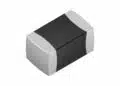
Designed for use in high-temperature, high-energy, & harsh-environment automotive, industrial, & oil & gas applications, the new TransGuard® Automotive VGAH Series MLVs provide bidirectional overvoltage protection & broadband EMI/RFI filtering in a single, high-reliability SMT device

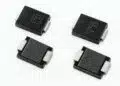
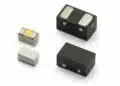
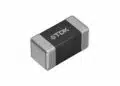
FOUNTAIN INN, S.C. AVX Corporation, a leading manufacturer and supplier of advanced electronic components and interconnect, sensor, control, and antenna solutions, released a new series of high-temperature, glass-encapsulated multilayer varistors (MLVs) that are qualified to AEC-Q200, rated for operating temperatures up to 150°C, and designed for use in a wide variety of high-energy, harsh-environment automotive underhood, industrial, and oil and gas applications.

RelatedPosts

Most Reliable, Most Efficient and Price Effective Solid Tantalum Capacitors

COTS procurement for space missions

Niobium and Niobium Oxide Capacitors Overview

Comprised of zinc oxide (ZnO) based ceramic semiconductor devices with nonlinear, bidirectional voltage-current (V-I) characteristics similar to those of back-to-back Zener diodes, but with greater current and energy handling capabilities and the addition of EMI/RFI attenuation, the new TransGuard® Automotive VGAH Series High-Temperature, Glass-Encapsulated MLVs combine bi-directional overvoltage circuit protection and EMI/RFI filtering functions in a single, high-reliability SMT device.

The series also exhibits high current- and energy-handling capabilities, very fast, sub-nanosecond (<1nS) response times to ESD strikes, multiple-strike capabilities, high energy absorption/load dump, low leakage, and excellent solderability. Additional benefits include glass encapsulation for impermeable protection against harsh environments and processes, including acids, salt, and chlorine flux, and no derating requirements for energy and current over the full range of operating temperatures extending from -55°C to +150°C.

Available in five chip sizes (1206, 1210, 1812, 2220, and 3220) with 16–31VDC working voltages, 40–57V clamping voltages, 0.6–13J energy ratings, 1.5–50J load dump energy, 200–1,800A peak current ratings, and 700–15,000pF capacitance, the new automotive-qualified VGAH Series MLVs are especially well suited for use in high-temperature, harsh-environment DC motor, pencil coil, local interconnect network (LIN) bus, electrical control unit (ECU), turbocharger, sensor, and relay applications in commercial, hybrid electric (HEV), plug-in hybrid electric (PHEV), and internal combustion engine (ICE) vehicles. The series is also ideal for use in a wide range of high-temperature, harsh-environment industrial applications, including power tools, automation and downhole drilling equipment, and renewable energy systems.

“AVX’s new TransGuard Automotive VGAH Series High-Temperature, Glass-Encapsulated Multilayer Varistors further extends its portfolio of high-reliability solutions for high-temperature, high-energy, and harsh-environment applications in the automotive, industrial, and oil and gas industries,” said Jiri Machanicek, product marketing manager for circuit protection at AVX.

“The new VGAH Series MLVs provide TVS protection in their on-state and broadband EMI/RFI filtering in their off-state, don’t require any current or energy derating over the entire range of rated operating temperatures, which spans -55°C to 150°C, and have a compact form factor that ruggedly withstands harsh-environment conditions and processes and satisfies increasingly common demands for lightweight, space-saving, multifunctional components.”

The new VGAH Series High-Temperature, Glass-Encapsulated MLVs also have RoHS-compliant nickel-barrier-over-pure-tin (Ni/Sn) terminations, are compliant with the ESD performance requirements defined in the AEC-Q200, IEC 61000-4-2, and ISO 10605 standards, and are supplied on 7” or 13” tape and reel for automated placement. Lead-time for the series is currently 14 weeks.

Related

Source: AVX

Recent Posts

Bourns Introduces Automotive BMS Signal Transformer with Integrated Common Mode Chokes

17.7.2026
10

Itelcond Introduces High‑Voltage Aluminium Capacitors for Modern IGBT DC‑links

17.7.2026
17

Bourns Introduces Automotive Shielded Power Inductors for Compact DC‑DC Converters

16.7.2026
33

Murata Unveils Lead Disc Ceramic Capacitors for Automotive Safety and EMI Suppression

15.7.2026
40

SCHURTER Releases Intelligent Three‑Terminal Fuses for Safer Li‑ion Battery Systems

14.7.2026
42

In the Age of AI, Every Watt Counts: Implications for Components

13.7.2026
65

Stackpole Extends Resistance Range of 2512 High‑Power Current Sense Resistors

13.7.2026
29

Littelfuse Announced TVS Diodes for 48 V Automotive Systems

10.7.2026
46

Coilcraft Releases High-Current Ferrite Beads for CISPR 25 EMC compliance

8.7.2026
46

Upcoming Events

Jul 21
16:00 - 17:00 CEST

Safety by design: X and Y Interference suppression capacitors for power line filters

Jul 28
8:00 - 11:00 CEST

Post Procurement Testing of EEE Components for LEO Space Applications

Jul 29
17:30 - 18:30 CEST

To Ferrite or to Nanocrystalline in Transformer Design

View Calendar

Popular Posts

  • Boost Converter Design and Calculation

    0 shares
    Share 0 Tweet 0
  • Buck Converter Design and Calculation

    0 shares
    Share 0 Tweet 0
  • YAGEO Announces July 2026 Capacitor Price Increase

    0 shares
    Share 0 Tweet 0
  • Flyback Converter Design and Calculation

    0 shares
    Share 0 Tweet 0
  • LLC Resonant Converter Design and Calculation

    0 shares
    Share 0 Tweet 0
  • MLCC and Ceramic Capacitors

    0 shares
    Share 0 Tweet 0
  • Earthing Systems and IEC Classification Explained

    0 shares
    Share 0 Tweet 0
  • MLCCs in the Age of AI: Q2 2026 Market Tightness

    0 shares
    Share 0 Tweet 0
  • Nvidia Vera Rubin: Why One AI Rack Needs So Many More MLCC Capacitors

    0 shares
    Share 0 Tweet 0
  • Dual Active Bridge (DAB) Topology

    0 shares
    Share 0 Tweet 0

Newsletter Subscription


Passive Components Blog

© EPCI - Leading Passive Components Educational and Information Site

  • Home
  • Privacy Policy
  • EPCI Membership & Advertisement
  • About

No Result
View All Result
  • Home
  • Knowledge Blog
  • Dossiers
  • PCNS

© EPCI - Leading Passive Components Educational and Information Site

This website uses cookies. By continuing to use this website you are giving consent to cookies being used. Visit our Privacy and Cookie Policy.
Go to mobile version