






Passive Components Blog
No Result
View All Result
  • Home
  • NewsFilter
    • All
    • Aerospace & Defence
    • Antenna
    • Applications
    • Automotive
    • Capacitors
    • Circuit Protection Devices
    • electro-mechanical news
    • Filters
    • Fuses
    • Inductors
    • Industrial
    • Integrated Passives
    • inter-connect news
    • Market & Supply Chain
    • Market Insights
    • Medical
    • Modelling and Simulation
    • New Materials & Supply
    • New Technologies
    • Non-linear Passives
    • Oscillators
    • Passive Sensors News
    • Resistors
    • RF & Microwave
    • Telecommunication
    • Weekly Digest

    Samsung Introduced Low ESL 3-Terminal Reverse-Geometry MLCCs for High-Performance ADAS

    Würth Elektronik Presents New Bidirectional Digital Isolators

    Using Stress–Strain Curves to Diagnose Tantalum Powders for Capacitors

    Coilcraft Introduces SMT Current Sense Transformers for High‑Performance Power Electronics

    Samsung Launches Ultra-Compact 008004 High Q MLCC for Next-Generation RF Applications

    Nichicon Extends Rechargeable Batteries Temperature to Rival Supercapacitors

    Two‑capacitor paradox explained for engineers

    YAGEO Releases Compact RJ45 Connector for Multi‑Gigabit Ethernet

    Circuit Protection Technology Annual Dossier

    Trending Tags

    • Ripple Current
    • RF
    • Leakage Current
    • Tantalum vs Ceramic
    • Snubber
    • Low ESR
    • Feedthrough
    • Derating
    • Dielectric Constant
    • New Products
    • Market Reports
  • VideoFilter
    • All
    • Antenna videos
    • Capacitor videos
    • Circuit Protection Video
    • Filter videos
    • Fuse videos
    • Inductor videos
    • Inter-Connect Video
    • Non-linear passives videos
    • Oscillator videos
    • Passive sensors videos
    • Resistor videos

    Two‑capacitor paradox explained for engineers

    Capacitances of Nonlinear MLCCs: What Datasheets Don’t Tell You

    Tapped Inductor Buck Converter Fundamentals

    Planar vs Conventional Transformer: When it Make Sense

    Modeling Fringing Field Losses in Inductors & Transformers

    Why Power Inductors Use a Ferrite Core With an Air Gap

    Transformer-Based Power-Line Harvester Magnetic Design

    Thermal Modeling of Magnetics

    Standard vs Planar LLC transformers Comparison for Battery Chargers

    Trending Tags

    • Capacitors explained
    • Inductors explained
    • Resistors explained
    • Filters explained
    • Application Video Guidelines
    • EMC
    • New Products
    • Ripple Current
    • Simulation
    • Tantalum vs Ceramic
  • Knowledge Blog
  • DossiersNew
  • Suppliers
    • Who is Who
  • PCNS
    • PCNS 2025
    • PCNS 2023
    • PCNS 2021
    • PCNS 2019
    • PCNS 2017
  • Events
  • Home
  • NewsFilter
    • All
    • Aerospace & Defence
    • Antenna
    • Applications
    • Automotive
    • Capacitors
    • Circuit Protection Devices
    • electro-mechanical news
    • Filters
    • Fuses
    • Inductors
    • Industrial
    • Integrated Passives
    • inter-connect news
    • Market & Supply Chain
    • Market Insights
    • Medical
    • Modelling and Simulation
    • New Materials & Supply
    • New Technologies
    • Non-linear Passives
    • Oscillators
    • Passive Sensors News
    • Resistors
    • RF & Microwave
    • Telecommunication
    • Weekly Digest

    Samsung Introduced Low ESL 3-Terminal Reverse-Geometry MLCCs for High-Performance ADAS

    Würth Elektronik Presents New Bidirectional Digital Isolators

    Using Stress–Strain Curves to Diagnose Tantalum Powders for Capacitors

    Coilcraft Introduces SMT Current Sense Transformers for High‑Performance Power Electronics

    Samsung Launches Ultra-Compact 008004 High Q MLCC for Next-Generation RF Applications

    Nichicon Extends Rechargeable Batteries Temperature to Rival Supercapacitors

    Two‑capacitor paradox explained for engineers

    YAGEO Releases Compact RJ45 Connector for Multi‑Gigabit Ethernet

    Circuit Protection Technology Annual Dossier

    Trending Tags

    • Ripple Current
    • RF
    • Leakage Current
    • Tantalum vs Ceramic
    • Snubber
    • Low ESR
    • Feedthrough
    • Derating
    • Dielectric Constant
    • New Products
    • Market Reports
  • VideoFilter
    • All
    • Antenna videos
    • Capacitor videos
    • Circuit Protection Video
    • Filter videos
    • Fuse videos
    • Inductor videos
    • Inter-Connect Video
    • Non-linear passives videos
    • Oscillator videos
    • Passive sensors videos
    • Resistor videos

    Two‑capacitor paradox explained for engineers

    Capacitances of Nonlinear MLCCs: What Datasheets Don’t Tell You

    Tapped Inductor Buck Converter Fundamentals

    Planar vs Conventional Transformer: When it Make Sense

    Modeling Fringing Field Losses in Inductors & Transformers

    Why Power Inductors Use a Ferrite Core With an Air Gap

    Transformer-Based Power-Line Harvester Magnetic Design

    Thermal Modeling of Magnetics

    Standard vs Planar LLC transformers Comparison for Battery Chargers

    Trending Tags

    • Capacitors explained
    • Inductors explained
    • Resistors explained
    • Filters explained
    • Application Video Guidelines
    • EMC
    • New Products
    • Ripple Current
    • Simulation
    • Tantalum vs Ceramic
  • Knowledge Blog
  • DossiersNew
  • Suppliers
    • Who is Who
  • PCNS
    • PCNS 2025
    • PCNS 2023
    • PCNS 2021
    • PCNS 2019
    • PCNS 2017
  • Events
No Result
View All Result
Passive Components Blog
No Result
View All Result

Enhancing Effectiveness of Tantalum Capacitor Anode Control

23.3.2025
Reading Time: 3 mins read
A A

This article by Dr. V. Azbel, an Independent consultant on tantalum capacitors highlights importance of tantalum capacitors anode control for reliability, leakage current and yield stability.

Introduction

RelatedPosts

Using Stress–Strain Curves to Diagnose Tantalum Powders for Capacitors

How a Digital Structural Twin Can Predict Tantalum Capacitor Reliability

Energy Localization in Tantalum Anode Formation: A Structural Perspective

Quality control of tantalum capacitor (TC) anodes during manufacturing is a critically important process that determines the final product’s characteristics.

However, existing methods for assessing the quality of anode batches after sintering and formation do not always ensure capacitor reliability and stability.

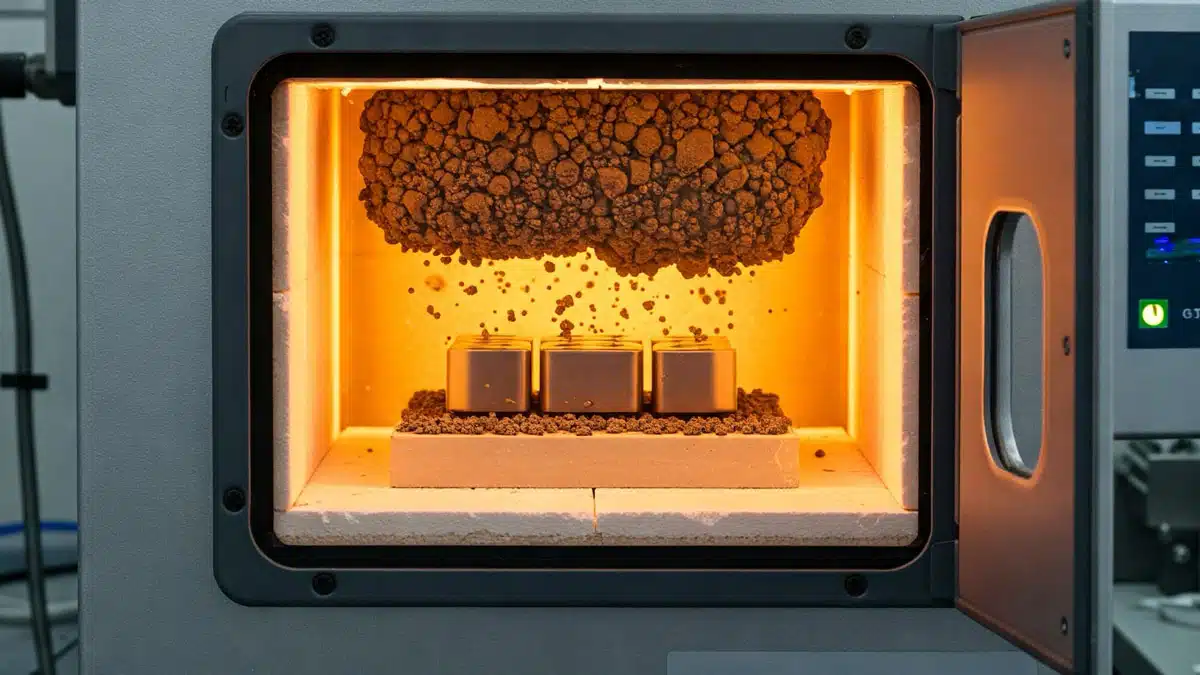
The currently used methods focus on evaluating production batches, with testing times ranging from 20 to 40 minutes. It is important to note that there is currently no control of the sintered pellet to verify its powder structure.

Issues with Current Control Methods

At present, the primary acceptance criteria for an anode are:

  • Capacitance
  • Leakage Current

The issue is that capacitance is weakly dependent on internal mechanical stresses within the material, unlike anode leakage currents. Current methods for evaluating leakage currents do not allow for the early detection of potentially unstable batches, leading to reduced overall capacitor quality and potential operational failures.

Despite an unchanged anode manufacturing process, internal stresses indicate a deviation in the powder structure from the benchmark. While such deviations may have little impact on capacitance, their effect on leakage currents can be critical.

An Alternative Approach

In this study, I propose using two methods:

  1. Mechanical testing of the sintered pellet – a technique widely used in powder metallurgy, allowing for the assessment of: Powder quality – a key parameter influencing subsequent manufacturing stages. Anode structure – mechanical characteristics of the sintered material precisely represent its stability and reliability.
  2. Aging tendency assessment – a method applied to heat-resistant materials, enabling the prediction of long-term leakage current stability. This is crucial for evaluating anode reliability during operation.

Testing is conducted on a sintered pellet produced from a benchmark powder lot, with evaluation based on the mechanical characteristics of the stress-strain curve. This approach allows for the early identification of potential issues, significantly improving anode quality.

Conclusion

The proposed methods are not new – they are well-known and already used in industrial applications. However, their implementation in tantalum capacitor manufacturing can greatly enhance anode reliability and, consequently, the quality of the final product. These methods do not replace but rather complement existing techniques, addressing their shortcomings.

Additionally, software exists for calculating stress-strain curve parameters. If benchmark lot data is available, AI can be utilized to analyze the causes of internal stress formation. This will allow for a deeper understanding of powder structure deviations and enable corrective actions at early production stages.

Given the importance of leakage current stability, control methods require revision and enhancement through more precise and reliable testing techniques.

Read more in-depth articles on this approach published in this blog https://passive-components.eu/tag/azbel/

Related

Source: Vladimir Azbel

Recent Posts

Samsung Introduced Low ESL 3-Terminal Reverse-Geometry MLCCs for High-Performance ADAS

20.5.2026
14

Using Stress–Strain Curves to Diagnose Tantalum Powders for Capacitors

20.5.2026
16

Samsung Launches Ultra-Compact 008004 High Q MLCC for Next-Generation RF Applications

20.5.2026
9

Nichicon Extends Rechargeable Batteries Temperature to Rival Supercapacitors

19.5.2026
24

Two‑capacitor paradox explained for engineers

18.5.2026
49

ESA SPCD 26 Registration Open

15.5.2026
25

Capacitances of Nonlinear MLCCs: What Datasheets Don’t Tell You

14.5.2026
88

How a Digital Structural Twin Can Predict Tantalum Capacitor Reliability

14.5.2026
64

Tapped Inductor Buck Converter Fundamentals

13.5.2026
44

Upcoming Events

Jun 2
16:00 - 17:00 CEST

Calculation, Simulation and Measurement of 800V EMC Filters

Jun 16
16:00 - 17:00 CEST

EMC with EMC – EMC‑compliant design with electromechanical connectors

View Calendar

Popular Posts

  • Buck Converter Design and Calculation

    0 shares
    Share 0 Tweet 0
  • Boost Converter Design and Calculation

    0 shares
    Share 0 Tweet 0
  • Flyback Converter Design and Calculation

    0 shares
    Share 0 Tweet 0
  • LLC Resonant Converter Design and Calculation

    0 shares
    Share 0 Tweet 0
  • MLCC and Ceramic Capacitors

    0 shares
    Share 0 Tweet 0
  • Capacitor Charging and Discharging

    0 shares
    Share 0 Tweet 0
  • What Electronics Engineer Needs to Know About Passive Low Pass Filters

    0 shares
    Share 0 Tweet 0
  • Dual Active Bridge (DAB) Topology

    0 shares
    Share 0 Tweet 0
  • Ripple Current and its Effects on the Performance of Capacitors

    3 shares
    Share 3 Tweet 0
  • Samsung Electro-Mechanics Releases High-Capacitance MLCCs for AI Server Applications

    0 shares
    Share 0 Tweet 0

Newsletter Subscription


Passive Components Blog

© EPCI - Leading Passive Components Educational and Information Site

  • Home
  • Privacy Policy
  • EPCI Membership & Advertisement
  • About

No Result
View All Result
  • Home
  • Knowledge Blog
  • PCNS

© EPCI - Leading Passive Components Educational and Information Site

This website uses cookies. By continuing to use this website you are giving consent to cookies being used. Visit our Privacy and Cookie Policy.
Go to mobile version