




Panasonic Industry Europe will showcase lightweight graphite heat-spreading technology and passive components at the sixth Space Passive Component Days (SPCD), taking place on 13–16 October 2026 at ESA/ESTEC in Noordwijk, the Netherlands.
The presentation will focus on thermal management, power density, mass reduction and long-term reliability in satellite and spacecraft electronics.
The company’s announcement brings together two closely connected engineering priorities: managing heat generated by increasingly powerful space systems and selecting passive components capable of supporting reliable operation over demanding mission profiles.
PGS Graphite Sheets Support Lightweight Heat Spreading
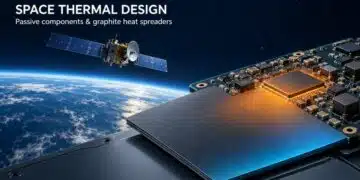
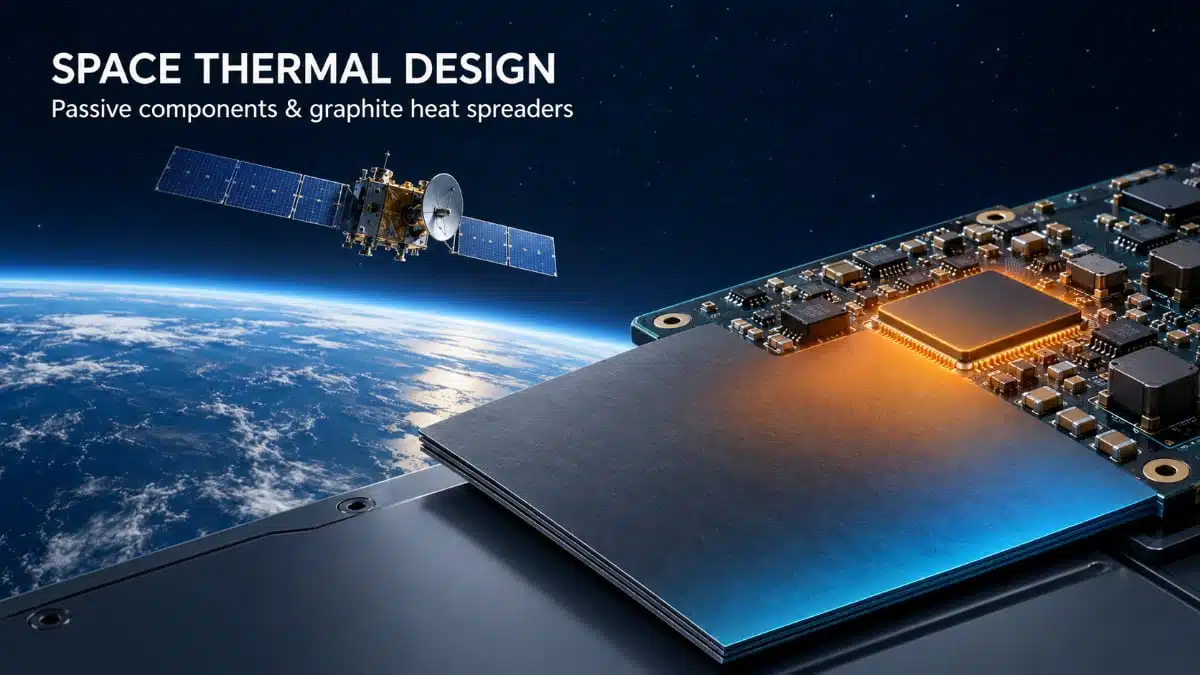
A central part of Panasonic’s presentation will be its Pyrolytic Graphite Sheet (PGS) technology. Panasonic describes PGS as a lightweight material with exceptionally high in-plane thermal conductivity, intended to spread heat away from concentrated sources such as processors, power electronics, batteries and payload electronics.
In the spacecraft architectures described by Panasonic, these sheets help distribute heat toward cold plates, structural panels and radiator interfaces. The company identifies four potential system-level benefits:
- Higher allowable power density.
- Improved temperature uniformity.
- Greater flexibility in thermal design.
- Reduced spacecraft mass compared with conventional metallic heat-spreading approaches.
The important distinction is heat spreading: PGS redistributes heat within the thermal architecture rather than serving as a complete heat-rejection system on its own. Panasonic’s emphasis on in-plane conductivity also matters because it describes heat transport along the sheet, not an interchangeable performance value for every direction or interface.
For spacecraft designers, the opportunity is therefore to improve the conductive path between heat-generating electronics and the structures responsible for carrying that heat onward. The announcement does not provide a specific PGS grade, thermal-conductivity value or quantified spacecraft-level mass saving.
Capacitors, Resistors and Inductors for Demanding Electronics
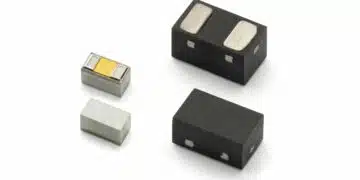
Alongside its thermal materials, Panasonic will present three groups of passive components:
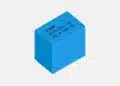
- Solid low-ESR capacitors.
- High-power and high-precision resistors.
- High-current inductors.
Panasonic positions these technologies around efficiency, long operating life, vibration robustness and stable performance under demanding thermal conditions.
The combination is relevant because thermal design and passive-component reliability cannot be treated as separate issues. Temperature exposure is an important consideration in passive-component selection for space electronics, making the relationship between component placement, heat sources and the wider thermal architecture particularly significant.
The release describes a broad portfolio rather than a new component-series launch. It does not identify individual capacitor, resistor or inductor series, electrical ratings, package sizes or qualification status.
Manufacturing Experience Adds Context—Not Automatic Space Qualification
Panasonic’s reliability message centres on advanced materials expertise, vertically integrated manufacturing and experience gained from producing billions of components for automotive, industrial and infrastructure applications.
That manufacturing history can provide useful evidence about process consistency and field performance. However, it should not be interpreted as confirmation that every component in the portfolio is already qualified for a particular space mission.
The distinction between commercial, COTS+ and qualified passive components in space applications remains important. Manufacturing experience and mission-specific qualification address different aspects of confidence, and the announcement does not name an applicable space qualification, approval or screening programme for the showcased parts.
For engineering teams, the practical next step is to discuss exact part numbers, supporting reliability data and the qualification requirements of the intended application with Panasonic’s specialists.
Supporting Future Satellite Architectures
“Space engineers require solutions that deliver both performance and confidence,” said Shahrokh Kananizadeh, Head of Product Management Distribution at Panasonic Industry Europe.
Panasonic’s SPCD participation will give visitors an opportunity to discuss how its thermal materials and passive-component technologies could support future satellite and spacecraft designs. The most useful application discussions will connect the thermal path, component operating conditions and required reliability evidence rather than considering each product category in isolation.
Further reading
- COTS Automotive Capacitors Procurement and Evaluation Case Study for SME Space Hardware Manufacturer – ESA ESCCON 2021 EPCI Report
- Stress Testing Evaluation of Chip Aluminum Polymer Capacitors for Space Applications
Source
This article is based on Panasonic Industry Europe’s press release published on 8 October 2026. Event dates and venue were checked against the official SPCD website. Additional editorial context draws on Passive Components Blog coverage of component selection, reliability and qualification for space applications.