




Passive Components Blog
No Result
View All Result
  • Home
  • NewsFilter
    • All
    • Aerospace & Defence
    • Antenna
    • Applications
    • Automotive
    • Capacitors
    • Circuit Protection Devices
    • electro-mechanical news
    • Filters
    • Fuses
    • Inductors
    • Industrial
    • Integrated Passives
    • inter-connect news
    • Market & Supply Chain
    • Market Insights
    • Medical
    • Modelling and Simulation
    • New Materials & Supply
    • New Technologies
    • Non-linear Passives
    • Oscillators
    • Passive Sensors News
    • Resistors
    • RF & Microwave
    • Telecommunication
    • Weekly Digest

    EMC‑Compliant PCB and Connector Design Guidelines

    Practical Value of Structural Diagnostics for Tantalum Capacitor Anodes

    Hall-Effect Sensing for Harsh Environments: TT Electronics Selected in NASA’s Dragonfly Fan

    Bourns Releases Automotive Gate Driver Transformer for Isolated Power

    Stackpole Releases High-Frequency Thin Film Chip Resistors for RF up to 50 GHz

    Knowles Expands High‑Q Ceramic Core Inductors for RF designs

    Vishay Unveils 1.5 kV IHDV High Voltage Power Inductors for EV and Industrial Converters

    SCHURTER Introduces PPTC Resettable Overcurrent Protection for Compact Electronics

    TrendForce: CSP in‑house AI ASIC Boom Reshapes Capacitor Demand

    Trending Tags

    • Ripple Current
    • RF
    • Leakage Current
    • Tantalum vs Ceramic
    • Snubber
    • Low ESR
    • Feedthrough
    • Derating
    • Dielectric Constant
    • New Products
    • Market Reports
  • VideoFilter
    • All
    • Antenna videos
    • Capacitor videos
    • Circuit Protection Video
    • Filter videos
    • Fuse videos
    • Inductor videos
    • Inter-Connect Video
    • Non-linear passives videos
    • Oscillator videos
    • Passive sensors videos
    • Resistor videos

    EMC‑Compliant PCB and Connector Design Guidelines

    Why Isolated DC/DC Power Supplies Fail Late, Würth Elektronik Podcast

    Designing 800 V DC EMC Filters: Calculation, Simulation and Measurement

    Current Sense Transformer Datasheet and Design‑in Guide

    Designing a USB Type‑C Flyback Planar Transformer with Frenetic’s Planar Tool

    Magnetics Design in High‑Frequency GaN Converters

    Qi2 Wireless Charging: Inductors, Capacitors and EMC Filters

    Two‑capacitor paradox explained for engineers

    Capacitances of Nonlinear MLCCs: What Datasheets Don’t Tell You

    Trending Tags

    • Capacitors explained
    • Inductors explained
    • Resistors explained
    • Filters explained
    • Application Video Guidelines
    • EMC
    • New Products
    • Ripple Current
    • Simulation
    • Tantalum vs Ceramic
  • Knowledge Blog
  • DossiersNew
  • Suppliers
    • Who is Who
  • PCNS
    • PCNS 2025
    • PCNS 2023
    • PCNS 2021
    • PCNS 2019
    • PCNS 2017
  • Events
  • Home
  • NewsFilter
    • All
    • Aerospace & Defence
    • Antenna
    • Applications
    • Automotive
    • Capacitors
    • Circuit Protection Devices
    • electro-mechanical news
    • Filters
    • Fuses
    • Inductors
    • Industrial
    • Integrated Passives
    • inter-connect news
    • Market & Supply Chain
    • Market Insights
    • Medical
    • Modelling and Simulation
    • New Materials & Supply
    • New Technologies
    • Non-linear Passives
    • Oscillators
    • Passive Sensors News
    • Resistors
    • RF & Microwave
    • Telecommunication
    • Weekly Digest

    EMC‑Compliant PCB and Connector Design Guidelines

    Practical Value of Structural Diagnostics for Tantalum Capacitor Anodes

    Hall-Effect Sensing for Harsh Environments: TT Electronics Selected in NASA’s Dragonfly Fan

    Bourns Releases Automotive Gate Driver Transformer for Isolated Power

    Stackpole Releases High-Frequency Thin Film Chip Resistors for RF up to 50 GHz

    Knowles Expands High‑Q Ceramic Core Inductors for RF designs

    Vishay Unveils 1.5 kV IHDV High Voltage Power Inductors for EV and Industrial Converters

    SCHURTER Introduces PPTC Resettable Overcurrent Protection for Compact Electronics

    TrendForce: CSP in‑house AI ASIC Boom Reshapes Capacitor Demand

    Trending Tags

    • Ripple Current
    • RF
    • Leakage Current
    • Tantalum vs Ceramic
    • Snubber
    • Low ESR
    • Feedthrough
    • Derating
    • Dielectric Constant
    • New Products
    • Market Reports
  • VideoFilter
    • All
    • Antenna videos
    • Capacitor videos
    • Circuit Protection Video
    • Filter videos
    • Fuse videos
    • Inductor videos
    • Inter-Connect Video
    • Non-linear passives videos
    • Oscillator videos
    • Passive sensors videos
    • Resistor videos

    EMC‑Compliant PCB and Connector Design Guidelines

    Why Isolated DC/DC Power Supplies Fail Late, Würth Elektronik Podcast

    Designing 800 V DC EMC Filters: Calculation, Simulation and Measurement

    Current Sense Transformer Datasheet and Design‑in Guide

    Designing a USB Type‑C Flyback Planar Transformer with Frenetic’s Planar Tool

    Magnetics Design in High‑Frequency GaN Converters

    Qi2 Wireless Charging: Inductors, Capacitors and EMC Filters

    Two‑capacitor paradox explained for engineers

    Capacitances of Nonlinear MLCCs: What Datasheets Don’t Tell You

    Trending Tags

    • Capacitors explained
    • Inductors explained
    • Resistors explained
    • Filters explained
    • Application Video Guidelines
    • EMC
    • New Products
    • Ripple Current
    • Simulation
    • Tantalum vs Ceramic
  • Knowledge Blog
  • DossiersNew
  • Suppliers
    • Who is Who
  • PCNS
    • PCNS 2025
    • PCNS 2023
    • PCNS 2021
    • PCNS 2019
    • PCNS 2017
  • Events
No Result
View All Result
Passive Components Blog
No Result
View All Result

Researchers Developed High Energy Ferroelectric BNT Dielectric by Aliovalent Sm-doping

27.11.2024
Reading Time: 4 mins read
A A
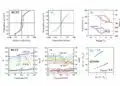
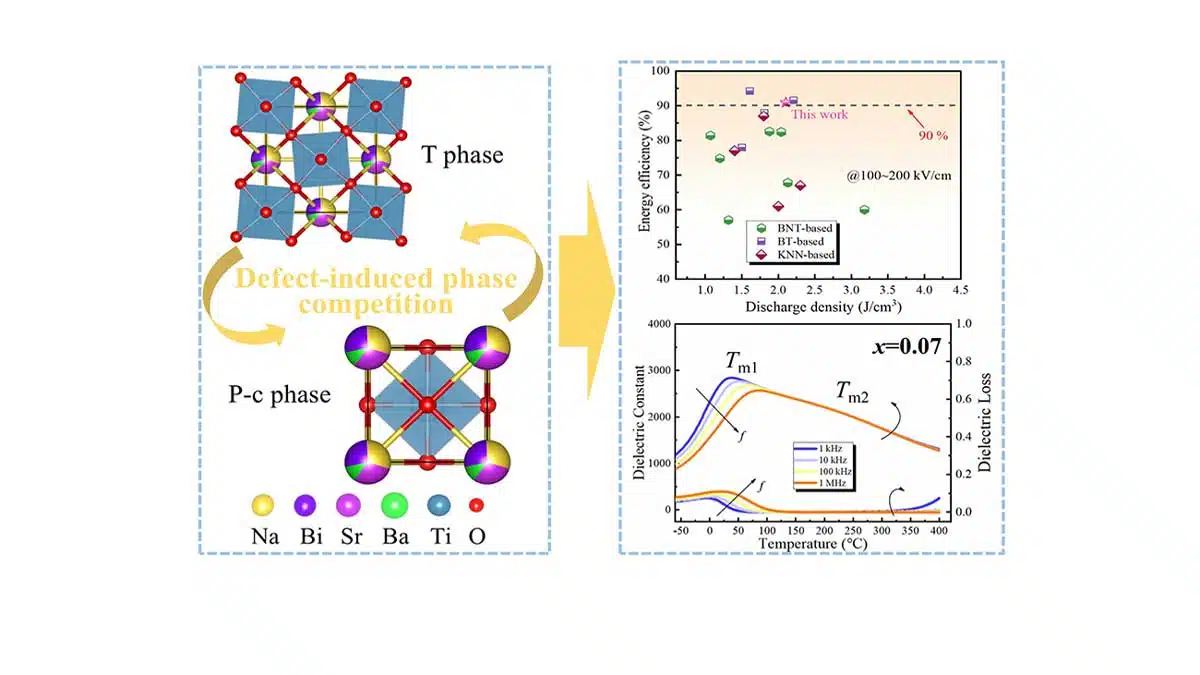
Aliovalent Sm-doping at A-site enables defect-induced phase competition between tetragonal phase and pseudo-cubic phase not only strengthens polarization switching ability but also improves dielectric temperature stability via thermal evolutions.Credit: Journal of Advanced Ceramics, Tsinghua University Press

Aliovalent Sm-doping at A-site enables defect-induced phase competition between tetragonal phase and pseudo-cubic phase not only strengthens polarization switching ability but also improves dielectric temperature stability via thermal evolutions.Credit: Journal of Advanced Ceramics, Tsinghua University Press

Researchers from Jingdezhen Ceramic University, Institute of Tsinghua University, Zhejiang province, China reported aliovalent doped Sm0.07-BNBST ceramics to achieve a high energy efficiency of 91% together with a recoverable energy density of 2.1 J/cm3 at a low electric field of 114 kV/cm, which exceeds other reported dielectric materials at the same electric field.

High-quality relaxor ferroelectric BNT-based ceramic dielectrics achieved high discharge density by many methods of chemical doping, hierarchical structure design, advanced sintering technology, and defect structure engineering.

RelatedPosts

EMC‑Compliant PCB and Connector Design Guidelines

Practical Value of Structural Diagnostics for Tantalum Capacitor Anodes

Hall-Effect Sensing for Harsh Environments: TT Electronics Selected in NASA’s Dragonfly Fan

Unfortunately, the inferior energy efficiency of BNT-based ceramics is still at a level of 60 to 70%, which means a large portion of stored energy is dissipated generating more joule heat. Notably, low energy efficiency is a long-time neglected but important issue, and corresponding solutions need to be developed.

Recently, a research group of dielectric materials for energy storage capacitor led by Prof. Dr. Zong-Yang Shen from Jingdezhen Ceramic University, reported aliovalent rare earth ion Sm3+-doped relaxor ferroelectric Ba0.12Na0.3Bi0.3Sr0.28SmxTiO3 (abbreviated as Smx-BNBST) solid solutions thorough defect-engineered phase/domain structure competition. Sm0.07-BNBST ceramics achieve a high energy efficiency of 91% together with a recoverable energy density of 2.1 J/cm3 at a low electric field of 114 kV/cm, which exceeds other reported dielectric materials at the same electric field.

“In this work, we proposed that defect-induced phase competition between tetragonal phase P4bm and pseudo-cubic phase Pm3m not only strengthens polarization switching ability but also improves dielectric temperature stability via thermal evolutions. More importantly, a high 91% energy efficiency with discharge density of 2.1 J/cm3 was achieved in Sm0.07-BNBST ceramics at a low electric field of 114 kV/cm, which is closely related to a reduced Pr demonstrated by PFM measurement.” said Prof. Zong-Yang Shen, vice dean at School of Materials Science and Engineering, Jingdezhen Ceramic University (China), whose research interests include dielectric ceramics for high power density energy storage capacitors, and high Curie temperature piezoelectric ceramics.

“Reduced domain size determines the remanent polarization (Pr), while the competition between tetragonal phase and pseudo-cubic phase determines the maximum polarization (Pmax). For the x=0 composition, it exhibits obvious ferroelectricity with increasing voltage; and after the electric field is removed, the polarization direction is still maintained and difficult to return to the initial state, corresponding to a high Pr. For the x=0.07 composition, the ferroelectricity is significantly weakened; when the external voltage is removed, the polarization direction can quickly return to the initial state, corresponding to a low Pr. The rapid response of polarization switching in Sm0.07-BNBST ceramics indicates that it has highly active polar nanoregions (PNRs), which produce low Pr and moderate Pmax, contributing to enhanced energy density and efficiency.” said Zong-Yang Shen.

“As the Sm concentration increases, the P-E loops of Smx-BNBST ceramics gradually become slimmer, and both Pmax and Pr gradually decrease, indicating that Sm doping weakens the ferroelectricity. When the Sm equals to 0.07 mol, Pmax shows a sudden increase, which may be related to the synergistic contributions of tetragonal/pseudo-cubic phase competition and reduced domain size.” said Zong-Yang Shen.

“Compared with pure BNBST ceramics with one dielectric peak of <100 °C, Smx-BNBST ceramics exhibit a new weak dielectric peak near ~200°C, which should be related to the thermal evolution of defect-induced phase competition between tetragonal phase and pseudo-cubic phase in BNT ceramics. As the Sm concentration increases, the dielectric peaks gradually broaden, and corresponding transition temperature Tm1 shifts towards lower temperatures, strengthening the dielectric temperature stability.” said Zong-Yang Shen.

Prof. Zong-Yang Shen said “In the following work, we will do research on designing and analyzing the influence of defect structure on dielectric and ferroelectric behaviors of BNT-based ceramics.” He hopes to obtain a BNT-based ceramics with high discharge density and energy efficiency at low electric field, and then fabricate them into multi-layer ceramic capacitors (MLCCs) to advance the development of dielectric materials in practical applications.

Link to the scientific paper:

Li D-X, Deng W, Shen Z-Y, et al. Aliovalent Sm-doping enables BNT-based realxor ferroelectric ceramics with > 90% energy efficiency. Journal of Advanced Ceramics, 2024, https://doi.org/10.26599/JAC.2024.9220999

Related

Source: Journal of Advanced Ceramics

Recent Posts

Practical Value of Structural Diagnostics for Tantalum Capacitor Anodes

22.6.2026
12

Knowles Expands High‑Q Ceramic Core Inductors for RF designs

19.6.2026
20

TrendForce: CSP in‑house AI ASIC Boom Reshapes Capacitor Demand

18.6.2026
96

Samsung Introduces Automotive 1206 100uF X7T MLCC for Power Rails in ADAS and SoCs

17.6.2026
30

YMIN Hybrid Aluminum Capacitors for Automotive LiDAR Power Rails

17.6.2026
29

Samsung Presents Ultra‑Thin Silicon Capacitors for AI and Server PDN

17.6.2026
56

YAGEO Introduces 310VAC SMD Y2 Safety MP Capacitors for Compact EMI Filtering

16.6.2026
33

DMASS: European Components Distribution Returns To Growth In Q1 2026

16.6.2026
51

German Component Distribution Market Rebounds in Q1 2026 According to FBDi

16.6.2026
37

Upcoming Events

Jun 30
17:00 - 18:00 CEST

PSMA Capacitor Committee Webinar: High Voltage Pulse Capacitors

Jul 14
16:00 - 17:00 CEST

EMC Design Essentials: Mastering Varistors and Common Mode Chokes

Jul 21
16:00 - 17:00 CEST

Safety by design: X and Y Interference suppression capacitors for power line filters

View Calendar

Popular Posts

  • Boost Converter Design and Calculation

    0 shares
    Share 0 Tweet 0
  • Buck Converter Design and Calculation

    0 shares
    Share 0 Tweet 0
  • LLC Resonant Converter Design and Calculation

    0 shares
    Share 0 Tweet 0
  • Flyback Converter Design and Calculation

    0 shares
    Share 0 Tweet 0
  • MLCC and Ceramic Capacitors

    0 shares
    Share 0 Tweet 0
  • Earthing Systems and IEC Classification Explained

    0 shares
    Share 0 Tweet 0
  • Nvidia Vera Rubin: Why One AI Rack Needs So Many More MLCC Capacitors

    0 shares
    Share 0 Tweet 0
  • Dual Active Bridge (DAB) Topology

    0 shares
    Share 0 Tweet 0
  • SEPIC Converter Design and Calculation

    0 shares
    Share 0 Tweet 0
  • MLCC Case Sizes Standards Explained

    0 shares
    Share 0 Tweet 0

Newsletter Subscription


Passive Components Blog

© EPCI - Leading Passive Components Educational and Information Site

  • Home
  • Privacy Policy
  • EPCI Membership & Advertisement
  • About

No Result
View All Result
  • Home
  • Knowledge Blog
  • Dossiers
  • PCNS

© EPCI - Leading Passive Components Educational and Information Site

This website uses cookies. By continuing to use this website you are giving consent to cookies being used. Visit our Privacy and Cookie Policy.
Go to mobile version