




Passive Components Blog
No Result
View All Result
  • Home
  • NewsFilter
    • All
    • Aerospace & Defence
    • Antenna
    • Applications
    • Automotive
    • Capacitors
    • Circuit Protection Devices
    • electro-mechanical news
    • Filters
    • Fuses
    • Inductors
    • Industrial
    • Integrated Passives
    • inter-connect news
    • Market & Supply Chain
    • Market Insights
    • Medical
    • Modelling and Simulation
    • New Materials & Supply
    • New Technologies
    • Non-linear Passives
    • Oscillators
    • Passive Sensors News
    • Resistors
    • RF & Microwave
    • Telecommunication
    • Weekly Digest

    Bourns Introduces LTCC GNSS L‑Band Diplexer for Compact RF Front Ends

    TT Electronics: How Qualification Underpins Reliable Selection of Thick‑Film Resistors

    Modelithics Extends Models for Microchip PIN and Varactor Diodes

    Exxelia Offers 1200V Capacitors and Magnetics for 800V Aerospace Platforms

    Wk 28 Electronics Supply Chain Digest

    Bourns Introduces Automotive BMS Signal Transformer with Integrated Common Mode Chokes

    Itelcond Introduces High‑Voltage Aluminium Capacitors for Modern IGBT DC‑links

    Bourns Introduces Automotive Shielded Power Inductors for Compact DC‑DC Converters

    EMC Design Fundamentals: Safe Use of Varistors and Common Mode Chokes in Mains and Data-Line Filters

    Trending Tags

    • Ripple Current
    • RF
    • Leakage Current
    • Tantalum vs Ceramic
    • Snubber
    • Low ESR
    • Feedthrough
    • Derating
    • Dielectric Constant
    • New Products
    • Market Reports
  • VideoFilter
    • All
    • Antenna videos
    • Capacitor videos
    • Circuit Protection Video
    • Filter videos
    • Fuse videos
    • Inductor videos
    • Inter-Connect Video
    • Non-linear passives videos
    • Oscillator videos
    • Passive sensors videos
    • Resistor videos

    EMC Design Fundamentals: Safe Use of Varistors and Common Mode Chokes in Mains and Data-Line Filters

    Ferrite versus Nanocrystalline Power Inductor Cores: Turns, Gap and Size

    KYOCERA AVX Presents Antenna Integrator Studio Tutorial for Antenna Placement and RF Design

    Power Design Simulation Tools for Faster Inductor Selection and Loss Optimization

    EMC‑Compliant PCB and Connector Design Guidelines

    Why Isolated DC/DC Power Supplies Fail Late, Würth Elektronik Podcast

    Designing 800 V DC EMC Filters: Calculation, Simulation and Measurement

    Current Sense Transformer Datasheet and Design‑in Guide

    Designing a USB Type‑C Flyback Planar Transformer with Frenetic’s Planar Tool

    Trending Tags

    • Capacitors explained
    • Inductors explained
    • Resistors explained
    • Filters explained
    • Application Video Guidelines
    • EMC
    • New Products
    • Ripple Current
    • Simulation
    • Tantalum vs Ceramic
  • Knowledge Blog
  • Dossiers
    • AI Hardware Dossier
    • Power Converter Dossier
    • Automotive Dossier
    • Capacitor Dossier
    • Resistor Dossier
    • Inductor Dossier
    • Circuit Protection Dossier
  • Suppliers
    • Who is Who
  • PCNS
    • PCNS 2025
    • PCNS 2023
    • PCNS 2021
    • PCNS 2019
    • PCNS 2017
  • Events
  • Home
  • NewsFilter
    • All
    • Aerospace & Defence
    • Antenna
    • Applications
    • Automotive
    • Capacitors
    • Circuit Protection Devices
    • electro-mechanical news
    • Filters
    • Fuses
    • Inductors
    • Industrial
    • Integrated Passives
    • inter-connect news
    • Market & Supply Chain
    • Market Insights
    • Medical
    • Modelling and Simulation
    • New Materials & Supply
    • New Technologies
    • Non-linear Passives
    • Oscillators
    • Passive Sensors News
    • Resistors
    • RF & Microwave
    • Telecommunication
    • Weekly Digest

    Bourns Introduces LTCC GNSS L‑Band Diplexer for Compact RF Front Ends

    TT Electronics: How Qualification Underpins Reliable Selection of Thick‑Film Resistors

    Modelithics Extends Models for Microchip PIN and Varactor Diodes

    Exxelia Offers 1200V Capacitors and Magnetics for 800V Aerospace Platforms

    Wk 28 Electronics Supply Chain Digest

    Bourns Introduces Automotive BMS Signal Transformer with Integrated Common Mode Chokes

    Itelcond Introduces High‑Voltage Aluminium Capacitors for Modern IGBT DC‑links

    Bourns Introduces Automotive Shielded Power Inductors for Compact DC‑DC Converters

    EMC Design Fundamentals: Safe Use of Varistors and Common Mode Chokes in Mains and Data-Line Filters

    Trending Tags

    • Ripple Current
    • RF
    • Leakage Current
    • Tantalum vs Ceramic
    • Snubber
    • Low ESR
    • Feedthrough
    • Derating
    • Dielectric Constant
    • New Products
    • Market Reports
  • VideoFilter
    • All
    • Antenna videos
    • Capacitor videos
    • Circuit Protection Video
    • Filter videos
    • Fuse videos
    • Inductor videos
    • Inter-Connect Video
    • Non-linear passives videos
    • Oscillator videos
    • Passive sensors videos
    • Resistor videos

    EMC Design Fundamentals: Safe Use of Varistors and Common Mode Chokes in Mains and Data-Line Filters

    Ferrite versus Nanocrystalline Power Inductor Cores: Turns, Gap and Size

    KYOCERA AVX Presents Antenna Integrator Studio Tutorial for Antenna Placement and RF Design

    Power Design Simulation Tools for Faster Inductor Selection and Loss Optimization

    EMC‑Compliant PCB and Connector Design Guidelines

    Why Isolated DC/DC Power Supplies Fail Late, Würth Elektronik Podcast

    Designing 800 V DC EMC Filters: Calculation, Simulation and Measurement

    Current Sense Transformer Datasheet and Design‑in Guide

    Designing a USB Type‑C Flyback Planar Transformer with Frenetic’s Planar Tool

    Trending Tags

    • Capacitors explained
    • Inductors explained
    • Resistors explained
    • Filters explained
    • Application Video Guidelines
    • EMC
    • New Products
    • Ripple Current
    • Simulation
    • Tantalum vs Ceramic
  • Knowledge Blog
  • Dossiers
    • AI Hardware Dossier
    • Power Converter Dossier
    • Automotive Dossier
    • Capacitor Dossier
    • Resistor Dossier
    • Inductor Dossier
    • Circuit Protection Dossier
  • Suppliers
    • Who is Who
  • PCNS
    • PCNS 2025
    • PCNS 2023
    • PCNS 2021
    • PCNS 2019
    • PCNS 2017
  • Events
No Result
View All Result
Passive Components Blog
No Result
View All Result

Tiny Bio-Supercapacitor Provides Energy for Biomedical Applications

25.8.2021
Reading Time: 5 mins read
A A

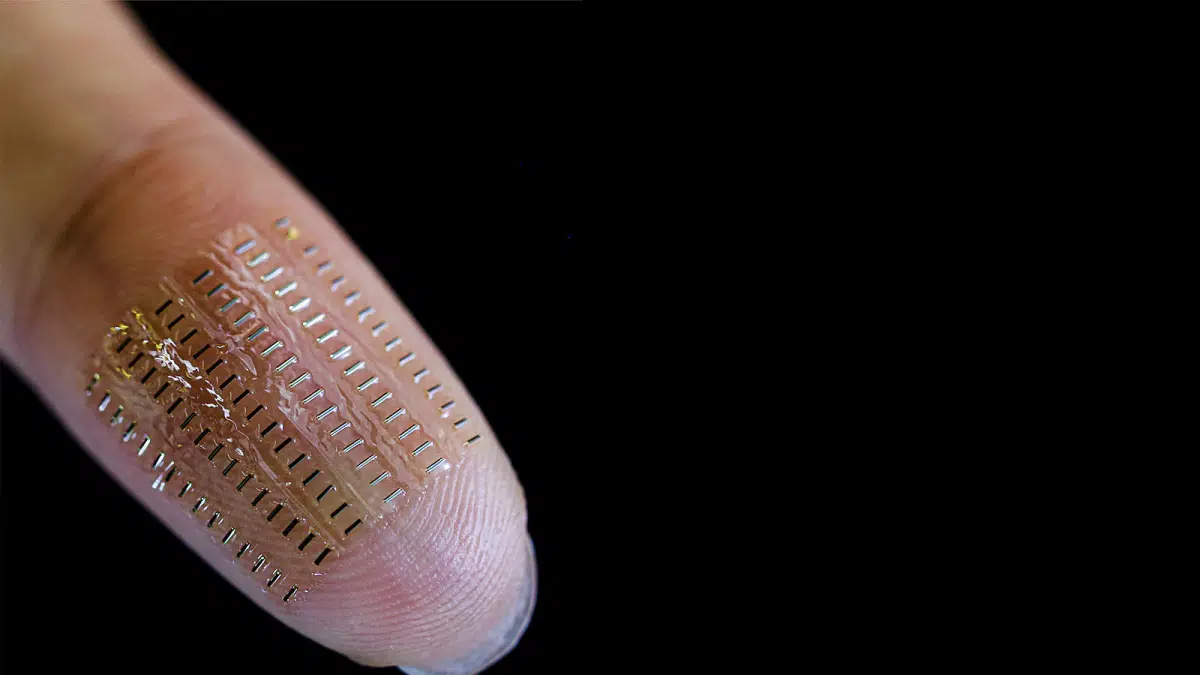
Research team from Chemnitz University of Technology, IFW Dresden, and IPF Dresden presents biocompatible energy storage device for sensor applications in blood vessels.

The miniaturization of microelectronic sensor technology, microelectronic robots or intravascular implants is progressing rapidly. However, it also poses major challenges for research. One of the biggest is the development of tiny but efficient energy storage devices that enable the operation of autonomously working microsystems – in more and more smaller areas of the human body for example. In addition, these energy storage devices must be bio-compatible if they are to be used in the body at all. Now there is a prototype that combines these essential properties. The breakthrough was achieved by an international research team led by Prof. Dr. Oliver G. Schmidt, Professorship of Materials Systems for Nanoelectronics at Chemnitz University of Technology, initiator of the Center for Materials, Architectures and Integration of Nanomembranes (MAIN) at Chemnitz University of Technology and director at the Leibniz Institute for Solid State and Materials Research (IFW) Dresden. The Leibniz Institute of Polymer Research Dresden (IPF) was also involved in the study as a cooperation partner.

RelatedPosts

Bourns Introduces LTCC GNSS L‑Band Diplexer for Compact RF Front Ends

TT Electronics: How Qualification Underpins Reliable Selection of Thick‑Film Resistors

Modelithics Extends Models for Microchip PIN and Varactor Diodes

In the current issue of Nature Communications, the researchers report on the smallest microsupercapacitors to date, which already functions in (artificial) blood vessels and can be used as an energy source for a tiny sensor system to measure pH.

This storage system opens up possibilities for intravascular implants and microrobotic systems for next-generation biomedicine that could operate in hard-to-reach small spaces deep inside the human body. For example, real-time detection of blood pH can help predict early tumor growing. “It is extremely encouraging to see how new, extremely flexible, and adaptive microelectronics is making it into the miniaturized world of biological systems”, says research group leader Prof. Dr. Oliver G. Schmidt, who is extremely pleased with this research success.

The fabrication of the samples and the investigation of the biosupercapacitor were largely carried out at the Research Center MAIN at Chemnitz University of Technology.

“The architecture of our nano-bio supercapacitors offers the first potential solution to one of the biggest challenges – tiny integrated energy storage devices that enable the self-sufficient operation of multifunctional microsystems,” says Dr. Vineeth Kumar, researcher in Prof. Schmidt’s team and a research associate at the MAIN research center.

Smaller than a speck of dust – voltage comparable to a AAA battery 

Ever smaller energy storage devices in the submillimeter range – so-called “nano-supercapacitors” (nBSC) – for even smaller microelectronic components are not only a major technical challenge, however. This is because, as a rule, these supercapacitors do not use biocompatible materials but, for example, corrosive electrolytes and quickly discharge themselves in the event of defects and contamination. Both aspects make them unsuitable for biomedical applications in the body. So-called “biosupercapacitors (BSCs)” offer a solution. They have two outstanding properties: they are fully biocompatible, which means that they can be used in body fluids such as blood and can be used for further medical studies.

In addition, biosupercapacitors can compensate for self-discharge behavior through bio-electrochemical reactions. In doing so, they even benefit from the body’s own reactions. This is because, in addition to typical charge storage reactions of a supercapacitor, redox enzymatic reactions and living cells naturally present in the blood increase the performance of the device by 40%.

Currently, the smallest such energy storage devices are larger than 3 mm3. Prof. Oliver Schmidt’s team has now succeeded in producing a 3,000 times smaller tubular nBSC, which, with a volume of 0.001 mm3 (1 nanolitre), occupies less space than a grain of dust and yet delivers up to 1.6 V supply voltage for microelectronic sensors. This energy can be used for a sensor system in the blood, for example. The power level also is roughly equivalent to the voltage of a standard AAA battery, although the actual current flow on these smallest scales is of course significantly lower. The flexible tubular geometry of the nano-biosupercapacitor provides efficient self-protection against deformations caused by pulsating blood or muscle contraction. At full capacity, the presented nano-biosupercapacitor can operate a complex fully integrated sensor system for measuring the pH value in blood.

Thanks to Origami structure technology: flexible, robust, tiny 

Origami structure technology involves placing the materials required for the nBSC components on a wafer-thin surface under high mechanical tension. When the material layers are subsequently detached from the surface in a controlled manner, the strain energy is released and the layers wind themselves into compact 3D devices with high accuracy and yield (95%). The nano-biosupercapacitors produced in this way were tested in three solutions called electrolytes: Saline, blood plasma, and blood. In all three electrolytes, energy storage was sufficiently successful, albeit with varying efficiency. In blood, the nano-biosupercapacitor showed excellent lifetime, holding up to 70% of its initial capacity even after 16 hours. A proton exchange separator (PES) was used to suppress the rapid self-discharge.

Performance stability even under realistic conditions

In order to maintain natural body functions in different situations, the flow characteristics of the blood and the pressure in the vessels are under constant change. Blood flow pulsates and varies according to vessel diameter and blood pressure. Any implantable system within the circulatory system must withstand these physiological conditions while maintaining stable performance.

The team therefore studied the performance of their development – similar to a wind tunnel – in so-called microfluidic channels with diameters of 120 to 150 µm (0.12 to 0.15 mm) to mimic blood vessels of different sizes. In these channels, the researchers simulated and tested the behavior of their energy storage devices under different flow and pressure conditions. They found that the nano-biosupercapacitors can provide their power well and stably under physiologically relevant conditions.

Self-contained sensor technology can support diagnostics – such as tumor diagnostics

The hydrogen potential (pH) of blood is subject to fluctuations. Continuous measurement of the pH can thus help in the early detection of tumors, for example. For this purpose, the researchers developed a pH sensor that is supplied with energy by the nano-biosupercapacitor.

The 5 µm thin film transistor (TFT) technology previously established in Prof. Oliver Schmidt’s research team could be used to develop a ring oscillator with exceptional mechanical flexibility, operating at low power (nW to µW) and high frequencies (up to 100MHz).

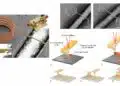
For the current project, the team used a nBSC based ring oscillator. The team integrated a pH-sensitive BSC into the ring oscillator so that there is a change in output frequency depending on the pH of the electrolyte. This pH-sensitive ring oscillator was also formed into a tubular 3D geometry using the “Swiss-roll” Origami technique, creating a fully integrated and ultra-compact system of energy storage and sensor. 

The hollow inner core of this micro sensor system serves as a channel for the blood plasma. In addition, three nBSCs connected in series with the sensor enable particularly efficient and self-sufficient pH measurement.

These properties open up a wide range of possible applications, for example in diagnostics and medication.


Related

Source: Chemnitz University of Technology

Recent Posts

Exxelia Offers 1200V Capacitors and Magnetics for 800V Aerospace Platforms

22.7.2026
51

Itelcond Introduces High‑Voltage Aluminium Capacitors for Modern IGBT DC‑links

17.7.2026
89

Murata Unveils Lead Disc Ceramic Capacitors for Automotive Safety and EMI Suppression

15.7.2026
76

Square-Wave Harmonics and RMS Currents in Power Converters

14.7.2026
84

LeanBOM: Practical Cross‑Technology Capacitor Search by Real Working Conditions

14.7.2026
91

In the Age of AI, Every Watt Counts: Implications for Components

13.7.2026
120

RF Filters and Passive Components Enabling the 7 Missile RF Subsystems

9.7.2026
72

From DCL to SSC: Bridging Electrical Symptoms and Structural Indicators in Tantalum Capacitors

7.7.2026
76

High-Q RF & Microwave MLCCs: A Cross-Vendor Benchmark

2.7.2026
124

Upcoming Events

Jul 28
8:00 - 11:00 CEST

Post Procurement Testing of EEE Components for LEO Space Applications

Jul 29
17:30 - 18:30 CEST

To Ferrite or to Nanocrystalline in Transformer Design

Sep 29
16:00 - 17:00 CEST

Cybersecurity 2026

View Calendar

Popular Posts

  • Boost Converter Design and Calculation

    0 shares
    Share 0 Tweet 0
  • Buck Converter Design and Calculation

    0 shares
    Share 0 Tweet 0
  • YAGEO Announces July 2026 Capacitor Price Increase

    0 shares
    Share 0 Tweet 0
  • Flyback Converter Design and Calculation

    0 shares
    Share 0 Tweet 0
  • LLC Resonant Converter Design and Calculation

    0 shares
    Share 0 Tweet 0
  • MLCCs in the Age of AI: Q2 2026 Market Tightness

    0 shares
    Share 0 Tweet 0
  • MLCC and Ceramic Capacitors

    0 shares
    Share 0 Tweet 0
  • Earthing Systems and IEC Classification Explained

    0 shares
    Share 0 Tweet 0
  • Dual Active Bridge (DAB) Topology

    0 shares
    Share 0 Tweet 0
  • Nvidia Vera Rubin: Why One AI Rack Needs So Many More MLCC Capacitors

    0 shares
    Share 0 Tweet 0

Newsletter Subscription


Passive Components Blog

© EPCI - Leading Passive Components Educational and Information Site

  • Home
  • Privacy Policy
  • EPCI Membership & Advertisement
  • About

No Result
View All Result
  • Home
  • Knowledge Blog
  • Dossiers
  • PCNS

© EPCI - Leading Passive Components Educational and Information Site

This website uses cookies. By continuing to use this website you are giving consent to cookies being used. Visit our Privacy and Cookie Policy.